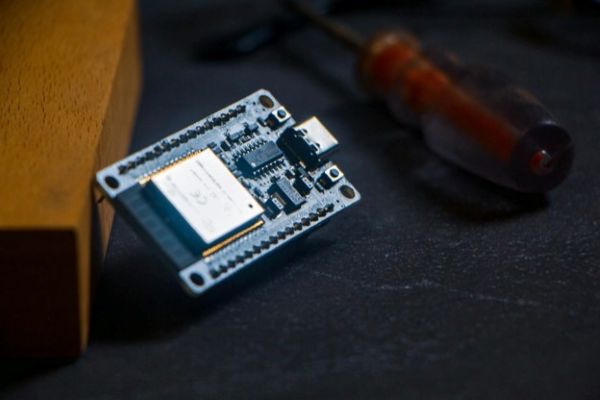
It is always enjoyable to work with new writers here at the Techso Mogro. Harper Lane recently came on the scene, and she is becoming quite a presence with this, her third submission. Today’s topic is Part 1 of 2, looking at embedded controllers (ECs). ECs can be found within many modern devices. They are microcomputers or microcontrollers on circuit boards. These boards get inserted into larger pieces of technology to play specific roles in critical operations. They act independently of the hardware in which they are embedded.
In Part 1, Harper provides an in-depth description of how ECs operate and are an essential part of modern electronic devices today.
In Part 2, Harper looks at how artificial intelligence (AI) can add a predictive component to the operational life and effectiveness of these embedded system devices.
Enjoy the read.
ECs are everywhere, quietly orchestrating the behaviour of devices we rely on every day. They regulate industrial machines, pace medical devices, control vehicles, and manage everyday consumer electronics. These systems might look simple from the outside, but beneath the surface, they make tightly coordinated decisions in real time, often with no margin for error (a theme that becomes especially clear in safety-critical transportation systems).
What makes ECs different from general–purpose computers isn’t their raw performance. It is their predictability. They are built to behave the same way every time, under strict timing and power constraints. That goal shapes every design decision, from hardware selection to software structure, and it is why custom ECs are far more complex than they initially appear.
At their core, EC systems exist to serve a single purpose: reliable behaviour under known constraints. When you understand how deterministic timing and power budgets drive that reliability, the hidden sophistication of these systems becomes clear.
Why Deterministic Timing Is Non–Negotiable
Deterministic timing guarantees that a system will respond within a fixed, predictable timeframe. The equipment operator can state with confidence, “This action will occur within X microseconds… every time.” In many embedded environments, missing that deadline isn’t a minor hiccup; it can create system instability, cause safety hazards, or damage equipment.
Consider a motor controller on an industrial assembly line. Sensors must be read, control algorithms executed, and actuators triggered in a precise sequence. If the timing slips, even slightly, motors desynchronize, materials jam, and equipment can wear prematurely. The same principle applies to medical infusion pumps, where delayed responses could deliver incorrect dosages.
That’s why real–time behaviour dominates embedded design. Tasks like sensor sampling, control loops, and communication all operate within carefully defined timing windows. Variability, also called jitter, can cause unexpected latency and ripple throughout a system, with sometimes catastrophic consequences.
To enforce determinism, engineers rely on real-time operating systems (RTOS), fixed–priority scheduling, and predictable execution paths. Familiar desktop conveniences (background services, dynamic memory allocation, or best–effort task scheduling) are usually avoided. They’re flexible, yes, but they introduce uncertainty, which is the enemy of real–time systems.
Power Budgets as a Design Constraint
Power budgets define how much energy a system can safely consume, and influence design choices. Whether an embedded controller runs on battery, must minimize heat output, or needs to meet regulatory efficiency limits, energy use isn’t an option. It is necessary because every processed instruction consumes power. Too much computation generates excess heat, shortens component lifespan, and pushes systems beyond safe operating limits. That’s why ECs are engineered to do exactly what’s required, nothing more.
Think about a wearable health monitor. It might sample sensors a few times per second, perform just enough processing to detect anomalies, then sleep immediately. Running a more powerful processor “just in case” would drain the battery far too quickly. These constraints force deliberate tradeoffs. Lower clock speeds reduce energy consumption but limit processing headroom. Deep sleep states save power but complicate timing guarantees with wake-up latency mattering. Managing tradeoffs requires detailed knowledge of how hardware and software interact under real operating conditions.
The Interplay Between Timing and Power
Timing and power aren’t separate problems; in fact, they constantly influence each other. Executing tasks quickly may allow a processor to return to a low–power state sooner. Slowing things down can reduce instantaneous power draw, but risks missing deadlines.
Engineers often structure systems to run in bursts: tasks wake up, execute predictably, and then relinquish control so the processor can sleep. You see this pattern in smart meters, environmental sensors, and even automotive controllers that spend most of their time idle until something important happens.
Dynamic voltage and frequency scaling (DVFS) manages power requirements based on workload demands. DVFS gets used within carefully controlled ranges. Any adjustment must preserve known timing guarantees, which means extensive analysis and testing. Once again, timing analysis and power analysis are inseparable. Design one without the other, and reliability suffers.
Hardware Choices That Shape Controller Behaviour
Hardware lays the foundation for everything else. Microcontroller architecture, memory layout, peripheral design, and power–management features all determine how well a system meets its constraints. ECs often favour architectures with deterministic instruction timing and tightly integrated peripherals. This predictability simplifies worst–case execution analysis and reduces the need for external components, which can add both latency and power overhead.
In higher–performance or high–reliability environments, such as aerospace subsystems or industrial robotics, engineers may opt for custom embedded systems. These custom-designed controllers remove unnecessary features, optimize power paths, and tightly align peripherals with real system needs. Every unused circuit is wasted energy, with every unpredictable component creating risk.
Software Architecture and Its Hidden Complexity
Embedded software often looks simple until timing enters the picture. Interrupts, shared resources, and concurrent tasks create interactions that aren’t always obvious from just reading the code.
Small changes can have outsized consequences. Adding diagnostic logging, adjusting an interrupt priority, or introducing a new background task can change execution timing. In a real–time system, that change might be enough to break deterministic behaviour.
Engineers must account for worst–case execution time, stack usage, and resource contention. Validating these assumptions isn’t trivial. Debugging may involve timestamping events at microsecond or even nanosecond resolutions. This capability goes far beyond tools used in general software development.
This is where real–world testing matters. Simulating electrical noise, temperature swings, and power fluctuations uncovers behaviours that never appear in ideal laboratory conditions.
Safety, Reliability, and Long–Term Operation
EC expectations are for them to run nonstop for years. That reliability expectation pushes EC performance to operate optimally under heat, vibration, electromagnetic interference, and aging.
Safety–critical systems add yet another layer. Redundancy, fault detection, and fail–safe behaviours must be carefully implemented. These safeguards additions consume resources and introduce complexity, while never interfering with core timing guarantees.
Long–term operation also means maintenance can’t be an afterthought. Firmware updates, diagnostics, and monitoring need to exist without disrupting critical tasks.
Why This Complexity Is Often Overlooked
From the outside, ECs look modest: small chips, limited interfaces, simple software. That appearance hides the reality that their constraints are far tighter than those of desktops or cloud systems.
Their success is quiet: no missed deadlines, no unexpected resets, and no excess power draw. When everything works, the complexity stays invisible and easy to underestimate.
But that invisibility is precisely why embedded systems demand such discipline. Designing for deterministic timing and strict power budgets means thinking several steps ahead, anticipating not just what the system does today, but how it will behave years into the future.

