The 7.87 billion people in the world today create two billion tons of waste per year. We see and often smell it everywhere. But even what we see and smell represents a small percentage of the total produced annually.
Some of us are motivated to attempt to implement a zero-waste lifestyle. Our reasons vary. Some simply want to make the Earth a better place for future generations. Others find that buying into sustainability saves money and time.
So what would a zero-waste lifestyle look like? Bea Johnson of Zero Waste Home suggests following the “Five R’s” of zero-waste, to get you started on your journey.
Seems pretty simple, but let’s explore actions you can implement to achieve the “Five R’s” today.
First, do some research to find the most reputable sustainable-living companies for your lighting systems, furniture and décor. Using more high-quality, sustainable materials around your home, like teak or bamboo, will save you more money in the long run, replacing cheaply made, mass-produced furniture which simply doesn’t hold up to the test of time. Consider choosing intelligent lighting and water options that you can control using technology, meaning you don’t even need to be home to reduce your home’s carbon footprint. Or if it makes sense based on location, install a propane oven to reduce your reliance on gas and electricity.
It’s time to rethink what we do with our trash. Before throwing out something like a takeaway container or plastic bottle, consider how you could reuse it around the house. Empty soda bottles can be made into adorable bird feeders, while empty egg cartons are a great place to store small tools, earrings or screws and nails. Keep old delivery boxes for reuse when returning items, or carrying things to and from the car, and remember – an old purse or bag could be great for grocery shopping!

It’s important to simplify and get used to using less. The more you buy, the more packaging you use, and the more factory emissions you create by proxy. Take a moment to consider if you really need the bulk package of individually wrapped toilet paper or pre-packaged lunches for the kids. Can you downsize the number of paper towels you use by substituting reusable cloth wipes? A good reusability example is reusable shopping bags. It’s estimated we could eliminate 500 single-use plastic bags per person per year by this simple substitution.

Food waste is a major issue, and although composting is a great way to recycle food waste, it’s important to remember a commitment to a zero-waste lifestyle each time you go to the grocery store. So buy only what you need. Try to avoid individually packaged foods. If you can, grow more of your own food. You’ll hate seeing tomatoes you lovingly tended go to waste. And doesn’t it sound great to pick a fresh sprig of rosemary or basil from your garden or planters?
This point seems particularly relevant considering water scarcity issues in many parts of the world including the western United States. So carefully consider water use as part of implementing a zero-waste lifestyle.
We take water for granted. In our western lifestyle, it flows freely and doesn’t cost a lot overall. But water conservation is important. So how can you implement it in your zero-lifestyle plan?
Here are a few ideas. Conserve water by washing clothes only when dirty. Completely fill the dishwasher or sink before you wash the dishes. Don’t pour out water used in cooking such as boiling those eggs. Instead, let it cool and use it to water your indoor and outdoor plants. Even coffee dregs can be used to fertilize plants. When you brush your teeth, don’t keep the water running. Turn it off until you need to rinse. Such small actions will have a huge impact on how much water you use daily.
Running a zero-waste home will help the environment and give you a great deal of satisfaction. Don’t be surprised if it also is good for your bank account. And as an example for your children, extended family, and neighbours, your lifestyle choice can become an example for others.
We know, particularly in the Western World, that we are enormous waste producers. But the solutions are right there for us to end our bad habits. So take time this weekend to consider how you can make the world a better place by changing just a few of your habits to create a more environmentally sustainable, zero-waste home and life.
]]>
According to the United Nations Department of Economic and Social Affairs, the number of us living in urban centres will grow to 68% by 2050, that’s an increase of 2.5 billion taking up residence in cities.
So if cities aren’t leading the way on key sustainability issues, then humanity is heading for a crisis of survival. Much of this anticipated urban population shift will happen in Africa, Asia, and South America where cities are already bursting at the seems from rapid growth. Sustainable development in these urban centres will be far more challenging because of the lack of urban planning and financial resources to deal with the fastest human population shift ever seen on the planet.
Just how fast are cities growing? By 2030 the planet will have 43 with populations exceeding 10 million. One in eight of us will live in 33 of these megalopoli. That means one in eight of us will be dosed with urban air pollution, a garbage problem, potentially unsafe water, and global pandemics from opportunistic diseases transmitted from human to human in confined spaces, let alone all the other stresses that come with city living.
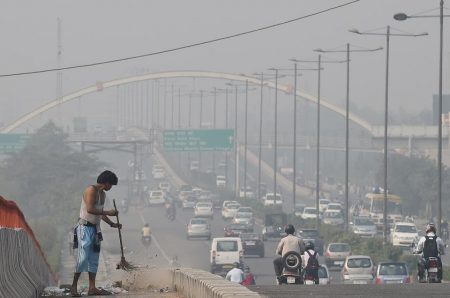
We have all seen pictures of China’s smog-ridden cities where air pollution is responsible for causing respiratory problems. According to the World Health Organization, over 12 million globally each year die from air pollution’s effects. It is the fourth highest risk factor for premature death representing one in 10.
But now we have found another consequence of air polluted urban environments from a study conducted by Chinese researchers released in the last 24 hours showing that polluted air is not only a mortality risk, but also effects cognitive abilities. In a report appearing in the journal Proceedings of the National Academy of Sciences (PNAS) it states that over a period from 2010 to 2014, cognitive skill test results on 20,000 Chinese exposed to toxic air, scoring of language and mathematics skills in air polluted centres across the country with higher than safe levels of nitrogen and sulfur dioxide from smokestack and vehicle emissions showed a decline equated to a loss of one full year of education on average. For those in the study with less than average education the exposure to these pollutants equated to a loss of more than one year of education. When you consider the importance of education in the 21st century to help all of humanity manage the challenges we face, no country or culture can afford a cognitive decline in its general population. And certainly no country can wilfully expose its citizens to such risks that cause cognitive impairment.
So it would seem that urban air pollution must be addressed with greater haste than has been applied to date. Cities have been organizing to deal with air pollution, climate change, garbage, and other challenges. Groups like C40, representing many of the world’s most populous cities, are pursuing ambitious action plans to create more resilient communities. C40’s ultimate goal is to eliminate air pollution through a zero carbon strategy.
Twenty-three of its members have also announced a zero carbon strategy which includes zero waste. In tackling waste they want to eliminate the greenhouse gas emissions (GHGs) associated with waste generation and storage. In particular, they are targeting methane (CH4). Collectively if all the cities of the world were to move to zero waste we would see an immediate annual GHG emission’s reduction of CH4 by more than 20%. (Other CH4 sources of pollution include the oil and gas industry and agriculture.
To reduce CH4 from waste would help countries move closer to achieving targets set by the Paris Climate Agreement of 2015. See if your city is one of those participating in this new initiative. A partial list includes New York, Philadelphia, Washington, Auckland, Copenhagen, Dubai, London, Milan, Montreal, Paris, Rotterdam, San Francisco, Sydney, Tel Aviv, Tokyo, Toronto, Vancouver, and others.
In the announcement of this C40 initiative, cities acknowledge themselves as the leaders in advancing the goals of the Paris Climate Agreement in the absence of national, state, and provincial progress. States Bill de Blasio, New York City’s mayor, it is cities that are “taking matters into our own hands.” Echoing similar sentiments, Anne Hidalgo, mayor of Paris states, “cities are getting the job done, inventing the new practices….the future is taking place in cities.”
]]>