WeWork isn’t alone in seeing meat as an environmental contributor to greenhouse gas emissions and climate change, and as a result, coming up with ways to influence employees and the public about their meat consumption. The Vancouver Humane Society has introduced “Meatless Monday,” an information campaign to get the public to go meatless one day a week to benefit animals and the environment. A British Columbia-based company, Daiya Foods, has a line of plant-based dairy and meatless foods. One of its co-founders, Andre Kroecher, recently stated “animals get their protein from plants, we eat animals for protein. We are really just cutting out the middle-man.”
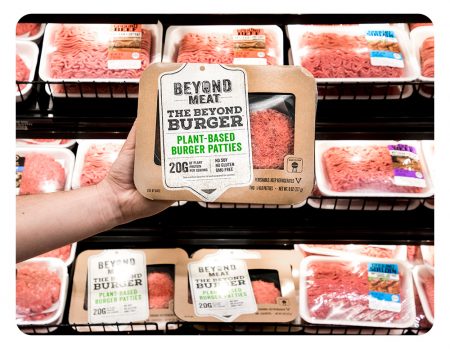
In the last week, A&W, a burger chain in Canada has introduced the Beyond Meat Burger to its lineup of Mama, Papa, and Teen Burgers. Beyond Meat is made from 100% plant-based protein that includes beets, coconut oil, yellow peas, pomegranates, mung beans, rice, potatoes, and apples, and so far the customer reviews have been more than positive. An even bigger endorsement comes from Tyson Foods, the American meat-producing giant, which recently invested $55 million in Beyond Meat, the company A&W has gone to for its new burger. Stated Justin Whitmore, Tyson’s Executive VP of Corporate Strategy and Chief Sustainability Officer, “we’re talking about ourselves as a protein company.” Joining Tyson in this new pursuit is Nestle who recently acquired Sweet Earth Foods, a maker of all kinds of vegan-meat substitute foods including pizza and burritos, and Maple Leaf Foods, who acquired LightLife, whose motto is “meat without the middleman” and Field Roast Grain Meat, based in Seattle.
Unilever, the consumer products giant, is also moving into the meatless world with significant investments in efforts by Wageningen University in The Netherlands, to create the perfect vegetable steak. In describing the evolution of this new meat replacement product a company spokesperson described the goal to create a “sustainable vegetable alternative for meat, with good flavour and nutritional value.”
Not to be forgotten for meat die-hards who cannot accept the idea of a vegetarian substitute being nearly as good as the real thing, there is the rise of laboratory-grown meat. This is meat from cells taken from animals which are then cultured and nurtured to grow in a factory setting. In a recent article appearing in the Independent, author Lucy Pasha-Robinson writes, “meat grown in a laboratory could be on restaurant menus by the end of the year” according to Josh Tetrick, CEO of JUST, an American food manufacturer.
For the moment the cost of manufacturing lab-meat is prohibitive. No one wants to buy a hamburger that costs $2,400 U.S. That’s way down from the first lab-meat hamburger served which was valued at $325,000. Companies are pursuing ramping up lab-meat production which if not in 2018, will find its way to grocery counters well before 2020 at a slightly higher price tag than conventional meat.
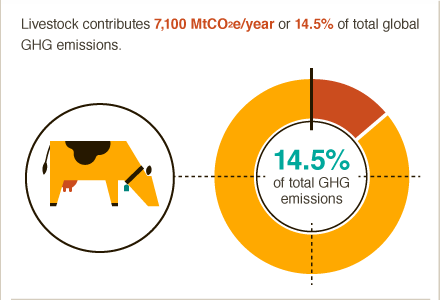
What’s driving this move to meatless and lab-meat substitutes in Western diets? Carbon emissions from livestock contribute nearly 15% to the greenhouse gas totals fueling climate change. That’s 7.1 gigatons, equivalent to all emissions coming from cars, trucks, airplanes and ships. And if the world can move away from animal husbandry for the purpose of generating meat, significant amounts of land can be freed up to grow crops, or increase natural carbon sinks further mitigating global warming.
]]>