Watson’s artificial intelligence gives it the skill to discern patterns in complex data. Applying this ability to the many challenges Africa is experiencing from freshwater shortages to mass rural to urban migration will prove a useful tool for cross country planning initiatives.
IBM will partner with the pan-African Center of Excellence for Data-Driven Development that includes universities, development agencies, NGOs and business start-right across the continent.
Here are some interesting facts that Africa will have to deal with in the coming decades:

IBM will invest $100 million U.S. over a decade to help Africans find solutions using the Watson cognitive computing platform. This is technology that has the ability to sift through large amounts of data and find emerging patterns and correlations. With Watson seeking answers to Africa’s challenges the continent could find itself emerging as a strong economic player in the global community rather than the “sick man” of the planet.
So what started as a project to build a computer to beat the best human contestants in a television game show is turning into a world beater of a technology.

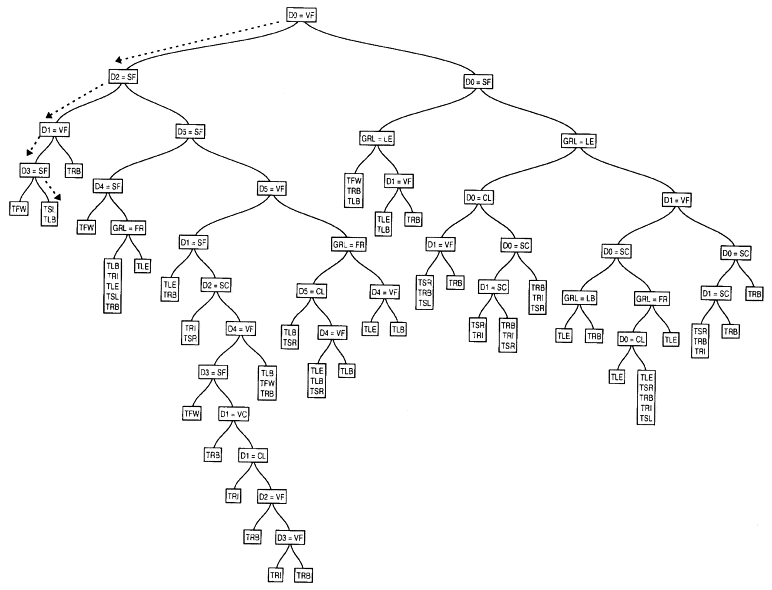
Back in the 1970s, James Martin, the futurist and telecommunications guru, described in his book, The Wired Society, a scenario in which a patient would be pre-screened before being seen by a doctor. The pre-screening involved the patient answering a series of questions that appeared on a computer screen and based on the answer the computer would then choose the next question to ask. The program resembled a large decision tree with branches going off in all directions based on how each patient responded. In the end the computer could narrow down the investigation and advise medical staff in a report. This concept preceded the existence of the Internet and the availability of massive amounts of information from which a human or computer intelligence could draw.
Today anyone with access to the Internet can visit medical websites like WebMD, or NetDoctor and look up symptoms to try and do self-diagnosis. These sites and the online encyclopedia Wikipedia, are filled with information. What they lack is a screening mechanism in the form of an intelligent front end that can interact with the information seeker based on an understanding of symptoms and implications. Back when James Martin was writing, medical artificial intelligence was in its infancy. The systems used symbolic models of disease and related them to what the patient was describing. Today’s artificial intelligence systems, however, employ neural network architecture and can draw on vast data resources in offering an opinion on a diagnosis.
Combined with widespread use of electronic medical records and surgical medical robotics, the age of the machine and the iDoctor is near at hand. Will patients be better off getting diagnosed by a machine rather than a human MD? An artificial intelligence-based medical system will be cheaper than one that is human-based. It will be more individually focused having access to a patient’s DNA profile and medical history. This will take subjective human opinion out of the mix. It will be able to interact, read and even adjust any broadcast capable medical devices used by a patient, whether a smartphone ECG reader that the patient uses regularly, or blood sugar home testing equipment, or even internal devices like pacemakers or medical nanobots. As a result the iDoctor will likely be faster and more accurate in diagnosis than 80% of existing MDs today.
Hence my opening comment. Want to try a taste of the future? Check out Androctor Anna.

]]>


