I remember a list by James Martin, who wrote “The Meaning of the 21st Century.” Martin was an IT savant and futurist and I was an avid reader of his books and articles. His top concern was global warming. Although he included the threat of pandemics and the rise of artificial intelligence (AI) well before these two subjects became part of the daily global conversation, on his list they were lower concerns than population growth, freshwater scarcity and food insecurity, ecosystem collapses particularly in the ocean, and desertification.
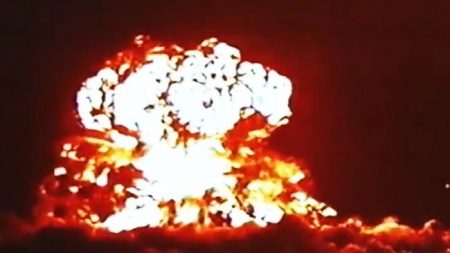
The last item on Martin’s list was a fear of the rise of a new Dark Age. The Dark Ages was an expression coined by historians studying the aftermath of the decline and fall of Rome covering a period from the late 5th century to the beginning of the Renaissance from the mid-15th century onward. Martin described his Dark Age as a global cocktail of intolerable poverty, outrageous wealth, starvation, mass terrorism, nuclear and biological weapons, world war, religious insanity and worldwide unending hatred and violence.
Martin never foresaw the rise of the Internet and social media. If he had, I am sure he would have added them to his list because these technologies could influence all the other threats he described.
What is on my list of the greatest threats we face this century? Today I have chosen five to talk about.
No doubt, as readers of this blog, you may have your own lists of the biggest threats we face. I would welcome hearing what you have concluded and why.
]]>Putin sees the restoration of Mother Russia as his goal. His Mother Russia is delineated by the Baltic Sea coast and the eastern borders of Poland, Slovakia, Hungary and Romania. Putin’s Mother Russia contains Belarus and Ukraine which in his eyes have no historical legitimacy as nations. He feels the same about Estonia, Lithuania and Latvia. The pretext named is coming to the aid of Russian-speaking Eastern Ukrainians in the Donbas. The multifront assault bears no resemblance to a peacekeeping operation. It’s about crushing Ukraine as an independent nation.
By initiating this assault he has temporarily pushed Europe into reconsidering the decommissioning of many of its coal-fired thermal powerplants. His actions have also caused Europe to look elsewhere for gas and oil, places like North America, and the Middle East. Liquified natural gas will replace gas supplied over pipelines. Giant tankers will transit the oceans with their emissions contributing to atmospheric warming.
In a Politico article published on February 28th, Karl Mathiesen writes that war has become a giant distraction taking our collective eye off combatting climate change. The timing of the assault on Ukraine has pushed into the background the eye-opening report from the Intergovernmental Panel on Climate Change (IPCC) that describes just how far behind we are globally in implementing mitigating and adaptation strategies.
Mathiesen notes, “Whatever disorder we make in the world will ally itself with climate change and deplete our ability to respond to either.” He goes further describing the Ukraine and Russia as critical players in dealing with the fallout from climate change. Ukraine is a critical food exporter to countries in Africa where global warming is negatively impacting crop yields. And Russia is a petrostate that sees aggressive climate change mitigation as a threat to its economic wellbeing. Mathiesen notes that as the Russian invasion started it was the Ukrainian scientists working on the final IPCC draft who had to take shelter from Russian missile strikes while their attackers were still working on the language of the report inserting notes about positive benefits from global warming.
In a security conference held in Munich prior to Putin’s invasion, German attendees noted that depending on Russian oil and gas was making Europe as much a victim as Ukraine would be if it were attacked. They noted that finding alternative fossil fuel energy sources would be a short-term challenge and a distraction from dealing with the much greater long-term existential threat of climate change.
From reading the headlines on business pages in North American newspapers, it looks like fossil fuel producers are the winners here. The war is turning out to be a good thing as disruptive supply lines drive up prices. Regular unleaded gas at the pumps today here in Toronto was $1.95 CDN per litre ($5.77 US per gallon).
In the March 2nd New York Times, Somini Sengupta, the Times international climate correspondent, and Lisa Friedman, a federal climate and environment policy reporter stationed in Washington, wrote about Europe’s dependence on Russian fossil fuel sources. They quoted Kadri Simson, the European Union’s energy commissioner who said, “this war will have deep repercussions one way or another on our own energy system.” In the same article, the writers refer to John Kerry, the American climate czar, who called Putin’s action the weaponizing of fossil fuels. Kerry further stated that the climate effort will suffer. “It’s not what we want, it’s not going to be positive.”
In a March 7th article published in the State of the Planet, from the Columbia Climate School, Steve Cohen wrote:
“Europe is like a junkie trying to attack its favourite drug pusher.” His analogy is a good one when you think of how the EU is now invoking sanctions on Russia’s leaders and its energy sector. Cohen went on to state “in the near term, climate advocates are concerned because the war and need for Russia’s resources seem to have displaced climate change from the political agenda.” But he believes the short-term shift away from climate policy in face of this war is an appropriate tack and notes the need “to shift our focus from climate policy to trying to stop a murderous lunatic from destroying Ukraine and then possibly turning his attention to other nearby nations.”
Cohen cited environmental consequences to the war in his article stating, “The recklessness of the Russian invasion was never more apparent than last week’s attack and near destruction of the Zaporizhzhia nuclear power plant in southeastern Ukraine.” In his conclusion, he believed that ending the conflict sooner would allow us to “return to the long-term threat of global warming…For now, the people of Ukraine deserve our help, support, and prayers.”
How long can the world wait? Sea level rise, one of the many consequences of global warming, won’t abate without all of us making the effort to decarbonize. Mathiesen in his article asked us to consider the plight of the citizens of the Pacific island nation of Kiribati, who see any delay as existential. He wrote stating they “are building seawalls from broken coral because it’s all they have to fight the invading sea….and then what?”
Ending this Putin aggression and getting back to fighting climate change is critical. Every delay in implementing mitigation and adaptation strategies means the degrees of warming will continue to climb upward to and past 1.5 Celsius (2.7 Fahrenheit) that the IPCC says is our target ceiling. Exceeding 1.5 comes with escalating environmental, human, and financial costs. The world cannot afford to go there.
]]>In today’s announcement the full statement begins as follows:
“Humanity continues to face two simultaneous existential dangers—nuclear war and climate change—that are compounded by a threat multiplier, cyber-enabled information warfare, that undercuts society’s ability to respond. The international security situation is dire, not just because these threats exist, but because world leaders have allowed the international political infrastructure for managing them to erode.”
What surprised me is that it didn’t single out the state actors who are the culprits in this escalation of insecurity that the world faces: No mention of Donald Trump, Vladimir Putin, Xi Jinping, Kim Jong-Un, the U.S. Republican Party, Mark Zuckerberg, and a few others of notoriety that have proved to be actors in the global drama that is pushing humanity closer to an existential crisis.
The Doomsday Clock announcement pointed to these eight trends:
The anti-science movement in the United States is particularly a problem whether it be anti-vaxxers, climate change deniers, or a disdain for facts, what the data shows and the experts in universities and company laboratories. Propaganda, once associated with dictatorships, has now become the means to indulge in prejudice, bias, and ideology, spreading false and manipulative messages to millions.
The twenty-second move toward midnight puts the world nearer to doomsday than at anytime during the Cold War when the United States and Soviet Union faced each other with tens of thousands of nuclear weapons.
So what can be done? These are five steps the Atomic Scientists believe need to happen if we are to move the minute hand of the Doomsday Clock further from midnight:
The Atomic Scientists believe the present global situation is unsustainable and dangerous. Citizens can alter this by demanding of their leaders the truth.
The move of the Doomsday Clock closer to midnight is a warning. The minute hand can still be moved further away but it will only happen through wise leadership, and mass civic engagement to compel existing leaders and governments to make the changes the world needs.
Empowering citizens will unmask the lies, and improve “the long-term prospects of their children and grandchildren. They can insist on facts, and discount nonsense. They can demand—through public protest, at the ballot box, and in many other creative ways—that their leaders take immediate steps to reduce the existential threats of nuclear war and climate change. It is now 100 seconds to midnight, the most dangerous situation that humanity has ever faced. Now is the time to unite—and act.”

Futurists shouldn’t be talking about war but indeed, it appears that more effort and money is going into military invention and action than at any time since the lead up to World War Two.
The United States, with the largest armed forces and a bloated military budget, has been given through the last few administrations more money than reasonably needed to defend the country. And now an additional plus $50 billion is being thrown at the Pentagon with announcements that America is about to create the next generation of nuclear weapons and refurbish its existing deterrent.
In admonishing NATO countries about their lack of contribution to the collective defense of Europe, President Trump has goaded the nations of the European Union to up their military expenditures over the next few years. At the same time, the President has cast doubt on the concept of collective defense which has further pushed Europe into accelerating its rearmament. Recently Germany’s Angela Merkel declared to Germans and the rest of Europe that the continent was on its own. Over seventy years after World War Two, Germans are being asked to support an expanded military as a contribution to European defense.
China’s efforts to reassert itself as The Middle Kingdom by the mid-21st century has turned into not just an economic effort at expansionist outreach, but also a massive growth in military capacity including the establishment of hegemony over the South China Sea. The end result of these moves by China is producing an overall arms buildup in the western Pacific. Not only is the United States increasing its naval presence on, over, and under Pacific waters, Japan is ending its pacifist constitution to build a much large military regional presence.
And then there are all the regional conflicts on the go that, in some cases, could lead to an incident that sparks a much wider war. Here are just a few:
The Korean Peninsula
The country since the end of World War Two has been partitioned. Since 1950 the South and North have been at war although a ceasefire has been in place since 1953. The South and North have been pawns in the Cold War that dominated from the 1950s to the fall of the Soviet Union. China and Russia have been patrons of the North. The United States and an alliance of western countries have been patrons of the South. North Korea has developed intercontinental ballistic missiles. North Korea has developed nuclear bombs. The combination is seen as a direct threat to the South, Japan, and the United States. The Americans have a significant number of troops stationed in the South and keep the Pacific fleet nearby.
Strategy to contain the nuclear and missile threat from the North has included the trading of insults by the North’s leader and the U.S. President. It has included economic sanctions, trade restrictions, joint military training exercises in the South, and attempts to sever the relationships the North has with its Russian and Chinese patrons.
Of all the conflict zones on the planet, this one has the makings to become a global war pulling China and Russia in on one side while the United States, Japan, and other western countries attempt to neutralize the North’s nuclear and missile capacity.
The Middle East
There are so many points of conflict in this part of the world it is almost impossible to sort them all out. You have Shia Iran facing off against the Sunni Arab world, supporting a Syrian government that has been fighting against an uprising increasingly backed by different global powers. Russia has allied with Iran and the Syrian government to save the regime from collapsing. The United States and its Sunni Arab state allies have promoted Arab and Kurdish forces to fight the Syrian government.
Turkey, a non-Arab Muslim country, has entered the conflict carving out a buffer along its border with a separate goal to stop the Kurds from establishing a Kurdistan state which could ultimately cause war to break out within the Turkish nation itself. Turkey appears to be fighting everybody in this conflict, shooting down Russian warplanes, getting into battles with American troops supporting Syrian rebels, and launching an offensive against Kurdish controlled areas.
And increasingly Israel has been drawn into the Syrian abyss. Israel fears a future nuclear-armed Iran, and Iran’s client, Hezbollah, a militant Lebanese based group that has been fighting alongside the Syrian government forces and has been armed by the Iranians. Israel and Hezbollah have a history of wars fought on the former’s northern border. Hezbollah has fired missiles at Israeli domestic targets in these battles. Israel has bombed, and occupied southern Lebanon from time to time and has armed and trained Lebanese surrogates to create a buffer on its border. Hezbollah has supported the Palestinian cause in the latter’s bid to establish independence and end the Israeli 50+ year occupation of the West Bank.
But the Sunni-Shia confrontation goes beyond Syria. In Yemen, the Saudis and Iranians are fighting on opposite sides of a civil war that has devastated that nation.
Meanwhile, the Afghan conflict that began post-9/11, to wipe out Al Qaeda and its Taliban supporters appears to have no end in sight. That war has destabilized Pakistan in the process, a nuclear-armed country on the verge of chaos. And in the most ill-conceived post-9/11 strategy, has led to the conflict and collapse of the Iraqi nation-state, the rise, and the recent demise of the new caliphate, the so-called Islamic State.
So many flashpoints, so little diplomatic maneuvering room, so much bad blood based on centuries of religious and tribal hate, is there a bigger mess anywhere else on the planet than the one in the Middle East today? I’d say no and it is a wonder to me that a global conflict has not happened from the chaos that dominates this region of the planet today.
Post-Colonial Africa
The legacy of colonialism lingers in Africa to this day. Whether talking about Saharan, Sahel, Central, East or South African nations, this continent is in need of a restart. Probably the most significant flashpoint lies in the area of the Congo River where the Democratic Republic of the Congo, Uganda, Rwanda, and non-state actors in the form of guerrilla armies, continue to destabilize and disrupt the people of the region.
There are political and economic issues at stake here. The Congo’s government is in free fall because of a constitutional crisis. There are violent protests. The Congo’s mineral resources have brought non-state actors as well as Western governments and China into the mix. Parts of the eastern Congo have experienced interventions from neighbouring Uganda and Rwanda.
Meanwhile, the nations of Central and East Africa are being confronted by a plague of armyworms that are devastating food crops with no end in sight.
In the Sahel and Sahara al Qaeda affiliates and other jihadist militants are a threat to the populations of many countries from Mauritania, to Mali, to Nigeria.
The newest nation in Africa, South Sudan is in a state of perpetual civil war.
Libya, after the fall of Muammar Gaddafi, has its own civil war on the go.
Can Africa’s flashpoints be the spark that lights a global war? If the confrontation comes it may be sparked by China’s increasing economic and now military presence in Africa, and that nation becoming embroiled in a regional conflict. That could draw the former European states that still have interests and alliances with African countries in the post-colonial era.
Ukraine-NATO-Russia
Since Ukraine became an independent state, Russia has sought a “special” relationship with its neighbour. What started off as a civil partnership of equals has descended over the years into Russian efforts to dominate and coerce Ukraine through political interference, cyberattacks, economic threats, and direct and indirect military intervention.
Russia occupied the Crimean Peninsula just a few years ago. And then Russia supported an insurrection in eastern Ukraine that has led to more than 10,000 deaths. It is a wonder that Ukraine has survived the Russian assault. The way it has achieved this is by using the NATO card to keep its neighbour from swallowing it whole.
At one point Russian-supported rebels shot down a Malaysian commercial airliner as it flew close to zone controlled by the separatists. The fear in time is that another stupid move by a local rebel leader in the field could spark an international incident and bring Europe and the United States into a more direct involvement on behalf of Ukraine. Today Canada is training Ukrainian troops and security forces. It isn’t a great leap to go from training to collaboration in the field against a rebel force.
Russia denies its involvement in eastern Ukraine and yet it is its equipment and soldiers that are often seen conducting operations. If NATO forces act similarly with Ukraine then a shooting war in this area of the world could join those already on the brink of taking place in Syria today.
Other Flashpoints
I have not described the continuing India-Pakistan confrontation in Kashmir. Nor have I dwelled on the Rohingya, African, Syrian and Venezuelan refugee crises. Nor have I talked about climate change’s contributions to current and future flashpoints such as battles for water resources in the Nile, Mekong, and other Asian river basins.
Humanity faces enough challenges in the 21st century without having to worry about the potential of a worldwide conflict. Leadership is wanting. Saner heads need to prevail in many countries.