January 21, 2019 – A new United Nations study looks at freshwater demand and desalination technology. The team of researchers from the UN University Institute of Water, Environment, and Health at Wageningen University, The Netherlands and the Gwangju Institute of Science and Technology in South Korea, cataloged the almost 16,000 plants around the world producing 95 million cubic meters of freshwater daily. The byproduct of desalination is brine which amounts to 142 million cubic meters of the stuff each day or a liter-and-a-half for every liter of freshwater, a number that is 50% higher than previously estimated.
Almost half the world’s desalination plants can be found in the Middle East and North Africa, the largest producer being Saudi Arabia, followed by the United Arab Emirates (UAE), and Kuwait. East Asia and the Pacific region (notably Australia) are a distant second followed by the United States and China.
As for brine production, 55% of it is found in four Middle Eastern countries, Saudi Arabia, the UAE, Kuwait, and Qatar. Almost all of the desalination plants dump their brine back into the marine environment raising the salinity of local water and adding toxic elements like copper and chlorine. The brine, being heavier than seawater, settles down on the seabed where it is far away from waves and currents and, therefore, hard to disperse.
Studies to mine the brine to extract sodium, bromine, magnesium, calcium, potassium, lithium, and even uranium may prove one way of ensuring that a good percentage of brine never makes its way back to the ocean floor. Other research is using the brine for aquaculture where a high level of salinity is contributing to increasing tilapia fish farming biomass by 300%. Additionally, there is ongoing research in biosaline agriculture growing salt-tolerant food and forage crops both on land and in coastal waters. For example, spirulina, a form of seaweed, tolerates higher levels of salinity and can be consumed by both humans and livestock.
In a world increasingly facing freshwater scarcity, and a world ocean that covers 70% of the planet’s surface, it is no surprise that countries, where natural freshwater resources are scarce. have turned to desalination. The technology toget freshwater from seawater has been around for more than a century. Large-scale desalination for about half that time. Not all desalination technologies are created equal. The World Health Organization has noted a broad spectrum of contaminants largely based on from where the water is extracted. For example in The Middle East, desalinated water can contain inorganic and synthetic organic chemicals from close proximity to oil production and shipping terminals.
Nevertheless, the increasing demand for desalination technology has made these facilities absolutely necessary. With world population continuing to grow and the largest percentage of that growth in areas of freshwater scarcity, the demand cannot be ignored. But neither can we turn a blind eye to the environmental impact that the byproduct of desalination, the brine represents a growing environmental challenge.
Expect desalination facilities to double by mid-century as freshwater scarcity increases. But the energy intensity of desalination, particularly the use of fossil fuels in processing, and the carbon pollution produced, should have us considering more sustainable technologies for these future facilities than the ones in existence to-date. Let’s hope that governments take an environmentally responsible approach in both policy and planning to ensure that we don’t end up trading freshwater for more greenhouse gases entering our atmosphere and contributing to global warming.

]]>
So how would we establish suitable soil for crops on Mars. Very much in the same manner that was depicted in the Andy Weir authored novel, The Martian. A stranded astronaut, Mark Watney, survives on potatoes which germinate in Martian soil fertilized by organic waste (poop) from his fellow astronauts. But Mark didn’t have earthworms which would have made things a lot easier.
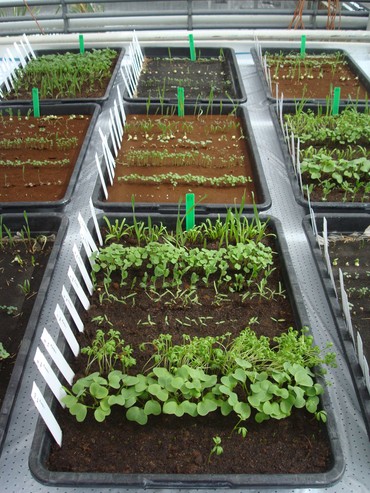
The research being done at Wageningen University for the Mars One project has successfully grown vegetables in simulated Martian soil. But could earthworms survive and thrive in this medium? That’s what a team at Wageningen decided to find out. Instead of human excrement to fertilize the soil, the researchers used pig manure. Then they added earthworms.
States Wieger Wamelink, one of the researchers, “Clearly the manure stimulated growth, especially in the Mars soil simulant, and we saw that the worms were active. However, the best surprise came at the end of the experiment when we found two young worms in the Mars soil simulant.”
It’s one thing for earthworms to survive in the soil. It’s quite another if they begin propagating. That’s pretty exciting for any future human who chooses to live on Mars.
Simulated Martian soil is turning out to be a pretty good growth medium if you add organic matter (poop). To date, the researchers at Wageningen have grown green beans, peas, radishes, tomatoes, potatoes, arugula, carrots and garden cress. If you are a salad lover, you need not worry when you get to Mars. All you’ll need to bring is the Ranch dressing.
An additional note: when we bring earthworms to Mars will we rename them marsworms?

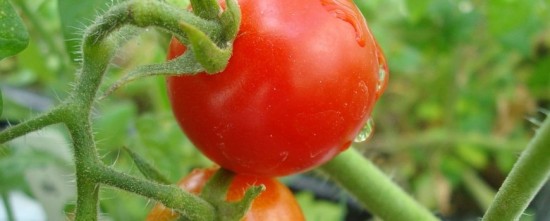
At Wageningen University, The Netherlands, researcher Wieger Wamelink harvested a crop of radishes, peas, tomatoes (see the first Martian tomato in the image below) and rye grown in both simulated Martian and lunar soils. The yields were comparable to what we can grow here on Earth. But the jury remains out on whether these harvested foods are edible.
Why?
The simulated soils gathered from Hawaiian volcanoes for Mars and the Arizona desert for the Moon contain heavy metals including lead, cadmium, mercury, iron and arsenic. How much of these potential poisons get taken up by the plants’ stems and leaves and how much by the edible fruits and seeds? Until now anything grown in these simulations has remained uneaten. But Wamelink hopes through a crowdfunding campaign to produce a new crop from his simulations and then test the yields for edibility.
The plan is to work with peas, tomatoes, radishes and two other crops replicating growth cycles five times. Plants would be grown in a Martian soil simulation, lunar simulation and Earth-based control medium. All will receive plant and human fecal organic matter and water in equal amounts. All planting is in a controlled underground environment with an Earth-simulated atmosphere and lighting approximating each environment. Fruit and other edible parts of each plant will be harvested and analyzed for heavy metal content.
The research will not only tell us if we can safely produce food locally for future Martian and lunar colonies, but also should help us here on Earth where farmers have to deal with marginal soils equally laced with heavy metals.
The crowdfunding campaign goal is 25,000 Euros with about one-third raised to date and two months left to go. The plan is to start the experiment in April 2016. If you want to help you can donate by clicking on this link.