The environment is in trouble, and most of the problem is caused by humanity. Our oceans, a primary source of oxygen, food, and medicine, are polluted with plastic and other waste materials. The one bit of good news is that people now want to do something about it. The same technological progress that polluted our waters in the first place has the potential to help us save them.
Some solutions aren’t even in the realm of high tech or waiting for some future invention or discovery. In fact, with a little help from us, we can get nature to clean up polluted water coming from an unlikely source: mushrooms.
The technical term for what mushrooms can do is mycoremediation.
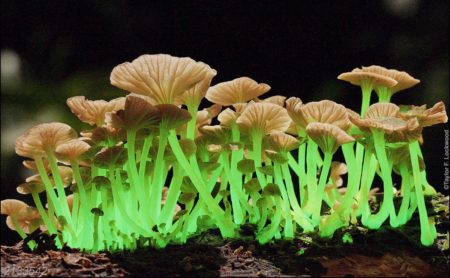
Mycoremediation is an experimental bioremediation technique that utilizes mushrooms to clean up water pollution. In this process, the natural enzymes in mushrooms are used to degrade foreign matter. They break down pollutants and turn them into products like fertilizer.
The mushrooms that we see above ground aren’t involved in this process. It is the mycelium network of filaments underground, called hyphae, that secrete the enzymes that turn toxic matter into nontoxic soil.
The pollution in our oceans is already causing extreme problems, from animal deaths to the spread of diseases. Even humans are indirectly consuming plastic, mercury, and lead dissolved that has washed into the ocean from human activity on ships or on land. DEHP, chemicals found in microplastics, are known to cause asthma and reproductive problems.
Researchers at Ocean Blue, a nonprofit organization working to conserve the oceans has been looking at the properties of mushrooms and fungi since 2014 as an ocean remediation solution. They are not alone. Some municipalities have started researching mushroom use for environmental cleanup and Northern California has been using them to clean ash from streams and waterways following 2017 wildfires.
Researchers at Utrecht University in The Netherlands have discovered 50 more species of fungi that can be used to clean polluted sites. Their current task is to find the specific conditions for each of these species to perform optimally.
There are two main roadblocks, however, to mycoremediation as an environmental cleanup solution. The first is time. Mycoremediation isn’t fast. It’s a long-term solution with the process taking days, months or even years depending on the extent of the damage. Bioremediation may not fit in with the timetables that those who hire cleanup operators demand.
The other problem is the cost. Developing mycoremediation on a large scale needs funding that many aren’t willing to pay because of the slow process. If the byproduct of cleaning water can have value, then perhaps investors will be more willing to spend money on the process. That’s why Ocean Blue is making the effort to try and get a return on investment from the byproducts of mycoremediation.
There isn’t a whole lot the average person can do to boost mycoremediation except for doing volunteer work. Sadly, there isn’t a lot we can do about the plastics already in our oceans. What we can do, however, is prevent more pollution from entering the environment and making an already bad situation much worse. Limiting plastic and other human-generated environmental pollutants is a key step in the process while we let mycoremediation do its thing.
]]>And now, based on a study just published in The Proceedings of the National Academy of Science (PNAS), evidence of life has been found in rock samples from a deep-sea drilling expedition near the Mariana Trench in the Pacific, the deepest spot in the ocean. These new samples, although found just under the seabed, appear to have come from deep in the Earth’s crust pushed to their present location by the activity of a mud volcano. The sample presence of serpentine, a mineral found in deep subduction zones on the edge of tectonic plates, lends credibility to the hypothesis of an origin far from where the samples were gathered.

The paper describes what was found stating “the similarities between the molecular signatures identified in the clasts and those of bacteria-derived biopolymers from other serpentinizing systems hint at the possibility of deep microbial life.” The authors further state the discovery is on “an order of magnitude deeper than the…serpentinized Atlantis Massif oceanic core complex….These types of protected ecosystems may have allowed the deep biosphere to thrive, despite violent phases during Earth’s history….and global mass extinctions.”
So what is going on? It appears that the energy from the interaction of plates at a subduction point is producing heat and pressure and an environment suitable for anaerobic microbes to thrive in the absence of oxygen. That energy produces a form of volcanic activity which releases belches of hydrogen and methane along with mud. The gasses make for good conditions for anaerobic microbes. The scenario is somewhat similar to the recent NASA reporting of outgassing of hydrogen, water vapour, and organic compounds from the surface of Saturn’s moon, Enceladus, suggesting a possible presence of anaerobic microbes beneath the icy surface of that ocean world.
Finding serpentine in the drilling samples gives researchers a sense of just how far down life may thrive within Earth’s crust. Serpentine forms as deep as 20 kilometers (12.5 miles) beneath the surface. But scientists believe that at that depth temperatures would exceed the upper tolerance limit for life which here on Earth is 122 Celsius (250 Fahrenheit) degrees. So they have calculated an estimate of where these organic samples may have originated and come up with a depth of 10,000 meters (6.2 miles) beneath the surface.

Oliver Plumper, Utrecht University, the Netherlands, one of the authors of the study, when interviewed by National Geographic and the Smithsonian stated, “this is another hint at a great, deep biosphere on our planet.”
Frieder Klein, Woods Hole Oceanographic Institute, who did not participate in the theory and analysis presented by this paper states, “organic molecules definitely hint toward life, but the source of that life…is not clear yet.” Nonethless he refers to the findings as “truly remarkable.”

