The production of food on this planet is a significant contributor to carbon emissions. In their book, “Climate of Hope,” authors Michael Bloomberg and Carl Pope describe our need to eat as a big deal when talking about climate change. They write “if you add up everything – growing crops, clearing and cultivating land, producing and applying fertilizers, shipping food to customers and keeping it refrigerated until it is eaten – food is responsible for about one-third of the total greenhouse emissions each year.” Agriculture produces 30% of the total methane released annually into the atmosphere. Blame cows and rice paddies. The former excreting the equivalent of 2 billion tons of carbon dioxide (CO2) annually. The latter generates 700 million tons. And those numbers are only part of the problem. Add to this nitrous oxide emissions, another potent greenhouse gas, from excessive use of fertilizers. And then top it off with the widespread use of plowing rather than no-till practices on the majority of farms, with the resulting release of carbon, normally bound in soil and root systems, into the atmosphere where it contributes to global warming.
Knowing that our need to eat is a big deal for climate change, a new start-up company, InFarm, is converting urban indoors spaces into vertical farms. The company website proudly proclaims, “we are the new farmers and the city is our farm.” Located in Berlin, the goal is to deliver on-demand farm produce within cities by introducing the technology to grocery stores. Shoppers will literally pick their food.
The InFarm vertical farming modular system can grow herbs, lettuce, other vegetables, and fruit. Its modularity makes it scalable based on available in-store floor space. A small store could handle 10 to 100 modules. A larger store 100 to 1,000. Online grocery systems could have warehouse operations filled with living plants that could be picked daily and delivered to urban consumers.
The company is partnering with supermarket chains like Metro Cash & Carry. At its stores, the modules are providing a “perpetual daily harvest” using a rotating series of growing trays. New plantings go to the back and mature plants to the front where they can be picked and purchased.
InFarm has loaded their system with sensors that monitor the health of the plants throughout their lifecycle. Machine learning anticipates potential problems with every new plant type introduced coming with its own set of algorithms that factor in all the conditions for optimal health.

]]>
For mechanized agriculture in Europe and North America, knowledge intensive practices are already in place producing very high yields despite an overall changing climate and extreme weather events. But in the Developing World, particularly in Asia, where farming is divided among small holdings, knowledge intensive practices are just beginning. This is data-enabled agriculture using distributed field sensors, drones to provide constant images and readouts of important data such as soil moisture, field temperature, and evapotranspiration, wireless communication to mobile and tablet applications that provide small farmers with an accurate picture of their crops, and enhanced satellite imaging to further help with planning. Knowledge-intensive agriculture is also accepting of genetically modified crops which for many Developing World countries may prove to be the difference between feast or famine.
Mobile phones have become a small farmer’s best tool because it key to acquiring knowledge not just about growing crops but also marketing them. With 300 million small farms in Asia alone spread over a wide range of biomes and geography, they face diverse farming conditions with challenges that can be collectively addressed through shared knowledge distributed through the Internet. This democratizing of knowledge is the most significant positive disrupter to the world of agribusiness.
The same is true for Africa where small farms are beginning to see the benefits of knowledge distribution through the Internet. Whether a herdsman in Kenya trying to find out the latest cost of feed, to corn and cassava planters checking on potential threats to their crops, or the latest information on the spread of armyworms and new pesticide controls to keep them at bay, the new knowledge revolution in agriculture represents the best hope for a world heading for a population of 10 billion by mid-century.
Knowledge-intensive farming has also come to cities in the Developed World bringing food producers closer to urban consumers. City farms, whether on rooftops or vertically placed in fully integrated indoor environments, grow crops under far more controlled conditions than farms in the country. On rooftops, crops receive the consistent application of fertilizers and water to ensure healthy yields. In indoor farms, the light provided is artificial, as is the temperature and even the atmosphere. In some vertical indoor farms, carbon dioxide is added to the air to speed up crop growth and improve yields. Asian states and cities have seen more than 100 indoor farms launched in the last few years in places like Singapore, Korea, and Japan. And vertical urban farming is catching on in Europe and North America as well.
A more controversial aspect of knowledge-intensive agriculture is related to the distribution of genetically modified (GMO) seeds for the most commonly grown staple crops. The demonization of this very important technological advance because of the negative image of Monsanto and its marketing practices, has delayed acceptance of GMO crops. And yet, GMO in conjunction with other knowledge-intensive technologies and practices represents the best bet for a sustainable food supply as the world faces the combination of population growth and unpredictable extreme weather from anthropogenic climate change in this century.
It is indeed unfortunate that many in the environmental movement and scientific community, when it comes to GMO science, reserve judgment or condemn the technology. Yet they accept humanities manipulation of plants prior to the arrival of GMO technology through other means. Selective breeding alters plant genetics to create new crops. The difference between GMO and selective breeding is timing. Selective breeding can take years to produce a stable new food source. GMO can achieve the same result in but a fraction of the time. And current GMO practices involve significant testing of the end results in animal and other studies to ensure restructuring at the submolecular level doesn’t produce unintended consequences.
Food security should be the priority. And using knowledge-intensive farming practices and 21st-century technologies will be critical to meeting the needs of humanity at the mid-century and beyond.

This week I look at technology headlines in the fields of agriculture, biomedicine, climate change, energy, and space. Enjoy the read.
Agriculture Update: “Urbanana” Brings Tropical Vertical Farms to Paris
Greenhouse vertical urban farms are making a fashion statement in the fashion capital of the world, Paris. A French architectural company, SOA, has designed a six-storey annex-styled greenhouse that can fit between existing buildings on the main thoroughfares of the City. Called Urbanana, a combination of urban and banana, the building is designed to grow tropical fruit year round. This is not SOA’s first urban farming concept. The company has developed an Agricultural Urbanism Lab to create facilities for growing local produce in urban settings.
With over 3.5 billion of us living in cities today vertical farming is no longer an idea but a necessity, a practical solution to supplementing the feeding of urban populations.
Urbanana has been designed to be highly mechanized with plants grown in pots and rotated on moving belts to maximize light requirements. In the concept drawing below you can see how the greenhouse has been integrated into the urban landscape. Nice curb appeal!

Biomedicine Update: Developing A Drug Chemistry Replicator
Two headlines on 3D printing technology caught my eye this week. This one involves using 3D printing to create complex chemistry. The other you’ll read about a little further down.
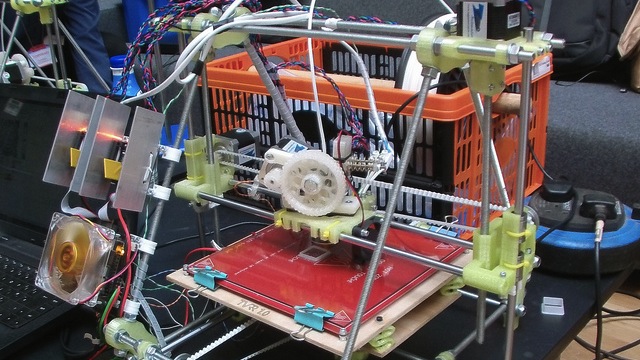
The 3D printing research being done here is by the Cronin Group, headed by University of Glasgow’s, Lee Cronin, a chemistry professor who is adapting 3D printers to become what he calls “chemputers.”
Cronin’s goal is to use 3D printing to build complex molecular chemistry. The chemputer is a prototype that can be programmed to build complex chemicals. Most pharmaceuticals are complexes of carbon, hydrogen and oxygen along with vegetable oils and paraffin. With the chemputer, drugs can be assembled from inks that reflect the chemistry of the pharmaceutical recipe. The chemputer lays down the molecules with reliable precision. The current goal is to successfully fabricate ibuprofen. Ultimately the goal is to manufacture almost any drug using a combination of a larder of chemical-based inks with an electronic recipe book for guidance.
Climate Change Update: Will Global Warming Also Damage the Ozone Layer?
In a report published in the journal Science, Harvard University researchers are studying increased atmospheric turbulence and its impact on ozone. What they are finding is violent summer thunderstorms pull large amounts of water vapour into the stratosphere causing chemical reactions with residual atmospheric pollutants. The pollutants are the legacy of CFC (chlorofluorocarbon) prior use, the refrigerant and spray can gas containing carbon, chlorine, hydrogen and fluorine, that was banned in the 1980s because it was blamed for ozone depletion in the upper atmosphere. It was CFC use that led to today’s UV weather reports with admonishments for us to all use sun screen.
The scientists who wrote this recent report were led by Dr. James G. Anderson. They looked at risks to the ozone layer from increasing storm frequency and intensity and studied a process called convective injection where water vapour rises as high as 19 kilometers (approximately 12 miles) into the stratosphere.
The IPCC (Intergovernmental Panel on Climate Change) in its reports notes that storm frequency and intensity are byproducts of rising temperatures globally. Storms over oceans such as hurricanes and typhoons have been forecasted to become more frequent and more intense. The same is true for storms over land. Although these are not equal in intensity to hurricanes and typhoons, nevertheless they create large upwellings of moist air to rise and mix in the bone dry stratosphere.

Energy Update: Trash to Energy on the Upswing
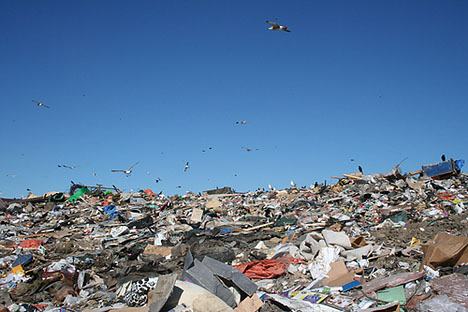
When is urban trash a good news story? Well according to Pike Research the trash we currently dump into landfill is becoming an important energy resource. The report states that more than 800 thermal trash-to-energy facilities operate today in 40 nations. The trash to operate these facilities, however, amounts to only 11% of the total municipal waste we generate annually worldwide.
By 2022 forecasters indicate that we will be converting between 260 and 396 million tons of waste each year to produce 429 Terawatt-hours of power and heat. That will represent between 10-13% of total municipal waste.
Urban trash will reach 3 billion tons by 2022. Our trash is an untapped energy resource and represents an increasingly attractive option for cities that find landfill sites reaching capacity or closing and NIMBYism (not-in-my-backyard) push back on creating new municipal landfill sites.
The largest growth for trash-to-energy is expected in the Asia-Pacific region which is forecast to account for 54% of these projects by 2022.
Space Update: 3D Printers to Fuel Made in Space Manufacturing
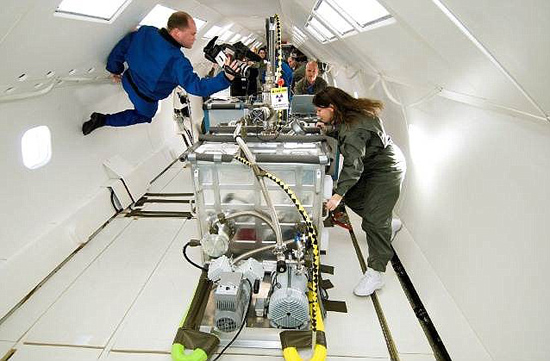
Check out Made in Space, a company in the business of creating manufacturing in space for in-space consumption. The plan is – build spacecraft and habitation components in space. Do this by using 3D printers and a wide range of space compatible materials. NASA has even developed a supergoo that can be used with a prototype electron beam fabricator, seen in the picture below.
The materials of space construction include plastics, aluminium and titanium. Building for in space for use in space is different than building for space here on Earth. When we manufacture on the planet surface we have to send the finished product into space. To do that we have to construct it to withstand the forces of gravity and the stresses of a launch. When we manufacture in space for consumption in space, however, we don’t have to deal with gravity and launch stresses. As a result we can reduce mass dramatically.
A 3D printer on board with base feedstock and a CAD program could begin to manufacture almost anything needed. A 3D printer delivered to Mars wouldn’t even need feedstock. It could use the local materials to fabricate habitations for the planet’s surface.
Currently Made in Space 3D printers are being tested on parabolic flights to simulate microgravity. The next step will place a 3D printer on the International Space Station along with some supergoo and the recipe book.
A Postscript
Find an interesting technology story, an innovation that can really make a difference for humanity and the planet in the 21st century- let me know. Currently with over 2,200 readers visiting each month it is encouraging to see the growing traffic, up 300% in the last 90 days. I thank all of you for visiting and hope you keep coming back. If you like what you read here then let others know. My personal goal is to have 10,000 visitors each month by year’s end. I’m hoping you can help me get there. – Len Rosen
]]>