Hai Zhang, a professor of restorative dentistry at the University, along with several colleagues has found a way to generate ameloblasts. What are they? Ameloblasts are one of two cells that exist in human embryos responsible for the formation of our teeth. The other cells are called odontoblasts—the former secrete enamel, the latter dentin.
The process of tooth development is called odontogenesis. The two cells mentioned above are critical to tooth formation. Enamel keeps our teeth surfaces hard and strong throughout our lifetimes. Mineralization of teeth begins early in embryonic development. Dentin precedes enamel production, both critical to giving us a healthy set of choppers.
But life has its travails. What we eat and chew causes the enamel surfaces of our teeth to wear thin, crack and decay. And because it is embryonic cells that form the enamel and then die out once our teeth have been produced, we have no biological means to repair them.
Researchers decided to take on the task of trying to create these lost before-birth enamel-producing ameloblasts. To do they used single-cell combinatorial indexing RNA sequencing or sci-RNA-seq. This technique reveals which of the genes in a cell are active in sequence during development.
The RNA molecule is the letter carrier of the cell while genes are the letter writers. Hence the term messenger RNA or mRNA (a term for which many of us have become more familiar from mRNA COVID vaccines), the molecule that carries the instructions to assemble proteins which serve as the letter reader and construction crew in our analogy. Changes om levels of mRNA differ during stages of embryonic cell development which determines which of our genes are sequentially activated.
What the University of Washington researchers were able to do is track each gene activation stage and create a roadmap to develop ameloblasts from undifferentiated stem cells using a software tool called Monocle. The software was able to predict the biochemistry sequence to test on stem cells. They exposed the cells using computer-designed proteins and chemicals. The latter activated different genes in sequence to create the final roadmap. While doing the work on ameloblasts they uncovered another cell type, subodontoblasts which may precede the development of odontoblasts.
The end result was the stem cells were induced to create multicellular mini-organs called organoids which resembled the structures seen in developing human teeth. Now the team is hoping to improve the process to make enamel as durable as that found in a healthy mouth and develop methods for applying the technique to fill cavities and do other enamel restoration. Imagine a future where we have stem cells activated to fill cavities, do other enamel repair, and even replace lost teeth.
The results of the current project were published last week in the science journal, Developmental Cell.
]]>Valentine’s Day did make me reminisce about the first time I met my wife. We will be married 50 years this coming May. That first “meet cute” was over a telephone line. We were set up to have a blind date by two mutual acquaintances.
For younger readers, blind dates before personal computers and smartphones provided the equivalent service to sites like Harmony. Instead of computer programs facilitating introductions, friends or acquaintances who thought two people were right for each other would facilitate an initial connection.
I remember that first phone call. My wife’s voice instantly attracted me. Maybe it’s the musician in me but her tone and the way she sounded had me instantly smitten. When we met a week later, talking to her reinforced that same feeling. Six months later we were engaged. Three years later we married. I have known her for more than two-thirds of my life and the feeling has never gone away.
That’s why an article appearing on the University of Washington’s news website on February 9th entitled “Valentine’s Day: Love is a state of mind” intrigued me. It turns out it isn’t what the heart wants but rather the brain that drives the kind of instant connection I felt back in December of 1969 on that first telephone call.
Larry Zweifel, (watch the YouTube video), is a professor of psychiatry and behavioural science at UW Medicine. He comments, “Love is the result of chemical changes that happen in the brain when we meet someone and feel that connection. There are long-term changes in our brain when we connect with someone that links us to those individuals, sometimes for life. I think that’s tremendously fascinating.”
Zweifel explains how our brains and body receive chemical signals set off by social feedback and initial situational responses such as meeting someone or talking to them for the first time. If our brain likes what it sees or hears the first reaction is a surge of dopamine, serotonin and norepinephrine, chemicals that push us to engage or arouse us. He goes on, “Your brain is like, OK, I can approach this person and they’re receptive, so in the future if I see this person again, I know that I can approach them and talk to them.”
What follows the initial meetup can be a touch, a holding of hands, a first kiss and even more chemistry, the release of a neuropeptide, oxytocin which is a neurotransmitter that reinforces emotional bonds. Zweifel says oxytocin rewires our brains “so that now we have an emotional attachment to that individual.”
Does Valentine’s Day produce all that chemistry? The commercial creators of this annual event wanted to sell greeting cards and chocolate. The unintended consequence is increased stress felt by many during this heart-themed holiday.
It impacts the brain of those who are unattached and those who in their current pair-bonding relationships are challenged by financial or behavioural circumstances. Zweifel notes that “if something causes stress, it’s going to reduce those reinforcing and rewarding signals that are motivating us to socially interact with the people that we care about. It can actually have the opposite effect.” When under stress our bodies release cortisol and adrenaline. So I hope your Valentine’s Day was a dopamine, serotonin, norepinephrine and oxytocin day and not a cortisol and adrenaline one.
]]>With Aedes aegypti, it is the female of the species that does the biting drawn to us first by visual cues and then as it nears by the exhalations of carbon dioxide (CO2) from our bodies, and by our skin heat and odour. But what if scientists could introduce a mutation that would impede the insect’s ability to see us from afar?
That’s what Yinpeng Zhan, from the Department of Molecular, Cellular, and Developmental Biology and the Neuroscience Research Institute, University of California, Santa Barbara, and Diego Alonso San Alberto, Claire Rusch, and Jeffrey Riffell from the Department of Biology, the University of Washington in Seattle have been working on using CRISPR-Cas9, the DNA editing tool.
Targeting two specific genes, Opsin1 (Op1), and Opsin2 (Op2), of the five responsible for light-sensor receptive proteins, known as rhodopsins, they were able to create genetically modified versions in an experimental group of mosquitoes. They did not tamper with the remaining three genes responsible for vision, or those responsible for olfactory or thermal sensing. The hoped-for result was the creation of a new version of the mosquito less capable of vision-guided flight to target humans. In other words, making us nearly invisible.
Aedes aegypti are daytime biters usually flying in search of prey around dawn and dusk. They use their sight during flight to find targets, and in particular, those that are dark clothed. This visual attraction from afar, when combined with olfactory and thermal cues picked up as the mosquito gets close, serves to navigate mosquitoes to their targets.
Wind tunnel testing of genetically modified females with mutated Op1 and Op2 rhodopsin-protein generators, against a control group of unmodified ones and under varying light conditions, produced results that showed the modified mosquitoes displayed no preference for dark or white targets. That, however, was not true for the unmodified control group that bee-lined to the dark ones.
The mutated mosquitoes’ olfactory and heat receptors remained unaffected, as did their remaining optical sensors. And testing also showed that the mutated mosquitoes could still see, but in flight were less visually perceptive.
Meanwhile, experiments with both mutated and unmutated groups showed equal responses to a combination of black targets in the presence of a 5% CO2 plume. But mutated mosquitoes had no preference for targets, either white or black, in the presence of CO2.
With both mutated and control-group mosquitoes, once they had landed on a target, had no trouble navigating while walking to a place to bite. The researchers concluded that elimination of the normal Op1 and Op2 genes and replacing them with mutations diminished light sensitivity during flight, solely, “below a threshold required for vision-guided target recognition.” Their research appeared in the July 30, 2021 edition of the journal, Current Biology, in a report entitled, “Elimination of vision-guided target attraction in Aedes aegypti using CRISPR.”
What are the implications for humanity? The Aedes aegypti mosquito infects 400 million humans globally and kills more than 700,000, a disproportionate number of them children, every year.
]]>They have created a website, Which Face is Real, as a means to illustrate our current dilemma, separating fact from fiction. You are given two faces pictured side-by-side and asked to pick the one that is real. You can continue testing your skill in discerning the real from the fake or drill down into learning more about the ideas represented in the course.
The Calling Bullshit site states, “The world is awash in bullshit. Politicians are unconstrained by facts. Science is conducted by press release. Higher education rewards bullshit over analytic thought.” The course aims to teach students to spot what’s fake, and what are lies including that which comes “clad in the trappings of scholarly discourse.” But even of greater concern is the disinformation that comes from algorithms designed to parse big data and produce computational bullshit.
It is much easier to discern the fakery in advertising than the bullshit in an editorial from a national newspaper, or an “expert” spouting “facts” in a YouTube segment or TED Talk. The same is true about discerning the truth in scientific journal publications, of which I read many. Data is fudged. Clinical trials are skewed to favour an end result desired by the researcher rather than reporting the truth. Biopharmaceutical companies are notorious for delivering this type of bullshit.
Bergstrom and West have compiled a set of tools and tricks to help discern fact from fiction. These include:


The “Calling Bullshit” course is one I would like to take because even in the research I do to create the content here I have found myself questioning the authenticity of research papers I read and describe. Occasionally readers have pointed out misinformation derived from these sources. I appreciate this level of scrutiny.
]]>How can convolutional neural networks assist in the study of the association between the built environment and obesity prevalence?
In modeling the built environment of a group of select cities including Los Angeles, Memphis, San Antonio, and Greater Seattle (Seattle, Tacoma and Bellevue), they developed a deep learning algorithm for a convolutional neural network which then examined 150,000 high-resolution satellite and Street View images from Google. Data on adult obesity rates on these cities, obtained from Atlanta’s Center for Disease Control and Prevention, was used to quantify the association of urban features within the images. When the algorithms were applied the neural network was able to accurately determine rates of obesity based on the type of urban infrastructure.
Some interesting data points emerged. Areas near pet shops had lower obesity rates because of a higher density of dog owners meant more people were taking walks. Where there was higher amounts of green space between buildings, obesity rates were lower.
In their paper, the authors describe a study entitled the “Global Burden of Disease” in which it estimates that more than 603 million adults globally were defined as obese in 2015. The study further noted that a third of the U.S. adult population was obese and that 46 U.S. states had obesity rates exceeding 25%.
Obesity reflects lifestyle as well as genetics. The lifestyle issues are about the physical environment, levels of activity, and food choices. There is also a correlation between obesity rates and low income.
The application of creating a software algorithm, in association with a neural network, to study adult obesity levels in built-up urban environments, could lead to changes in the creation of future city infrastructure. Rather than time-consuming on the ground surveys, and data collection for city hospitals and physicians, this software AI approach where existing data and images serve as a shortcut yields meaningful data for urban planners and city governments.
One caveat. The AI algorithms developed by these University of Washington researchers are specific to the U.S. and unlikely to be relevant in other parts of the world without adjusting for specific factors in those urban localities. Nevertheless, it demonstrates what AI is capable of doing with distinct advantages over other forms of data parsing particularly when applied to enormous volumes of non-specific data such as satellite imaging. Who would have thought an overhead shot of a city could tell you where obesity rates are highest?

Creating a machine learning AI tool could be the best way to combat this online phenomenon. It might even become a downloadable app that we can all use to weed out so much of the garbage being spouted by hackers and cyber miscreants.
In recent weeks I’ve come across two attempts to create applications that can help all of us tell the difference between a friend request from a fake Facebook or other social media account, and planted fake stories.
The social networking machine learning algorithm was developed by researchers from Ben-Gurion University in Israel and the University of Washington in the U.S. The algorithm when finding fake social media accounts on one app correlated them to additional social networking apps. For example, it could discern that if it found a fake Facebook friend it was likely to find the same fake identity on your Twitter, Yelp, Instagram, and others. Testing was done on 10 different networks. They explain how the machine learning AI works in a paper published in the journal Social Network Analysis and Mining this month.
As for others machine learning AI developments, Aaron Edell, Co-founder and CEO of Machine Box Inc., invented an AI algorithm with better than 95% capability of knowing the difference between a real news story and one that is fake. Combining natural language processing and exposing the algorithm to real and fake news. A great source for the latter was The Onion, the iconic, satiric, online source of comedic fake news. For the real news, Reuters proved a useful training tool. With the machine learning AI exposed to thousands of news stories, it was its ability to recognize the real stories that ended up being the key to discerning the remainder as fake.
The fake news application is now available. It is called Fakebox and you can download it.
So what does the app do? Fakebox checks the following aspects of an article.


What are the implications? For home use it gives users the ability to monitor their hemoglobin levels. This is important for example for home monitoring to during pregnancy to ensure that an expecting mother isn’t experiencing anemia. In blood donor clinics, the app could replace the pin prick blood analysis done as a pre-screening test. In many Developing World countries anemia is a persistent and chronic condition that often goes undiagnosed. A test like HemaApp could identify the condition and monitor the effectiveness of treatment without elaborate on-site laboratory testing.
Current accuracy of the test shows sensitivity and precision of 85.7% with an LED light and 76.5% with incandescent external lighting. These results compare favorably with current FDA approved noninvasive hemoglobin measuring devices.
The goal of the University of Washington team is not just to identify anemia but to use the smartphone as the one ubiquitous platform loaded with apps for screening a wide range of diseases and medical conditions. This is an ideal way to deliver improved medical diagnostics for Developing World countries where laboratories equipped with myriad devices can be cost prohibitive.

Seen above, the graphic for a paper presented and declared the best, at this years International Joint Conference on Pervasive and Ubiquitous Computing, the University of Washington authors show just how HemaApp works.
HemaApp bombards a patient’s finger with different light wavelengths from visible to infrared and creates a series of videos. It uses its software to analyze how colors are absorbed and reflected across these wavelengths to detect hemoglobin levels and other blood components like plasma. It uses processing algorithms to eliminate the variable of different skin tones, body mass and physical characteristics of the patient’s finger.
States senior author, Shwetak Patel, Washington Research Foundation Entrepreneurship Endowed Professor in Computer Science & Engineering and Electrical Engineering, “new phones are beginning to have more advanced infrared and multi-color LED capabilities….but what we found is that even if your phone doesn’t have all that, you can put your finger near an external light source like a common light bulb and boost the accuracy rates.”
Next steps involved wider testing to improve accuracy rates. Of particular interest for Sub-Saharan Africa and for Afro-American patients is using HemaApp to help screen for sickle cell anemia.
The authors caution that HemaApp as of yet is not a replacement for more accurate blood tests that involve drawing a small sample for analysis.
]]>Named by Massachusetts Institute of Technology as one of the breakthrough technologies of 2016, a new form of Wi-Fi will be unveiled in the next couple of weeks at NSDI ’16, in Santa Clara, California. This annual three-day symposium, representing the Advanced Computing Systems Association, will be the setting where Passive Wi-Fi will be demonstrated to the research and industry leaders in the fields of computing and Internet connectivity.
Passive Wi-Fi is the invention of a team of University of Washington researchers. In a paper to be presented at NSDI, the team will not only speak about but demonstrate the technology. The researchers set out to prove that Wi-Fi transmissions could be achieved using very little energy.
Those of you who use Bluetooth will ask how is it different?
Bluetooth is a low-energy technology for enabling inter device wireless communication. Passive Wi-Fi works similarly but at speeds 11 times faster than Bluetooth while using only one thousandth the power.
And compared to normal Wi-Fi, like the technology I have here in my home, we are talking one-ten-thousandth the power.
How does Passive Wi-Fi work?
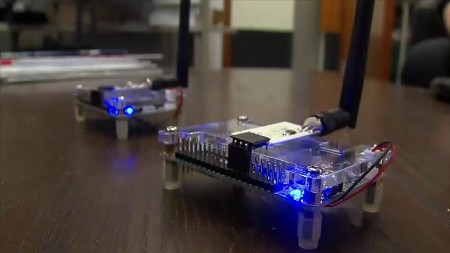
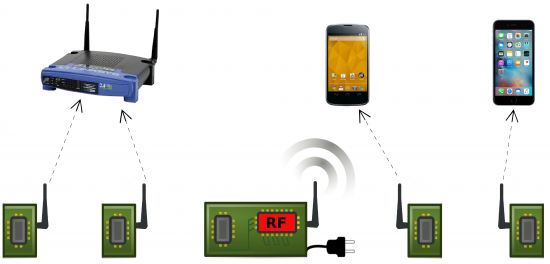
In traditional Wi-Fi every device has both digital and analog radio frequency technology on board. But Passive Wi-Fi only requires its communication Wi-Fi devices to have digital on board. The Wi-Fi power intensive function only exists with one plugged-in device. It continually broadcasts the Wi-Fi signal. The Passive Wi-Fi devices (see image below) use reflections of the signal and converts these to packets which are transmitted to any Wi-Fi receiving device such as a smartphone. Any Wi-Fi enabled device as far away as 30 meters (100 feet) can communicate with others. The signal can even travel through walls. The Passive Wi-Fi sensors can harvest energy from other radio frequency signals such as those produced by radio broadcasts and television.
So what kind of devices can use Passive Wi-Fi?
You name it: routers, smartphones, tablets, smart thermostats and more.
States Vamsi Talla, one of the inventors, “all the networking, heavy-lifting and power-consuming pieces are done by the one plugged-in device….the passive devices are only reflecting to generate the Wi-Fi packets, which is a really energy-efficient way to communicate.” This low energy way to communicate changes the Wi-Fi playing field opening up enormous possibilities for the Internet of Things (IoT). For smart homes it means only micro-watts of energy will be needed to control all the smart devices within them.
The inventors have launched a company called Jeeva Wireless to commercialize their communication breakthrough.
Fusion power requires lots of heat to create an ionized plasma. To contain the plasma you need a strong magnetic field. Since 2006 an international group has been trying to build the ITER Project, a reactor with these features. It is, however, based on current timetables, not expected to be ready until 2027. And it is expected to cost many billions of dollars more before finally operable. The figure now is approaching $50 billion U.S.
As ITER sucks more research and engineering dollars from partner governments and university budgets, some academics and energy businesses are seeking cheaper alternatives to commercial fusion reaction. But it is fundamentally hard to create and contain the Sun on Earth. Why I say this is because that’s what a fusion reactor is all about. It is the recreation of the power that drives the Sun.
In fusion reactors we heat up hydrogen or other element isotopes (deuterium, boron or helium-3 for example), stripping them of electrons and creating a plasma which we then compress using powerful magnets. The nuclei of the hydrogen then fuse and in the process release excess amounts of energy.
But what the Sun does naturally, because solar fusion can be contained by the star’s immense gravitational field, we, here on Earth, must mimic by using external containment provided by powerful magnets. Is ITER and its design the only way?
Thomas Jarboe and a group of researchers at University of Washington in Seattle don’t think so. They are attempting to build a much smaller fusion reactor that costs 1/10th the price. Jarboe is pictured here with a prototype of his reactor. The schematic drawing to the left provides a good illustration of the device he and his team are building.

Jarboe, a professor of nuclear engineering and Director of the Plasma Science and Innovation Center at University of Washington, is collaborating with Princeton’s Plasma Physics Laboratory on this experimental fusion reactor which they call a Spheromak. In their research they have discovered they can create a stable contained plasma using 1% of the energy required by a device like ITER.
TheSpheromak resembles two coffee mug handles surrounding a wheel, a far far different appearance than ITER which uses a tokamak design (see below).

Two decades of research have gone into Spheromak’s design which Jarboe believes will be far more efficient for containing plasma. That’s because the two mug-handle-shaped coils generating alternating currents on either side of the central core create what is called an imposed dynamo current drive. This creates a sustained closed magnetic field within which the plasma is contained.
Right now the reactor is a small laboratory-sized device and its size presents a problem. It is far too small to fully contain all of the plasma within it and some escapes as gas. That’s why the researchers want to build a larger version where they believe the size will solve the plasma leak problem. Total cost – approximately $2.7 billion U.S.
The United States Department of Energy is putting money into the project which is more than can be said for ITER this year. The U.S. Congress voted not to make its annual contribution to the multinational project.
The focus was finding a way to get a robot to learn the best way to complete a task, not by repetitive teaching, but by exposing it to online sources showing hundreds if not thousands of people doing similar tasks. The robot observed and translated that into completing assigned tasks. And the robot chose well, picking what would amount to best practices.
Why does this work? Because robots have computer minds, and computer minds like lots of data in which to model solutions for problem solving. So the bigger the crowd sourced the more data the robot can analyze and the better it can produce. This best mimicry approach was called “goal-based imitation” by the university researchers.
The online community came from Amazon Mechanical Turk, a crowdsourcing site.


