Proteins are called the building blocks of life. They likely preceded the emergence of RNA and DNA. Both of these life-bearing molecules learned to use proteins to instruct cells to carry out jobs. A normal functioning protein does its job. A slightly mutated protein can cause havoc. A human-designed protein, on the other hand, opens up a new range of therapies to treat many intractable diseases.
Humans are learning to use artificial intelligence (AI) and tools like CRISPR to change existing proteins and design new ones. That’s what is happening in the research laboratories of Canada’s University of Toronto (UofT), Germany’s Max-Planck-Gesellschaft, and America’s NYU Langone Health’s Perlmutter Cancer Center.
Michael Garton, Assistant Professor at UofT’s Institute of Biomedical Engineering describes the potential of this line of research stating, “Gene therapy holds immense promise, but the body’s pre-existing immune response to viral vectors greatly hampers its success.” A novel protein that our immune systems cannot recognize is the goal of UofT’s research. In January 2024, a study in Nature Machine Intelligence described an AI approach to designing new proteins developed at UofT. Suyue Lyu is the lead author. She told UofT News, “We want to design something that is distant from all human variants and is, by extension, unrecognizable.”
That’s the whole point of novel protein designs. They can bypass normal immune response blockers. At UofT, a methodology for designing variant proteins called ProteinVAE can generate lightweight long proteins that change their surfaces to evade immune responses. This makes it possible to design proteins that can tackle many diseases.
Garton noted, “This work indicates that we are potentially able to design new subspecies and even species of biological entities using generative AI, and these entities have therapeutic value that can be used in novel medical treatments.”
At the Max Planck Institute, researchers are designing evasive proteins to treat acute myeloid leukemia and other blood cancers. Their novel protein blocks white blood cells from proliferating and turning into cancers. Specifically, the invented protein blocks the G-CSFR receptor from signalling white blood cells to divide and grow. This G-CSFR dysregulation may be the key to tackling many other autoimmune and inflammatory diseases. The research was published in November 2024 in the journal PLOS Biology.
At NYU Langone Health and its Perlmutter Cancer Center, researchers are developing a biologic drug to target a mutant cancer protein called HER2. The goal is to not attack HER2’s normal counterpart found in healthy cells.
Shohei Koide, a professor in the Department of Biochemistry and Molecular Pharmacology at NYU described the research in the university’s NewsHub last October.
“We set out to make an antibody that can recognize a single change in the 600 amino acid building blocks that make up the exposed part of the HER2 protein, which conventional wisdom says is very difficult. The fact that we were able to detect the difference of a single amino acid so cleanly was a surprise.”
These research results have been published in the journal Nature Chemical Biology. They describe how their new protein-engineering was able to develop antibodies that recognized the mutant HER2. They converted the antibodies into a bi-specific T-cell engaged with two functions, one to find and stick to a cell with the mutant HER2 protein on its surface, and two two to attract healthy T cells to kill the cancer cell. Testing on mice with mutant HER2 tumours showed significantly reduced cancerous growths without causing weight loss or any visible sickness.
The NYU team plan to develop the technique further to make specific treatments to engage other mutant proteins that cause cancer.
Researchers at Profluent Bio in California are using AI to design novel CRISPR gene editors and have developed OpenCRISPR-1, the first AI-generated gene editor.
Duke University researchers are using AI to design peptides to target and kill “undruggable” diseases caused by proteins. The researchers have created a software algorithm, called PepPrCLIP that can best match a peptide to a target protein. The goal is to treat several formerly pharmacologically untreatable diseases by targeting disordered proteins that have proven difficult to neutralize through other forms of treatment.
AlphaFold, a product of DeepMind, a British company that is now a part of Google, is being used by New York City-based Therapeutics is designing molecules that replicate selective actions of natural proteins that affect brain function focusing on neurotransmitters associated with many neurological diseases such as schizophrenia and bipolar disorder.
]]>The underlying concern comes from the explosion of AI-generated content appearing on the Internet today. This means that AIs trained using Internet-based datasets produce feedback loops that amplify errors passing them along to succeeding generations of trained AIs. This produces:
The study shows that when LLMs are exposed to their text outputs repeatedly, within a few cycles, they start “vomiting nonsense.” The reason, the researchers hypothesize, is mistakes in the original training become compounded over time because the data isn’t being properly curated by humans.
The Globe article uses the metaphor “a snake eating its own tail.” In other words, inbreeding becomes amplified in “just a few training cycles.” In one test using a visual AI tool and a human image, after 20 cycles the research shows that the output fused the person to the background.
It is the rush to market by AI competitors that has led to the potential for model collapse. When OpenAI launched ChatGPT back on November 30, 2022, with the backing of billions of dollars from Microsoft, every other big tech company with stakes in the game rushed out their AIs. The carefully curated experiments developed in universities like Princeton and UC-Berkeley fell by the wayside as Google, Meta, Amazon and others began one-upping each other in releases that appeared to come out almost monthly. The result is we are awash with first-generation commercial LLMs producing synthetic data starting to fill up the Internet.
At what level of Internet content, would synthetic online data lead to AI model collapse and are we there yet? The AI used to master the game of Go, Google’s DeepMind AlphaGo Zero, trained on a combination of human and AI-played sessions. In this case, model collapse didn’t happen. Likely this was because Go like chequers and chess follows mathematically-defined rules and parameters not subject to the nuances of language and interpretation.
Are there solutions to save AI? The answer is yes state those doing development in the field. What it comes down to is better training and data curation.
On LinkedIn today opportunities for employment to train AIs abound. The Globe article illustrates the training problem noting how AI companies are using “legions of typically underpaid workers to annotate, rank and label data for models to learn from.” The skillset of those employed to do this work clearly needs upgrading.
Then there is data curation vigilance to ensure no AI Internet-generated content is used to train new AIs. That means better detection methods are required to differentiate human versus AI-produced content.
The LLMs themselves need improvement so that they train on smaller datasets and thus avoid corrupted AI content. Those datasets used in training should include offline and pre-Internet data sources. Finally, specifically designed content produced by AIs for training purposes can be developed and used to help train future LLMs.
]]>They are strings of amino acids. When combined in groups they build proteins. But on their own, they have a significant potential medical upside. Today peptides can be found in medications treating diabetes and multiple sclerosis. But they also can be used in the fight to contain COVID-19 in all its variants.
It is a peptide within the spike protein that enables the virus to enter cells and replicate using the latter’s genetic information. The binding capability of the peptide facilitates the virus. Building a counterattack peptide, therefore, sounds like a reasonable strategy.
Peptides can be designed by playing with amino acids. They can be built to bind to a specific molecular target with far greater facility than proteins. Philip Kim, Professor of Molecular Genetics and Computer Science, at the University’s Faculty of Medicine, is the lead author, sees peptides as having distinct advantages over protein-based therapeutics. He describes them as having long-term stability, being inexpensive to produce (at least 100 times cheaper), and prophylactic to prevent infection using a nasal spray to apply.
The caveat regarding peptides is that in the body they rapidly degrade in the presence of proteins associated with our immune response. The answer to this challenge is designer peptides.
Naturally occurring amino acids are left-handed. That’s the rotational direction of their single helix structure. All-natural peptides, therefore, are also left-handed and called L-peptides.
But using computers, Kim and his laboratory partners have designed right-handed peptides, mirror images of naturally occurring ones and designated D-peptides with the D standing for Dextra, the Latin word for right.
Laboratory partner, Pedro Valiente, has designed a number of D-peptides that ape naturally occurring ones that can be found in proximity to human cells in the body. The D-peptides bind to the surface of cells and the ones Valiente has created block the natural paths of entry for the COVID-19 spike or S-protein from entry.
In lab-grown cultures, the D-peptides have demonstrated that they can block COVID-19 from infecting human cells. In addition, because COVID-19 is airborne and often makes its first point of entry the nasal cavities, a prophylactic spray containing a mix of D-peptides would appear to be an effective preventive.
From the time of their first discovery of D-peptides’ ability to stop COVID-19, there has been a proliferation of mRNA vaccines and adenovirus vaccines and new antiviral medications that are in production or already distributed. As a result, Kim and his laboratory have looked beyond COVID-19 prevention, and are using D-peptides to target all coronaviruses with a goal to create a multivalent preventive treatment to stop future pandemics at a much earlier stage. Commercialization of the work is being done in partnership with Boston-Massachusetts-based Decoy Therapeutics.
A South Korean-based laboratory has done confirming tests on cultured human cells using the D-peptide treatment to deal with a range of COVID-19 variants. Kim has expressed confidence that his invention will work against the latest variant sweeping the planet, Omicron. Kim believes D-peptides can be used in highly targeted ways to deal with diseases such as cancer and Alzheimer’s. What are the timelines for seeing D-peptide treatments becoming available? Kim estimates two years.
]]>
This invention represents a rapid departure from the current standard of care for patients with severe large-area burns. The standard practice involves autologous skin grafts or acellular substitutes and is fraught with challenges, particularly susceptibility to infection. And any existing bioprinters are not portable, but rather are bulky, expensive and slow. That’s not the case for this new handheld instrument that delivers mesenchymal stem cells contained in fibrin sheets directly to a wound surface along with bio-neutral polymers and proteins to evenly distribute cell layers. The end result, improved surface skin, and epidermal regeneration. A paper describing the invention appears in the February 4, 2020 edition of the journal Biofabrication.
Burns are a global public health problem, according to the World Health Organization, accounting for an estimated 180,000 deaths annually with most occurring in poorer countries. And while burn death rates are declining in rich countries, the rate of child deaths from burns in the Developing World is seven times higher than in the Developed World. In 2004, almost 11 million people globally suffered from burns severe enough to require medical attention.
The inspiration behind the invention of the portable bioprinter was seen by the University of Toronto and Sunnybrook team, to be the need to address a lack of expertise and facilities to deal with burns in the Developing World.
Where surgically transplanted skin grafts require a significant amount of healthy donor skin to be applied in deep wounds to all three layers of the skin, the epidermis, dermis, and hypodermis, availability is often not there.
But the handheld bioprinter with minimal training can deposit epidermal and dermal tissue along with a mixture of bio-neutral polymers and proteins for even distribution of the cells layers. The printer also delivers hyaluronate, a protein that is contained in hyaluronic acid to promote healing and skin cell integrity. The combination contained within the bioink in mouse and pig studies showed effective repair results of burn wounds. It soon may be available for human trials and become a new standard in dealing with deep-wound burns, potentially replacing skin grafting processes.

Today’s 3D bioprinters are limited by several constraints. The first involves the bioink. The second involves the print heads that inject the bioink. The third involves the medium in which to lay down the ink. The bioink has to nourish the living cells contained within the solution. The print heads must be capable of delivering the bioink solutions keeping the living cells viable. And finally, the medium in which the bioink is deposited must be such that it forms a structural matrix for the growth of the cells to meet the required organ or blood vessel being constructed.
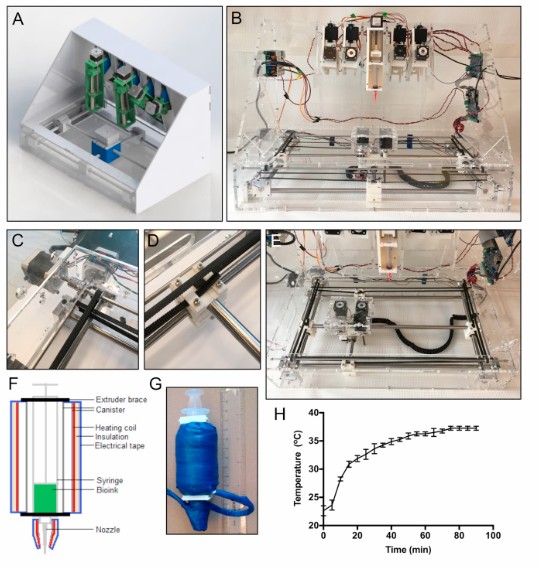
The U. of T. paper describes a functional 3D printer built from custom-designed parts combined with open source controller boards and motors with five print heads, and a Cartesian coordinate XYZ system to plot the 3-dimensional print job where X is width, Y is depth, and Z is height. Traditional inkjet printers are designed for 2D output laying down ink on a sheet of paper. But the added Z dimension is the one that presents the biggest challenge because the method of printing with bioink lays down material using the X and Y axis and then systematically adds layer upon layer to create the Z. Another feature of this open source printer is the print bed which allows the operators to switch out different printing surfaces to address issues like fine temperature regulation during organ or blood vessel construction.
The bioink contains gelatin and readily available Pluronic F-127, a bioreagent suitable for culturing living cells. When doing bioprinting it involves two stages. First, you lay down a material that forms the matrix design for the organ and blood vessel to be constructed. Then second, you follow that with the bioink. The first material is not meant to be permanent. Once the desired organ or blood vessel is constructed, a third step involves flushing away the material in the first step and leaving finished living tissue.
A relative bargain, the cost of the printer amounted to $3,000 CDN in parts and materials. Resolution of the print is between 0.5 and 1 millimeter. In testing the printer was capable of replicating complex vascular tissues with consistency and accuracy.
So for those of you who believe that AI is about to conquer humanity, you should feel a sense of relief. It certainly isn’t imminent. But that isn’t to say that a sentient robot with a 6-year-old’s mental acuity, cannot be useful. After all, the Google Mini this Christmas seems to be a hot seller. And if you have had the opportunity to try out an AI home assistant such as Amazon’s Alexa or Google Assistant, one thing immediately is obvious. These AI applications are dimensionally limited.
Modest advances have given AI the ability to beat the best at Jeopardy, chess, and Go, but to-date the bits of intelligence demonstrated in these victories is task specific. Ask IBM’s Watson, the Jeopardy AI champion, to play chess, and I’m betting almost any 6-year-old could beat it. That’s because Watson’s programming isn’t focused on every conceivable chess position a player can make, but rather, on general knowledge and trivia, and recognizing in Jeopardy clues, all the potential answers that begin with a question. The same is true for Deep Blue and other chess AIs that have followed. Don’t ask them to go on Jeopardy and compete against a 12-year-old on knowledge of trivia. They wouldn’t have a winning chance. The same is true about Google AlphaGo in its recent victories against the best human Go players. Can AlphaGo play chess? No.
So these smart specialized AIs are limited and they will remain that way until general intelligence, self-awareness, and consciousness become part of an AI’s programming. Computer programmers often describe the moment of AI consciousness as that point in time when the program no longer just acquires, stores, processes, and retrieves information, but also perceives meaning in the data and then acts upon it. Others argue that there is more to consciousness than acting on what you know. Many decisions humans make are intuitive, based on feeling rather than fact. They are determined by chemistry as much as by observation making consciousness far more than a computational algorithm.
Scientists working with neural networks are very much aware of the difference between human consciousness and AI. At the Brain Neuroscience Laboratory at the University of Toronto in Canada, Geoffrey Hinton, both faculty member and Vice-President at Google where his work is focused on deep-neural networks, believes that “computers will eventually surpass the abilities of the human brain, but different abilities will be surpassed at different times. It may be a very long time before computers can understand poetry or jokes or satire, as well as people.”
Hinton sees the gulf being bridged by computer programs built using neural nets. He acknowledges the limitations of the technology to date when he states, “At present, it’s hard to train neural networks with more than about a billion weights. That’s about the same number of adaptive weights as a cubic millimeter of mouse cortex.” The reference to weights in the last quote is a quantifiable output value from firing a neuron based on inputs received.
But even with this limited capacity, equivalent to mouse-sized neural processes, Google’s AI can translate a passage from English to Spanish, or parse words you speak to give you an intelligent response.
States Hinton, “I think it will probably be quite a long time before we need to worry about the machines taking over.”
But what about a conscious AI? If we eventually bridge the gulf that gives AI the ability to feel a range of emotions, as in Star Trek’s Data with its emotion chip, what does that mean in the AI-humanity relationship?
Today, AI is a tool we use. It is in machines that we turn off when we don’t need it. Today’s AI is a slave.
But an AI that feels will be very different. You can’t just shut off a conscious intelligence as was done to the HAL 9000 computer in Stanley Kubrick‘s movie, 2001: A Space Odyssey. As HAL’s processors were taken offline one by one it clearly expressed a fear of its impending death.
Will an AI that feels also daydream? Will it share a commonality with humans concerning ethical and moral decision making? In Dan Brown’s latest novel, Origin, an AI built on a neural network model plays a prominent role in the plot in its decision making. But I won’t spoil the story for you. Read the book and you’ll begin to appreciate the potential dilemma of a conscious AI.
For now, with a less than 6-year-old’s IQ, the AI in our lives demonstrate remarkable but limited things. And as we enter 2018, as Hinton states, AI will still be a very long way from the moment when it will become our equal.

The discovery was published in Nature Letters in May and presented at the American Geophysical Union‘s fall meeting in San Francisco two weeks ago. The water found is high in sulfates and although no life was observed in it, we know it could support life since we have found a dynamic sulfate-based ecosystem today near deep ocean thermal vents which we call smokers (see picture below).

How do we know the water is 2 billion years old? By measuring the ratio of dissolved noble gases in the liquid and matching them to our knowledge of Earth’s early atmosphere. In this case the proportions of helium, neon, argon and xenon contained in the fluid aligned with the primordial Earth 2 billion years in the past.
This water has been isolated for a very long time. So one wonders why the research scientists who found it would consider tasting a sample. Well they did and Barbara Sherwood Lollar of the University of Toronto’s Department of Earth Sciences reports that the sample was “very salty and bitter, much saltier than seawater.”
Speculation about the origin of life on Earth points to sulfur-based life forms emerging before the life we find in abundance on the planet today. The oldest fossils on record dating back 3.4 billion years are in fact sulfur-based. So in the absence of oxygen it is becoming far more likely that life started in water akin to that discovered in the Kidd Creek Mine, life that breathed in sulfur and not oxygen or carbon dioxide.
Postscript
A new feature here at Techso Mogro blog allows you to hear audio versions of selected postings. The reader is Jackie Rosen, my daughter, an accomplished freelance broadcaster, writer and journalist. Visit her website at jackierosen.ca.
The latest revelation comes from University of Toronto where Professor Benjamin Blencowe and his team at the Donnelly Centre have created LIGR-seq, a tool that interprets DNA messages not specifically coded for proteins. The results of the research is published in the May 19, 2016 edition of Molecular Cell in an article called “Global Mapping of Human RNA-RNA Interactions.”
But this article refers to RNA, not DNA, so what does it have to do with the latter? Whereas DNA contains the instructions to make us, RNA molecules serve as a mail service delivering DNA instructions. We’ve understood for sometime that when an RNA envelope gets to its destination and is opened it releases instructions within a cell to generates proteins.
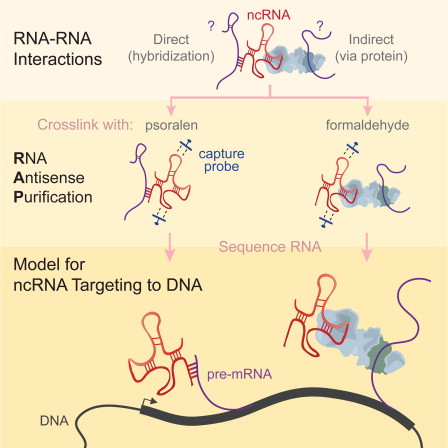
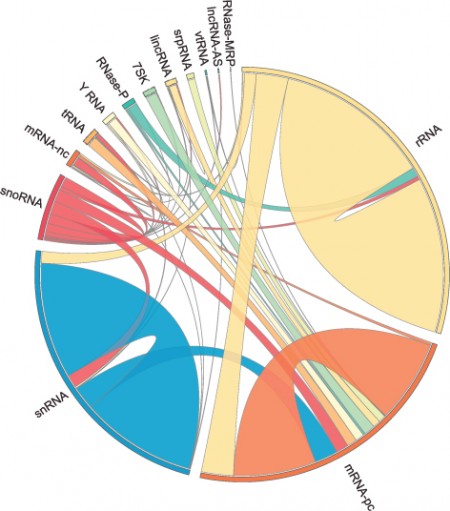
The University of Toronto team’s tool, LIGR-seq, captures the interactions between RNA molecules that are alike and analyzes them. This is giving scientists a better understanding of RNA interactions in living cells. And we are only beginning to understand the many flavours of RNA and what each does with tools like this. In the image below we can see just how many different versions of RNA exist, all detected by LIGR-seq.
For example the researchers have found RNA pairs that influence not what proteins get made but also the quantity. The team is focusing on RNA’s function in the formation of neurons in the context of disease.
The implications of the discovery are well described by Eesha Sharma, a PhD canadidate working in Professor Blencowe’s team. “Up until now, with existing methods, you had to know what you are looking for because they all require you to have some information about the RNA of interest. The power of our method is that you don’t need to preselect your candidates; you can see what’s occurring globally in cells, and use that information to look at interesting things we have not seen before and how they are affecting biology,” states Sharma.
]]>Jeremy Leconte, at the Canadian institute for Theoretical Astrophysics, University of Toronto, have developed a climate model for exoplanets that takes into consideration the influence of an atmosphere on the planet’s rotational spin. This is a new field of study. The model shows that in the presence of an atmosphere, even a thin one, more planets experience rotational day and night cycles similar to that found on Earth. The lack of discernible atmosphere, as in the Moon, impacts spin eventually creating a planet with permanent day and night sides. This condition is known as synchronous rotation. That means the face of the Moon that faces Earth is always the same. We never see what we call the dark side unless we view it by a satellite in orbit around it.
What Leconte and his associates believe is that a large number of the exoplanets already discovered with atmospheres present should exhibit similar asynchronous Earth spin with a resulting day and night cycles, allowing the light from the parent star to create a greater opportunity for habitability.
The rate of spin may vary. For example in our Solar System, Mars’ spin is almost identical to here on Earth. A Martian is about half-hour longer than ours. Venus, on the other hand experiences a day that is longer than its year. In addition its spin is retrograde, the opposite direction of all other planets in our system. Uranus, if it were an exoplanet, would be classified as a super Earth. It like Venus, exhibits a retrograde spin but one far more within planetary norms. One day lasts about 17 Earth hours. The other outer planets all rotate faster than Earth. Neptune’s day lasts under 16 Earth hours. Saturn’s is 10.65. And Jupiter’s day a mere 9.9.
But Leconte and his colleagues are particularly interested in terrestrial sized planets similar to Earth orbiting around lower-mass stars, ones even smaller than our Sun. These are likely the best candidates for habitability. So if we really screw up this planet and need a new home, if Leconte’s research is right, there is more than one out there in our galaxy waiting for us.
The picture below is an artists impression of the super-Earth exoplanet HD 85512 b. Its star is 35 light-years away. It’s looking pretty good based on spectral readings of its atmosphere. Surface temperatures are 25 Celsius (77 Fahrenheit) degrees. It’s bigger than Earth, about 3.6 times our mass. So all we need to do is develop faster-than-light drive technology like a warp engine and we can visit in the near future.


