It is obvious that we can’t go without quality building materials for the buildings we live and work in, but we need to be looking at what we source and make more environmentally sound choices. That’s because we are in a race against time to decarbonize to keep Earth’s atmosphere from warming above 1.5 Celsius (2.7 Fahrenheit). That means we need to be changing cement, described as “the most mass-produced human-material on earth.”
The Institute of Industrial Science at the University of Tokyo has been working on a variety of formulations to discover one or more that can remove CO2 emissions from cement which is mostly made of sand. But surprisingly, the sand used to make it is in limited supply.
How could that be when you see an abundance of the stuff on beaches, dredged from the sea bed, and in deserts around the world? But all that sand isn’t uniform in consistency, and uniformity is critical to conventional cement to provide the right consistency for concrete.
What are the alternatives to sand? Cement experimenters have tried fly ash left over from coal-fired powerplants, and slag, the remains that come from the smelting of steel. The problem with both of these is a lack of consistency and uneven supply. Others have been experimenting with silica sand, glass beads, desert sand, and even simulated lunar regolith. The recipes they create combine these materials with alcohol and a catalyst to produce a binder that yields construction-grade concrete. And yet again, another project is using the crushed remains of demolished concrete structures.
There is nothing new about repurposing materials from older building sites. Humans have been doing this throughout history. The columns of Greek and Roman temples were looted from their ruins and used to grace the churches of the Medieval World. But in the 20th century we went through a period in which everything built had to come from newly sourced materials. Only recently have we saved the facades of older buildings to incorporate them into new construction.
Using crushed concrete from demolished sites when turned into a powder and mixed with a calcium carbonate solution is proving to produce a durable cement capable of withstanding heat and cold, high and low humidity, and the corrosiveness of carbonation which I have previously written about related to the recent collapse of the Champlain Towers in Surfside, Florida.
The findings of a group of University of Tokyo researchers, published recently in the Journal of Advanced Concrete Technology, describes the formulation and advantages of crushed concrete in cement. The authors of this new calcium carbonate concrete (CCC) estimate that if it were substituted in the production of cement, would reduce the total amount of GHG emissions in the atmosphere by 2%. CCC is a combination of concrete waste powder mixed with a calcium bicarbonate solution. In its formation it more closely resembles how limestone is naturally created here on Earth. It would be a carbon negative construction material and help us to mitigate atmospheric warming.
]]>

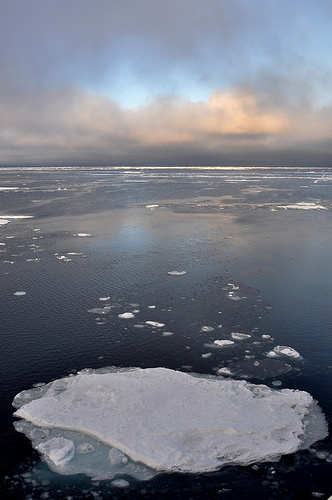
Is the pace of a melting land-based ice on Greenland and the trend of declining Arctic sea ice responsible? As one climate scientist recently stated, “What happens in the Arctic doesn’t stay in the Arctic.” And climate models are confirming this.
According to a study by the Atmosphere and Ocean Research Institute at the University of Tokyo, there is a distinct connection between freaky cold weather in the Northern Hemisphere and Arctic ice loss. The study appeared in the journal, Nature Geoscience on October 26, 2014. Its conclusions, that global warming is doubling the risk of extreme winters in North America and Eurasia. The study involved simulations from 22 climate models.
What do the simulations show?
Coincidentally the models match observed weather. Hence confidence in using them to predict likely long term climate effects.
So Toronto getting a blast of winter earlier shouldn’t be a surprise. And based on what the long-term weather forecasts are predicting, fall right in line with the climate models and simulations.
And scientists who do these climate simulations also point out that sometimes all we are witnessing is natural variability which may have nothing to do with sea ice decline.
Some climatologists argue that the Arctic Ocean is too small an area and the sea ice decline not significant enough to be responsible for the movement of cold air masses in the way we are presently observing. They seek another explanation, that this is just a freaky series of weather events coincident with declining sea ice cover but not caused by it. Could it be natural variability, and if not, could changes in solar radiation levels, cosmic rays, volcanic eruptions, wind patterns and oceanic heat transport be the potential cause or causes?
No scientists, however, have yet to find the smoking gun for any other explanation and until they do, the prevailing opinion is the warming atmosphere caused by greenhouse gases (GHGs) is the only clear and plausible correlation. And that the carbon dioxide, methane, and other GHGs are largely coming from human industrial and extractive processes, and not from nature.
What’s this technology all about?
A New Type of Sail
Ships will be outfitted with multiple 20-meter wide (65.6 feet), 50-meter high (164 feet) telescoping sails made from aluminum or fibre-reinforced curved plastic. The material of each sail is hollow in the centre to expand and contract as weather and wind conditions change.
A computer control system will position each sail to take advantage of maximum wind force. In simulation and wind tunnel experiments on models, the sails work effectively even in heavy cross winds. When in port the sails will collapse. At sea the sails can be partially to fully deployed based on prevailing wind and weather conditions.

Weather and Wind Tracking Technology
The control system will use weather forecasting live feeds, networked maritime navigation information from other ships at sea, on-board wind measurement including both direction and speed to optimize sail usage. Individual sail wind analysis will be combined with wind-flow analysis for the multiple sail array to ensure that all sails gain optimum value from prevailing winds.
Navigation Routes Redefined by Wind and Weather
Currently ships at sea seek the shortest distance routes to get from one port to another. Wind is not a factor in defining these routes. But that would change if merchant and cruise vessels were outfitted with these high-tech sails. Each sail equipped ship would be equipped with ocean wind forecasting technology for plotting an optimal course.
Measurable Benefits
Current model tests are built to scale to a size suitable for large merchant ships. The next step is to build a half-scale model for testing at sea before full-scale manufacturing and first sea trials on a 180,000-ton bulk carrier outfitted with 9 sails as early as 2016. Wind Challenger is a project headed up by researchers at University of Tokyo along with a number of ship builders and vessel and fleet operators.
]]>


