The company is using the inherent nature of lymph nodes and their evolutionary function, turning them into rapid bioreactors. Our lymph nodes already do this when they produce infection-fighting T-cells. But LyGenesis’ therapies turn donated organ cells into biofactories that can become a source for producing viable organs in multiple patients. The only minimally invasive procedure involved is the engrafting of the cells into a patient’s lymph nodes to begin the process of organ development.
In 2012, Dr. Eric Lagasse, who hails from The University of Pittsburgh, had his research featured in an edition of Discover Magazine. The article entitled, Big Idea: Turning Lymph Nodes Into Liver-Growing Factories described ectopic transplantation as a novel therapy allowing patients to grow a functioning liver.
Lagasse discovered that hepatocytes, which are liver cells, when transplanted into lymph nodes turned into miniature livers that could grow and function outside the normal position where livers reside in the human body. He demonstrated this ability in mouse studies which then became the basis for the biological principles behind the therapeutic treatment.
Today LyGenesis has done numerous large animal studies to help develop reproducible results in lymph node sites. The research results are published in Nature Biotechnology, Current Opinions in Organ Transplantation, and elsewhere.
The need today for human organs outpaces the availability of viable choices. More than 20 people die daily waiting for a suitable donor. In the U.S. alone, the wait list for organ transplants numbers well over a hundred thousand and is growing.
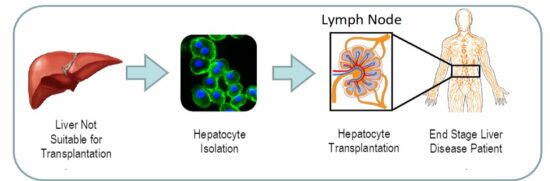
End-stage liver disease sufferers seldom are considered candidates for transplantation so they don’t even appear in the wait list statistics. But with LyGenesis, hepatocytes can be harvested even from non-transplant viable livers (see the above illustration) and grafted into patients’ lymph nodes in a minimally-invasive procedure involving endoscopic ultrasound. Once implanted the cells multiply and grow into functioning mini-livers.
So far mice and pigs have been the recipients of this life-saving technology. And in September, the company announced it had its first human volunteer prepared to try the treatment.
LyGenesis has plans for its therapeutic cell therapy to offer the technology to treat Type 1 diabetes, end-stage renal disease, aging, and autoimmune disorders. Organ regeneration will have an enormous impact on human longevity making it possible for our lifespans to extend well beyond current limits. An article appearing in Forbes back in 2021 featured LyGenesis and other life-extending technologies and asked the question, “will you live to 200?” It seems possible if humans can switch out failing organs for new good ones.
In the last week, Dr. Lagasse was presented with the 2022 Innovation Award from the Carnegie Science Center.
In Canada, colorectal cancer is ranked third in cancer occurrence and second as the most common cause of death from cancer. Early detection through screening like a colonoscopy can be your best protection. But prepping for as much as 48 hours before the test is never an enjoyable task and as a result most of us avoid baring ourselves for a half-day at a hospital or clinic where colonoscopies are performed.
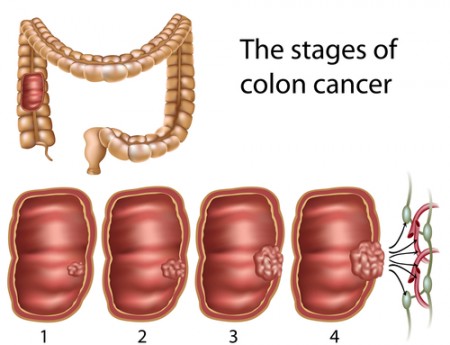
But from the National Cancer Institute of Canada, come colorectal cancer facts that you need to know:
With regular screening this is a cancer that is preventable. Researchers believe diet can play a part. High intakes of red and processed meats in the diet are thought to be enablers as they appear to be for lots of acquired diseases. So are lifestyle habits with regular exercise deemed to be a preventative. Studies at Washington University in St. Louis compared obesity, inactivity, red and processed meat intake, alcohol and cigarette smoking and concluded that 80% of colorectal cancer was preventable. The study indicated 6% attributable to red meat and 5% to alcohol consumption. Another study involving 77,000 participants showed that incidents of colorectal cancer could be cut by half cutting out smoking and drinking, and eating fish rather than any other meat.
Trying to prevent even the polyps that could indicate a greater propensity to get colorectal cancer is leading to a number of different chemotherapeutic experiments and trials.
At McGill University, Dr. Michael Pollak, an oncologist, is testing metformin, a diabetes drug that controls blood sugar levels, in clinical trial as a potential colorectal cancer preventative. The drug slows down the growth of epithelial cells in the gut, the exact of what happens when a cancer starts to form.
At University of Pittsburgh Dr. Robert Schoen, a gastroenterologist, is conducting what may prove to be the most interesting research into a colorectal cancer preventative. His clinical trial involves a three-shot protocol of vaccine designed to prime the immune system to recognize early onset colorectal cancer in patients deemed to be highly vulnerable. Dr. Schoen believes that the vaccine can be administered as a preventative or during early onset stopping the cancer in its tracks by prompting the immune system to recognize the presence of a protein, MUC1, found in colorectal adenomas. In a trial involving 40 patients who had advanced adenomas removed, the protocol boosted the immune response in almost half of the participants after a year. The trial has been expanded to multiple sites based on these initial results.
So we may have a cure and preventative for colorectal cancer in the next 5 years. That’s when I’m due for my next colonoscopy.


