
The method of communication releases molecules. One type of molecule may say “multiply.” Another may say “watch out for one of those T-cells, it could kill you.” And one may say “stop spreading.”
The research to discover this comes out of University of Missouri’s Comparative Oncology and Epigenetics Laboratory. It appears in PLOS ONE and is entitled, Bacterial Quorum Sensing Molecule N-3-Oxo-Dodecanoyl-L-Homoserine Lactone Causes Direct Cytotoxicity and Reduced Cell Motility in Human Pancreatic Carcinoma Cells. With a title like that you probably would have missed the implications of the research which involved the treating of cultured human pancreatic cancer cells with the bacterial molecule O-DDHSL. The treatment halted cell multiplication, migration and induced cellular death. In the image below the viable cancer cells appear on the left. After treatment with the O-DDHSL molecule in different concentrations and over a period of 24 to 48 hours, those same cells experienced apoptosis.

Apoptosis is not death from an external force. Instead it is programmed cell death. This happens to our body tissues over time but cancer cells seem resistant to normal cell aging. But by increasing the molecular message using this treatment the pancreatic cancer was induced to kill itself. Additional experiments with applications of O-DDHSL also decreased pancreatic cancer migration and new colony formation.
But treatment in a petri dish is not the same as treatment in a living patient. And as I read the study I didn’t get any indication whether the O-DDHSL molecule had any impact on healthy pancreatic cells. Would they have been programmed to die as well? So as interesting as this discovery is, it will be some time before this discovery finds its way from the laboratory to animal studies and then to clinical trials.
Oil is a low-surface tension liquid and can easily spread. That’s what makes it so dangerous when in contact with water. For spill boats fighting a sudden rupture at a rig such as the Deepwater Horizon, speed is of the essence. Because once the oil gets into the water it spreads rapidly and becomes almost impossible to contain. Hence those who fight oil spills use dispersants once containment is broken.
But the Missouri researchers have developed a micro/nanoelectromechanical or M/NEMS technology that works on oil and other fossil fuels at the micro/nanoscopic level. These M/NEMS can control oil droplets and guide them, confining them to a pathway chosen by those operating the technology.
The research results have been published in the journal Langmuir, a publication of the American Chemical Society.

I was told by another reader “if you think that the production of U238 fission products by transmutation in a LENR (low energy nuclear reactor) reaction is not nuclear, then you are in the wrong line of work…please educate yourself.” I’m all for educating myself so I looked up one of the terms introduced by this particular commenter – nanoplasmonics, (see image below) which I found out is the study of optical phenomena at a nanoscale. Nanoplasmonics concerns plasmons described as entities that “lurk on and below the surface of metals.” I must admit this was an entirely new subject for me and I wondered what it had to do with cold fusion and the presence of observed anomalous heat generation.
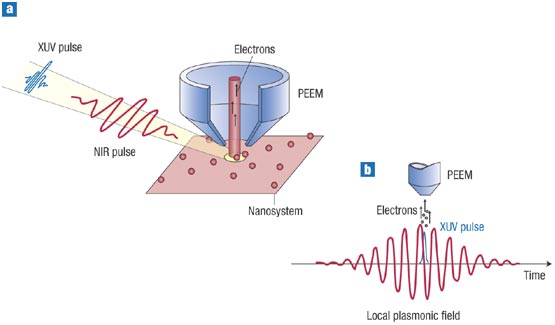
I was given a link by this same reader to a paper. Here is the link for all who are interested. In the article it states that “recent theoretical work shows the capability of laser radiation to directly excite nuclear levels of energy.” The technology described uses lasers to initiate nuclear reactions in nanoparticles suspended in liquid. This leads to nuclear decay. This phenomena is what my reader was referring to when he commented on my denial of transmutation as being anything more than alchemy. The paper goes on to state:
“If the results from works on “cold fusion” raised (and still raise) certain doubts due to their irreproducibility in different laboratories, experimental evidence on the possibility of the transmutation of various nuclei upon the laser excitation of nanoparticles and electro-explosions of metallic electrodes in aqueous solutions of salts of unstable isotopes are well reproducible. These results confirm the possibility of initiation of nuclear transformations in cold plasma.”
I won’t quarrel with the prose although it is quite a mouthful. The paper, however, goes on to describe experiments using lasers to irradiate different nanoparticles in cold suspensions and concludes that in fact transmutation is observed with the synthesis of tritium from deuterium oxide (heavy water).
Here, however, is where I have some problems. The paper is undated. In my attempts to find if it had been published anywhere I came up empty. That included doing Google searches, a search on the CERN pub site and on other journal article aggregation sites. So for the moment all I can conclude is that I have been given a document that may or may not have been peer reviewed, and may be on to something or not. But I am sure I will hear more from this reader who did ask me to educate myself and so I have lived up to the request.
Another reader also questioned my intelligence and knowledge and pointed me to the work being conducted by Defkalion, a company that has been associated with Andrea Rossi and has sought funding from the Greek government in the past. I find it funny that anyone would seek funding from a government that has itself sought a bailout from the European Union, but that’s another subject.
So what does Defkalion add to solving the mystery of cold fusion? Here is what one reader sent me although I found no reference to it on Defkalion’s web pages:
“There will be an official announcement of this technology during ICCF 18 (International Conference Cold Fusion 18) at the University of Missouri (USA). For those interested you can see this webcast of all phases of the experiment , ignition, performance and switching off. Two independent scientists and two science journalists at international level will participate in this broadcast, as well as a member of the Cicap. ”
This announcement was purported to come directly from the CEO of Defkalion, Franco Cappiello.
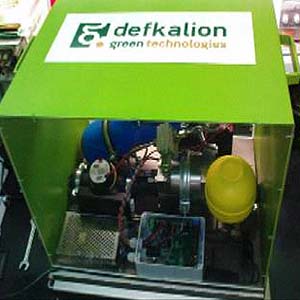
Another reader had things to say about Defkalion that were less than kind but I will let you find their comments in the postings. To me Defkalion remains a quandary. I have viewed presentations they have posted in which they describe observed transmutations from vulcanism and high-voltage accidents with the implication that, therefore, LENR is real. But I have yet to see or read about any of the supposed companies that are partnering with them to rollout OEM versions of the Hyperion (seen below), a commercial LENR product that has been promised on several occasions.
For those of you seeking answers to the mystery of cold fusion and the anomalous heat observations I would recommend you either attend the upcoming ICCF-18 Conference at the Columbia, Missouri campus of University of Missouri taking place next week (July 21-27) or research the presenters and get access to the papers they submit.
I will leave you with a quote from the document ascribed to the keynote speaker who is presenting at the conference.


