The latest speculations about how life began on Earth are leading to new origins-of-life research with a tongue-twisting title, “Evolution of complex chemical mixtures reveals combinatorial compression and population synchronicity.” An article appearing in February 2025 in Nature Chemistry written by researchers at Hebrew University in Jerusalem, and the Georgia Institute of Technology experimented with a chemical evolution model. The authors write:
“We used water as a chemical reactant, product and medium. We leveraged oscillating water activity at near-ambient temperatures to cause ratcheting of near-equilibrium reactions in mixtures of organic molecules containing carboxylic acids, amines, thiols and hydroxyl groups.”
The researchers used different mixtures of organic molecules and subjected them to repeated wet-dry cycles to mimic what the early Earth environments were like. They hypothesize that chemical systems underwent continuous evolution and self-organized over time, bridging the gap between prebiotic chemistry and the first biological molecules.
The ramifications for synthetic biology and nanotechnology are enormous for developing new materials, drugs and biotechnology.
Not to be outdone, genetic scientists at the University of Arizona have posed a new theory which they published in the Proceedings of the National Academy of Sciences in December 2024. The research notes that the amino acids that form proteins, the building blocks and engineers of our genetic code, before life emerged, were very different. The emergence of the “last universal common ancestor” or LUCA appeared four billion years ago, containing sulphur. Before this theory, sulphuric amino acids were thought to have organized much later. The researchers identified 400 families of proteins that date back to LUCA and more than 100 more that preceded them.
University of Arizona’s Professor Joanna Masel told the University of Arizona News, “The genetic code is this amazing thing in which a string of DNA or RNA containing sequences of four nucleotides is translated into protein sequences using 20 different amino acids. It’s a mind-bogglingly complicated process, and our code is surprisingly good. It’s nearly optimal for a whole bunch of things, and it must have evolved in stages.”
The presence of sulphur in LUCA has profound implications in the search for life other than on Earth. Mars, Enceladus (a moon of Saturn) and Europa (a moon of Jupiter) have significant amounts of sulphur compounds which means that when looking for biosignatures on these three, we should be looking at sulphur-rich chemistry to detect life.
What these two studies show is that what we thought were elements essential for life are wrong. It challenges scientific assumptions that sustained energy sources like hydrothermal vents or hot springs needed to exist prior to life’s emergence. The studies also question the need for a stable planetary environment as essential to the emergence of the first biological molecules, with the climate wet-dry cycles of the early Earth providing the right conditions.
There are many other theories on how life started here on Earth. As the two Martian rovers, Curiosity and Perseverance study Mars, they repeatedly have encountered clay minerals that formed in shallow pools early in the Red Planet’s history. Organic molecules have been found within the clay. What hasn’t been found to date are precursors to RNA and DNA.
The pursuit of clay deposits by NASA on Mars may or may not prove to be the decisive evidence that life existed there four billion years ago. Other theories for life’s origins would seek other evidence.
The Earth is estimated to be 4.5 billion years old. Early Earth was bombarded by pieces of debris that didn’t organize through gravitational attraction into celestial bodies like planets and moons.
This early Solar System rained asteroids, comets, and proto-planetary fragments on the surface of Earth. Scientists hypothesize that between 4 and 4.4 billion years ago, a cooling Earth saw the emergence of oceans.
A second bombardment followed 3.9 billion years ago. Life appears to have emerged soon after. The evidence of mats of single-celled cyanobacteria called stromatolites date to 3.5 billion years ago. Before stromatolites, between 3.5 and 3.9 billion years ago, evolutionary processes organized inorganic and organic molecules leading to biological molecules and the first proto-cells.
What triggered this change? Several theories, including the one previously described with NASA investigating clay formation on Mars. Here are several others:
]]>
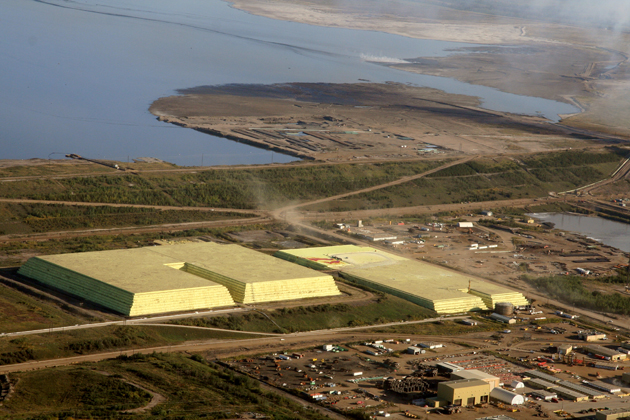
This international patent pending process uses sulfur left over from the refining of fossil fuels like the oil sands. Typically the sulfur extraction process involved yields less than a quarter kilogram (half a pound) of sulfur for every 72 liters (19 gallons) of gasoline. But when you factor in the millions of barrels of oil being refined each day you get a lot of sulfur. Although there are industrial uses for the sulfur there are not enough to get rid of mountains of yellow waste.
Using waste sulfur was a key objective for the research team. One that uses some of the sulphur from waste is vulcanization, a process that involves adding a small amount of sulfur to make synthesized rubber. In the case of the process from University of Arizona, the researchers use liquid sulfur with a chemical agent additive that turns the waste product into a usable polymer. The researchers have dubbed this process aptly as reverse vulcanization.
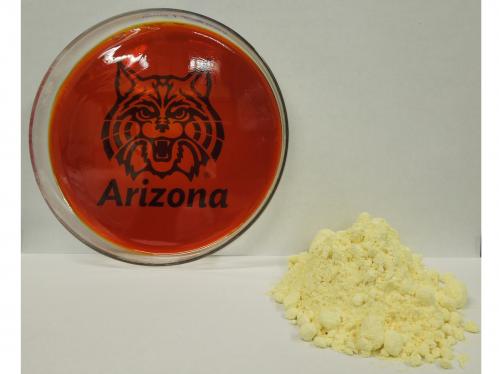
In the picture below you can see a petri dish on the left containing the liquid polymer plastic created from waste sulfur seen on the right. The plastic created from the sulfur performs very well in the Li-S batteries exhibiting high specific capacity and good retention over multiple discharges.
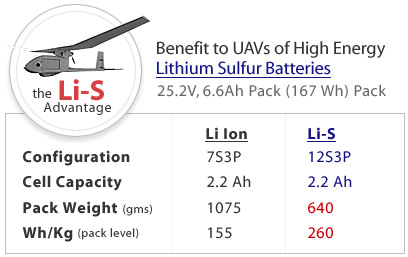
Already several companies have expressed interest in commercializing the technology. Li-S batteries are lighter than current lithium-ion batteries used in electric and hybrid vehicles today making them an attractive option for the transportation industry to consider. And these Li-S batteries are even lighter than any others on the market making them attractive for small form factors like airborne drones. A comparison chart shows the distinct advantages of Li-S over Lithium-Ion for such applications. Note how much lighter Li-S is than the lithium-iron batteries with which we are more familiar.
The research team continues to work on their discovery looking at other chemicals to see if they can improve on their formula. One field of interest is photonics looking at the polymer for its transmission properties and for light emitting diodes.
]]>