In the 21st century the apparatus and methods used in elections has become a mishmash of low and high-technology solutions. Voting methods led to the dimpled chads controversy in Florida in 2000 and a contested election. Donald Trump talks about massive voter fraud even though studies have shown the incidence of such acts to be negligible. Politicians in the United States in control of electoral processes have redrawn district boundaries to perpetuate the power bases of the party in power. This gerrymandering practice has become endemic to the American political process.
So it would seem that change is needed. But what kind of change?
Peter Diamandis has shared with those who he sends his email blasts to, a vision of what the U.S. election of 2020 may be like. Of course he applies technology to the political process and comes up with ideas you probably never considered. To our American friends and readers, I hope you survive the vote tomorrow and make wise decisions about the people you choose to represent you in your democracy. The world is watching.
Here are Peter’s words.
If you think this election is insane, wait until 2020. Imagine how, in four years’ time, technologies like artificial intelligence (AI), machine learning, sensors and networks will accelerate. Political campaigns are about to get hyper-personalized thanks to advances in a few exponential technologies. Imagine candidates who now know everything about you, who can reach you wherever you happen to be looking, and who can use information from social media (and intuited by machine learning algorithms) to speak directly to you and your interests. So here’s what future election campaign marketing might feel like.
Key Trends Four Years Hence
1. Social media will have continued to explode.
In 2016, 78% of Americans have social media profiles. This year, 162 million Americans (over 50%) will log onto Facebook at least once a month. In four years, these numbers will continue to grow. And, therefore, so will a campaign’s knowledge about you, who you are and what you care about.
AI agents built by political campaigns will track your every move, scraping your social graph, reading your tweets and posts, analyzing your Instagram photos, mining your publicly available data to know more about you than ever before. The single most important factor influencing your voting decision will be your social network. So you can bet that political campaigns will mine this data to find out who are your top social influencers, what stories you read and subjects that resonate with you.
2. Machine Learning/AI will be enhanced by a factor of 10.
This year, we saw chatbots emerge in a big way. Since Facebook opened Messenger it now has 11,000+ chatbots, where algorithms communicate with end users over it as if each were a person. By 2020, expect chatbots to get much more sophisticated. Also expect voice interfaces like Siri, Cortana, Google and Alexa to get much, much better. You’ll be able to carry on in-depth conversations with these AIs, and thanks to machine learning and the exponentially increasing amount of data about you that is self-generated each year, the AIs will learn to optimize communication with you in a personalized fashion. You’ll swear the technology will seem like your closest friend. The communications will incorporate your ideologies, preferences, choice linguistic styles and slang, favorite topics and content, and even add inside jokes to the conversation. It’s going to get very personal.
3. 50 billion devices and One trillion sensors will come online.
The Internet of Things (IoT) is growing exponentially. We will see billions of devices connected to the Web interacting with you daily. Your cars, your augmented-reality glasses and contact lenses, your computing devices, your biometric sensors, your home, office, appliances, restaurants, grocery stores, airports, airplanes and everything in between will be interconnected communicating with you and each other.
In this new interconnected world the machines will know the answer to questions like: Are voters who exercise frequently better Republican donors?
An AI will pick up on your movements, track your phone, and perhaps even monitor your heart rate. Ubiquitous cameras throughout the environment will image everything, everywhere. Imagine passing by a sidewalk display where the cameras and machine learning protocols pick up your face, know who you are and feed you personalized advertising. Spooky? Perhaps, but this kind of hyper-focused, targeted advertising is already starting to show up.
4. Digital avatars will become photo-realistic and fully programmable.
In four years, we’ll be able to fully manipulate photo-realistic avatars of candidates to say anything. This year, researchers out of Stanford University were able to take videos of humans and, in real-time, manipulate their faces to match expressions of another person in the lab. Scary. By the next election, this is going to get even better. We’ll be able to render any face to do and say anything, and you won’t be able to tell it’s a fake. Add this to advances in algorithmic audio dubbing, and we’ll be able to type text into a program which will then spit it out in the exact voice of the presidential candidate.
5. Micropayments, Smart Objects, and Blockchain applications will go mainstream.
In four years, it’s going to get easier and easier to pay for things. Mobile payments in 2016 will amount to over $600 billion. In 2020, this will likely be over $1 trillion. More than that, we’ll see a proliferation of apps that use “micro-payments,” small payments, from a fraction of a cent to just a few dollars, built on digital protocols like the Blockchain. You’ll be able to “flick” digital objects that contain value, like a Digital Political Sticker (which you by for $0.05) with your face on it, endorsing candidates from your phone to their smart billboards. I doubt the regulatory environment will move quickly enough for the next election to stop this from happening. And eventually using Blockchain we will vote in elections from our own devices.
Hyper-personalized Political Advertising: What it will feel like
The bottom line is that by 2020 elections are going to get very personal. Imagine candidate advertisements so personalized that they are scary in their accuracy and timeliness. For example, imagine you are walking down the street to your local coffee shop, and a photo-realistic avatar of the presidential candidate on a bus stop advertisement starts talking to you as you pass by and says: “Hi Peter, I’m running for president. I know you have two 5-year old boys going to kindergarten at XYZ School. Do you know that my policy means that we’ll be cutting tuition in half for you? That means you’ll immediately save $10,000 if you vote for me…” If you pause and listen, the candidate’s avatar may continue, “I also noticed that you care a lot about science, technology, and space exploration. I do too, and I’m planning on increasing NASA’s budget by 20% next year. Let’s go to Mars! I’d really appreciate your vote. Every vote and every dollar counts. Do you mind flicking me a $1 sticker to show your support?”
Fun times ahead.

It has always been a mystery to me how creation science came to be called a “science.” It certainly can be described as religious dogma but to equate it with science is dubious to say the least. That’s because “creation science” is biblical and the museum dedicated to its reasoning is located in Petersburg, Kentucky. The moniker for the museum is it “brings the pages of the Bible to life.” In its interpretation dinosaurs and humans co-exist in an Antideluvian World. You learn about the “true time line of the universe,” that “biblical history is the key to understanding the dinosaurs,” and find out “what natural selection can and cannot do.” For a mere $8.99 U.S., you can buy “The Lie: Evolution,” whose author, Ken Ham, also the founder of the museum, espouses the “evil of evolution” in today’s society.
So evolution is evil and the Judeo-Christian biblical text is the revealer of universal truth. Does that mean all other religious texts with their creation myths should be treated as not true or should we give them equal weight to biblical truth? Should this be the way of science and the technology it inspires in the 21st century in America?

The Thesis I am Proposing – Learn From History
The greatness of a society is a measure of its openness to scientific discovery and new ideas. European history provides us with a good example. Europe embraced science and technology in its pursuit of economic and military supremacy. Invention and innovation were products of necessity. In the end Europe mastered the globe by the end of the 19th century. The experience of the Americas, rightly or wrongly, was Europe’s greatest experiment. From exploration, to conquest, to genocide practiced on the native population of North and South America, Europe succeeded. The United States is the product of that experiment, today, the predominant nation of the planet. Embracing science and technology played a significant role in the outcome that is the United States today. But through its entire history the United States, as has happened in Europe, has always had an anti-science and anti-technology minority who fear new knowledge and discovery and who question its pursuit. Such are those who espouse creation science. Those who home school because secular education is considered dangerous. Those who put “belief” before anything else, and particularly their own belief, not the belief of others. And those who have the ear of those who legislate.
Herein lies the lesson that history reveals.
Nations that don’t embrace science, technology and scientific discovery are societies that will ultimately fail.
When I was a student at University of Toronto I studied history. The range of my inquiry began with the late Roman Empire and ended at the beginning of the Industrial Revolution. The geography I studied extended from Europe to East Asia. My undergraduate theses were on the Mongol Empire, the rise of the Ottoman Empire, and the evolution of Islam and religious syncretism. From my studies I share with you two historic examples.
Lesson One – China
China at the beginning of the 15th century was mining coal, had developed paper, moveable type and printing, gunpowder, the seismometer, water clocks, the compass, the dry dock for building ships, and advanced astronomical tools for studying lunar and solar eclipses. The Ming Dynasty, successor to the Mongols who connected China to the rest of Asia and Europe through conquest, enjoyed institutions of governance that existed nowhere else. Government was managed by a professional civil service who advised the emperor. Financially China developed a central bank and paper currency backed by its treasury. The empire enjoyed an extensive infrastructure of canals and roads, and a national army to protect it from invaders. China was well connected through trade with Central Asia, India, Persia, and through Arab intermediaries with Europe and Muscovy.
This was the China that embarked on a series of great expeditions to sail the Indian Ocean and find and meet other cultures for the purpose of trade and to share with them China’s national success. Zheng He, a court eunuch and Muslim, was the leader of these voyages of discovery. Hundreds of ships participated exploring from East Africa to Indonesia. These were multiple-masted ocean going vessels that made the Nina, Pinta and Santa Maria look like rowboats. The expedition brought back ivory, exotic woods and exotic animals including a giraffe. The China of Zheng He was outward looking, embraced science and technology, was innovative, inventive and highly successful. And then something happened.
The emperor who sponsored Zheng He died. The court located in Nanjing, the Ming capitol, moved to Beijing where an isolationist group became a powerful court faction eventually seizing the agenda and ending the voyages of discovery. Where Zheng He’s China looked outward and forward, the “reformed” court looked backward for precedent inspired by a cultural adherence to Confucianism. The end result a society that no longer innovated. Within a few years Chinese were forbidden to voyage abroad. Ship building was restricted to single-mast ships and anyone caught building anything larger was subject to execution.
China stood still while Europe and one of its neighbours, which we will talk about next, embraced science and technology, soon surpassing the Middle Kingdom. China is only now recovering from the short-sightedness that began in 1424, almost 600 years later.

Lesson Two – The Ottoman Empire
In the 13th century, the founder of the Ottoman Empire settled on the shores of the Bosporus as a mercenary in the internicine wars being fought between the Latin Crusaders who had conquered Constantinople in 1204 and the Greek-led resistance attempting to restore the Eastern Roman Empire that we know as Byzantine. The Ottomans were refugees from the devastating success of the Mongols who had invaded and acquired much of Southwest Asia including the eastern portions of modern Turkey, Iraq, and Persia. The Mongols ended the caliphate in Baghdad. Islam had lost its religious leader. What set the Ottomans apart from other Turkish refugees was the ability to learn from neighbours, to adopt new methods of governance, to embrace technology and scientific discovery, and to use all of this pragmatically for the purpose of building an unequaled military presence. In this the Ottomans succeeded.
By 1453 when Constantinople fell to them the Empire had grown to embrace the Balkans, the Crimea and Southern Ukraine, all of Turkey and the Caucasus, and Iraq. By the mid-16th century the Empire had expanded to include all of coastal Arabia, Egypt, Libya, Cyprus and Algeria. The Ottoman navy was the most powerful in the world. The Indian Ocean, Arabian Sea and the Mediterranean were its sphere of influence. Ottoman ships had reached the Canary Islands. And even after a defeat by a combined Spanish-Venetian fleet at Lepanto in 1571 the Ottomans launched an even larger battle fleet of galleys the following year laying siege to Toulon in France, seizing Madeira from the Spanish and harassing Sicily and the Italian coastal cities.
The Ottomans embraced multiculturalism, tolerating any religion within their borders. They perfected the cannon as a siege weapon and fielded musket-equipped brigades in their wars with European neighbours. One of these was Hapsburg Austria. At the height of the Ottoman conflict with Europe, the Empire besieged Vienna in the heart of central Europe. Several times the city was the subject of attack with the last ending in 1683 with the Ottoman army withdrawing. The Ottomans were very much focused on military technology and on building a professional and permanent army. They united the Middle East and North Africa in a pan-Islamic empire. They were trade intermediaries between Europe, India, Persia and China. The restoration of Constantinople, as Istanbul, made the city the centre of the Islamic and Eastern Orthodox Christian world. And then something happened.
The Empire which had enjoyed effective leadership through a series of rulers was suddenly beset with weak rulers who succumbed to interest groups and factionalism. The leadership turned inward no longer vested in innovation, in embracing multiculturalism, in progressive reform, and in retaining leadership in military technology. The pragmatism that had been a key to the Empire’s success vanished as power devolved to regional interests and sects. The infrastructure began to break just at the point when the Empire’s neighbours in Europe were developing centralized nation states backed by banking and financial institutions to fund innovation and invention.
The Empire suffered a slow collapse picked over by European states who had little in common with the local cultures but asserted themselves militarily, establishing colonies and spheres of influence. The colonization was disruptive to a point that it created the destructive seeds that continue to be sown in that part of the world to this day.

The Lessons of History Revealed
On Tuesday the United States votes to elect a President. What can we learn from Ming and Ottoman history? Several things including:
As always I encourage you to comment, ask questions and provide input on topics I write about or feature. And should you come across an interesting technology or scientific breakthrough that you feel should be included in this blog please don’t hesitate to let me know. Enjoy the read!
Technology and Politics in the 21st Century: What Happens to Scientific Progress if Mitt Romney Becomes President
It has been interesting following the “non-science” and “nonsense” of this 2012 campaign for the White House. Science and technology may prove to be victims if Republicans win the presidency. Where President Obama has integrated science and technology into his economic strategy to get the United States back on track, Mitt Romney is a whole other ball of wax. He believes innovation is almost exclusively a private sector issue and government need not set a direction or be involved other than doing “basic research.”
Mitt Romney’s technology spend is heavily slanted to the military. His position on stem cell technology harkens to a return to the days of President George W. Bush. Those policies set stem cell therapy research in the United States back a decade.
And on global warming, although never mentioned by either candidate in the debates, there is a significant difference in point of view between the sitting president and his Republican opponent. Mitt Romney believes global warming is not a concern of the United States because taking action would give China and other global competitors an unfair advantage economically. Mr. Romney wants to see a relaxation of EPA rules for development of coal and other fossil fuel sources. He wants the government out of the business of funding potential new renewable projects.
For more on the candidates’ positions read the October 24, 2012 issue of Nature International Weekly Journal of Science.

IKEA Leads the Way with Pledge to 100% Renewable Energy by 2020
If you don’t have some IKEA furniture in your house today you are more an exception than the rule. The Swedish company for 25 years has set the standard for modular, do-it-yourself-at-home assembled furniture. With outlets in 41 countries the company wants to lower its energy costs and environmental footprint by deploying renewable power and engaging in conservation initiatives.
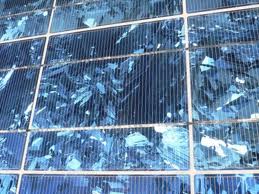
The plan is to make 70% of spent energy renewable by 2015 and become facility self-sufficient in energy generation by 2020. Currently IKEA warehouse outlets sport 342,000 rooftop solar panels generating 25% of the energy consumed by the company. To this they have added wind farms in 6 countries.
As for its conservation initiative the company has pledged to plant as many trees as it uses for creating furniture by 2020. It is implementing clean water projects in all the countries in which it has locations. And finally, it plans to recycle all its furniture products like kitchen cabinets and modular shelving units by introducing smart consumption options to customers.

Welsh University and Indian Steel Manufacturer Combine to Create Buildings as Power Stations
The shared vision of Swansea University and Tata Steel will lead to the development of coated steel and glass clad buildings that generate, store and release renewable energy turning individual buildings into self-sufficient power stations. By 2020 this joint university and industry venture hopes to have permanently altered the way buildings are constructed and rehabbed in the United Kingdom, with coatings and products to retrofit existing structures as well to construct new buildings. Combining solar and wind renewable energy with new advances in storage technologies, and advancements in nano materials using steel, ceramics and glass, the project, called SPECIFIC, has a goal to meet 33% of the United Kingdom’s renewable energy requirements. Watch the video to learn more.
New Smart Material Made From DNA Could Lead to Building Artificial Muscles and Bones
What is the value of a discovery by University of California Santa Barbara researchers of a goo made from DNA that mechanically responds to stimuli in the same way that cells do? According to Omar Saleh and Deborah Fygenson, the discoverers of this blob-like gel, it has the potential to mimic cell behaviour including shape shifting and division. If it can divide then it can grow. Sort of sounds like the sci-fi movie from 1958, “The Blob,” which seems like an appropriate subject to talk about on the eve of Halloween.
The DNA gel is composed of DNA nanotubes connected to each other by links made from DNA. The gel binds together at distinct linkage points along each nanotube DNA chain. Chemical stimuli stiffens the binding. Enough gel and the right stimuli and you can start building things. The discoverers plan to get the DNA gel to twist, crawl and mimic other cell behaviour. Come to think of it maybe it is “The Blob” reborn.

When Did Algae Growing on the Side of a Building Become a Good Thing?
BIQ house is a building being constructed in Hamburg, Germany. When completed in March 2013, it will be a zero-energy installation powered by algae growing on the exterior. Called a bio-adaptive facade, the algae-filled panels, seen to the left of the building in the image below, cannot only be a source of harvested biomass for biofuel, but also through photosynthesis generate solar thermal heat to power the building. When the algae grows quickly in sunlight it will provide shade for the interior while making for a visually interesting display as it constantly waxes and wanes in response to sunlight and the changing seasons.

A Postscript
Once again I thank the thousands of you who continue to drop by each month. It encourages me to write more. If you have a topic that fits within the themes of this blog, and a flare for good writing, then let me know. Guest articles are welcome!
– Len Rosen
]]>