The post Can We Adapt Old Power Plants to Run on Green Hydrogen? appeared first on Techso Mogro.
]]>Mars Food Australia, the subsidiary of the global food giant, is using HERO® to help decarbonize its processes. The 18-month pilot project is the first step in developing alternative heat sources for the food industry. Bill Heague who is General Manager of Mars in Australia states, “Thermal energy is crucial to the business of cooking food and this technology has the capability to create limitless heat without any combustion and zero emissions.”
But this is only the beginning because Star has plans to introduce the technology into legacy coal-fired power plants to retrofit existing generators to run on green hydrogen. In an interview with Bloomberg Green, Andrew Horvath, Chairman of Star Scientific states, “We think there are a lot of opportunities in existing steam turbines that have some longevity…Why would you throw them away? They’re already connected to the grid.” He cites the example of Japan where 70% of its existing turbines still have 40 years of life left.
It is using hydrogen without burning it. That’s what sets Star Scientific’s technology apart from others trying to harness the combustible gas. The patented catalyst heats in the presence of hydrogen and oxygen to reach temperatures of 700 Celsius (1,292 Fahrenheit).
For energy utilities with billions invested in legacy power plants, the ability to leverage its assets rather than demolish them has considerable appeal. The industry recognizes the need to commit to net-zero and the challenge to achieve this is no mean feat.
Many utilities are trying to use fossil fuels and carbon capture in combination to produce what is called blue hydrogen which can then be burned to power steam turbines. One such power plant is the Wabash River Generating Station, a 972.7 Megawatt coal-fired power plant operated by Durke Energy Indiana. In partnership with Honeywell UOP, it hopes to produce 300 Megawatts of zero-emission energy from this facility by 2024 while capturing 1.65 million tons of carbon dioxide (CO2) annually.
Australia’s new government is proposing that a proposed gas-fired thermal power plant in New South Wales currently under development be converted to green hydrogen. Refitting to burn hydrogen rather than natural gas which is methane (CH4) isn’t just like switching from unleaded to premium gas in your car. The two gasses when burned do not produce the same amount of energy. More hydrogen fuel will be needed to yield the same amount of energy needed to drive the plant’s steam turbines.
General Electric has been working with hydrogen for more than three decades. It currently has an inventory of more than 100 gas turbines running on a mixture of fuels combining hydrogen with fossil fuels. It provides U.S. utilities with a hydrogen and CO2 emissions calculator to answer questions related to converting existing power plants.
The big difference between Star Scientific and other players in the emerging hydrogen power plant sweepstakes is that the former isn’t igniting the gas to create heat. For those of us who have read the story of the Hindenberg 1937 fire, there is something both novel and reassuring about a technology that can deliver heat without combustion. I would think the utility companies of the world with legacy coal-fired and natural-gas power plants would be knocking on Star Scientific’s door.
The post Can We Adapt Old Power Plants to Run on Green Hydrogen? appeared first on Techso Mogro.
]]>The post New Technology for Steam Turbine Power Plants Increases Efficiency While Reducing CO2 Emissions appeared first on Techso Mogro.
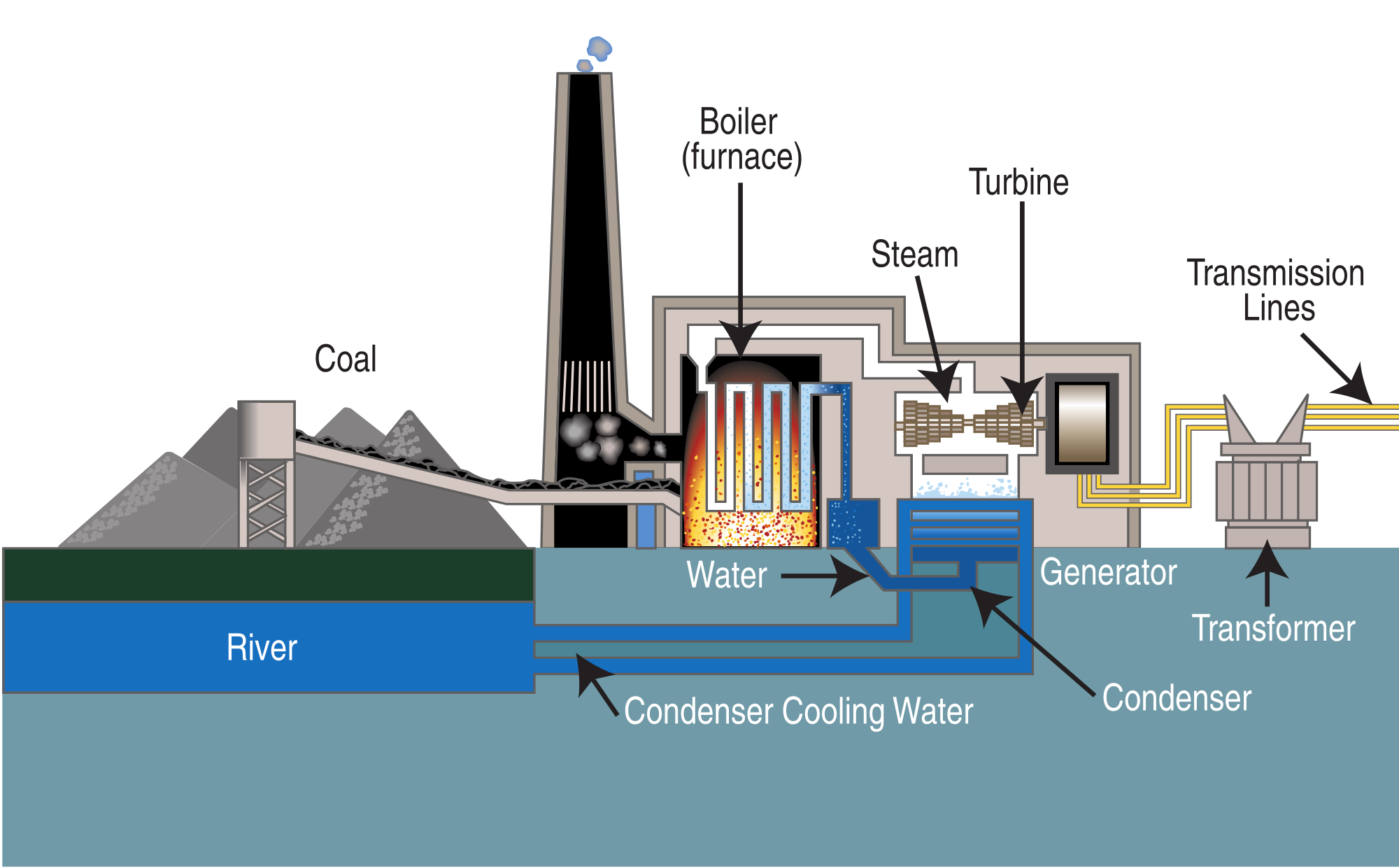
]]>The trick is in the coatings that line the steam condenser. In the high temperature environment getting a coating that is durable and thin can make an incredible difference. And that is what a team of MIT researchers have accomplished. The water repellant polymer coating developed has been tested in the lab and a new company, DropWise, intends to test it in power plants where it is expected to boost the heat rate performance of the condensers.
Heat rate is the standard by which steam turbines are measured. It is defined as the amount of heat applied to water to produce a specified unit of power. In the United States it is measured in British Thermal Units (BTUs) per kilowatt hour of electricity. Elsewhere the measure is in Kilocalories (Kcals) per kilowatt hour. Divide the heat applied measure in BTUs or Kcals to generate a kilowatt hour by the heat rate and you get the efficiency measure as a percentage. The U.S. Energy Information Administration, on its web page provides two examples:
A heat rate of 10,140 BTUs divided by the heat applied to generate a kilowatt hour (3,412 BTUs) produces an efficiency of 34%.
A heat rate of 7,500 BTUs divided by the same amount as above produces an efficiency of 45%.
Every fossil fuel and nuclear power plant in the United States has a published heat rate. Improving the efficiency of these plants alone, states DropWise, “could offset more carbon than the entire global solar installations from 2013.” At the same time, the coatings developed by the company can help power plants conserve water by using far less to generate a unit of energy.
Watch the video to learn more.
The post New Technology for Steam Turbine Power Plants Increases Efficiency While Reducing CO2 Emissions appeared first on Techso Mogro.
]]>