The good:
The bad:
We’ll learn more when the report is released at the Woodrow Wilson International Center for Scholars sometime after noon tomorrow.

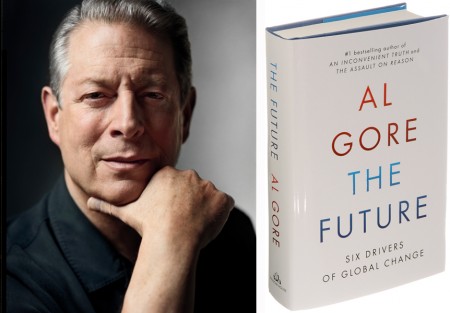
The themes of this book number six. They are:
The book takes an American point of view. Without a doubt the former Vice President sees the United States as both the leading player in the crisis as well as the “shining light” to help mitigate it. Mr. Gore’s credentials are well stated. In Congress and his progress to the Vice Presidency, he has often been heavily involved in portfolios, projects and legislative initiatives about science and technology. So one can argue that this is a messenger we should heed.
Having said that, when I finished the book I felt more depressed than hopeful about the way forward. As I stated in my posting title. This book is more a statement of human indiscretions both past and present with very little in the way of solutions for getting us out of a mess of our own creation. One of the more profound statements in the book really sums up the dilemma we have created:
“Roughly a quarter of the 90 million tons of global warming pollution we put into the atmosphere each day will still linger there — still trapping heat — more than 10,000 years from now.”
How can you find a way to progress when you have already planted the seeds of destructive change? I am a cautious optimist about humanity’s future but after reading this book it is hard to reconcile the issues it raises with a future better than the present. Mr. Gore talks about feeling stymied, “a sense of powerlessness.” That is a shared feeling by many humans who see governments that fail to lead, cop out on making the hard choices for citizens that must be enacted to address the distortions we humans are putting the planet through.
Although Mr. Gore clearly states he no longer has ambitions to lead, he now has become an Old Testament prophet for the 21st century. A believer in a renewed capitalism that will balance human enterprise with the ecology and biology of the planet. An advocate for democratic empowerment of the people to create a grass roots movement to redefine what is meaningful for a society faced with significant challenges. And a voice crying out for political reform in his country, the United States, so that the current federal dysfunction ends and leadership does what it is supposed to do.
Through this entire book you get the sense of rushing. We humans are experiencing rapid change in every aspect of our being….advances in science, communication, technology, genetics, and greenhouse gases. What is needed is systemic change. Mr. Gore describes reasons for optimism. He states:
“war seems to be declining. Global poverty is declining. Some fearsome diseases have been conquered….Lifespans are lengthening. Standards of living….are improving. Knowledge and literacy are spreading.”
He goes on to describe periods in the past when it appeared humanity had hit a wall “only to be transcended by new advances — the Green Revolution of the second half of the twentieth century, for example.”
One thing is for certain, both Mr. Gore and I believe that the only way positive change will occur is through changes in the patterns by which we currently live our lives. We as a species have done it in the past. We went from hunters and food gatherers to agrarians. We developed positive impact technologies that raised human living standards in the 20th century to a point where here in the 21st we are debating whether an individual human can live well beyond a century. Knowledge today is universally accessible. Education is on the rise everywhere despite even the worst repression by regressive cultures. We have become more social in the social media age, engaged with people from all over the planet in a global conversation. We are moving beyond tribes, religions, cultures and nations. Many businesses already get that pollution doesn’t pay, that it is immoral, an offense against the planet, humanity and all species.
Mr. Gore identifies where he believes the remaining change must happen. It is naturally, from his perspective, political and American. He states, “Democracy and capitalism have both been hacked.” That the hacking is suffocating good policy decision making. Of course he is referring to the present American political experience. But what he doesn’t really tackle is how the rest of the planet is addressing the change that must occur.
Here in Canada, for instance, we still have a government that sees our role as “hewers of wood,” the proverbial resource provider delivering oil, gas, mineral wealth and even freshwater to the planet. The national government here is abdicating responsibility for measuring the consequences of our resource-based wealth. The global response to this has been decidedly negative. Because today, no nation stands alone when all of us breathe the same air.
]]>

