The work at Scripps is not in isolation. In February of this year, researchers at the Foundation for Applied Molecular Evolution in Florida doubled down on DNA creating eight base pairings in a stable synthetic helical molecule. At the time they noted there was no reason to limit synthetic DNA to eight pairs. So why not up the ante to 10 or 12?
What makes these lines of research so interesting is they open our eyes to the possibility of new biological or synthetic life. Why would we want to do synthesize biology? Back in 2017, I wrote about the best way for humans to colonize Mars arguing that altering our DNA would make us adaptable to an environment alien to our species. It kind of makes sense that the only way to free humanity from living in a bubble as a spacefaring species would be to alter our genome so we could easily adapt to a place like Mars.
The International Space Station has already taught us what happens to our bodies and other biology in low-Earth orbit when away from the safety of our planet for a year. For humans, the results aren’t pretty. Our circulatory system is altered. Our muscles waste. Our bones thin. Our brains swell. Our autoimmune systems are compromised.
To survive, therefore, suggests we either transport environments to space and other celestial bodies that is Earthlike including our gravity, or make our DNA better at self-repair to deal with solar and cosmic radiation, low and micro-gravity environments, extremes of cold and heat, and more. An altered DNA would be able to create new versions of us with re-engineered muscles, bones, body organs, and circulatory systems. And having done that we would then do this for any other species that accompany us. The question then becomes, would a 6, 8, 10, 0r 12-base pair version of DNA make this transition possible? Is experimenting on humans to find out in the cards?
Up until now our species and every other one on Earth has been limited to DNA and RNA as building blocks of life. But researchers at the Tokyo Institute of Technology, the German Aerospace Center, and Emory University, have been experimenting to find out if there are other biomolecules out there. What they have concluded is the discovery of more than 1.16 million likely alternatives.
In a paper appearing in the Journal of Chemical Information and Modeling entitled, “One Among Millions: The Chemical Space of Nucleic Acid-Like Molecules,” the authors write “there are large spaces of unexplored chemistry relevant to pharmacology and biochemistry and efforts to understand the origins of life.” One of the researchers, Professor Jim Cleaves, at the Tokyo Institute, noted they started out on a path to find out if there were analogs to DNA and RNA, the two biological molecules we know and thought they would find a few more. Instead they found 1.16 million plus.
Why was this possible? Because the difference between DNA and RNA is a single atom substitution. So other single substitutions could conceivably create completely new biological molecules capable of replicating an alien version of what happened here on Earth.
Their findings also raise other questions. When we look for life on places like Mars, should our experiments be limited to attempting to find just DNA or RNA fragments? And if not, how would we devise experiments to recognize an alien biomolecule? The analog to alien biomolecules here on Earth is viruses. Remember how difficult it was until recently for science to detect and understand these very different biomolecular packages to the DNA that created cellular biology?
And could this research help us find new places to plant seeds beyond Earth? No doubt once we realize that the biomolecules that are in us are not unique to creating life, we have the means to create synthetic or hybrid alternatives to who we are now and that just might allow us to tolerate the conditions of almost any terra firma in The Universe. In the end, if we succeed, will we then no longer be us?

The new joint venture, which was given the name Joyn Bio, is tasked with engineering bacteria that is symbiotic with the primary cereal crops grown today – corn, wheat, and rice, to dramatically decrease the fertilizers used in farming.
Why is this needed? For two very good reasons.
Creating nitrogen-fixing microbes friendly to cereal crops would mean:
Many oppose genetically modified anything, the science and engineering whereby genetic information is altered within a species not by selective breeding but by changing its DNA. The typical opposition calls alterations to foods we would normally eat, “frankenfoods.” But what if we genetically modified the bacteria in and around the root systems of plants, bacteria that provides symbiotic benefits to plants like cereal crops? Would opponents to genetic modification consider this to be a Frankensteinian move?
In the announcement of their joint venture, Bayer and Ginkgo Bioworks, the two indicated their purpose to develop synthetic biology to support sustainable agriculture, and that their first project was to deal with environmental impacts from synthetic nitrogen-based fertilizers.
Every plant has a symbiotic relationship with a microbiome consisting of hundreds of different bacteria that occupy the soil near its roots. In the case of cereal crops, the microbiome is not particularly good at fixing nitrogen from the air to make it useful to plants. You see, even though most of our atmosphere is made of nitrogen gas, nearly 80%, the problem is plants, for the most part, cannot absorb it from the air in its existing form. That’s because atmospheric nitrogen contains two atoms of the element bonded together, and most plants cannot break the bond to absorb a single nitrogen atom.
But the scientists at Bayer have an extensive library of microbes found in and around plants, and they have identified those that have a symbiotic relationship with legumes – soybeans, peanuts, alfalfa, and peas, have the ability to take nitrogen from the atmosphere through normal biological processes.
So Joyn Bio’s task will be to use the existing bacteria common to cereal crops and switch out the genetic machinery inside with that of the legume symbiotic microbes. If successful it would mean for the first time, cereal crops would no longer need to use nitrogen fertilizers to the extent they are being used today. The Joyn Bio team of researchers believe, if successful, they can reduce global synthetic fertilizer use by 35%. And that means a lot less nitrous oxide emissions, algae blooms, ocean dead zones, and global heating.
First, you have to identify which cereal crop microbes would be the best candidates to fix nitrogen.
Second, you have to identify which are the nitrogen-fixing genes in the legume microbes that you need to emulate or borrow.
Third, you have to engineer the cereal crop microbial DNA to make it work the same way the legume microbe DNA works.
Fourth, you have to ensure that what you have created replicates, remains stable, and can thrive in the microbiome environment found around cereal crop root systems.
Joyn Bio calls what they are attempting to produce, probiotics for plants. If successful they believe they can cut worldwide global greenhouse gas emissions by 3%, and reduce natural gas usage also by 3%.
For those opposed to genetically modified anything, I wonder what will be their take on this joint venture?

These were my immediate thoughts as I began to read about the Earth BioGenome Project, (EBP)a $4.7 billion US, 10-year project, to sequence, catalog, and analyze every living eukaryotic life form on our planet. That includes every plant and animal but not bacteria and archaea. The latter two are being sequenced since 2010 under a different publicly funded program called the Earth Microbiome Project (EMP).
Why else would we be sequencing all life here?
It could be because climate change and our human activity on the planet is leading to the extinction of so many species that conservationists and scientists fear we will lose them for good. It could be because the remaining wild spaces are insufficient to support the biodiversity that is still with us. It could be because we don’t want to lose the potential benefits we could derive from the fauna and flora we preserve through their DNA record. But I can’t help but return to the scenario of a future interplanetary venture which takes our descendants over centuries to some distant world which we then terraform and using synthetic biology, populate with species recreated from DNA records kept in data storage.
Both the EBP and EMP are projects in a hurry because our Earth is in the midst of the sixth great extinction event for life on the planet. The evidence is clear. Sources like the Living Planet Index, a measure of species and habitat destruction, have recorded a 58% decline in vertebrate populations between 1970 and 2012. The International Union for Conservation of Nature has estimated that of 80,000 species surveyed, approximately 23,000 are nearing extinction. By 2050 we may witness the loss of 50% of our planet’s species from human activity. Consider the concern of farmers globally should bee populations continue to plummet. Without these pollinators, many crops we depend on for food will fail.
In the EBP description that appeared in the April 23, 2018 publication of the Proceedings of the National Academy of Sciences of the United States of America (PNAS), the authors not only discuss the threat of extinction, but also the “unimaginable biological secrets” that will be uncovered in the genomes of millions of the creatures and plants that inhabit our world. They refer to the “dark matter” of biology as critical to “unlocking the potential for sustaining planetary ecosystems.”
They also talk about what will be lost to pharmacology, should we not have a genetic record of every living thing and cite recent clinical trials where drugs being used were derived from 25 different marine species. Discovering medicines that can cure cancer or genes we share with other species that lie dormant in us that if switched on could help us fight disease, is something we cannot afford to lose. In our mapping of other species, we may even find the key to help us reduce greenhouse gas emissions and rebalance carbon on the planet.
Sequencing technology which cost billions of dollars two decades ago is now accessible to us for hundreds today. And that cost continues to drop making the two projects, the EBP and EMP financially feasible.
What are some of the anticipated outcomes?

You won’t recognize these company names. None are part of big pharma. But all are pursuing the design and construction of artificial life to use it for biomedical, environmental, agricultural, energy and industrial applications. Manipulating DNA and altering existing lifeforms to create new ones is seen as a way to help feed humanity, tackle climate change and end freshwater scarcity.
Tell me if you have heard of any of these companies:
I’m betting none jump out at you. But these are companies in hot pursuit of cloning, DNA sequencing, genomic engineering, biofuel development, and nanotechnology just to name a few of the fields driving advancements in synthetic life. Many are spinoffs of university research projects. And many are receiving significant funding from defense research budgets, biopharmaceutical companies, and Silicon Valley angel and new venture funds.
Back in 2010 Craig Venter, the first scientist-inventor to map the entire human genome announced he had manufactured Mycoplasma mycoides, a bacteria containing a single chromosome. He subsequently transplanted it into another species of Mycoplasma which went on to successfully replicate.
In March of this year, a team of scientists announced they had created synthetic chromosomes for Baker’s yeast. Yeast contains 16 chromosomes. The team had synthesized five of the 16 and expected to have all completed within the year.
The ability to create synthetic yeast represents a step beyond Venter’s 2010 accomplishment. Where Venter synthesized prokaryotes, bacteria, and algae, yeast is a eukaryote, a cell that characterizes life forms from fungi to plants and animals.
Prokaryotes are much simpler. Eukaryotes, on the other hand, contain a nucleus and other organelles, as well as complex membranes not found in prokaryotes. Eukaryotes can differentiate into cells that form muscle, nerve, bone and brain. That’s why synthesizing yeast is truly a big deal.
So what can we do with it?
Researchers want to use yeast to mass produce antibiotics, vaccines, biofuel, insulin, chemicals of all kinds including synthetic silks and perfumes, and even microbial fuel cells. States Jef Boeke, the lead researcher of the yeast project, a geneticist at New York University Langone Medical Center, “this work sets the stage for completion of designer synthetic genomes to address unmet needs in medicine and industry.”
Another research laboratory located at the University of Edinburgh is busily trying to add a 17th chromosome to yeast. Lead researcher, Patrick Cai states, that “We’re shortcutting evolution by millions of years…Our goal here is not engineering a particular kind of yeast, but the kind of yeast that is amenable to engineering.”
It Doesn’t Stop with Yeast
One company, Bolt Threads, is combining yeast, sugar and DNA code from spiders to spin new fibers. The end result is silk that can stretch like spandex while retaining the strength of steel. A competitor, AMSilk is creating biosteel from spider DNA.
Modern Meadow, is using engineered cells to create synthetic leather.
Ecovative is manipulating plant and mushroom fibers to grow synthetic wood for flooring, tables, paneling and packaging. The U.S. Department of Defense has issued a contract to the company to develop temporary living structures that reduce waste and don’t involve cutting down trees.
Another company, Ginkgo Bioworks is using DNA code from existing and extinct plants to create perfumes and food sweeteners. By “mixing and matching” DNA the company can produce its products at costs 50 to 90% less than competitors. And better yet, the company doesn’t use laboratory animals for testing.
As bizarre as the notion is to re-engineer us, there are researchers today speculating on creating synthetic life to help us get out of our current global warming bind. One of these is Ricard Solé, a professor at ICREA-Complex Systems Lab in Barcelona, Spain, who has speculated that by engineering synthetic organisms we may create the means of restoring ecological homeostasis on our planet. This would come through the creation of artificial life or lives capable of reproducing either on a regional or global scale. Multiple artificial life forms could address all geographic and ecological domains on the planet. Design would take into consideration the impact of the synthetic biology on all other living things and ensure that no synthetic transference enters into natural biological systems. It could involve creating symbiotic relationships between artificial life and biological life which could act as host. Synthetic life might even be designed to live and flourish in detritus we humans produce like the plastic debris floating in the ocean, or in raw sewage or landfill, breaking down pollutants, capturing carbon dioxide and providing other benefits.
At ICREA there is ongoing research into synthetic biology looking at multicellularity, collective intelligence (think the intelligence of a swarm as demonstrated by bees, army ants and even schools of fish evading predators) and organogenesis (substituting bio-engineered tissues in place of living normal or damaged tissues).
How close is ICREA to producing synthetic life?
Right now it more theory and mathematics than reality. But Professor Solé describes the potential of artificial life forms to help us to cut carbon emissions, reforest our planet, turn wasteland into arable farmland, and even end freshwater shortages. He argues that synthetic biology could terraform Earth in human timescales, not geological ones, and that genetically manipulated organisms could be designed to be self-limiting so there would be no unintended consequences.
Solé describes several scenarios:
In these scenarios bio safety would be a major concern and probably be the largest obstacle to adoption. As I read Solé’s paper one particular scenario came to mind. In Michael Crichton’s novel, Prey, he describes genetically engineered nanotechnology that escapes from its laboratory confines, replicates and develops collective intelligence through swarm behavior. In the end the swarm takes over.
Solé, unlike Crichton, presents the potential beneficial impacts of engineering what he describes as self-limiting biological technology. He sees other uses including synthetic biology to create new drugs and therapies, and to produce bio fuels with zero emissions. I can even think of one use of synthetic biology not mentioned by Solé, the creation of biology-based computing, no longer bound by silicon’s limitations. This is the stuff of Star Trek.
Solé argues that unless we slow our impact on the biosphere we have no safe way out from the Anthropocene we are creating. He concludes: “We cannot foresee all future changes that will unfold in the next decades as a consequence of our impact. What we do know is that all sorts of evidence point towards an unsustainable outcome where our society is likely to fail unless serious measures are taken. Novel approaches are needed, and often the novelty emerges at the crossroads between apparently distant fields. Nowadays, synthetic biology and ecological theory are loosely connected, but it is at the intersection between these two major disciplines where some solutions might reside. The essential message is that we need to reinvent a small part of nature in order to preserve as much as possible while we guarantee our persistence as a species in a sustainable way.”

]]>
Flu is an interesting virus. What occurs in the Southern Hemisphere’s winter may be the flu we get in the winter that follows here in the Northern Hemisphere. And of course, vice versa. So you would think that our bio-pharmaceutical industry would have plenty of notice on how to formulate an effective vaccine.
But last winter they got it wrong and lots of people who had the vaccine also got the flu because the variant that hit here in North America was not the one the industry thought we would get.
That’s why I’m interested in how synthetic biology, that is the genetic engineering of vaccines, can allow pharmaceutical companies to speed up the process of developing vaccines in response to viral outbreaks. This means creating a synthetic virus with genes harvested during a disease outbreak and incorporated into an engineered organism.
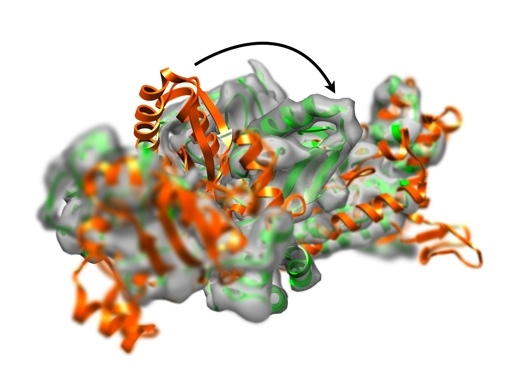
The method has been tested in a drill in 2011 which mimicked a mock outbreak of an H7N9 outbreak, the bird flu. Novartis, the bio-pharmaceutical company started the test on a Monday morning and by Friday noon its scientists were growing and incubating live virus in cells in preparation to mass produce a vaccine. All done in less than five days.
How can synthetic biology help with other diseases and as a cure for seasonal illnesses? In May this year the Synthetic Biology Center at Massachusetts Institute of Technology held a workshop in which scientists and researchers discussed ways to use the technology in treating cancer, engineering tissues, curing diabetes and other metabolic diseases, drug screening and vaccinations for infectious diseases. You can check out their findings yourself in the session reports.
The goal of those working in this burgeoning field is to develop within the next decade kill switches to turn off metabolic disorders in patients, more personalized and individualized therapies, and of course quick responses to outbreaks of highly infectious and spreadable diseases.
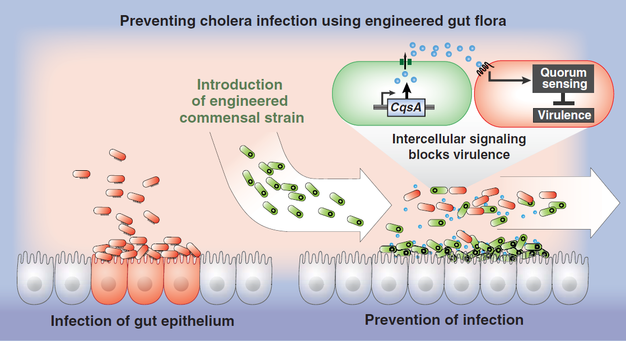
One commonly found disease in the Developing World is cholera. Can we stop it from infecting between 3 and 5 million and killing 120,000 every year? We know how cholera spreads – through contaminated food and water. We know how to create water filters to screen out most of the bacteria. But what if we could alter our bacterial flora in the gut to prevent Vibrio cholerae from causing the diarrhea and massive dehydration associated with the disease? At UCSF researchers are trying to do just that, preventing cholera infection in mice studies that use the E. coli virus as a mechanism for delivering new genetic material to gut bacteria. The altered bacteria blocks Vibrio cholerae from attacking the epithelial cell lining the bowel. The diagram below shows just how it works.
Expect to hear more about synthetic biology in future postings here.
]]>J. Craig Venter, the American biologist and sequencer of the human genome is at his entrepreneurial best when he imagines using 3D printers to print DNA. Venter has started working on a device he calls a teleporter, a digital biological converter that prints vaccines from downloaded software.

The idea came to him during an outbreak of H1N1 influenza in 2009 as a way of rapidly disseminating new vaccines to remote locations around the world to stop a pandemic from happening. How would it work? Venter believes that we can digitize the DNA of a virus like a strain of influenza and within a day build a vaccine to defeat it. His teleporter, a 3D printer with the materials needed to print a vaccine, would be made available to medical facilities around the world. Software containing the instructions for assembling a vaccine could be sent digitally to every facility. The printed vaccines could then be used to stop an outbreak of infections leading to an epidemic.
There are challenges still to be overcome. Venter’s past work shows that he is more than capable of overcoming them but nonetheless his teleporter will have to be highly accurate in its ability to assemble a vaccine molecule by molecule. Any slight variation could have unintended consequences.
Bioprinting has already been used to print veins using a patient’s own cells. More complex body parts remain a work in progress.
Venter is also working in the field of synthetic biology, creating new bacteria to create biofuels and harvest hydrogen from water.

]]>

