The solution is a photovoltaic envelope that utilizes lightweight solar panels and robotically-controlled actuators to actively track the sunlight and generate energy while providing a thermal barrier to keep the internal environment of a building comfortable for its inhabitants. The researchers installed a 16-module prototype measuring 3.9 by 3.2 meters (12.8 by 10.5 feet) on one of the Swiss Federal Institute’s buildings and were able to test the performance and stability of the panels under real weather conditions.
Each modular panel was equipped with copper indium gallium selenide (CIGS) solar cells, a thin-film photovoltaic technology, with robotically controlled actuators that performed solar tracking both by moving them horizontally and vertically between 10 and 45 degrees at regular intervals to maximize electric power generation. The facade was oriented 23 degrees from the south and towards the west with electric power gains larger in the morning than in the afternoon. The panels also had to deal with shadow from an adjacent building which reduced direct solar radiation to periods after 10:00 a.m.

Those panels nested below the top units also saw reduced gain because of the shadow cast from above. The researchers recognized this as a tradeoff between solar shading and energy generation, noting that if the overlap were reduced it would impact the thermal balancing effect of the panels on the interior environment negatively. The potential to impair an outside view seemed to be little noticed by those working in the area where the panels were applied. Observers noted that in most window-clad vertical construction, they would be using blinds as shading devices regularly to cut out the heat and glare. In this case the panels did this automatically.
One of the positive aspects of this technology is its ability to adapt to changing environmental conditions happening outside the building. It can be set up with mulitple controllers for multiple modules and applied almost anywhere on a vertical, angled, or horizontal surface. And because the modules are scalable it can be used in small and large form factors, for both new construction and retrofits. And with the ability to integrate the robotic pneumatic controls or operate them singly, by groups, by rows, or in total depending on the installation need, the technology presents considerable adaptability.
During the test in Zurich, the 16-module prototype was exposed to temperatures between 3 and 20 Celsius (37 to 68 Fahrenheit) and wind speeds of up to 30 kilometers (18 miles) per hour. Under such conditions the pneumatic robotic-controlled actuators proved stable and energy gains over consumption varied from 28 to 50% when compared to vertical static solar panels mounted on the same building.

]]>
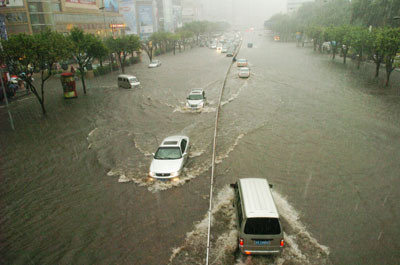
In their study they state that “today 75% of the moderate hot extremes and about 18% of the moderate precipitation extremes occurring worldwide are attributable to warming, of which the dominant part is extremely likely to be anthropogenic.” That means the balance are not causally linked to what we humand are doing to the planet. Think about that. For every four extreme heat events three are anthropogenically derived. And almost one in five extreme weather events can be linked to anthropogenic causes.
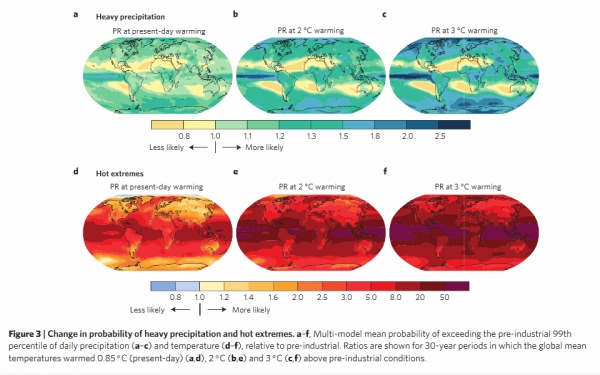
The authors link present day warming of 0.85 Celsius (1.53 Fahrenheit) and increasing extreme precipitation events as exceeding pre-industrial occurrences by a small margin. But when they project the trend to a warming of 2 Celsius (3.6 Fahrenheit) the link increases by a 1.5 to 3 times factor depending on location on the planet. Worse in the tropics and in extreme polar locations and weaker in the mid-latitudes.
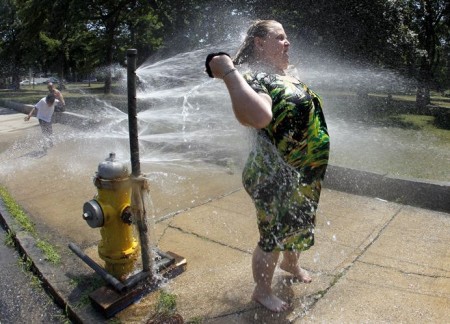
They write, “this implies that on average…an event expected once every 10,000 days (about 30 years), in pre-industrial conditions, is expected every 10 to 20 years at a 2 Celsius warming.” There is a similar correlation with extreme heat events. The authors state, “the trend to more hot extremes with increasing global temperature is ubiquitous. Already at an observed warming of 0.85 Celsius the probabiliyt of 1-in-1,000-day hot extremes over land is about five times higher than in pre-industrial conditions.”
For the “I’m not a scientist” crowd the study states that that quantifying the human contribution to a single weather event is challenging, but when you analyze the massive amount of observational global data you remove the uncertainty. The authors use sophisticated modeling of the data to draw their conclusions and although models aren’t the real world, they are an attempt to simulate it as closely as possible.
It is hard to argue with the wealth of sampling the authors have used to build their hypothesis. Nor can you argue with their motive. They hope policy makers can use this as a tool for mitigation and adaptation decisions. When combined with maps the data can serve to show actual risk and vulnerability. The authors state “the fraction of heavy precipitation and hot extremes attributable to warming is highest over the tropics and many island states, which typically have high vulnerability and low adaptive capacities.”
The maps appearing below come from the study. Areas of greatest vulnerability are highlighted.