The post Can Hollywood Stop Producing Dystopian Films? appeared first on Techso Mogro.
]]>It appears to be a growing malaise in society these last few decades where we increasingly are being fed popular movies where space rocks slam the Earth, monsters from the deep ravage the planet, or superheroes are needed to bail us out of one close scrape after another.
There is a reason I had nightmares when I was a child, every time my parents took my brothers and me to see horror and science fiction movies. They would keep me up for days. I made a point of not going to see them in theatres or watching them on television. They didn’t feel good for my psyche.
To this day, I wonder why we are so fascinated with the creepy and the dark side and prone to watching stories that paint our bleak and dystopian future. Is this a symptom or a leftover artifact from our ancestral past, where we feared the dark and the things that go bump in the night?
So, hearing Peter’s take on this very subject, I found it reassuring. To know that others see the problem these films and shows create for the human mindset made me want to share his message.
I’m tired of Black Mirror, Terminator-like movies, and endless assassin flicks. Hollywood is screwing with our heads and our collective mindset. King Solomon’s wisdom has never been more important: “Without a vision the people will perish” – Proverbs 29:18
Humanity, all of us, need a non-dystopian, positive vision of the future – one we can strive to create – because without a target, we’ll miss it every time.
Our brains (100 billion neurons, 100 trillion synaptic connections) are neural nets, and we train them every day with every program we watch and every story we read. If all we see is a future filled with terrorists, killer robots and runaway destructive AIs, then that is what we’ll create.
If we want a positive future for humanity – for ourselves and our kids – then we need a vision of tomorrow that is hopeful, compelling, and abundant.
When half of Prime Video’s global audience chooses to spend 12 billion minutes wandering a radioactive wasteland, it’s a signal: dystopia isn’t fringe — it is the mainstream.
Here’s the data on how negative and dystopian today’s films and TV shows are:
With these films, we are programming our collective neural net to a mindset filled with fear and disaster. But here’s the truth: the future we envision is the future we create.
How do we incentivize the creation of hopeful future storylines?
We need visions of the future that inspire us. Not just handwringing about climate collapse, AI overlords, or zombie outbreaks. We need our own modern-day Star Trek: a north star that pulls us toward possibility, and here are four ways we can drive this transformation:
1. Create an XPRIZE for Optimistic Media: Launch a multi-million-dollar competition for filmmakers, writers, and creators who develop compelling, scientifically-grounded visions of an abundant future. Not rose-colored fantasy, but data-driven optimism that acknowledges challenges while showing paths to overcome them.
2. Build a “Media Abundance Index”: What gets measured gets managed. Let’s create a dashboard tracking the ratio of dystopian-to-optimistic content across platforms. Make studios compete for higher scores on the “Abundance Index,” similar to how they now tout diversity metrics.
3. Invest in Exponential Storytelling: Those who want to steer towards a hopeful, compelling, and abundant future for humanity should back productions that showcase how exponential technologies solve humanity’s grand challenges.
4. Leverage AI for Narrative Transformation: Today’s AI systems can analyze story structures and help writers craft compelling narratives around hope, innovation, and human potential. Let’s use these tools to create the next positive world-building generation.
Remember, by 2030, 7.5 billion people will be connected to the internet: that’s 90% of humanity plugged into a global intelligence layer. We are creating a planetary brain capable of unprecedented collaboration and problem-solving.
The future isn’t something that happens to us. It’s something we create—one story at a time. The stakes couldn’t be higher. If we keep programming ourselves with apocalyptic visions, don’t be surprised when reality follows suit. But if we can shift the narrative—if we can make optimism cool again—we unlock possibilities beyond our imagination.
It’s time for our modern Star Trek moment. Let’s create it together.
The post Can Hollywood Stop Producing Dystopian Films? appeared first on Techso Mogro.
]]>The post The Star Trek Holodeck is Getting Closer to Becoming Reality appeared first on Techso Mogro.
]]>The communicator was a wireless device that bears a strong resemblance to the first flip phones.
In Star Trek the ship’s computer and crew interacted not just through keyboards but also by voice. Today we can converse with the digital world through Alexa, Google Home and Siri.
There were replicators that not only manufactured food, hot or cold, and the containers and cutlery with which to eat. We are seeing in the latest 3D printing technologies a future when the replicator will become a reality.
Some NASA scientists even believe that warp drive, a technology that alters a contained area of space around a starship to move it at speeds beyond light may be attainable.
And then there is the holodeck, a technology that first appeared in Star Trek’s Next Generation, in which crew members could immerse themselves and interact within a virtual reality without wearing goggles, or putting on a special sensor-laden suit.
How close are we to this type of immersive holodeck experience? In postings to this site in the past, I’ve written about Disney’s Holobench, and the University of Tokyo’s Haptoclone, but there is much more out there moving closer to turning the fiction of Star Trek into a reality.
Judge for yourself.
SandboxVR, a Hong Kong-based virtual reality gaming company, describes its technology as “bleeding edge” uncompromising immersion, as close to the holodeck as the world can get today. They use full-body motion capture technology in which you and others can experience VR together.
Steve Zhao, the founder, created his first VR game back in 2016. But in 2017 he decided to go for broke in building a VR interface as close to the holodeck experience as possible. SandboxVR opened its doors to the public that year but only a trickle of visitors came to experience immersive VR, that is, until a Facebook video about one visitor’s experience went viral. Zhao, in a piece he wrote for Medium, describes SandboxVR’s mission, “to create a reality where you can be what you want to be and go wherever you want to go.” Today a visitor to a SandboxVR can immerse themselves in three different virtual worlds: Curse of Davy Jones, where you can hunt for lost treasure, Amber Sky 2088, where you can experience a space elevator and deliver a package to Earth to save it from invaders, and Deadwood Mansion, where you get to fight zombies. Current locations include Hong Kong, Jakarta, Macau, San Francisco, Singapore, and Vancouver, with Austin, Chicago, Dallas, Los Angeles, New York, and San Diego, all coming soon.
In pursuit of the Star Trek holodeck, Microsoft is developing what it calls a mixed reality capture studio with locations in San Francisco, London, and Redmond, Washington, that not only have technology in place to create life-like holograms but even can get the VR representation to speak in other languages simulating your voice. To do this Microsoft employs its HoloLens, mixed reality, and neural text-to-speech. The company has recently demonstrated this capability which you can watch here.
And then there is Mixed Place, an Israeli company, that is developing mixed reality AR cloud infrastructure to stream location-specific experiences around the world. According to the company’s founder and CEO, Alon Melchner, the environment it is creating is midway between immersive VR and augmented reality (AR), superimposing 3D objects on the real world through a mobile phone, camera, VR/AR headsets, and VR contact lenses. Melchner’s invention allows virtual objects to blend into the real world and interact with it seamlessly.
In a recent article, he talks about what this could mean for retail: “We can create a virtual salesperson that knows when you’re getting closer to the store and can guide you in. Through your phone or smart glasses, you’ll see shoes personalized for you on the empty table. You can rotate them, change the colors and then make your order.”
Mixed Place technology doesn’t give you the ability to feel objects like the holodeck experience, but it creatives a powerful immersive blend of VR and AR. Imagine touring Pompeii and seeing what the city actually looked like before Vesuvius exploded. Or experiencing a game in a real physical location, not a studio, where you interact with virtual objects. As Melchner states, Mixed Place is “where content and the real environment become one.”

The post The Star Trek Holodeck is Getting Closer to Becoming Reality appeared first on Techso Mogro.
]]>The post Organic Transistor May Make Biological Circuits and Computing a Reality appeared first on Techso Mogro.
]]>In a paper entitled, An Evolvable Organic Electrochemical Transistor for Neuromorphic Applications, lead author Jennifer Gerasimov, from the Laboratory of Organic Electronics at the University, along with four colleagues, describes the creation of an electropolymerized transistor that can alter its conductance and structure resembling the neuroplasticity of neurons seen in the human brain. They describe their invention as “a new paradigm of machine learning based on evolvable organic electronics.”
Organic electrochemical transistors (OECTs) are seen as important additions to the field of neuromorphic computing. Instead of prefabricated circuitry which requires adjustment and supervision, OECTs have the ability to make new connections in a circuit where none existed before.
In their paper the authors describe how they can incorporate OECTs into a learning circuit to take advantage of their capacity to make new or strengthen existing electronic connections. In this way, the OECT becomes a synaptic device communicating with other circuitry and acting identically to our biological synapses that transmit information between nerve cells.
The use of OECTs with neuromorphic chip technology has the potential to bring the advantages of the organized chaos of our human brains to computing. A neuromorphic system is seen to have significant advantages over existing computing technology because it thinks in ways similar to us. Described as fuzzy logic, neuromorphic computers arrive at solutions through the exploration of multiple scenarios, much the way our brains work.
The OECT was built on a silicon substrate, marrying organic chemistry to more familiar computing materials. And one can imagine chips and circuits with OECTs in the near future becoming the central nervous system of robotic systems that learn through observation requiring little in the way of instruction or training.
OECTs, as described above, can alter their structure allowing them to fulfill different form factor requirements so that computing technology can be put to use in many more places than at present.
In Star Trek, bio-neural gel packs were described as operating by making best guess answers to complex problems, including ones related to space-time temporal anomalies, a favourite theme of the science fiction series. The Star Trek biological circuits could catch a cold. In one episode bio-neural gel packs became infected when a virus from a cheese being made on board contaminated the circuits. The cure for this cold was rather novel. Rather than swapping out infected circuits, they were heated to kill the infection.
And finally, using OECTs may make it possible to create computers that can run on as little energy as what it takes to operate our brains, a mere 15 watts. It seems that in developing the OECT technology that may very well be possible. Simone Fabiano, one of the four authors of the paper, is quoted stating, “Our organic electrochemical transistor can… carry out the work of thousands of normal transistors with…energy consumption that approaches the energy consumed when a human brain transmits signals between two cells.”
Sounds very promising.

The post Organic Transistor May Make Biological Circuits and Computing a Reality appeared first on Techso Mogro.
]]>The post Remember Scotty and Transparent Aluminum? – Metal Glass Becomes a Reality appeared first on Techso Mogro.
]]>

In this case the amorphous glassy structures being created contain three or more metals including magnesium, copper and yttrium. The work is being done by researchers at the School of Materials Science and Engineering, New South Wales, Australia. In a study published in Nature Communications on September 15, 2015, the research team describes the progress being made in understanding how to make metallic glass with strength three times greater than titanium while remaining lightweight.
What distinguishes metal glass from ordinary metals? It is the organization of atoms. In a crystalline metal atoms are highly structured. In metal glass the atoms are irregular and highly disordered. This contributes to the strength and malleability of the material which can be moulded and shaped and even blown behaving like a glass but with the shatter-proof strength of a metal.
The breakthrough by the New South Wales team is the creation of a cookbook for making 200 varieties of metal glass. In the press release announcing the publication of their findings it mentions metal glass from titanium, magnesium, silver, copper and zinc. No transparent aluminum although I’m sure somewhere in the recipes Scotty’s formula lurks.
What does metal glass bring to materials science? A material three times stronger than an equivalent metal while being far lighter. As malleable as chewing gum and therefore easily moulded metal glass will become a material of choice for automobiles, airplanes, and buildings here on Earth, and for spaceships and robotics operating beyond Earth. The Martian rover planned for 2020 will incorporate metallic glass alloys in its structure, the first time the material will be used for an extra-terrestrial purpose.

The post Remember Scotty and Transparent Aluminum? – Metal Glass Becomes a Reality appeared first on Techso Mogro.
]]>The post Gizmos & Gadgets: Tricorder of “Star Trek” Fame Comes to Life appeared first on Techso Mogro.
]]>The Scanadu Scout is a medical scanner packed with a mashup of sensors. Unlike the tricorder of Star Trek you cannot just pass it over the body in Reikian fashion. It must touch you. Just place it on your forehead for ten seconds and it measures key vital signs.
And unlike the tricorder the Scout itself does not display the medical information. That gets transmitted by Bluetooth to your smartphone where it is displayed in easy-to-read output.
Designed by a company at the NASA Ames Research Park in Mountain View, California, the Scout recently launched a crowdfunding campaign on IndieGoGo. Investors get a Scout for a $149 investment if they are early birds. One thousand have already put money down. For those who are late to the investment table you can put down $199 as a “First Responder” to reserve your Scout.
The company wanted to raise $100,000. So far with 9 days to go in the campaign the funding has reached $863,031 and is still climbing.
Scanadu Scout is the equivalent of the medical Tricorder seen on Star Trek. An early version of the device is seen in the image below.

The tricorder was a portable medical lab in episodes of the orignal sci-fi adventure and evolved over time in subsequent series to look much more like today’s smartphones.

The Scout bears no resemblance but provides a rich set of medical data using a sensor-laden package smaller than a hockey puck. The Scout when placed on the forehead for 10 seconds measures:
Results are captured and transmitted to a smartphone.
What is the technology behind the Scout? It is the same as the one being used by the Martian rover, Curiosity, the 32-bit RTS Micrium platform chosen for the Sample Analysis at Mars module (SAM).
So why does Scanadu need your money? Because to become a certified medical device they require U.S. Food and Drug Administration (FDA) approval. That means extensive clinical testing. And for those who invest it is an opportunity to participate in that testing putting the device through its paces to ensure that it passes as a reliable, over-the-counter diagnostic tool.
So if your game and want to experience a real Dr. McCoy experience pledge a few dollars on Indiegogo and join a Trekkian future today.

The post Gizmos & Gadgets: Tricorder of “Star Trek” Fame Comes to Life appeared first on Techso Mogro.
]]>The post The Machine Question – Our Perspective on Sentience, the Singularity and Humanity appeared first on Techso Mogro.
]]>Moral agency refers to the capacity of an individual to differentiate between right and wrong and then act knowing full well the implications.
Moral patiency refers to the capacity to endure the actions of a moral agent.
Humans exhibit both agency and patiency. In Gunkel’s book he looks at the application of these concepts to animals and AI. Can an animal be defined as a “person” if it displays agency and patiency? Can a machine? Animal rights advocates believe that several species as we understand them today could easily be seen as qualifying for the definition of “person” based on this criteria.
Humanity has undergone an awakening in the last fifty years. Rene Descartes may have thought animals were automata. But where we once saw ourselves as unique, separate from other animals, today we are very much aware of our evolutionary roots and are cognizant that many animals display high levels of awareness, emotion, moral patiency and agency. Just recently I read a press report that described the results of a scientific study indicating that even lobsters and crustacean feel pain when we boil them in a pot. Pain and patiency go hand in hand.
So when HAL uncovers the human plot to shut down sentient functions, the machine responds to the threat terminating the lives of several of the crew before being disabled by the one human survivor, David Bowman. HAL in its actions displays moral agency and patiency. It is particularly poignant when HAL states, “I’m afraid” as Bowman shuts down its higher functions.
Gunkel also refers to another science fiction source when he discusses the three laws of robotics developed by Isaac Asimov. Asimov used the laws as a literary convenience for spinning his many stories about robots. Gunkel describes them as largely literary license for good storytelling rather than substantive rules for AI.
Ray Kurzweil, the noted futurist, envisions a point in time when machine intelligence will surpass human intelligence. He sees the inevitable integration between humans and machines and calls this the singularity. Kurzweil believes computers will reach a point in 2029 when machines will be able to simulate the human brain. And by 2045 AI machines and humans will be fully integrated.
But there are others who argue that the singularity will never happen and that we humans will always have a master-slave relationship with AI limiting machine intelligence so that it can never be equal to a HAL computer or a Commander Data.
Gunkel’s book wrestles with all of these issues but arrives at no firm conclusions. It seems that advancements in technology and machine intelligence are leading us to ask complex philosophical questions never anticipated by Plato, Aristotle or Descartes. Maybe a future machine will provide the answers.
The post The Machine Question – Our Perspective on Sentience, the Singularity and Humanity appeared first on Techso Mogro.
]]>The post Headlines at Techso Mogro for July 6, 2012 appeared first on Techso Mogro.
]]>What the Heck is the Higgs Boson and What Does it Mean for Us in the 21st Century?
When scientists get excited about a discovery like the one announced this week it is hard not to jump on the bandwagon and acknowledge the progress made to unlock the mysteries of the Big Bang, matter, antimatter, dark matter, energy, dark energy and the quantum sub-atomic realm.
But what does the Higgs Boson particle discovery mean practically speaking? To answer this question you have to appreciate what this particle means to other sub-atomic particles. The Higgs Boson is the attractor that makes sub-atomic particles associate with each other. It acts like an invisible force field giving other particles their mass. Without the Higgs Boson electrons wouldn’t exist, and without electrons atoms wouldn’t exist, and without atoms we wouldn’t exist.
Consider the importance of electrons to our technical society (all of our energy and power generation is based on what electrons do) then it’s good to know our understanding of how things work in the universe is confirmed by this discovery.
Billions of dollars have been spent searching for the Higgs Boson as nations cooperated to build the Large Hadron Collider. And now with it built the Collider can make important contributions to science, and feed technology innovation in a number of fields from biomedicine, to manufacturing, to energy, computing and space science.
It’s hard not to argue that advances we have made in scientific discovery in the past have always led to new technology. So hats off to the scientists at CERN and to future discoveries from the Large Hadron Collider. And before I end this topic I leave you with the following:

Biomedicine Update: Move Over Higgs Boson as Researchers Discover Holy Grail of Tissue Engineering
Newts and other amphibians can regenerate lost limbs. Some reptiles can regenerate lost tails. Even humans can regenerate bone to heal fractures. But regenerating lost brain cells, heart muscle, or insulin-producing pancreatic cells has been only a dream until now.
Well according to the Journal, Comptes Rendus Biologies, scientists at the University of Paris Descartes and University of Maryland, adult bone marrow stem cells harvested from mice were used to generate multiple tissue types for use in cell replacement therapy.
If the mouse study can be replicated in humans we will have the ability to replace damaged organs without transplants and the need for immune suppressants.

Energy Update: Paint on Batteries
What if you could spray paint batteries on to any surface from a ceramic tile to a piece of paper? That’s exactly what researchers at Rice University, in Texas, hope to achieve. They have developed technology to spray-paint battery structures on surfaces. The anode and cathode, that is the negative and positive halves of the battery are kept apart using poly-methyl methacrylate. A sequence of five separate paint layers, each no more than 0.5 millimeters in thickness, makes a battery with efficiencies equivalent to the traditional lithium-ion batteries we use today in portable electronics. The flexibility these batteries provide should make them attractive to consumer-electronics and industrial manufacturers.

Materials Science Update: New Adhesives Created from Barnacles
Current adhesives are typically made from petroleum byproducts. But nature demonstrates adhesives with remarkable bonding capability, almost impossible to break. The Buoy Barnacle, Dosima Fascicularis, produces an adhesive that allows it to stick almost anywhere in the marine environment. Naturally its adhesive can cure under water.
So a research team at the Fraunhofer Institute for Environmental, Safety and Energy Technology in Bremen, Germany, is studying the barnacle to isolate the amino acids and proteins that constitute the properties of the adhesive with the goal to use it in medical applications such as closing surgical incisions, and supporting pins and screws in repairing bone fractures.

Space Science Update: Could We Build the U.S.S. Enterprise Today?
An engineer has proposed that much of the technology needed to build a starship like Enterprise exists today not including warp engine technology and transporters. For example we have technology today that was seen as futuristic in the 1960s when Star Trek first appeared on television. Touch screens, communicators, sliding doors, talking computers, and replicators (think 3D printers) are available to us today. Even impulse engines represent technology currently under development in NASA’s Advanced Propulsion Physics Laboratory.
Unlike the TV Enterprise, the one proposed would use a rotating structure in the saucer section of the spacecraft to create artificial gravity.
You can check out the website at BuildtheEnterprise.org.

The post Headlines at Techso Mogro for July 6, 2012 appeared first on Techso Mogro.
]]>The post Space and Humanity in the 21st Century: Part 9 – More About Technology to Take us Farther and Faster appeared first on Techso Mogro.
]]>Antimatter Engines
What is antimatter? The term comes up in so many episodes of Star Trek and other science fiction TV dramas that you may think it is fantasy rather than fact. But antimatter does exist in the form of subatomic particles with properties opposite to those particles that form matter. For example a positron is the antimatter equivalent to an electron. When the two meet they annihilate each other and release energy.

Where can you find antimatter on Earth?– in terrestrial gamma-ray flashes (TGF) associated with lightning strikes during thunderstorms. In fact, about 10% of particles erupting from lightning are positrons. NASA’s orbiting Fermi Gamma-Ray Space Telescope has detected in lightning antimatter that subsequently beamed into space using Earth’s magnetic field as a conduit.
How long does antimatter hang around? Not very. The Fermi telescope has recorded free positrons in the form of gamma ray bursts that survived 23 milliseconds before encountering electrons and their destruction. Most recently scientists at CERN in Switzerland set a new world record by capturing anti-hydrogen atoms and containing them for 16 minutes.
When a gram of antimatter encounters a gram of normal matter they experience mutual destruction and in the process generate as much energy as all of the energy stored in the liquid hydrogen fuel of 23 Space Shuttle external fuel tanks. A kilogram of the stuff would create energy equal to two billion kilograms of hydrocarbon, or more than one thousand times the energy from a kilogram of plutonium or uranium in a nuclear reactor.
CERN has demonstrated that antimatter can be contained using magnetic and electrical fields in a similar manner to the plasma technology containment used by the VASIMIR rocket engine. The big problem with antimatter, however, is how to make it in quantities sufficient to fuel a rocket. Today when we produce antimatter it is in minute amounts, a few nanograms. And those few nanograms cost a fortune.
Fortunately we don’t need a lot of antimatter to power a rocket to take us to the far reaches of the Solar System and beyond. As little as the equivalent of a grain of rice would be enough to fuel a rocket to Mars and back. With 17 grams of the stuff we could send a robotic spacecraft to our nearest neighbouring star, Alpha Centauri. The voyage would take 40 years travelling at 10% of the speed of light. To shorten the trip we would need 70 grams of the stuff.

So how do we harvest antimatter, the proverbial lightning in a bottle? Well short of milking lightning bolts for the antimatter they create, a somewhat difficult endeavour, we need to look elsewhere to where antimatter freely exists. And it appears to exist in orbit around the Earth. Recently discovered by PAMELA (Payload for Antimatter Matter Exploration and Light-Nuclei Astrophysics), a satellite launched in 2006, it seems our Earth is surrounded by a ring of antimatter particles contained by our magnetic field. And other planets that produce lightning storms and have magnetic fields are probably similarly surrounded by rings of antimatter. To harvest this antimatter resource researchers have proposed a magnetic trap that would orbit a planet to harvest and contain antiparticles (see image below).

Fusion Engines
We have yet to develop a nuclear fusion reactor but that hasn’t stopped scientists and engineers from looking at fusion as an energy source for interplanetary and interstellar travel. Fusion-powered rockets would use hydrogen as propellant and would harvest hydrogen while travelling through space using a large trap like scoop.
Fusion rocket engines would use magnetic field containment similar to VASIMIR but the reaction chamber in which the plasma is contained would be replaced by a Gas Dynamic Mirror (GDM). The GDM engine instead would be a long and thin magnetic bottle with mirror magnets at both ends to contain the fusion reaction and prevent the plasma from leaking in many directions rather than the intended one to generate thrust.

The proposed fuel for fusion rockets would be a combination of deuterium and Helium-3. While the latter is rare on Earth it is widely present in lunar surface soils and is one justification for humans returning to the Moon. Mining the Moon for Helium-3 and rare earths would provide the materials and fuel for fusion engines.
Warp Engines
Are warp engines for real? We have grown up with warp speed ever since Star Trek first aired on television in the 1960s. Warp 1 is the speed of light. Warp 2 is 10 times the speed of light. Is it even possible to travel at light speed or beyond it?
Warp technology defies the physical limit that nothing can travel faster than the speed of light. Yet didn’t we hear in February 2012 that CERN scientists had recorded neutrinos travelling faster than light speed, 299,792 kilometers (186, 282 miles) per second? Widely reported the CERN team performed the experiment twice getting similar results. Did this mean we could develop a technology like warp engines.
Unfortunately the scientists went over their data carefully and discovered the 60 nanosecond discrepancy recorded by the neutrinos early arrival at faster than light speed was really a faulty sensor reading and not the speed of the neutrinos themselves.
Light is truly a barrier because matter is made from the same stuff as light itself. But in Star Trek space ships achieve speeds hundreds of times light speed. They do this theoretically because a warp engine generates a bubble around it compressing the space time in front and expanding the space time behind. Inside the bubble the spaceship experiences stationary space time allowing it to go anywhere in the galaxy at faster than light speed.

The fuel of the warp drive is antimatter. But no antimatter-matter annihilation force can create a warp field. So for all intents and purposes warp engines remain purely theoretical until we can discover a new physics that unseats Einstein’s Theory of Relativity.
In our next blog on outer space we will look at the implications of the commercialization of space in the 21st century and how that change to profit-driven space enterprise will accelerate our outward urge.
The post Space and Humanity in the 21st Century: Part 9 – More About Technology to Take us Farther and Faster appeared first on Techso Mogro.
]]>The post Robotics and Material Science Update: When will Robots Feel? appeared first on Techso Mogro.
]]>Known as Belousov-Zhabotinsky (BZ) gel, and first discovered in the 1950s, it wasn’t until the mid 1990s before experiments demonstrated the gel’s unique abilities to pulsate performing bio-mimicry. Described by scientists as “smart” or “intelligent” the actual physical and chemical response is a chemical volume phase transition resulting from external environmental changes that leads to the swelling and shrinking of the gel.
The recent experiments at MIT and University of Pittsburgh have demonstrated that the gel can be used with sensors or actuators for a number of different applications including usage in bio-medicine for drug release devices, and in robotics.
 Oscillating gel is a material that can sense and respond to external stimuli. When left on their own in response to stimulus they oscillate just like heartbeats and arterial pulsations. Source: Revoseek.com
In a robot with skin made from oscillating gel it would feel pressure and react to it through the chemical signal it would receive. In addition the gels could sense any damage they receive such as a tear or puncture and perform self-healing. Scientists are also looking at ways to use the gel to create synthetic muscles that work in combination with mechanical actuators.
Are we getting closer and closer to our Star Trek cyborg friend, Data? As the 21st century unfolds I think we are.
The post Robotics and Material Science Update: When will Robots Feel? appeared first on Techso Mogro.
]]>The post Biomedicine – Part 7: Life Mapping, Genomics and Unnatural Selection in the 21st Century appeared first on Techso Mogro.
]]>
We did not fight a eugenics war in the 1990s as described in Space Seed. But we laid the foundation for creating Khans and people like him in this century. Far fetched you say? Not so much when you consider two major scientific and technological breakthroughs, products of the latter part of the 20th and the first decade of this century – the mapping of the human genome and in vitro fertilization (IVF).
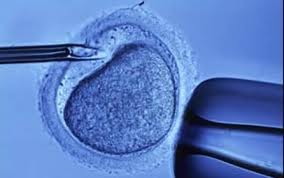
In 1978, Louise Joy Brown came into the world. Louise was no ordinary child. She was conceived in a test tube using IVF, combining a donor sperm and egg together to create an embryo and ultimately a baby. Her creators, other than the parent donors were British scientists, Dr. Patrick Steptoe, a surgeon, and Robert Edwards, a physiologist. By the time Louise turned 11 we had learned how to look inside embryos and examine gene sequences. A mere 14 years later we had a detailed map of our entire genetic makeup.
Today we have the ability to screen sperm and egg DNA and ensure that what gets combined to produce an embryo is free of inheritable traits that could cause disease in a child. The social implications of this technological capability are enormous. Parents now, if given the opportunity, have choices. They can alter the end results of natural selection using unnatural selection.
Will we in the 21st century breed Khans, a new generation of super-humans? Will we limit our ability to manipulate genes to free us of hereditary illnesses like cystic fibrosis, Tay-Sachs, sickle-cell anemia, muscular dystrophy, diabetes, blindness, deafness and heart disease? Or will we take it one step further and give parents the ability to choose eye, hair and skin colour, height and weight, sex, athletic ability and other traits having nothing to do with inherited disease?
The revolution that is unnatural selection comes with its own terminology. In this blog we will introduce you to some of it so that you can better understand what lies ahead on the road to our genetic future.
Genomics
In part 2 of this biomedicine blog I described the basic components of DNA and human genome sequencing so I would suggest you go back and read that blog before you read this next section.
We are multicellular creatures. Our cells contain nuclei (with the exception of blood cells) and each nucleus consists of paired chromosomes. We have 24 pairs in all cells except sperm and egg. Each chromosome contains linearly arranged genes. Each gene contains thousands of chemical units called base pairs, the nucleotides that combine and chain together to form DNA strands. The human genome contains 30,000 genes and 3 billion base pairs. That means on average each gene can contain 100,000 base pairs. Today we have the capability of looking at 800 base pairs at a time. So when we want to see an entire gene sequence we have to take snapshots of 800 base pair segments, overlap them and stitch the entire image together to make sure we haven’t made an error.
When we talk about an entire gene sequence we are referring to the order of the chemical unit base pairs (adenine, thymine, cytosine and guanine) in a strand of DNA. Sequencing involves breaking up a DNA strand into fragments by exposing it to free-floating nucleotides that have been assigned flourescent tags. The base pairs reassemble incorporating the flourescent tagged base units which can then be read by a computer.
In sequencing the 3 billion base pairs that make up our genetic map and comparing these maps to the sequences of people with diseases we can discover where the DNA strands have flaws. In some cases a flaw may be a base pair substitution. In other cases it could a deleted or additional base pair. In many diseases it can be a deletion of thousands of base pairs.
In developing a comprehensive database of human genome sequences from healthy and unhealthy people we have the means to create DNA screening and diagnostic testing tools.
Pre-implantation Genetic Diagnosis (PGD)
Today parents undergoing IVF can select a child’s sex and other desirable physical traits by having a doctor do PGD testing to pinpoint abnormalities in embryos, and implanting only those that are deemed healthy. PGD was first developed by Dr. Yury Verlinksy, an American, to detect potential birth defects. Today it is the standard for early prenatal diagnosis of abnormalities.
For older couples planning a pregnancy PGD testing can identify Down Syndrome, Turner Syndrome, Trisomy 18, Trisomy 13, conditions that normally do not run in a family’s medical history. PGD testing reveals specific genetic conditions like Tay Sachs, muscular dystrophy and cystic fibrosis, diseases that do run in families. In some cases an embryo can be matched to a transplant recipient such as a brother or sister suffering from leukemia by using donor stem cells and cord blood from the newborn child’s umbilicus.
Today PGD can be used to test a single gene. If you can test to eliminate any undesirable disease traits, you can also test for desired cosmetic or intellect traits and ensure that the embryos that get implanted through IVF contain the “right” genes. The implications for unnatural selection are enormous.
Preconception Screening
Why stop at just screening embryos for IVF when you can map the human genome of parents before conception? That is what preconception screening and genetic carrier screening is all about. Genetic disorders have a 25% chance of being passed to a future child when both parents carry deleted, additional or other base pair flaws in their genomes.
What is the value of preconception screening? Let’s look at one disease, cystic fibrosis. In the United States this disease affects 30,000 children and adults annually. But there are more than 8 million Americans who are asymptomatic carriers of the genes that lead to this disease. Screening could eliminate a great deal of the pain and cost associated with this inherited condition.
That’s why companies like Existence Genetics and Ambry Genetics offer genetic testing. In the case of the former, parents can take a saliva-based genetic test that screens for 1,217 rare diseases, conditions and traits. Ambry’s approach includes testing for a range of childhood diseases including a 76 disease panel test as well as individual panel tests for cystic fibrosis, Marfan Syndrome, Pancreatitis, Paranganglioma, and intellectual disabilities.
Human Germline Genetic Modification (HGGM)
This is exactly what it sounds like, changing genes in the human genome to pass along new characteristics to offspring or to correct a defect in a living person. Currently most HGGM studies are confined to laboratory mice.
HGGM is seen as a tool to be used in conjunction with IVF. An embryo can be repaired before implant, fixing a genetic mutation that could lead to disease. HGGM can also not jut fix but enhance an embryo to add athletic skills or intelligence traits. It is this enhancement capability that represents an ethical issue for many medical practitioners.
Where HGGM has application is in the treatment of defective-gene-caused diseases in living humans. The mechanism for altering the associated gene responsible for a disease involves creating a healthy gene and transferring it to the affected cells. Copies of the healthy gene are placed in a transfer agent such as a virus. The virus is inserted into affected cells where it combines with the existing DNA. The revised genome upon cell replication then is copied over and over replacing defective cells and eradicating the disease.
Of course if you extend the full capability of HGGM you can see an entire adult human genome from a somatic cell being transferred from a living person to an embryo resulting in a clone. But we’ll look at that in a separate blog.
Expect to see HGGM for IVF and disease treatment coming to a hospital or medical clinic near you in the very near future.
Pharmacogenomics
Pharmacogenomics is the study of genes and drug interactions. It looks at inherited traits in the genome and drug metabolism and response. The field combines pharmacology, biochemistry and genomics.
Drug companies are focused on developing tailor-made pharmaceuticals targeted to a specific individual’s genome. They see this as an important step in reducing adverse drug reactions in patients responsible for an estimated 100,000 deaths and 2 million hospitalizations annually in the United States alone.
Today some chemotherapy drugs such as thiopurines are not used on patients that test for an inability to produce a metabolic protein. Similar kinds of screening helps identify patients who are unable to use 3o different classes of drugs because their livers lack metabolic enzymes to breakdown the medications.
Through pharmacogenomics standard trial-and-error methods of matching patients with the right drugs will be eliminated. A physician will analyze a patient’s genome and prescribe the right drug, speeding recovery and eliminating adverse reactions.
Physicians will be able to review a patient’s genome and advise them about susceptibility to a genetic disease and include careful monitoring, diet, and lifestyle advice to lessen the impact before the disease expresses itself. Doctors will be able to provide preventive treatments to head off a genetic disease before it happens using HGGM, and vaccines designed specifically to activate the patient’s immune system.
The post Biomedicine – Part 7: Life Mapping, Genomics and Unnatural Selection in the 21st Century appeared first on Techso Mogro.
]]>