But in treating the subject of space in the 21st century we need to look beyond the race to space, the Moon, and the planets, comets and asteroids of the Solar System. We need to understand what’s in it for us, why space and the technology we invent to explore it will be a driving force for innovation throughout the 21st century.
So how did we get started? It began with the Soviet Union and Sputnik-1, on October 4, 1957 and humanity has never looked back. Sputnik circled the Earth. We then launched many more satellites, some to spy on our neighbours, some to help us improve global communications, some to study the atmosphere, weather, our oceans, land use and more. What started as a two-nation duopoly in space has broadened to become a global adventure today. The United States and Russia have been joined by 48 other countries with satellites in orbit. Nine countries have launched satellites into near-Earth orbit. Six countries and Europe through the 18-member European Space Agency (ESA) have sent probes to explore Solar System neighbours. Business is getting into the act with the United States moving from a government-only contractor to a mixed economic model embracing for-profit companies working on sub-orbital and low-Earth orbit transportation systems.
In the articles that follow we look at the history of our outward urge, starting with the Moon and other nearby Solar System neighbours. We look at this from the perspective of technological accomplishments in achieving success beyond Earth orbit. In this immediate posting we focus on the Soviet Union’s contribution to escaping the bonds of Earth. They were the first to do it and it is a remarkable story.
The Technology to Leave Earth Orbit – The Soviet Union Came First
The launch of Luna-1 by the Soviet Union represented the first human-made object to escape Earth’s gravity.What did it take to send a satellite beyond Earth orbit? It meant developing a rocket capable of lifting a 361 kilogram (790 pound) object, Luna-1, into space traveling at a speed of 11.2 kilometers (7 miles) per second. That amounts to 40,234 kilometers (25,000 miles) per hour.
An augmented R-7 rocket, named Vostok, provided the launch capability. In an earlier blog we talked about the R-7 program, the most successful rocket launching system ever built. For the Soviets to turn it into an orbital escape booster they added a third-stage. This gave them capability to deliver 6-ton payloads into low-Earth orbit, and 1.5 ton payloads into trans-lunar trajectory. Luna-1 proved a remarkable achievement for technology in 1959, passing within 6,000 kilometers of the Moon before entering solar orbit. Its onboard instruments fed telemetry back to Earth providing measurements of our planet’s magnetic field.
A second 1959 triumph was Luna-2. It was the first probe to target and hit a non-Earth object, the lunar surface. The Soviets recognized that reaching the Moon required longer duration power systems to keep instrumentation working. In Luna-3, launched a month after Luna-2, they incorporated solar cell technology to supplement the onboard batteries. When Luna-3 reached the Moon it circled it and returned to pass by Earth. During this elongated orbit of both Earth and Moon its onboard camera photographed 70% of the Moon’s unseen side. The camera used standard 35 mm film. An onboard film laboratory developed the images which were then scanned by a television camera and transmitted using radio waves back to ground stations as the spacecraft approached Earth.
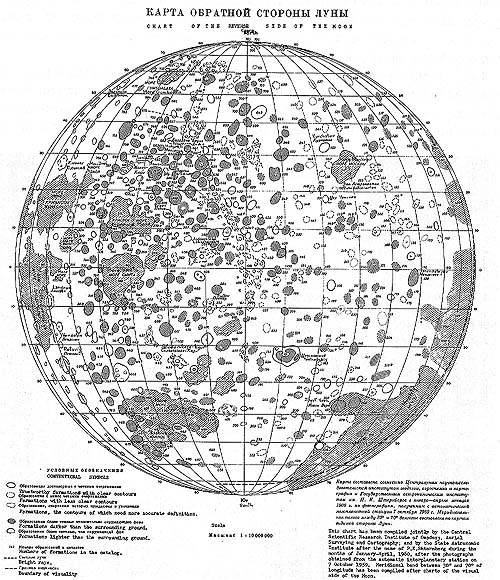
The Soviets Develop Robotic Systems for Planetary Exploration
Right from the start the Soviet Union made the Moon a target of its space program. When President Kennedy announced the Moon as the goal of the American space program in the 1960s he was abundantly aware of Soviet ambitions. The Soviets weren’t hiding anything. They had built heavy lift capacity in their rocket systems far more than needed for ballistic missiles. But the Soviets needed much more than big rockets if they were to succeed. Their shopping list included:
The Soviets mastered these skills but they came at great cost. In 1965 they made four failed attempts (Luna-5 through 8) to soft land Luna probes on the Moon. The technology included vernier rocket packs for controlled descent, nitrogen-bag inflation systems to cushion probes on impact, and instrumentation shielding to achieve ambient temperatures (19 and 30 degrees Celsius, 66 to 86 Fahrenheit)in a space vacuum. These technologies worked to perfection in January 1966 with Luna-9 making the first powered descent to the Moon’s surface. Luna-9 incorporated a panoramic television camera onboard capable of 360 degree coverage.

Two months after Luna-9, the Soviets once again proved they had mastered another technological accomplishment, successfully placing a satellite into lunar orbit. Luna-10 achieved this feat using its course correction engines to slow the spacecraft sufficiently for lunar orbit insertion. The battery-operated instrumentation package included gamma radiation, electric and magnetic field, micro-meteoroid, and solar wind detectors. After 57 days and 460 orbits the batteries finally ran out and the Moon’s first artificial satellite ceased transmissions.
In 1966 the Soviets followed with two more Luna orbiters, Luna-12 providing television transmissions of the lunar surface back to Earth and Luna-13, deploying a lander with a penetrometer to dig 45 centimeters (18 inches) into the Moon surface to study its soil properties.
Luna-16, launched in 1970, after the first two Apollo Moon landings, incorporated robotic systems for descent, sample collecting of lunar surface materials, ascent and then return to Earth. In 1970, Luna-17 delivered a robotic rover to the Moon’s surface, Lunokhod-1.
In 1973, Luna-21 delivered a more sophisticated robotic rover to the Moon’s surface, Lunokhod-2. This rover traveled 37 kilometers during its mission, transmitting more than 80,000 and conducting over 700 lunar soil tests.

The last Luna probe, Luna-24 landed on the Moon in 1976 where it proceeded to take a 2.5 meter lunar core sample and return it to Earth.
The Soviets in their lunar exploration activity created all the technologies needed for planetary exploration beyond the Moon.
What were the Americans doing in parallel? Read the next blog.
]]>Rockets are a Chinese invention with reference to them as useful for both military and celebratory purposes. The Chinese defended themselves against the 13th century Mongol invasion using rockets with little effect. Through trans-Asian trade, rockets were introduced to Europe in the 14th century. Rockets primarily were powered arrows at this time. In the 19th century the British Congreve rockets inspired Francis Scott Key in his writing of “The Star Spangled Banner,” the American national anthem. Rockets were used in whaling to enhance the power and distance harpoons could travel. Rockets attached to safety lines were used to reach ships in distress so that they could be towed to safety. The Katyusha rockets of World War II were the 20th century equivalent of the British Congreve rocket.

But the rockets that were to launch humans into Outer Space did not use the technology inspired originally by Chinese invention. In 1903, Konstantin Tsiolkovsky, a Russian school teacher, proposed liquid propellants as a rocket fuel because of the potential increase in exhaust velocity to drive rockets farther. In his writing Tsiolkovsky laid the theoretical groundwork for the rockets of Robert Goddard, an American, who built the first liquid-fueled rocket and launched it successfully. It didn’t go far but the technology he demonstrated became the basis for Germany’s emergence as the leader in modern rocketry.
Before World War II rocket clubs popped up throughout Europe, Japan and the United States. Rocket hobbyists were popular in Germany inspirted by the writings of Dr. Hermann Oberth, a Hungarian-born German, who wrote about rocket travel beyond Earth. An inspired Werner von Braun in 1930 began experimenting, building and firing liquid-fueled rockets built on Goddard’s designs. Von Braun eventually became the leader of the German rocket program that created the A-4, the rocket known to us as the V-2. The A-4 stood 14 meters in height (46 feet), burned alcohol combined with liquid oxygen, and could launch a 750 kg, (1,650 pound) payload. It had a range of 360 kilometers (225 miles). Several thousand A-4s with attached warheads were constructed and launched against British, French and Belgian targets from 1944 to early 1945 causing considerable destruction.
With the end of World War II both the United States and Soviet Union took an interest in the weapon systems designed by Germany. German scientists, remaining inventory of A-4 rockets, and the engineering tools and technology were spirited out of the country. The race to exploit and enhance this technology for war and science had begun.
Machines Enter Outer Space, Humans Soon Follow
Both the United States and Soviet Union assembled and test-fired the remaining inventory of A-4 rockets. Then they began building their own largely for war purposes. The dream of using rockets to put machines and humans into outer space seemed like an afterthought.
Exploration of near-Earth space soon followed with the launch of Sputnik, in October, 1957, the first artificial satellite placed in orbit. Weighing 84 kilograms (183 lbs.), Sputnik’s launch vehicle was the R-7. R-7 technology directly evolved from the A-4. It burned kerosene and liquid oxygen. Today’s Russian space program continues to use the R-7.
To get to orbit rocket technology needed to achieve escape velocity. That meant building rockets with more power. More power required a larger amount of fuel. Both the Americans and Soviets approached this by developing multiple-staged rockets. With multiple staging a rocket could achieve orbit without carrying around any extra weight in the form of empty rocket casings. The approach to multi-staging, however differed dramatically. The Americans chose to build multi-stage rockets in a vertical-stack configuration. The Soviets built multi-stage rockets by strapping together each rocket. In the picture below you can see how the two designs differ. In the short-term the Soviet design made it possible to develop heavier lift capacity. The R-7 had three times the thrust and payload capacity of any of the American rockets. With limited thrust and capable of delivering only small payloads American satellite requirements stimulated integrated circuit development and the technology behind modern computing. But at the beginning of the Space Age, this need for light and small was not seen as an advantage.

In space the Soviets surged ahead with heavy launch capacity and a program aimed at being first in all the key categories;
For the American program the achievements were far more modest, the successful launch of a satellite, Explorer 1, January 31, 1958. Pioneer 4, launched in March 3, 1959, became the first American satellite to pass the Moon and achieve solar orbit. On May 5, 1961, Alan Shepard became the first American to achieve suborbital flight. And on February 20, 1962, John Glenn became the first American to orbit the Earth.
The components for reasonably reliable rocket technology made these advances possible. All that was left was the imagination and determination of a government to set an achievement goal. That happened when President John F. Kennedy established a goal of landing a human on the Moon before 1970.
In our next blog we will look at the technology that created to achieve the Lunar landing of Neil Armstrong and Edwin Aldrin in Apollo 11.
]]>