space habitation – Techso Mogro https://techsomogro.com/ Science, Technology and the Future Fri, 10 Apr 2015 14:42:59 +0000 en-US hourly 1 https://wordpress.org/?v=6.8.1 NASA Invests in Commercial Partnership Projects Around Space Habitation https://techsomogro.com/nasa-invests-commercial-partnership-projects-space-habitation/?utm_source=rss&utm_medium=rss&utm_campaign=nasa-invests-commercial-partnership-projects-space-habitation https://techsomogro.com/nasa-invests-commercial-partnership-projects-space-habitation/#respond Fri, 10 Apr 2015 14:42:59 +0000 http://www.21stcentech.com/?p=16930 April 10, 2015 – Part of NASA’s recent NextSTEP announcement included the awarding of projects to a number of companies focused on developing habitats for Deep Space missions. NASA’s strategic objectives in awarding three-years of funding to these companies includes its primary goal to extend and sustain human activities across the Solar System while creating innovative technologies to support that exploration.

The companies NASA has selected include:
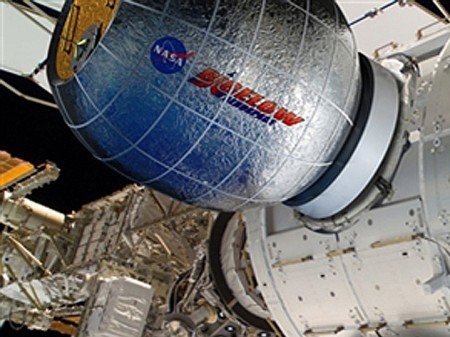
  • Bigelow Aerospace LLC of North Las Vegas, Nevada – will be putting its inflatable BEAM module (seen in the image below) on board the International Space Station (ISS) in 2015, a precursor to development of other inflatable habitats for use in Deep Space as well as for the building of a lunar base on the Moon’s surface. Who says NASA isn’t planning to go back to the Moon?


BigelowBEAMCloseup_NASA4X3

  • The Boeing Company of Pasadena, Texas – has been an integral partner of NASA going back to the 1960s. The company along with SpaceX has been picked to provide a taxi service for American crews to reach the ISS starting in 2017. In Deep Space missions Boeing will help design habitat extensions for NASA’s Orion space capsule to boost its capability to support missions as long as 60 days.
  • Dynetics Inc. of Huntsville, Alabama – is developing environmental control systems for NASA’s Deep Space initiatives. The new funding will focus on creating a rapid, efficient carbon dioxide removal system.
  • Hamilton Sundstrand Space Systems International of Windsor Locks, Connecticut – is a prime contractor for NASA’s next generation space suits. The company specializes in environmental controls and life support and one can suspect that this will remain their focus under Next STEP.
  • Lockheed Martin Space Systems Company of Denver, Colorado – is a principal logistics provider for ISS and will no doubt be developing logistical support systems for Deep Space initiatives as well as many of the components for Orion.
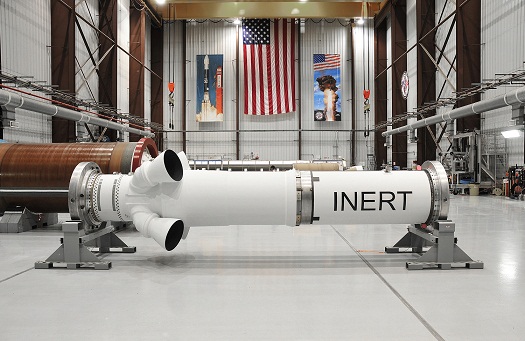
  • Orbital ATK of Dulles, Virginia – is building the rocket motor (see image below) to be used in the launch abort system (LAS) for the Orion space capsule.


AbortMotor_Pre-ship

The funding of projects focused on extending human life support systems for Deep Space missions will require in many cases the need for the companies to work closely together. This is far different than the NextSTEP contracts NASA awarded to companies developing advanced propulsion systems described in a previous blog.

]]>
https://techsomogro.com/nasa-invests-commercial-partnership-projects-space-habitation/feed/ 0
Headlines: Russian Scientists Propose We Colonize Asteroids https://techsomogro.com/headlines-russian-scientists-propose-colonize-asteroids/?utm_source=rss&utm_medium=rss&utm_campaign=headlines-russian-scientists-propose-colonize-asteroids https://techsomogro.com/headlines-russian-scientists-propose-colonize-asteroids/#respond Fri, 22 Nov 2013 16:58:15 +0000 http://www.21stcentech.com/?p=12325 November 22, 2013 – When I started writing the date just a second ago I put the year as 1963. Just shows you how certain moments in time get embedded in memory so deeply that you automatically type something without thinking. Of course November 22, 1963 refers to the day John Fitzgerald Kennedy was assassinated in Dallas, Texas, a day I will always remember.

But this story isn’t about the assassination but rather reports a story that purportedly appeared recently in the Voice of Russia stating that Sergey Antonenko, head of the Khrunichev State Space Research and Production Center, (the builders of the Proton rocket and the Zarya module that was the first piece of the International Space Station) believes that colonizing asteroids, hitching a ride on them, and using them as closed ecosystems for human habitation may be the smartest way for us to become a space faring species.

In his comments he argues that there are at least 10,000 near-Earth asteroids (NEOs) and over 2 million in the Asteroid Belt. The total mass of all of these space rocks equals more than three Earths so that means lots of material to exploit. And many of the NEOs follow long elliptical orbits that take them outward to the proximity of Mars and Jupiter which means we can ride them to other places in the Solar System.

Antonenko believes we can inhabit some of these space rocks and build closed-cycle ecosystems where humans could live quite comfortably. Today the United States, Russia and China are attempting to develop closed-cycle environments that are self sustaining, a necessary step for any successful long-term habitation of Deep Space, the Moon and Mars. Antonenko sees asteroids as the most suitable candidates for our long-term colonization of space beyond Earth orbit.

There has been lots of talk about mining asteroids and using the materials to support space habitations. But less has been said about inhabitin one of these rocks to make it a home in space. The idea has lots of merit when you consider the challenge of cosmic radiation and how an asteroid could effectively provide the type of shielding needed for our long-term space survival.

Of course NASA has an asteroid capture mission on the drawing boards but the goal there is to study and test mining technologies to see if we can use these rocks to build space infrastructure. What Antonenko has in mind goes much further.


Asteroid habitation


]]>
https://techsomogro.com/headlines-russian-scientists-propose-colonize-asteroids/feed/ 0