Today we live in a 4G and 3G telecommunications world. By 2020 we will see the emergence of the first global 5G rollouts and my guess is we will never look back. So here is what’s good, bad, and ugly about this coming communications revolution.
5G Good!
5G Bad!
5G The Ugly!
So you may be asking why we are going ahead with 5G knowing that there are so many unknowns and cautions in its deployment. The answer is 5G will be needed as 4 billion more of us become connected through a global telecommunications network. And with all those humans will come hundreds of billions of smart devices and sensors to share network bandwidth. Without 5G none of this is likely to happen.
So in putting together this abbreviated list of the good, the bad, and the ugly when it comes to 5G, I hope to have given you the means to walk into the future with your eyes wide open. That means you can talk to legislators, telecommunication providers, and equipment builders to ensure that they understand how to mitigate the risks of the bad and enact necessary rules, regulations, and policies to ensure the ugly never happens.

I’ve noticed it particularly this year when I walk my pup, Maya (she’s not really a pup being 12 years old). I go out with a fully charged phone in my back pocket and come back 45 minutes later having made no phone calls, or checked emails, texts or Google, and yet the battery shows as much as a 25% drop.

But that battery problem may soon pass as scientists search for alternative electrolytes that can stand the cold. Two researchers at Fudan University, Shanghai, have experimented with organic-based chemical electrolytes that are showing considerable promise in retaining ionic conductivity in temperatures as low as -70 Celsius (-94 Fahrenheit). The electrolyte uses an ethyl acetate base and exhibits a capacity to retain a charge at 70% in -70 Celsius temperatures. At -40 Celsius (-40 Fahrenheit) the battery retained 83% capacity. And at 25 Celsius (77 Fahrenheit) 100% retention. The researchers are still playing around with the material composition of the anodes and cathodes to go along with their new organic electrolytes. The material for the cathode is made of polytriphenylamine. The anode is composed of naphthalene tetracarboxylic dianhydride. Talk about two real tongue twisters.
From the laboratory to commercial reality is the next big step. But don’t be surprised if the next generations of smartphones and EVs operate much better when a polar vortex descends on your locale in a future winter.
]]>According to a survey conducted by CivicScience, an organization founded in 2007 focused on advising corporate and public decision makers, 76% within the above age group are “addicted” to computers and smartphones. Self-declared device addiction in groups below the age of 54 exceeded 50%.

With ownership of smartphones almost ubiquitous among young people (84% between ages 12 and 17 own or use a smartphone) and the immediate older demographic, millennials, the numbers of them accessing social networks is astronomical.

In another survey conducted by Coupofy, the online couponing website, 20% of U.S. millennials check their smartphone 10 times per hour and 25% of them do the check every 15 minutes.

None of this should be a surprise. I know when I take the subway or go for a walk the one common observation I can make is the obsession people have with their mobile devices. A typical subway car with 50 people on board will have 40 of them staring at their small screens. And I cannot count the number of times while walking that I have had to avoid running into someone mesmerized with the small screen they carry.
All we need now is for someone to invent a game that further addicts people to these devices. Oh, you say it is already happened. Welcome to Pokemon Go.

]]>
Since those early days of tunes that moved with you, when you needed a minimum of eight D batteries to power your devices and required a small posse just to move it around, portable music has often been a deciding factor in the evolution of technology. The iconic boom box, popular with late era Gen X-ers, gave way to the portable cassette player, or Walkman, which ruled the portable universe for many years. The invention of compact disks, or CDs, and eventually digital portable players such as the iPod or Zune gave way to smaller devices with greater capacity and variety of data storage. Now, the current trend is all about streaming.
Cell phone technology has progressed alongside music technologies. Mobile phones have shifted away from the smaller flip phones to the handheld smartphones with larger screens and capabilities. Data transmission began rapidly increasing, and the cell phone and music industry were quick to jump on board the streaming revolution. Companies quickly realized that people don’t want to carry around multiple devices, and so cell phone designers and manufacturers began to incorporate that technology into their designs.
In 1993, the world had its first glimpse of the future as the IBM Simon was introduced. The original smartphone was a phone, pager, fax and PDA all in one, but sadly had no music capabilities. It was, however, the first phone ever to utilize touch screen technology, ushering the way for the marvels we now call commonplace. As the technology, designs and development progressed, subsequent phones quickly adapted to allow the storage of music on phones. They also incorporated better speakers and headphone jacks.
With the advent of 3G technology, allowing for greater transmission speeds, streaming information quickly changed from fantasy to reality. When streaming music over your cellular phone was first introduced by Spring in 2004, the idea was revolutionary. Suddenly people had the ability to watch videos or, more importantly, listen to whatever music they wanted, whenever they wanted without having to carry around tons of stored data. Companies such as RealNetworks pioneered the technology which was soon picked up by others like iTunes and Pandora. Now, there are numerous audio streaming alternatives which allow you to choose your own channels and even listen to channels set up by your friends.
All the major phone companies have started producing phones tailored to these consumer desires. With newer technologies designed around music and audio reproduction, the quality of music heard through internal or external speakers or headphones is amazing. So where does the collaboration of music and mobile devices go from here? Only time can tell.
Postscript
This article has been kindly provided by a Social Monsters’ guest blogger. If you would like to see more articles of this type here please give me feedback through your comments.

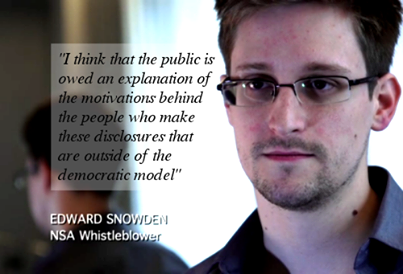
That brought to mind Edward Snowden and Wikileaks and the recent series of disclosures that have given us a new picture of government’s overreach into our private lives. Snowden’s leaks of which the latest reported in The Washington Post, show us that 90% of conversations, texts and emails sent over telecommunications networks are intercepted and have nothing to do with legitimate targeted surveillance. And to make matters worse, the captured data by organizations like the National Security Agency where Snowden worked as a contractor, is being retained. This captured data which you and I would consider personal and private, is now in the hands of an agency that appears to have few limits put on its authority.
So my friend had a point when he pointed to his smartphone. Every picture you take, every text you send, every phone call you make, is no longer private. And this is not limited to transmissions through mobile networks. Your WiFi home network is as vulnerable. Your land line phone calls which today are converted from analog to digital signals may also be intercepted as they travel from you to the person on the receiving end. Privacy is vanishing rapidly. So should we be worried? Absolutely and when we elect our governments we should be holding them to account on the issue of what is private and should remain so.
But getting back to our debate on greatest threats, I couldn’t help but think that we have seen cycles of this type of invasive and irrational “fear stoked” behaviour in the past by governments. We have had Soviet Communist invasive behaviour. We have seen fascist and Nazi invasive behaviour. We have had McCarthyism. We have profiled people by the colour of their skin and shape of their eyes and displaced them in times of war. We have discriminated and murdered people because of their cultural heritage and beliefs. So is this behaviour today much different than the past? Only in scale because we have the technology to reach further into private lives than ever before all because we are addicted to a telecommunications revolution that makes two-way communication ubiquitous. And with that comes the dark side.
On the other hand, our influence on the environment is more subtle than eavesdropping on conversations. When sea levels rise they go up in fractions of millimeters per year. You don’t notice the change that much because it is gradual and insidious. Climate scientists like to talk about the frog sitting in pot of water being heated on a stove. The frog doesn’t know to jump out until it boils to death. That’s the threat to humanity that I see as most compelling because we can ignore its insidious effects more easily.
This smart sock tells you if your running style is one that will lead to potential injury. The dashboard app for your smartphone can be used to identify problems and improve performance. There is even an SDK (software development kit) for those with smarts to create additional applications for different types of sporting activities. For example you can use your Sensoria socks to track how you shift weight from one leg to another when swinging a golf club.
Sensoria socks are machine washable and come with one electronic ankle bracelet, an ankle bracelet charger and the smartphone mobile app. You can get the socks in various sizes and four different colours. But it looks like these $149 U.S. a pair goodies will not be stocking stuffers this Christmas. The company hopes to ship its first pairs in March 2014.

We have seen the earliest stirrings that are consequences of universal connectivity. “The Arab Spring” is just one example. In the West we have seen Occupy Wall Street, Move On, 350.org, Avaaz and even the Tea Party achieve unprecedented reach and influence because of these technologies. Social networking has proven a powerful means by which causes and new ideas get disseminated. Crowdsourcing, crowdfunding, micro loans – all are the consequence of a pervasive Internet that reaches every corner of the globe.
The confluence of an ubiquitous Internet accessible by everyone may mean the death knell of traditional politics, not only in non-democratic states, but in democracies as well.
Let’s look at how these two technological achievements are impacting causes.
The Arab Spring
al-Rabee’a al-‘Arabi began with the action of one man, a Tunisian who in protest against police treatment set himself on fire, a blaze that soon spread across the Internet, fanned by smartphones and social media. The subsequent protest in Tunisia caused its dictator to flee the country. The self-immolation was soon repeated by a man in Egypt and within a few months, Hosni Mubarak, the longest ruling leader in the Arab World, was driven from office. Libya followed Egypt and today in Syria a civil war inspired by The Arab Spring is going full bore.
Other Arab countries have felt the ripples of protest inspired by the images of protest and text posted to Facebook, Twitter feeds, and YouTube. Algeria, Bahrain, Iran, Jordan, Lebanon, Mali, Morocco, Niger, Nigeria, Palestine, Saudi Arabia, the United Arab Emirates and Yemen have all seen rising civil unrest, the occupation of central city squares, general strikes and other protests, inspired by events shared through universal communications provided by the Internet and mobile phone networks. Even the community outside the Arab World found itself drawn into these conflicts first fed by spontaneous anti-government actions and soon evolving into organized revolutions supported by tanks, guns and rockets. No one has a crystal ball to see where it will end.
Occupywallst.org
This movement began in September of 2011 as a spontaneous sit-in in the Manhattan Financial District and then spread to more than 100 other U.S. cities and 1,500 across the globe. The movement’s manifesto is to represent the 99% who are without power and money, and sees banking, financial institutions and mega-corporations as the enemy. Occupy accuses these businesses as agents responsible for the economic collapse of 2008 leading to the “Great Recession.”
Inspired by the initial success of “The Arab Spring” in toppling totalitarian rulers from positions of leadership, the movement used similar tactics to attempt to destabilize political and economic institutions. But it seems to have lost much of its cachet since those early protests.
Today Occupy Wall Street states that “it is committed to making technologies, knowledge, and culture open to all to freely access, create, modify and distribute,” stating “the only solution is World Revolution.”
Its site includes contacts with all Occupy city chapters around the world, upcoming events to organize around, a “how to” manual for organizing Occupy actions, class war camp, how to form neighborhood assemblies, and connections to allied groups around the world.

350.org
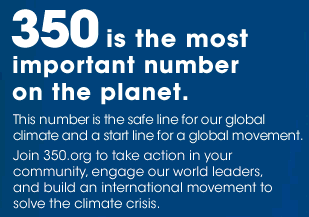
This online organization is focused on preserving the planet by reducing humanities carbon footprint. The group’s name focuses you on the issue, 350 parts per million, the safe atmospheric upper limit for CO2. The movement is described as grassroots, using online tools to act globally. The movement transcends country borders. It mobilizes people everywhere to get involved through local activities, rallies, letters to political leaders, video clips on YouTube, and now, by starting a university to train future climate action leaders to alter government policies, shame industries into recognizing the consequences of their behaviors, and plan actions to achieve their ultimate goal, the rollback of CO2 in the atmosphere. Anyone who is a member can refer to the 10-step action plan posted online to help them begin his or her own event to raise awareness.
Avaaz.org
Avaaz is a social action network that is boundless in the issues it tackles. It has close to 20 million members worldwide and describes itself as the campaigning community “bringing people-powered politics to decision-making worldwide.” Avaaz encourages individual members to start a petition, empowering anyone with a cause to draw the support from its online community.
Avaaz means voice in several languages. It was launched in 2007. Today it campaigns in 15 languages creating petitions and getting millions of signatures, funding mass email, lobbying governments, organizing events and physical protests, and contacting the media using social networking’s reach and the Internet. A typical petition campaign can mushroom within a few hours after launch into hundreds of thousands of emails bombarding the target political body, individual, business or organization. Its causes are those of its members. It doesn’t lead. It facilitates.
Avaaz states the conviction that “we are all human beings first, and privileged with responsibilities to each other, to future generations, and to the planet. The issues we work on are particular expressions of those commitments.”

The Tea Party
This subset of the traditional Republican Party in the United States has been a force to be reckoned with since its founding during the “Great Recession.” On its website its “American first” manifesto includes 15 non-negotiable core beliefs which are proudly stated:

So I started looking for a solution that would make my smartphone a better email and texting environment. Enter the Brookstone Virtual Laser Projection Keyboard. It features:
It’s certainly cool to use although a bit pricey at $99.99. But if you are like me and a klutz with small keyboards, this is a nice solution.


