In the last week in one county to the west of Toronto, 164 migrant workers from Mexico fell ill to the coronavirus. These are workers that arrived in Canada in early April to undergo 14-days of quarantine before being allowed to do their jobs on local Ontario farms. No one was sick coming out of quarantine. But poor and crowded living conditions led to community spread.
On another farm, out of 216 migrant workers, 125 tested positive for COVID-19, and there is no way to know just how far the virus may spread beyond the migrants themselves. This local outbreak on farms is symptomatic of a wider problem facing agriculture in the age of pandemic. We no longer can continue to do things the same way we have done them in the past.
The Agricultural Revolution happened 12,000 years ago. Technology has always been part of agriculture from the first digging sticks to plant seeds, to hand plows, plows pulled by animals, to harvesters, bailers, and combines. Even with all this technology agriculture remains labour intensive requiring lots of human muscle power.
Considering how the current pandemic and future ones may restrict the human migrant option, it should be no wonder that the agriculture’s future will involve a high degree of automation.
Robots are the future of agriculture. Whether ground-based or aerial, semi-autonomous and intelligent autonomous machines will become a common sight on farms.
Ecorobotix is a lightweight autonomous drone with built in GPS. Its job is to kill weeds using a herbicide spray. Mounted on wheels and solar-powered, the robot can work all day, using its onboard camera system to survey and target infestations. Farmers who implement the robot report having to use The 90% less herbicide because of it can discern precisely where the weed killer needs to be spread. And it is 30% cheaper on delivery than traditional untargeted treatments.
Will robots like Econobotix replace human labour? There is no doubt that labour-intensive, repetitive jobs are ones that robots can do as well if not better than human counterparts. And in this case, the work of weeding may no longer require any human intervention.
The widespread use of sensors on farms is further reducing the need for farm workers. Famers can survey the state of their fields and crops from a home monitor or one onboard a tractor, connected to an array of sensors sending data to the Internet cloud. This is the developing field of precision agriculture. Sensors gather the data and software interprets the results. The type of sensors include:
The growing use of precision agriculture reflects the changing climate. Areas of the United States, particularly the mid and southwest, are increasingly threatened by drought making water conservation critical. Moisture sensors make it easier to target irrigation. Efficient water delivery systems use precise air valves and sustainable pipes to distribute needed water at the appropriate time and in the right amount to maximize the health of individual plants and fields.
Environmental concerns are making farmers take note of what to grow in their locations. There is an increased focus on “low impact” crops for sustainability, and a move away from animal husbandry as the industry’s carbon footprint is increasingly under examination.
Two interesting movements in both practice and crop science have arisen at opposite ends of the spectrum.
One is organic farming that grows traditional selectively bred crops. Organic farms limit the use of pesticides, avoid artificial chemical fertilizers, and implement natural processes and techniques to reinvigorate soils.
Two is focused on the genetic manipulation of plants to improve their ability to withstand environmental challenges. Drought-resistant wheat and corn, are two examples. Both have been developed through the genetic alteration of the plant. Manipulating the DNA to make these crops resilient in the face of drought is allowing farms to continue to produce crops on increasingly marginal agricultural lands. Tools like CRISPR are being used to replace defective genes with healthy ones, or to alter the characteristics of a gene to increase a plant’s resistance to insects, fungi, and other environmental pests. Known by the acronym GMO, the technology is seen by many to be the best way forward to ensure food security in a world where our human population continues to grow, and climate change represents an existential threat.
Farm labour, the plants we grow, and the food we put on our tables are all tied to innovations being made on farms and in agricultural research being done today whether at colleges or in industry. From energy use to water management to the storage, supply chain, and distribution agribusiness systems, the farms of our past are quickly disappearing turning the growing of crops into high tech.
]]>

The warming of the ocean is one of two threats. The other is ocean acidification.
Why are both of these happening?
We know that the atmosphere responds to increased levels of CO2 by warming. That’s because CO2 is a greenhouse gas, absorbing solar radiation and converting it to heat. Over the last century our atmosphere has warmed 0.6 degrees Celsius (approximately 1.0 Fahrenheit). The oceans have been slower to warm as they too absorb heat from the surrounding atmosphere and from increased CO2. In comparison oceans have warmed on average 0.1 degrees Celsius (0.18 Fahrenheit). That warming extends through the water column to depths of 700 meters (2,300 feet). But the warming in the first 10 meters is more noticeable because surface water temperatures are already warmer than those further down.
Acidification comes from increased absorption of CO2. The ocean is the world’s primary carbon sequestering engine, more than forests or farmland. Approximately one-third of all CO2 we emit gets captured in water. The ocean is alkaline but CO2 is weakly acidic and when it dissolves in water on its own it forms carbonic acid. But in the ocean it just reduces alkalinity. And since we began measuring pH values in the ocean from the 19th century onward ocean waters have seen that pH level deline from 8.2 to 8.1. This trend is expected to continue throughout the remainder of the 21st century when pH levels drop to between 7.8 and 7.9. Why? Because the ocean will continue to absorb the CO2 we humans put into the atmosphere. At current concentrations of CO2 at 400 parts per million the ocean will continue to get more acidic. And if that atmospheric number reaches 450 then we should expect pH values to be closer to 7.8.
What does that mean for ocean life? Of all the creatures in our oceans two are most susceptible to the conditions we have created – warming and acidification.
The first is coral. The second is krill.
For coral warmer temperatures can mean death but not for all. But acidification is another story. It can inhibit construction of the reefs in which the coral live.
Coral is an unusual creature. It is a host to symbiotic algae which is critical to the coral’s survival. When coral is stressed it is the algae that dies first. The weakened coral then succumbs. Hence the bleaching that precedes the death of a reef.
For krill warmer waters and acidification inhibit reproduction. That means those animals that rely on krill such as whales and many species of fish will experience food scarcity. Any decline in the krill population, therefore, will impact the ocean food chain from bottom to the top.
In this posting we look at what some scientists believe they can do to combat the decline of coral reefs. You see not all corals are dying from a warming and acidifying ocean and scientists believe they can begin a program of selective breeding to take advantage of what has been observed.
For example corals off American Samoa, in the Pacific Ocean, (see image below) although exposed to water temperatures as high as 35 degrees Celsius (95 Fahrenheit) are not dying but in fact flourishing. Another reef has been observed off the coast of Taiwan near a wastewater outflow coming from a nuclear power plant where temperatures fluctuate 6 to 8 degrees Celsius (10 to 14 Fahrenheit) daily. It too is thriving in what would normally be considered a coral kill zone. At another location in the Pacific, off Palau, where pH levels are below the mean ocean average of 8.1, there are reefs flourishing.

What is making these corals more resilient? Scientists believe that some corals have thermal and acid tolerance built into their DNA. And it appears that these same corals are also transplant friendly so that they can be cultivated. There is research looking at hardier algae strains more resistant to ocean changes with the goal to incorporate these into corals. And plans are afoot to bank coral sperm, eggs and embryos with desirable traits to develop a program of seeding and outplanting for reefs currently in stress.
When you realize that more than a half billion of us depend on coral reefs as a food or income source focusing on reef recovery is critical.
How much more time have we got? We need to be turning the situation around over the next two decades so that by 2050 coral reefs are sustainable despite the effects of climate change.
As for how we can address the krill population challenge, that’s the subject of future blog posting.
Genetically modified (GM) crops, however, are very different than those created through selective breeding. In GM a foreign gene enhancement is spliced into the DNA of a plant and then bred to create a new species. Multi-billion dollar companies like Monsanto see GM as a universal answer to solving world hunger. But GM resistance has arisen in many countries because GM crops can have unintended consequences such as:
Selective breeding comes with none of these inherent concerns. Conventional breeding is not subject to controversy. And selective breeding has the same capacity as GM crops to address world hunger. As a result there is an increasing interest in many countries in developing better selective breeding techniques to develop new crop varieties.
One initiative goes by the name of HarvestPlus.Funded by the World Bank and a grant from the Bill and Melinda Gates Foundation, HarvestPlus focuses on developing new plant varieties to address the lack of micro nutrients in staple foods for the billions of people in the Developing World. Staple foods consist of beans, corn, rice, cassava, millet and sweet potato. Through selective breeding techniques the goal is to develop plants that incorporate the micro nutrients that address malnutrition and associated diseases that arise from poor health. Called biofortification, the process involves crossing hundreds of varieties of staple crops to create desirable traits in their offspring. HarvestPlus focuses on three micro nutrients recognized by the World Health Organization (WHO) as critical to diets. These are iron, zinc, and Vitamin A.
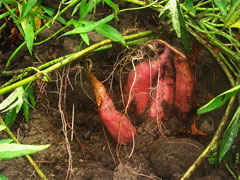
HarvestPlus recent successes include:
By 2020 the sweet potato project will impact 10 million people in 17 African countries. Other bio-fortified crops include zinc-enhanced rice and Vitamin A-enriched corn (maize).
AgroSalud, likes its counterpart, HarvestPlus, focuses on bio-fortified selective breeding for staple crops indigenous to Central and South America to address the same challenges. Between the two organizations, they are demonstrating that what Mendel discovered can be an effective tool for addressing the food production challenges humanity faces with population growth largely a phenomenon of the Developing World.
]]>

