Chris Wilmers is an Assistant Professor in the Environmental Studies Department, University of California, Santa Cruz. His research is focused on climate change impacts on terrestrial ecosystems. For Wilmers, who studies marine and land animals, the sea otter’s choice of diet, sea urchins, presents an interesting side affect. Where sea otters proliferate on the West Coast of North America, kelp forests thrive. That’s because the otters eat the sea urchins who eat the kelp.
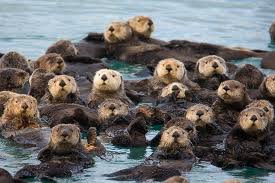
The sea otter, virtually wiped out for its waterproof pelt by hunters in the Pacific Ocean has made a recovery in the 20th century. Current population is estimated to be around 100,000 but lately the population has started to decline with infectious diseases, exposure to environmental toxins, malnutrition and attacks by large ocean predators such as orca and sharks, the principal attrition suspects.
Wilmers research shows that in eating sea urchins, sea otters allow kelp forests to expand. And with large kelp forests comes a bonus, carbon sequestration to the tune of 10 billion kilograms annually. At 2012 prices for sequestered carbon (around $21 per metric ton) the sequestered carbon would be valued at $210 million.
]]>