How life began here or anywhere else is an intriguing topic. How did inanimate atoms combine to form inanimate molecules of which some were reactive, and eventually organize to use sources of energy and become self-replicating?
Early Earth was heavily bombarded by the debris that condensed to form the Solar System. Early impactors included objects that were near planet size. In such a chaotic and hellish state how could life have spontaneously emerged?
One cannot imagine Earth 4 billion years ago as being remotely conducive to life. But moving the timeline 200 million years forward and we see the first signs of cellular biology in the earliest fossil records. It would be billions of years later before multicellular life emerged.
Panspermia advocates do not tie the emergence of life to a unique Earth-based event happening between 4 and 3.8 billion years ago. Japan’s Hayabusa2 mission which acquired samples from the asteroid Ryugu (seen below) is seen as supporting the alternative theory that panspermia led to life on Earth.

Ryugu is a carbonaceous asteroid or C-asteroid. The Solar System has an abundance of these with 75% of known asteroids in this category. Carbonaceous means they are predominantly made up of carbon plus a small percentage of other rocks, minerals, and chemicals.
Hayabusa2 explored Ryugu from orbit, placed a series of landers on the asteroid’s surface, and then collected a sample from beneath. The sample which returned to Earth in December of 2020 contained 5.4 grams of subsurface material. What was found in it has panspermia advocates abuzz.
The headlines state that 20 amino acids were contained in the Ryugu sample. Amino acids are found in living organisms. RNA molecules are complex strands of amino acids. RNA molecules use other amino acid chains as tools. Among these are amino acid chains called proteins. The combination of RNA and proteins and the linkage between them increasingly appears to be key to how life emerged from inanimate chemistry.
This is the latest twist in the panspermia hypothesis which originally only considered RNA as the building block leading to life. But now it appears that RNA in tandem with proteins (and likely peptides, but that’s another story) were critical to life emerging. When chains of amino acids formed to become self-replicating, the molecule not only copied itself but also used the nearby chemistry in the form of proteins. RNA and proteins working in tandem were key to what later would emerge. What is so interesting is that today in cells, RNA and proteins very much work together. So nothing much has changed.
The RNA-protein hypothesis leading to life has the proteins interacting with RNA strands through trial and error eventually leading to a paired RNA double strand. That doubling once replicated as a stable self-replicating molecule became DNA. It may appear to be a significant evolutionary leap, but based on the abundance of building materials available for experimentation, it doesn’t seem that extraordinary. In laboratory experiments, scientists have synthesized RNA molecules from amino acid chains. A paper recently published in Nature explains how. Given enough time, could we synthesize DNA in a laboratory experiment as well?
As for panspermia, it isn’t difficult to explain that if amino acids are present on an asteroid devoid of life, they could have been here on early Earth as well. Proto-Earth may have come with them, or they may have arrived in the meteorite bombardment 4 billion years ago. Amino acids and the molecular protein chains could have been floating within the gas nebula that preceded the forming of our Sun and Solar System.
Whether life’s building blocks were part of the planet or arrived later, panspermia advocates seem to be gaining credence, particularly based on what Hayabusa2 has revealed in the Ryugu returned samples.
]]>So what is CRISPR/Cas9? CRISPR stands for Clustered Regularly Interspaced Short Palindromic representing repeated RNA sequences found in genetic information. In bacteria, CRISPR gets used naturally to fight off viral infections by grabbing the invading viral RNA. Its partner is Cas9, a protein within the cell that gets summoned by CRISPR to destroy it. It was Doudna and her colleagues at Berkeley that realized the combination of CRISPR/Cas9 could be repurposed to treat genetic diseases cutting out bad sequences and replacing them with healthy ones. It spawned a revolution in medicine.
At the Yale Cancer Center, CRISPR/Cas9 is used to edit the genetic information in humans suffering from HIV, Fanconi anemia, Sickle Cell Disease, Beta Thalassemia, and more. The paper describing how this is being done was published on March 3, 2022, in the journal, Nucleic Acids Research.
The innovation Yale has brought to CRISPR/Cas9 is described in a press release Yale School of Medicine released on March 2nd. The lead author of the paper, Nicholas Economos, an MD and Ph.D. candidate in genetics, is quoted stating, “While past approaches have used proteins or small molecules to inhibit CRISPR-Cas9, we designed chemically synthesized peptide nucleic acids that can precisely and tightly bind the targeting guide-RNA element within the Cas9 enzyme…This allows us to impart very specific effects on Cas9 at low treatment doses to improve control and safety.”
Cas9 isn’t the only protein that CRISPR can use to slice and dice genetic information. Three years ago I wrote about the discovery of Cas12 for dealing with specific DNA sequences associated with immune response. In that same article, I described CasX, a smaller protein than either Cas9 or 12, making it even more versatile as a tool for CRISPR to use for gene editing and genetic engineering.
Now the Yale Cancer Center has added a new precision tool to accompany CRISPR that uses a synthesized peptide. So how do peptides differ from proteins? Although both consist of strings of amino acids, peptides are much smaller in size. And as I have described above, the smaller the tool as in CasX, the greater precision in doing editing.
Back in December of last year, I wrote about research at the University of Toronto that is using synthesized peptides to prevent COVID-19. The designer peptides created in this research were able to block the COVID-19 spike protein from penetrating human cell membranes. The researchers have used this information to launch a new pharmaceutical company that plans to produce a nose-spray COVID-19 preventive.
]]>In Part 1 we look at COVID-19 and how the virus has both devastated the nations of the world and at the same time accelerated development of a technological and scientific breakthrough known as mRNA. Messenger RNA, mRNA for short, represents what some biomedical experts call the cheapest fix ever invented to address so many chronic and often fatal diseases that inflict our species as well as others.
In an article appearing in the spring in the Penn Medicine News, a publication of The University of Pennsylvania (UPenn), Alex Gardner writes about how mRNA vaccines for COVID-19 are launching a paradigm shift in the treatment of influenza, and herpes with research at UPenn on each as well as work being done on future COVID variants and other coronaviruses.
Using mRNA technology to produce a seasonal version of the COVID-19 vaccine is in the works. Borrowing from what we have learned about the influenza virus and its seasonal mutations, scientists believe they should be able to predict mutational trends and conceive where the virus is going to create a vaccine each year, and even regional versions of the vaccine where a mutation is localized.
The transformational nature of RNA molecules and the ability to use them as a vaccine delivery mechanism has been researched for 27 years at UPenn. The current Pfizer-BionTech and Moderna mRNA vaccines owe their origins to research that started in 2005. The vaccines when injected instruct the body to make the definitive viral signature of COVID-19, a single spike protein that then triggers the body’s immune system to create specific antibodies that recognize the real virus immediately when present. But the beauty of the mRNA vaccine delivery mechanism is that the instructions can be changed to produce unique protein structures associated with other invaders whether viruses or microorganisms and as a result get the body to generate the antibodies to address each of them. And a single mRNA vaccine can be used to create several protein structures to help the body combat many invaders in one fell swoop.
mRNA vaccines are easy to construct. States Dr. Drew Weissman, a Professor of Infectious Diseases at the Perelman School of Medicine, UPenn, “mRNA vaccines are essentially plug-and-play. We believe you can change the part of the mRNA that encodes a protein, plugging in new code specific to the virus we hope to protect against, and cause one’s body to produce proteins that match that virus’ proteins. We do not have to develop and manufacture an entirely new formula.”
At UPenn, research to develop an mRNA vaccine to tackle herpes simplex virus 2 (HSV-2), a non-curable disease, is well underway. The vaccine identifies three HSV-2 proteins to create an antibody to stop the virus from entering cells, and two other antibodies to stop the virus from interfering with the immune system of the host. Human clinical trials are planned for 2022. The success of the HSV-2 mRNA vaccine will spur efforts to address other sexually transmitted diseases (STDs) using the technology.
Then there is influenza which evolves rapidly each year requiring scientists to scramble to identify which of the many viral flu strains is likely to have the greatest impact on human populations. Again, the beauty of mRNA technology is you can tick all the right boxes by delivering several different protein structures in a single vaccine. At UPenn, they have already started human influenza mRNA vaccine trials.
Elsewhere in scientific laboratories around the world, mRNA technology is being used to invent vaccines for Hepatitis A, B and C, Rubella, Measles, Rotavirus, HIB, HIV, HPV, Tetanus, Diphtheria, Chickenpox, Polio, Diphtheria, Pneumococcal pneumonia, Meningococcal Meningitis, Ebola, Pertussis, Malaria, Rabies, Zika, Chikungunya, and a range of cancers.
In its listing of breakthrough technologies for 2021, the MIT Technology Review states, “We got very lucky” that COVID-19 happened at a point in time where mRNA technology was arriving on the scene to transform medicine. The promise of this technology cannot be underestimated in the 21st century.
]]>
The basic molecular construct of our existence, the double-helix we call DNA, it turns out appears to spiral always to the right and not to the left. It doesn’t matter what type of life as we know it…always a right ascending spiral.
In chemistry, non-living molecules don’t discriminate. They mix both right and left-oriented constructs. But not the RNA and DNA, the molecules of life.
Why?
The article appearing in The Astrophysical Journal Letters entitled, “The Chiral Puzzle of Life” was published last month and talks about life having a “chiral bias.” That means the molecules display a specific orientation that cannot be replicated when looking at them in a mirror. The authors, Noemie Globus of New York University and the Center for Computational Astrophysics, and Roger Blandford of Stanford University, in their words, state that “living organisms comprise a system of molecules organized with specific handedness.”
In this case, it suggests a biological bias to right-hand dominance as determined by the RNA and DNA helixes. The helical structures of chained nucleotides rise up always spiraling to the right. This tendency ensures the stability of the genetic code and ensures few errors in replication. One could imagine if there were no chirality, that a percentage of DNA and RNA would display left-handed chirality, and the effect could become quite chaotic during replication.
What caused right-handed RNA and DNA?
The authors speculate that cosmic radiation played a key part. Subatomic particles like prions and muons delivered from the stars and cosmic background radiation may have bombarded long-chain molecules eventually leading to right-handedness becoming inherent to the beginning of life.
Muons, for example, contain enough energy to create a spin polarity when striking a molecule and the authors believe that this along with other potential particles within cosmic radiation became the instruments that led to stable helical structures ascending to the right.
That’s not to say that cosmic particles could equally have delivered left-handed spin producing very different constructs, but would they have led to a self-replication?
One can speculate that in the early Universe when stars and planets were first forming, left and right-handed chirality were equally on display producing all kinds of long-chain molecules of which some could have emerged as self-replicating.
To this day, we find evidence of amino acid molecules not just here on Earth that display left-handed chirality. Might this suggest that left-handedness chemistry constructs don’t lead to life?
The authors hypothesize how life emerged in the early Universe believing that its emergence had a lot to do with the building of long-chain molecules with stable architecture that allowed for rapid decoupling and recoupling of its sub-components, the nucleotides capable of grabbing the base sugars such as adenine, cytosine, guanine, and thymine which could be found nearby in the environment. The bombardment caused by cosmic particles influenced the molecules to spin to the right.
What would these early environments look like? Astrobiologists believe that good candidate environments include meteorites containing nucleotides, hydrothermal vents in the early oceans, volcanoes, and natural wet and dry cycles such as those brought on by tidal movements. All or one could have promoted the growth of long-chain molecules impacted by irradiation to display a polarity bias to right-handed chirality.
In any case, as we further explore the Solar System including asteroids, the Moon, and Mars, we may find biogenic evidence that supports universal right-handedness in life’s molecular origins. The authors of the paper described in this posting predict the likelihood that we will find just that, that all life in the Universe will display the same handedness which does nothing for me as a natural southpaw. But that’s life!
]]>The work at Scripps is not in isolation. In February of this year, researchers at the Foundation for Applied Molecular Evolution in Florida doubled down on DNA creating eight base pairings in a stable synthetic helical molecule. At the time they noted there was no reason to limit synthetic DNA to eight pairs. So why not up the ante to 10 or 12?
What makes these lines of research so interesting is they open our eyes to the possibility of new biological or synthetic life. Why would we want to do synthesize biology? Back in 2017, I wrote about the best way for humans to colonize Mars arguing that altering our DNA would make us adaptable to an environment alien to our species. It kind of makes sense that the only way to free humanity from living in a bubble as a spacefaring species would be to alter our genome so we could easily adapt to a place like Mars.
The International Space Station has already taught us what happens to our bodies and other biology in low-Earth orbit when away from the safety of our planet for a year. For humans, the results aren’t pretty. Our circulatory system is altered. Our muscles waste. Our bones thin. Our brains swell. Our autoimmune systems are compromised.
To survive, therefore, suggests we either transport environments to space and other celestial bodies that is Earthlike including our gravity, or make our DNA better at self-repair to deal with solar and cosmic radiation, low and micro-gravity environments, extremes of cold and heat, and more. An altered DNA would be able to create new versions of us with re-engineered muscles, bones, body organs, and circulatory systems. And having done that we would then do this for any other species that accompany us. The question then becomes, would a 6, 8, 10, 0r 12-base pair version of DNA make this transition possible? Is experimenting on humans to find out in the cards?
Up until now our species and every other one on Earth has been limited to DNA and RNA as building blocks of life. But researchers at the Tokyo Institute of Technology, the German Aerospace Center, and Emory University, have been experimenting to find out if there are other biomolecules out there. What they have concluded is the discovery of more than 1.16 million likely alternatives.
In a paper appearing in the Journal of Chemical Information and Modeling entitled, “One Among Millions: The Chemical Space of Nucleic Acid-Like Molecules,” the authors write “there are large spaces of unexplored chemistry relevant to pharmacology and biochemistry and efforts to understand the origins of life.” One of the researchers, Professor Jim Cleaves, at the Tokyo Institute, noted they started out on a path to find out if there were analogs to DNA and RNA, the two biological molecules we know and thought they would find a few more. Instead they found 1.16 million plus.
Why was this possible? Because the difference between DNA and RNA is a single atom substitution. So other single substitutions could conceivably create completely new biological molecules capable of replicating an alien version of what happened here on Earth.
Their findings also raise other questions. When we look for life on places like Mars, should our experiments be limited to attempting to find just DNA or RNA fragments? And if not, how would we devise experiments to recognize an alien biomolecule? The analog to alien biomolecules here on Earth is viruses. Remember how difficult it was until recently for science to detect and understand these very different biomolecular packages to the DNA that created cellular biology?
And could this research help us find new places to plant seeds beyond Earth? No doubt once we realize that the biomolecules that are in us are not unique to creating life, we have the means to create synthetic or hybrid alternatives to who we are now and that just might allow us to tolerate the conditions of almost any terra firma in The Universe. In the end, if we succeed, will we then no longer be us?

In the Nature article entitled, “Programmable Base Editing of A-T to G-C in Genomic DNA without DNA Cleavage” the researchers describe a way to use CRISPR to alter single base pairs. And in the Science research article, entitled “RNA Editing with CRISPR-Cas13” it describes using the gene editing technology at the RNA level.
So what are single base pairs?
A strand of DNA consists of four different chemicals strung out over a double helix. Those chemicals are adenine, thymine, cytosine, and guanine. Hence the letter designations A, T, C, and G. A always accompanies T, and C always accompanies G. These are the base pairs referred to in the Nature article.
Editing at the base pair level rather than cutting and pasting as is done with CRISPR/Cas9 presently, represents an even more refined approach to tackling inherited diseases. With base editing we can change single chemicals, one at a time, modifying DNA at the most granular level where in fact we can tackle a phenomenon called point mutation, associated with 32,000 of the 50,000 changes within DNA associated with genetically caused diseases.
In editing base pairs, the researchers at Harvard and the Broad Institute demonstrated using CRISPR to change an A to a G. By doing this the researchers switched on the cells own repair mechanism to complete the process by fixing the other chemical in the base pair. So in switching A to G, the cell then switched T to C rewriting single lines of genetic code rather than whole genes as is currently done with CRISPR/Cas9. In reverse other researchers have demonstrated that switching a G to an A, the reverse is associated with another 15% of point mutations responsible for genetic diseases like anemia.
Repairing RNA Base Chemicals Provides Temporary Relief
In the Science article, researchers at the same locales, Harvard and the Broad Institute, have described how they targeted base chemicals in RNA, DNA’s companion, by using CRISPR with Cas13, the latter a different protein from Cas9.
In RNA the base pairs are adenine, the A, uracil which is referred to as U, guanine, the G, and cytosine, the C.
The researchers targeted adenine, substituting a nucleotide chemical, inosine deaminase, known as I. Inosine strengthens a cell’s immune system by temporarily repairing damaged RNA sequences associated with some genetically caused conditions including diabetes, heart disease, blood disorders like sickle-cell anemia, and hereditary deafness and blindness.
Why only temporary?
DNA’s companion continuously degrades within a cell and then gets regenerated. Each time the cycle repeats RNA reverts to its original form. That means any CRISPR changes don’t get permanently incorporated. This means CRISPR-RNA research can only produce temporary therapeutic fixes in the same way a daily pill or a weekly given shot can alleviate symptoms while not actually curing the disease. It is possible, therefore, to encapsulate this newly discovered CRISPR-derived capability and serve it up in pill form.
I reported similar success last week from research being done at UCSD where CRISPR is targeting defective RNA in patients with Huntington’s , ALS and myotonic dystrophy, successfully eliminating 95% of the compromised cell proteins associated with these diseases. In this case, as well, the current goal is to produce a therapeutic medicine that can be given daily or weekly.
I used the 48-hour hiatus to finish reading “A Crack in Creation: Gene Editing and the Unthinkable Power to Control Evolution.” Written by Jennifer Doudna with co-author Samuel Sternberg, this is a book about unlocking the secrets of DNA using a new technology, one that I have written about before called CRISPR/Cas9.
CRISPR gives humans the power to edit DNA, and by edit I mean the capability to cure diseases, enhance biology, address world hunger, and alter humanity either for the good or for evil.
Doudna is on the faculty of UC Berkeley. Her laboratory focuses on molecular and cell biology and it is her work that has created what she calls the crack in creation, CRISPR/Cas9. And exactly what is this crack? CRISPR/Cas9 is a technology derived from a natural process within a bacteria that combines RNA and the Cas9 protein into a DNA editor capable of slicing out bad genes and replacing them with healthy ones.
CRISPR/Cas9 first appeared on the scene in 2012 when Doudna published the research in an article entitled, “A Programmable Dual-RNA-Guided DNA Endonuclease in Adaptive Bacterial Immunity” in the journal Science. She had learned about CRISPR from an associate at a conference and began investigating it only to discover that when combined with a particular protein, Cas9 it could do amazing things.
When introduced into a cell with damaged genetic information, CRISPR/Cas9 could excise the bad DNA code and replace it with a correct genetic sequence. And CRISPR/Cas9 could do this in cells with multiple defects, snipping and replacing, and snipping and replacing again. Nothing like this had ever been seen before.

For Doudna and her laboratory colleagues, it was a revelation that led them to publish and share their discovery with the world. Soon laboratories all over the planet were slicing and dicing with CRISPR/Cas9. That’s when she suddenly asked herself, had she created a monster?
Doudna didn’t start out trying to create a tool to reinvent biology. She wanted to understand CRISPRs, these clustered regularly interspaced short palindromic repeats of RNA sequences found in the genetic material within bacteria. CRISPRs turned out to be bacteria’s way of fighting viral infections. CRISPRs within the cell grabbed invading viral RNA and signaled a specialized protein called Cas9 to come and deal with it. And the Cas9 protein turned out to be a great executioner, dicing up and destroying the viral RNA.
Doudna and her colleagues realized that there could be another use for this CRISPR/Cas9 partnership. It could be repurposed to cut out bad sequences of DNA and replace them with healthy ones. Strings of 20 base pairs within the DNA strand could be excised and replaced with a precision never seen before. That made CRISPR/Cas9 the ultimate tool for potentially correcting congenital diseases, for stopping pandemics, for creating crops capable of dealing with the worst conditions climate change could throw at us, and for much more. Simply manipulating short strings of individual base pairs within the DNA of every living thing was now possible.
But what could do good could also do evil. Could CRISPR/Cas9 be a malevolent force unleashed upon the world? In her book, “A Crack in Creation,” Doudna describes a recurring nightmare.
She is approached by a colleague who asks her to teach a person about how the technology works. She writes, “I followed my colleague into a room to meet this person and was shocked to see Adolf Hitler, in the flesh, seated in front of me.” And Hitler speaks saying “I want to understand the uses and implications of this amazing technology you’ve developed.” Doudna talks about being jolted from sleep with her heart racing. She recognized that in CRISPR/Cas9 her team had created a tool of “incredible power, one that could be devastating if it fell into the wrong hands.”
Doudna suddenly thought back to the birth of the atom bomb, then the hydrogen bomb, and finally the Cold War. The second and third were unintended consequences of technological discovery.
Oppenheimer, the father of the atom bomb has been quoted about this period of discovery. In considering the birth of the bomb he states, “It is my judgment in these things that when you see something that is technically sweet, you go ahead and do it and you argue about what to do about it only after you have had your technical success.” Did Oppenheimer envision the Cold War in building the bomb? No.Doudna was now asking herself about unintended consequences of discovering CRISPR/Cas9 and its awesome power.
But Doudna was now asking herself about the unintended consequences of her discovery of CRISPR/Cas9 and the potential implications of its awesome power.
There is no doubt that CRISPR/Cas9 represents a biomedical revolution. Nothing in medicine, and biology will ever be the same. Of course, the public may raise pitchforks in fear of the potential chimeras and Frankenstein monsters CRISPR/Cas9 could produce if used with malicious intent. But should those fears dictate the pace at which research proceeds using the technology?of Science fiction about humans toying with nature is replete with warnings of our potential overreach. In particular, it is using CRISPR/Cas9 on what is called our
Humans toying with nature is a common science fiction theme replete with warnings of potential overreach. What is that overreach? With CRISPR/Cas9 it would be the manipulation of the germline, our sperm, eggs, and embryos. Could we spawn a new eugenics arms race with different countries spurring their scientists to develop enhanced warriors?
So far laboratories experimenting with CRISPR/Cas9 have been looking at the diseases that appear in somatic cells and seeing if the technology can defeat diseases like muscular dystrophy, cystic fibrosis, sickle cell anemia, and various cancers. Others that are using germ cells have experimented with nonviable embryos. In the case of the latter recent published results show that CRISPR/Cas9 can correct genetic sequences responsible for causing hypertrophic cardiomyopathy, a congenital heart condition. And although the embryos used in the latter study were nonviable, they could have been.
Doudna and her fellow scientists, researchers, philosophers, and ethicists continue to wrestle with the positioning of the line in the sand that cannot be crossed related to CRISPR/Cas9 use. But no one wants to stop experimenting with a technology so revolutionary it will change how medicine is practiced as this decade comes to an end and beyond.


Viruses mutate rapidly. That’s why every year we need to get a new influenza shot because every year we tend to face a new viral variant. But what do they all have in common? A double strand of RNA that coerces the DNA of the cells they invade to replicate copies of themselves. Every time a cell is invaded by a virus it replicates on mass and then breaks out destroying its host.
So what if an infected cell died before the virus could replicate? And what if the double strand of RNA could be the identifier that would trigger premature cell death so that no viruses could infect neighbouring cells. Essentially that is the modus operandi for DRACO, switching on the suicide button in a cell once the viral RNA alarm bell goes off.
What constitutes a suicide button in a cell? A protein! Normally cells use proteins as messengers and instruction deliverers for the execution of cell function. DRACO is a combination of two recognized natural proteins commonly found in human cells. Called a superprotein, DRACO’s two components are PKR and Apaf-1. PKR stands for protein kinase RNA-activated. It tracks the RNA viral double strand within the cell. Apaf-1 stands for apoptotic peptidase activation factor 1, a protein that activates a cell’s suicide switch.
What viruses are the object of DRACO’s wrath? The superprotein is being tested in the lab to combat 15 different viruses including:
When will DRACO be available for human trial?. As early as 2017 with large-scale trials planned for 2020. FDA and other health authority approvals are expected by 2022.
For a recent article on DRACO, look for the September/October 2012 issue of Science Illustrated. Great pictures and good explanations.

]]>
It is this capability that represents the significant breakthrough in this research. Scientists have been experimenting with synthetic DNA molecules for more than a decade. But in the research led by Philipp Holliger and Vitor Pinheiro, at the Medical Research Council Laboratory of Molecular Biology in Cambridge, United Kingdom, the research team was able to create synthetic DNA capable of duplicating allowing it to evolve. To achieve this the research team created six special polymerases that synthesized XNA from DNA and then copied the XNA back into DNA.

This is the essence of how evolution works. As DNA and RNA molecules replicate small errors over time appear. These errors alter the genetic code that underlies life here on Earth.
With XNA able to evolve through replication researchers can begin to understand how life started. The fact that XNA can do what DNA and RNA do suggests that there may have been other life creating molecular systems that predated or competed with them. Imagine life starting either here on Earth or somewhere in the Cosmos with competing forms of self-replicating molecular structures duking it out for supremacy. Here on Earth DNA and RNA were the winners. Could there be an XNA elsewhere leading to entirely different life forms? The research suggests the evidence is there.
Short of potentially creating life from exotic biology is there a practical value to the research? By developing XNA medical researchers can begin to explore ways to use it in therapeutic medicine, particularly in the development of nucleic acid treatments with modified DNA sequences that are self sustaining to target diseases. Current research in this area has been unable to create molecular-based treatments because the natural occurring DNA and RNA molecules breakdown before reaching therapeutic targets. The work on XNA should allow biomedical researchers to develop new anti-angiogenic medicines. Currently there is only one and it is used to treat macular degeneration.
]]>
DNA – Deoxyribonucleic Acid
Since the mid-19th century we have known that within our cells contained the building block of life. We didn’t know what that building block looked like until the mid-20th century when it was first described.

DNA is a molecule found in almost every cell of every animal and plant on this planet. There are a few exceptions – those cells that do not contain a nucleus such as red blood cells. DNA is also found in mitochondria and chloroplasts, organelles found within animal and plant cells that are energy factories.
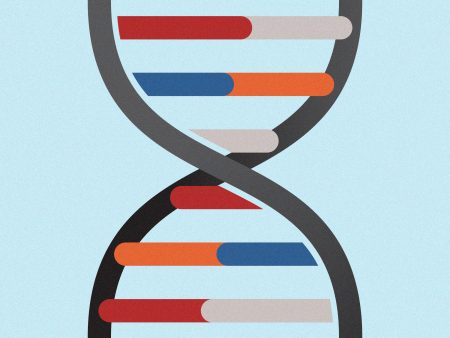
In the diagram above we note 4 different colour-labelled segments attached to the double-helix structure of the DNA molecule. These are labelled A, T, C and G and represent four chemical bases. These nitrogen-based chemicals are organic molecules that when combined together turn chemical soup into living things.
A stands for adenine
T for thymine
C for cytosine
G for guanine
Note how these bases connect the double helix in a particular way, adenine always connects to thymine and cytosine always to guanine. These are called base pairs. The helical spiral material consists of sugar and phosphate molecules. In our diagram they appear as the blue and orange spiral staircase banister with the base pairs acting as the steps. The combination of one of the nitrogen-based chemicals, a phosphate and sugar molecule together is called a nucleotide.
Human DNA consists of approximately 3 billion base pairs with accompanying sugar and phosphate molecules. It is both simple and complex. The quantity of base pairs within a DNA molecule determines whether we are human, or fruit flies. If the number of base pairs approximates 3 billion then it is the shuffling in the order that determines whether we as humans have brown or blue eyes. We call this shuffling in the order of base pairs, sequencing.
A sequence of DNA in the form of a number of nucleotide base pairs forms a gene. Genes can contain as few as 1,000 base pairs or as many as a million. Every human has approximately 20,000 genes. Our genes reside on 46 chromosomes in 23 pairs, all contained in the nucleus of our cells.
DNA – a Biological Programming Tool
Human DNA is an instruction manual containing the information necessary to make one of us. In every cell we have complexes of molecules called amino acids. Amino acids contain an amino group (NH2) and a carboxyl group (COOH). These are nitrogen and carbon-based molecules, the stuff of planets and stars. Amino acids are the chemicals that make up enzymes and proteins. DNA instructs both in a process described below:
DNA has one other remarkable characteristic. It can replicate by unlocking the bonds between nucleotides and joining up with other nucleotides. DNA does this with the help of another cell enzyme called DNA polymerase. This enzyme along with several other helper enzymes goes alongside the DNA strand and breaks the nucleotide bonds and replicates it into two DNA strands. The end product is two separate DNA molecules, virtually identical. The final act in this process leads to the cell dividing with each new cell containing its own DNA.
Genome Sequencing – a Prelude to Programming Ourselves
The full sequencing of the human genome is a very recent event. As of 2009 we now have the capability of describing ourselves completely. The cost of doing this has rapidly declined making it possible for almost anyone with $100 in their pocket to find out of what they are made.
What does this mean? For the first time medical professionals will have a tool that is predictive, personal and preventive in its use. How so?
Predictive – Because physicians will be able to study the genome doctors and detect all genetic variances that indicate a higher than normal likelihood of a patient getting a disease.
Personalized – Because individuals will receive treatment specific to what their genome indicates. For certain cancers where the genome indicates high certainty this means earlier intervention and better outcomes.
Preventive – Because doctors will be able to intervene before a disease starts making it possible to avoid its onset altogether.
Genome sequencing of every baby born will make it possible to develop a life plan heading off tendencies predicted in the reading of the child’s DNA. The downside to this is obvious. Not all diseases are visible by reading DNA. Malaria, HIV, drug overdose, being hit by a car, dying in war, are not predictable in reading a person’s genome.
For parents who only want the best for their children, genome sequencing has the potential of offering a means to offset deficits visible in a child’s makeup. Can reading the genome predict OCD (Obsessive Compulsive Disorder), ADD (Attention Deficit Disorder), Autism, Asperger’s Syndrome, Schizophrenia and other psycho-behavioral disorders? Could preventive intervention before the symptoms show potentially do more harm than good?
Programming the Genome
Eugenics is the practice of improving humanity through selective breeding. As practiced in the 20th century eugenic policies were enacted to cull “undesirables.” Probably the best examples were the racial practices of Nazi Germany in the euthanizing and murder of undesirables, gypsies, homosexuals, Jews, and lesser “races,” or the sterilization programs conducted in many Western countries against adults with Down’s Syndrome and mental disorders. War and saner, more humane leadership led to the end of these practices.
The new eugenics takes a very different approach. Instead of removing “undesirables” after birth, the idea is to engineer out the undesirable genetic factors before birth, even before conception. Enhancing existing in vitro fertilization techniques will make it entirely possible to introduce genetic improvements, the advent of designer babies.
Recently I read about a high-level programming language called Qath. Qath is software designed to build genomes. Like other programming languages, Qath generates source code to create new sequences. We are at the beginning of a new era, creating synthetic life.
The author of Qath is Zoltan Barczikay, a software developer with, as he describes it, “an avid interest in synthetic biology.” He has made Qath an open source tool available for free for anyone to download. The goal of Qath is to engineer human genomes “to create reprogrammed cells for therapeutic purposes” or perhaps to improve humanity.
]]>