The post We Need to Get Back to Using Glass Containers Instead of Plastic appeared first on Techso Mogro.
]]>What happens to the glass, however, is what I want to talk about today. Why? Because glass, unlike plastic and paper, is infinitely recyclable, never losing its material integrity. Yet most of it continues to be dumped in landfill sites around the world. This is an environmentally unsound practice for a material that when manufactured each year contributes as much as 86 million tons of carbon dioxide to the atmosphere. If we were to reuse the glass, that would mean much less carbon pollution contributing to global warming.
Global production of glass containers and bottles in 2020 reached 690 billion pieces. Forecasted growth has it reaching 922 billion pieces by 2026. The other area where glass is used is for windows. Production here is expected to reach 1.19 billion square metres by 2023.
The primary ingredient of glass is silica sand. The secondary material is soda ash. Glass is made by heating limestone to 1,500 Celsius degrees. Today, most glass manufacturing uses natural gas as the heat source which contributes up to 85% of the industry’s total carbon emissions. The remainder of the emissions come from the byproducts of the chemical reaction among the limestone, ash and silica sand. To remove that 85%, glass manufacturers can switch to renewable electricity sources which would mean the production of glass would be nearly carbon neutral.
When crushed recycled glass is used in the making of new glass, it means less raw material and less heat to produce a final product. Called cullet, the addition of crushed recycled glass further reduces carbon emissions.
Bottle glass and flat glass are different products. Recycled bottle glass cannot be used in the making of flat glass. And because glass is heavier than plastic, using it as a replacement for the latter does add on to transport costs and emissions.
Currently, where is glass manufacturing and recycling being handled best? The European Union is the model to look to for bottled glass. In all 27 member states, there is a concerted effort to recycle. As a result, new glass produced today in the EU contains 52% recycled glass with the Community setting a 90% target by 2030.
Some additional glass facts to consider as a consumer:
The pushback from manufacturers and merchandisers who use one-time-use plastic remains a significant challenge, making it harder for consumers to advocate for increasing environmentally sustainable consumer goods packaging where glass is used more frequently. It’s not that we should eliminate plastic from packaging. It is far too convenient a material. But for bottled products, minimizing single-use plastic by replacing it with glass is environmentally advantageous. Considering the commitments coming out of COP26 to try and keep global atmospheric temperatures from rising beyond a mean 1.5 Celsius degrees, governments have to look at manufacturing materials and consumer packaging where glass can serve as an environmentally sustainable alternative to single-use plastic.
The post We Need to Get Back to Using Glass Containers Instead of Plastic appeared first on Techso Mogro.
]]>The post In the Present and Future Can We Save Our Environment From E-Waste? appeared first on Techso Mogro.
]]>So what is it? If you are anything like me you may have accumulated quite a trove of digital devices that have outlived their use.
When I got Jenna’s article I took a look around in our home to take an e-waste inventory and discovered my wife has almost every cell phone she ever acquired from clamshells to smartphones. I, too, have some lying unused in my desk drawers. In our basement storage locker in the apartment building, we have a router, a range extender, a working micro-laptop, an electronic writing to digital text tablet, and an old but still serviceable audiovisual projector. All of these items take up space and fill a large sealed tub. I don’t need them but don’t know what to do with them. I know there are e-waste depots here in Toronto but all these devices still work. I just don’t have a use for them anymore now that we have downsized and I have retired from consulting.
Feeling like a packrat with all these devices made me wonder how others are handling their obsolete or discarded digital technology. I went online to find out just how much is out there. The World Counts website states “we generate about 50 million tons of it every year. This is equivalent to throwing out 1000 laptops every single second.” That’s an astounding amount. So with no further ado, I give you Jenna’s look at e-waste and what we can do about it.

Recycling is a major factor in the push for sustainability and green living. In recent years, you may have heard the term e-waste in discussions about recycling. If you’re not sure what it means, you’re not alone. E-waste is simply electronic waste. It can include anything from cell phones to laptops to refrigerators and more. Anything with an electrical aspect to it can become e-waste.
The problem lies with its handling. Recycling e-waste comes with a whole set of issues but there are ways to combat this environmental threat.
E-waste affects the environment in numerous ways from the presence of toxic materials and pollutants within it to its transportation.
Producing electronics relies on the mining of materials such as gold, silver, platinum, lithium and more. In extracting these raw materials there are process byproducts including toxic chemicals and heavy metals. Lead and mercury are among these.
The housings of electronic devices are often manufactured using polyvinyl chloride (PVC) plastic which in itself can prove to be hazardous in disposal.
Most electronic e-waste ends up in landfill where it breaks apart over time exposing the toxic materials inside to pollute the air, ground and water supply. This type of pollution produces many different health risks for people let alone harm to the environment.
Some e-waste gets incinerated which can also be a source of airborne toxins and emissions.
And some is recycled to prevent some of these risks. But even in recycling, there are problems because most of these operations take place overseas.
Many countries in the Developed World export their e-waste to the Developing World. The practice has environmental consequences releasing greenhouse gas emissions during transportation and if recycled can release toxins into the environment. Workers in some Developing World countries often attempt to refurbish and sell salvageable e-waste but in the process they are exposed to dangerous chemicals and substances during the sorting process.
Then there is the issue of e-waste containing digital content that has not been removed by former owners potentially creating security issues and identity theft.
You can no longer separate technology from your life, which is not necessarily a bad thing. The e-waste that is a byproduct of our technology dependence, however, is something that human society has to consider as we continue to be lured into buying a growing number of new devices. It seems that one can never keep up with the latest smartphone model with all of its bells and whistles making the device you already own seem obsolete when in fact it isn’t.
Manufacturers feed the demand by shortening the life cycle of their products. It often becomes easier to replace a device rather than repair it, and manufacturers making fixes more expensive than buying something new.
Raising awareness is an important first step. Consumers have a say and can let manufacturers know that e-waste is a problem for which they need to participate in finding solutions. That means improving production methods, replacing harmful materials in manufacturing with eco-friendly ones. And it means recycling e-waste has to be built into the product lifecycle.
Standard recycling is a beneficial way to help the environment. E-waste recycling is no different with those who do it implementing safety precautions and the wearing of protective gear during disassembly, cleaning, and sorting for material recovery. This type of recycling needs to be adopted globally to be effective and brings us to the issue of product lifecycle management.
The concept known as the circular economy is built around an industrial model involving not just material sourcing, manufacturing, and distribution, but also in the managing of a product after it is no longer being used. It is a solution that has become a growing practice for waste management and the electronics industry. In a circular economy, 100% of the materials going into a product get reused reducing waste and pollution significantly.
Today, there is a disproportionate gap between what society produces and what it discards and e-waste is no exception. This, however, is changing as more manufacturers and waste management companies adopt circular economy principles within their operations. The mantra is repair, reuse, remanufactured and refurbish with non-recyclable and single-use materials being removed from production processes.
The growing demand for new technology is not going to slow down. So the future of e-waste will require a revolutionary change. A move by manufacturers to a circular economy offers a sustainable model for recycling and reuse. And finally, each of us individually, by changing what and when we buy, can save the environment from piling up an increasing amount of e-waste.
The post In the Present and Future Can We Save Our Environment From E-Waste? appeared first on Techso Mogro.
]]>The post Recycling Makes All of Us Feel We Are Environmentally Responsible But How Many of Us Do it Right? appeared first on Techso Mogro.
]]>The post Recycling Makes All of Us Feel We Are Environmentally Responsible But How Many of Us Do it Right? appeared first on Techso Mogro.
]]>The post A New Source of Fuels – Those Tires You Discard appeared first on Techso Mogro.
]]>
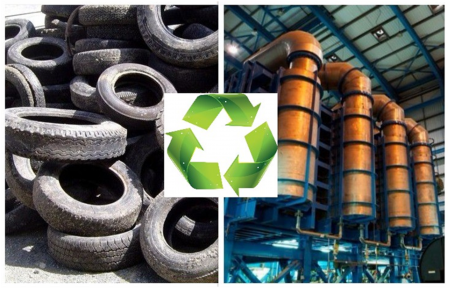
Tires are regularly discarded into landfill or stockpiled for future reuse. But today these discarded tires can be turned into fuels that are lower in emissions than other petroleum-derived products.
Tire-derived-fuels or TDFs can be created from scrap tires of all kinds including whole tires, or tires that have been processed into smaller, uniform pieces by using shredding equipment.
There are two physical processing steps while processing tires:
The shredded chip size of the tire is controlled by a screen kept in the discharge where approximately 5-centimeter (2-inch) sized pieces fall through screen openings while oversized material gets recirculated to the shredder for further cutting to get a uniform end size.
Some operations employ downstream shredding and wire removal to recover the entrained or lost rubber from the wire removal stream. This makes even the recovered steel resaleable for scrap, avoiding dumping it into landfill.
If smaller sized TDF-feedstock is required, shredding equipment capable of further reduction can be used.
There are many benefits derived from turning tires into fuel. These include:
The biggest challenge for TDF producers is storage and handling of the raw material. Tires left exposed to the environment consume a lot of land. They are water traps that can become breeding grounds for mosquitoes and the diseases these biting insects spread.
Harvesting tires from landfill sites presents additional problems. Hundreds of millions of tires have made their way into general purpose landfill today where their presence contributes to volatile greenhouse gas emissions in the form of methane, the single largest source for landfill fires.
So finding an economical way to retrieve and repurpose these abandoned, illegally dumped tires, could further reduce the human-generated garbage problem and produce a fuel capable of lowering greenhouse gas emissions and our dependency on fossil fuels.
The post A New Source of Fuels – Those Tires You Discard appeared first on Techso Mogro.
]]>The post Materials Science Update: The Plastic Problem and a Plastic Solution appeared first on Techso Mogro.
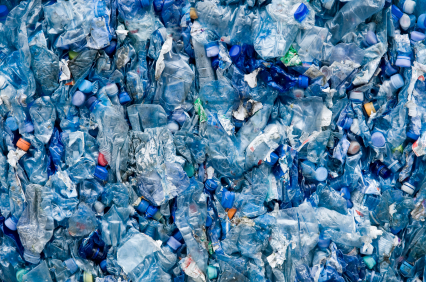
]]>Plastic is durable and versatile. We can mold it into almost any shape. We can reuse some of it to make new plastic items. But what we can’t easily do is decompose it. That’s because plastic is a polymer, consisting of hundreds of thousands of smaller molecular units called monomers. Polymers are huge molecular structures that can stretch and bend. But don’t ask a microbe to digest a polymer. The molecules are just too big to be handled. Plastic thrown in landfill, therefore, doesn’t degrade.
It appears that the only way to breakdown plastic is through chemical processes. Sunlight and heat seem to work. The photochemical effect from sunlight doesn’t work on all plastics and as the polymer degrades it turns into brittle fragments that keep getting smaller until they become microscopic. The process can take years.

On the other hand heat seems to work well on plastic. Cook it and you can break down the polymer chains. A Markham, Ontario company, Phoenix Depot International, is one of a handful of technology developers that are using a heat-based process to take waste plastic from recycling programs and landfill and convert it into clean diesel and gasoline fuel. The technology, called Thermal Molecular Decomposition (TMD) involves raising the temperature of the plastic to 700 Celsius (almost 1,300 Fahrenheit) at atmospheric pressure in an oxygen-free environment. There is no combustion, no toxic waste gases and no secondary contamination. The process yields gasoline, diesel fuel and carbon black.
The TMD technology can also be used to turn scrap tires and waste oil into usable clean fuels. Every landfill can become its own fuel depot processing plastic, tires and waste oil into gasoline and diesel. Output is impressive:
The TMD technology is available in 5, 30 and 50-ton units to scale to any operational requirement.
Phoenix is not alone in attempting to solve the waste plastic issue. I have found a number of other companies including:
As long as we continue to be a throw away society particularly with plastic, it’s good to know that there are companies addressing the waste we produce and coming up with ways to remove it from landfill without further polluting the environment. That’s a good first step in tackling the plastic problem we created over the last 70 years.
The post Materials Science Update: The Plastic Problem and a Plastic Solution appeared first on Techso Mogro.
]]>The post Energy Update: Sweden’s Waste-to-Energy Problem – Not Enough Garbage appeared first on Techso Mogro.
]]>One way the country is achieving this goal is through incineration with recycling programs feeding waste-to-energy power plants of which, currently there are eight throughout the country.

Today in Sweden only 4% of household waste goes to landfill. The remainder is managed as follows:
The 49% consumed by incinerators gets used to generate heat and electricity for buildings and homes throughout the country. Today in Sweden 20% of all homes are heated by hot water and 250,000 homes their electricity, both from burning garbage. As a result Sweden finds itself with not enough garbage from domestic sources to meet energy and heating demand and has started to import waste from other countries. Currently, Norway is the principal supplier, exporting 800,000 tons of its trash to Sweden annually.
Globally waste-to-energy power plants are showing up in a number of countries. But in Europe, Sweden is the only country that consumes other countries garbage to meet its energy demands. Here in North America, where I live, burning garbage for power has not won a large audience. Statistics show there are 459 waste-to-energy power plants in the United States although most are not burning municipal waste. Instead they are dealing with waste from industrial output converting it to energy and heat to supplement manufacturing and mining processes. For those burning municipal waste, many state and municipal governments are not involved having passed the burden along to waste management companies who own private landfill sites and who are contracted to collect and process the waste. These private contractors are finding it harder to develop new landfill sites because of nimby (not-in-my-backyard) opposition. It, therefore, becomes more urgent for them to find alternatives to new landfill sites. Hence they are exploring and in some locations developing incineration or mining of existing waste.
Last week I wrote about the City of Vancouver in British Columbia, Canada, and its announcement to turn 370,000 tons of trash per year into an energy source. It joins a few other municipalities across the the country, most much smaller than Vancouver, using landfill waste to generate energy. Other large Canadian municipalities such as Toronto, Calgary, Edmonton and Montreal continue to baulk at proposals to incinerate municipal waste. Toronto, for many years, has transported and dumped its municipal waste in landfill sites in Michigan, hundreds of kilometers from the city. New York City sends 10,500 tons of its residential waste to landfill sites as far away as Ohio and South Carolina. Sounds ridiculous, doesn’t it?
You would think that with all the waste humans produce that incineration would be a preferred method of managing garbage but that is not the case. Why? Because of effluent concerns — the amount of ash, heavy metals, dioxin, sulphur dioxide, hydrogen chloride, carbon dioxide and other trace gases that burning undifferentiated garbage can produce. These byproducts of incineration are linked to climate change, acid rain, and human illness.

So how is Sweden handling the byproducts of incineration? The country’s incinerators have been designed to collect the pollutants that are the byproducts of burning waste. Residual heavy metals are collected and buried in landfill. Gases going up the smokestack are scrubbed to remove dangerous chemicals. Sulphur dioxide gets converted to sulphuric acid for commercial resale. Ash is collected and exported back to Norway where it gets used for roads and building materials. The goal is to make incineration a green energy source and Sweden is well along the way to achieve this.
Sweden isn’t alone in its pursuit of reducing its landfill to net zero by using garbage as an energy source. Denmark has been in the incineration business much longer and boasts 29 waste-to-energy plants serving 98 municipalities and its 5.5 million inhabitants across the country. Germany and the Netherlands are also in the business of developing incineration plants to convert garbage to energy. For Europe, with far less available land for dumping municipal waste, incineration is seen today as a practical way to achieve two objectives – minimizing the garbage produced and generating the energy needed to heat and light communities while ensuring the process is green.

Some of the biggest resistance to waste-to-energy initiatives comes from environmentalists who want to achieve zero landfill by 100% recycling. This is a noble objective but even in municipalities with high recycling and composting rates garbage continues to be thrown into landfill sites. And legacy landfill sites remain a ticking time bomb – a source of greenhouse gas emissions, and an ongoing environmental hazard.
In the 21st century, how we handle garbage as the population in the Developing World acquires the same material quality of life of those in the Developed World, the problem of municipal waste will get that much larger. Waste-to-energy power plants represent a viable and responsible way to handle what will be an even larger garbage crisis.
The post Energy Update: Sweden’s Waste-to-Energy Problem – Not Enough Garbage appeared first on Techso Mogro.
]]>The post Transportation and Energy Update: Some Big Numbers to Ponder and a New Fuel Source appeared first on Techso Mogro.
]]>The manufacture of paper takes a huge environmental toll on our planet. Paper manufacturing is ranked third among industries on the planet in its consumption of fossil fuels. Every year in the United States, 24 billion editions of newspapers get published. A year’s worth of New York Times on average yield a combined weight of almost 240 kilograms (approximately 520 pounds). Newspaper that ends up in landfill emits methane, a gas that has 25 times the heat capacity of CO2, and therefore creates a much more potent greenhouse effect.
Our Growing Dependence on Automobiles
In 2010 our Earth was supporting close to 7 billion humans and 1 billion motor vehicles (cars, light trucks, minivans, SUVs and the like). With current growth trends that number will reach over 2 billion by 2030. Every year transportation contributes over 6.5 billion tons of CO2 into the atmosphere. In the United States, transportation is responsible for 33% of carbon emissions.
Are hybrids and electric cars making a dent in these statistics? Hardly. Over the last decade 2.5 million hybrids have sold and a few thousand electric cars. So we remain wed to the internal combustion engine and burning gasoline with the most optimistic projections forecasting 7 million electric cars on the road by 2020. That number represents less than 0.5% of the number of vehicles that will then be in use on the planet.
Marrying Newspapers to Automobiles to Zebras
What’s the correlation between these three? – bio fuel.
What if we could make a bio fuel from newspapers?
What if that bio fuel worked better than ethanol in current internal combustion engines and contributed less carbon pollution?
What if we could find a natural source catalyst to convert newspapers into bio fuel?
Who knew zebras were the answer.

The conversion process, discovered by scientists at Tulane Univeristy in New Orleans, combined wet chopped up newspapers with a newly discovered bacterium they named TU-103. The bacteria ate the newspaper and the output was butanol. The scientists combed the zoos of the world studying bacteria in animal droppings. They tested giraffes, elephants and others but in zebras they found a winner.
TU-103 is a member of the Clostridium genus of bacteria. The Tulane discovery is not isolated. UCLA researchers in 2009 also tested bacterium for a similar purpose. They fed a genetically modified cyanobacteria carbon dioxide to produce isobutanol. Experiments with algae have also yielded butanol when fed CO2.
What makes TU-103 unique is its ability to convert old newspapers, an enormous landfill challenge and a net contributor to greenhouse gases, into a fuel that has 90-95% of the energy density of gasoline, compared to ethanol at 60-70%. That means an automobile engine burns less butanol than a vehicle running on ethanol to obtain the same energy yield. It also means that reprocessing waste newspaper can be a better bio fuel solution than using sugar cane, corn and switch grass to produce ethanol.
The post Transportation and Energy Update: Some Big Numbers to Ponder and a New Fuel Source appeared first on Techso Mogro.
]]>The post Urban Landscapes in the 21st Century – Part 3: The Evolution of Cities appeared first on Techso Mogro.
]]>Dealing with Waste in the Urban Environment
Although cities occupy 2% of the earth’s surface, they consume a majority of its natural resources and generate more than 70% of human-activity derived waste. From earliest times we have accumulated garbage where we live or thrown it to the wayside. Archeologists and anthropologists study waste dumps created by our ancestors. Whether in cave dwellings or in early Neolithic sites garbage as a byproduct of urban living has proven to be an effective tool for understanding the way our ancestors lived.
In Classical Greece, cities like Athens handled garbage waste by developing municipal dumps outside the city walls. The Romans also used suburban dumps but added a new wrinkle, organized refuse collection. In Medieval Europe garbage and waste littered the streets of walled towns. Ditches and waterways served as open garbage dumps. Open sewers ran down the centre of many streets where accumulated garbage washed away anytime it rained.
The Industrial Revolution with ever larger urban centres required government and business to come up with better ways to handle garbage and waste management. Options included garbage as landfill, dumping, incinerating and processing to create new products. Garbage was turned into animal feed with little attention to the potential toxicity that could be passed through the food chain..
The solutions of the 19th century carried on into the 20th until well after World War II when environmental science began to influence government policy. Urban explosive growth from the mid-20th century to today has created a garbage crisis in cities in both the Developed and Developing World and sparked recycling and repurposing of garbage and waste.
Toronto,Canada is a good example of a city in transition from dumping to recycling. It took well over a century for Toronto to transition from throwing garbage away to treating it as an environmental concern. In Toronto’s 19th century years landfill sites existed throughout the city. Many buildings and homes occupied sites created from dumping of garbage for landfill. Toronto’s lakefront was a landfill site. In the 1980s Toronto ran out of local landfill and garbage dumping sites and started seeking sites many miles away from the City. That meant trucking garbage to dump it in abandoned mines or landfill dumps even beyond the Province of Ontario’s borders. For more than a decade Toronto trucked its garbage to sites in the State of Michigan. Can you imagine exporting garbage, but that’s what we were doing.
Toronto, today, runs an extensive household recycling program with curbside pickup of plastic, metal, paper and kitchen waste from single family homes throughout the City. For multiple-tenanted dwellings such as apartments and condominiums, municipal recycling remains a work in progress.
Toronto has also initiated a hazardous waste recycling program covering used electronics and paints and chemicals. The waste we can’t recycle and reuse gets processed and shipped to landfill sites the City has acquired located 200 kilometers to the west. Toronto’ goal for recycling and reuse aims at reducing garbage by 70%.
Dealing with Solid Waste in the Developing World
Urban waste is significantly greater and very different from that produced by humans living in rural environments. The average city resident in the Developed World produces 800 kilograms (1,760 pounds) of waste annually, mostly in the form of paper, plastic and metal. In the Developing World the average waste produced by rural dwellers amounts to 200 kilograms (440 pounds) per year of which 70% is organic. As rural to urban migration increases Developing World cities will face similar garbage challenges to those of the Developed World. Do they have the infrastructure and financial means to deal with increasing amounts of garbage concentrated in urban centres? Take a look at the pictures below to see just how serious the challenge is for Developing World urban and rural environments. These pictures were taken over the last 4 years and are representative of a garbage crisis that needs immediate solutions.

Going clockwise from top left, our first picture, taken in March 2009, comes from a slum in Manila, the Philippines. The shacks on the left are typical of informal urban environments in many Developing World cities. The garbage that looks like a cluttered roadway next to the homes is, in fact, afloat in a municipal creek that serves as a source of drinking water and a sewage dump.
The picture top right is contemporary to the one from Manila. It is a picture of garbage harvesters on the Citarum River, the main source of drinking water for Jakarta, Indonesia.
The picture lower right is also a recent photograph taken by a tourist of a beach in East Africa.
The picture lower left is recent as well and shows volunteers attempting to clear garbage from the water surface of a dam in Krichim, the Philippines.
Developing World cities are two urban environments in one location. The informal settlements consisting of shacks and shanty towns lack basic municipal services including garbage removal and wastewater systems. The commercial urban centres and wealthy and middle-class suburbs have infrastructure to manage waste. In the informal areas garbage harvesters have become part of the informal economy. Whether on water as seen in the pictures above or on land, human garbage scavengers, estimated at 15 million or 1% of the Developing World, recycle items found in municipal waste. This kind of harvesting provides subsistence income but does little to deal with overall growth of garbage in Developing World cities.
What do Developing World cities need to do in the near future in managing waste?
Practical technology solutions for municipal waste include:


In our next blog we will continue our exploration of the urban landscape of the 21st century and will look at technology to deal with water and air pollution.
The post Urban Landscapes in the 21st Century – Part 3: The Evolution of Cities appeared first on Techso Mogro.
]]>