What About Radiation?
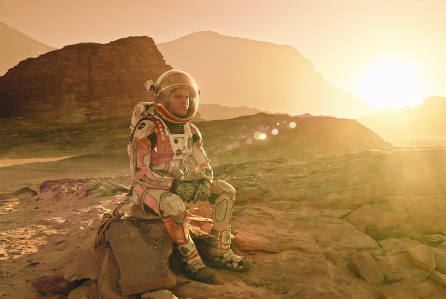
On the face of it, what is being proposed sounds viable. But nothing in the SpaceX presentation deals with a non-logistics challenge, that is the radiation that humans will experience not only in transit from Earth to Mars but also while on the Martian surface. Based on the European Space Agency’s Exomars Trace Gast Orbiter launched in 2016, the six-month journey to Mars will expose a human crew to a 60% lifetime dose of radiation not including the additional exposure while working and exploring on the planet’s surface. Exomars data is similar to the levels detected in the NASA mission to put Curiosity on the Martian surface. And since Curiosity has been roaming about the Gale Crater on Mars it continues to be bombarded by radiation at about 50% the level experienced during its voyage through space.
What’s the amount of radiation in terms of similar life experiences here on Earth? Astrobiologists describe a one-way human journey to Mars as being equivalent to having 24 CAT scans at one time, 15 times greater than the maximum allowable exposure for workers at nuclear power plants. No humans have ever experienced this type of exposure and healthily survived. And as of yet NASA and other space agencies have yet to devise a method of shielding spacecraft to block radiation in space. Radiation is the deal breaker for long-term space exploration and settlement of Mars, the Moon, or any other place in the Solar System and beyond. We are just not cut out for it as we presently are.
That’s why science needs to find a new path for humans to no longer be Earth-bound. To live on the Moon we need to be different. To live on Mars we need to become Martians. And anything we bring along with us to help support our existence has to undergo similar biological re-engineering. This means designing life to fit these new environments.
For example, because Mars gets 43% of the sunlight that falls on Earth, any plants adapted to Mars will need to be able to efficiently use the visible light that falls on them as well as non-visible light such as ultraviolet which is far more abundant on the Martian surface. And that just covers photosynthesis improvements. Plant re-engineering will also have to deal with the colder Martian environment, with a biomass deficient and nutrient deficient soil, and with the extreme dryness that makes Earth’s deserts seem like tropical forests.
For humans planning to become permanent Martians, there are three choices:
Greenhouses on Mars
If we go the first route then we can create hydroponic self-contained greenhouses and an elaborate infrastructure to support them. Current work on the International Space Station is testing just various proposed technologies and how well they can work to give us Earth on Mars.
Creating Martians out of Humans
But if we go the second route then we don’t bring Earth to Mars but rather adapt ourselves to be Martians. That means re-engineering not just the supporting biological infrastructure that keeps us alive here, but also re-engineering ourselves to allow us to acclimate and adapt to a much colder environment, to become a low-gravity species that operates effectively at one-third of the g-forces of Earth, a species capable of dealing with double the length seasonal extremes where a year is almost twice as long as the one on our home world where we evolved, and finally to a life limited to permanently enclosed habitations sealed off from the outside until we are so well re-engineered we can venture largely without supporting technology on the exposed planet’s surface.
Turning Mars into a Second Earth
And if we go the third route, one that Musk has proposed, then we take on a planet-wide project taking many hundreds of years. What are we talking about in such a terraforming project? We would release the greenhouse gases stored on and below the Martian surface to thicken the atmosphere. That would increase the planet’s atmospheric temperature just as greenhouse gases are doing it here on Earth. The water currently stored in the polar ice caps and permanently frozen beneath the surface would give us free-flowing rivers and lakes, and eventually even oceans. Once the atmosphere largely made up of carbon dioxide (CO2) becomes thick enough, and once surface temperatures are warm enough, we could plant trees whose exhalations would produce oxygen. Is there enough CO2 to turn this into a reality? Not native to Mars, but we could redirect asteroids to strike the planet’s surface releasing their contained materials to hasten the process. After centuries there might even be enough breathable air for humans and other animal species to thrive. This Genesis project is far beyond our technological abilities today and likely impossible to achieve.
Life on Mars Today
Finally, there is an important issue we may overlook in all of this effort to get us to Mars, that is the contaminating of a planet where life already exists. When humans arrive on Mars to visit or stay they will not be alone but rather will bring lots of biology along for the ride, most of it unintentionally. Trillions of microbes will accompany us and although many will die, some will find ways to adapt. By this process we will jeopardize any native life on the planet.
For those who argue there is no evidence for Martian life, I would argue the opposite. Whether from Viking lander experiments back in the 1970s, or data collected by Spirit, Opportunity and Curiosity, the Martian rovers and from seasonal observations by a number of Martian orbiters witnessing the seasonal exhalations of methane from the planet’s surface, there is abundant evidence of biology, likely in the form of microorganisms.
If that is the case there is a strong argument that we stay away from colonizing Mars to preserve its native life. Instead we can experience Mars through our technology – rovers and landers, artificial intelligence and augmented reality. We then wouldn’t have to bring Earth to Mars to support humans as we are. We wouldn’t have to reinvent our species and supporting biology to become Martians. And we wouldn’t consider terraforming a place where life already exists.
Musk has argued, as has Stephen Hawking, that Earth and humanity need a backup plan. There is no doubt that at some future point in time Earth will become uninhabitable as the Sun ages and expands. But that is billions of years away. In the meantime, we can do a better job of making Earth inhabitable for us and for the life already here, and use our technology to experience our neighbouring worlds while preserving the native life there.
And should we need a lifeboat for humanity, let’s develop technology to live in Deep Space in engineered environments built from the raw materials at hand. The cost to do this is no less formidable than us attempting to make a home for us on Mars, or to turn us into Martians, or to turn Mars into an inferior Earth.

Why? Because of radiation.
Mars lacks an atmosphere thick enough to shield colonists from solar radiation.
And Mars lacks the magnetic field that shields life here on Earth from cosmic radiation.
The likelihood of a baby surviving from conception to birth in the face of these threats, let alone anything else that the planet would throw at colonists, is dire. In the paper the researchers describe even fertilization, let alone successful fetal growth, as near miraculous under the harsh reality of Mars.
The researchers neglect to look at an alternative to living on the surface of Mars. Establishing human colonies underground using subterranean caves of which several possible candidates have already been identified, could prove to be the best defense against the radiation sources described above. Although a much harder life than the worst environments found here on Earth (think Antarctica), the colonists would at least not have to deal with cosmic bombardment.
And there is a second answer to the problem of human reproduction on Mars, that is, not to colonize the planet with humans as we know them, but to re-engineer our genome to withstand Martian conditions. We could begin to do this right here on Earth in anticipation of sending a genetically reprogrammed human who capable of surviving on Mars. In other words, we would be creating Martians.
That engineering could go one step further. We could alter the human genome for other living conditions, not just Mars. For example, we could create spacefarers capable of surviving long journeys throughout the Solar System so that solar flares and cosmic radiation would no longer threaten them in transit. Even better, we could create re-engineered humans who could live permanently in space habitats capable of thriving and reproducing in these self-sustaining enclosed worlds of our making.
As for the Martians we create here on Earth, once they get to Mars and have the opportunity to reproduce then evolution can take over. These Martians in reproducing should see the best traits passed on to their children, genetic characteristics that will ensure their survival. Martians born on Mars may eventual acclimate to low gravity and a thin atmosphere. And perhaps, with accelerated genetic re-engineering, one day the descendants of these first Martians may walk on the planet’s surface without space suits.
Back in 2012, I posted a piece to this site arguing the potential of re-engineering humans in light of climate change here on Earth. The merits of the case stated that our human population would soon exceed 9 billion putting incredible pressure on resources here on Earth. Thus it seemed it would be better to change us by making us smaller, turning us into vegans (meat intolerant), making us less reproductively prolific, and making us more socially sympathetic to our fellow members of the species as well as to all other life.
Although this argument was suggested as a better option in light of proposals to geoengineer our planet, it would seem, as an option for human settlement of Mars genetic engineering Martians makes sense. In the end, it means humans would not become the multi-planetary species that Elon Musk describes as the rationale for going to Mars in the first place. A re-engineered human as Martian would probably be incapable of interbreeding with humans from Earth, or if offspring were to be viable, it is unlikely they could survive on either planet.