What defines the nature of the paralysis? It is where the spinal cord injury occurs that makes the difference. For paraplegics, the severing occurs to the cord in the thoracic or lumbar section of the spinal column. For quadriplegics, the damage occurs higher up in the cervical spine. But one thing is certain. With either injury, mortality risk is much higher than the general population, and medical lifetime costs run into multi-millions of dollars.
Experimenting with stem cells is ongoing around the world as medicine experiments with the potential of regenerative medicine. Successes in the laboratory on animal studies have not always translated into success in human clinical trials. The Mayo Clinic in Rochester, Minnesota, however, is working with stem cells harvested from adipose tissue (body fat) and using the cultured cells for clinical trials focused on spinal cord regeneration.
Dr. Wenchun Qu, a physiatrist and pain specialist at the Mayo describes regenerative medicine and the use of stem cells as “an evolving field” with physicians still trying to figure out what is an effective stem cell dose, and what risks are attendant in their use. So far, the trials show how imperfect the results can be with some patients tagged as super responders, and others as non-responsive.
A recent Mayo clinical trial involving 10 adult patients suffering from spinal cord injury paralysis shows some early promise with a report appearing in an article published in the Mayo Clinic Proceedings on November 27, 2019. The patient, a 53-year-old male named Chris Barr had suffered a surfing accident that broke his neck severing his spinal cord and leading to a complete loss of motor, bowel, bladder, and other sensory functions. He was told that he would likely never walk again. Initial surgery to repair the vertebrae and spine provided some modest improvement but then plateaued six months post-injury.
Barr was enrolled in a clinical trial headed up by Dr. Mohamad Bydon to become a stem cell guinea pig. Thousands of his mesenchymal stem cells were harvested from his abdominal body fat. The cells were then cultured in the Mayo Clinic’s laboratory increasing the volume to 100 million. They were then reintroduced into the body through an injection in the lumbar spine eleven months after the injury. He was then followed by the medical team for 18 months with physical and occupational therapy scoring improvements to his mobility and sensory functions. The results were notable with Barr able to feel pinpricks and light touch, walk and use his hands. Today Barr is back walking and enjoying a much-improved quality of life, a far different outcome than the one he initially envisioned after the accident, a moment in time when he asked to end his life.
Apparently, the injected stem cells did exactly what Dr. Bydon and others hoped they would do. They migrated from his lumbar spine to the cervical site where he sustained his injury. Several samplings of cerebrospinal fluid indicated the ongoing progress as nerve tissue at the original injury site regenerated.
Dr. Bydon calls Barr a super responder. As Patient Number #1 in the clinical trial of ten, his results were considerably better than anyone of the other enrollees. Stated Bydon, “One of our objectives in this study and future studies is to better delineate who will be a responder and why patients respond differently to stem cell injections.”
What is it that makes some patients respond well to regenerative therapy while others do not? It could be the timing of the intervention, the age of the patient, prior physical condition, or the subtle differences in the location and specifics of the spinal cord injury. For the Mayo Clinic the only way to know is to keep expanding on the results of this first clinical trial to begin to detect a pattern within patient groups that end up being super responders, those who benefit the most from the therapy.
Dr. Qu who was senior author of the paper published in the Mayo Clinic Proceedings describes the rigour of the Clinic’s approach to this new form of therapy stating, “Mayo’s research and use of stem cells are informed by years of rigorous scientific investigation. We strive to ensure that patients who receive stem cells are fully educated in the risks, benefits, alternatives, and unknowns about these therapies. Through our clinical trials with stem cells, we are learning from and improving these procedures.” The Clinic intends to continue to do randomized controlled trials with stem cell therapy. The 250 to 500,000 who sustain these types of injuries are hopeful to experience similar results to Patient Number 1.

]]>
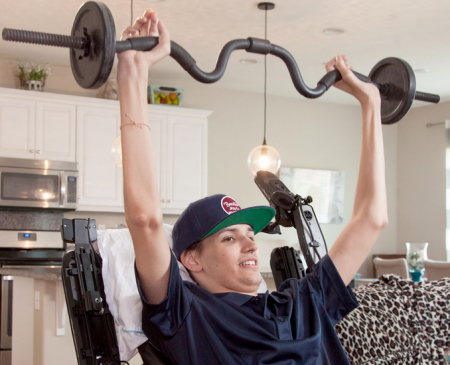
Two weeks post surgery Boesen (seen in the picture above) showed some signs that the procedure was working. And after 90 days he could feed himself, write his name, use a cellphone, hug his friends and more.
Explains Dr. Charles Liu, Director of the Neurorestoration Center, “Typically, spinal cord injury patients undergo surgery that stabilizes the spine but generally does very little to restore motor or sensory function….with this study, we are testing a procedure that may improve neurological function, which could mean the difference between being permanently paralyzed and being able to use one’s arms and hands. Restoring that level of function could significantly improve the daily lives of patients with severe spinal injuries.”
Liu reports that 90 days post surgery Boesen is demonstrating motor function that should it continue to improve will allow much greater levels of functional and physical independence than found in current standard treatment.
There are six sites in the United States currently enrolling candidates for clinical trial of this new procedure which involves escalating doses of AST-OPC1 cells (see below) developed by Asterias Biotherapeutics. The cells are made from embyronic stem cells converted to oligodendrocyte progenitor cells, cells found in the brain and spinal cord. AST-OPC1 cells in laboratory studies has been shown to stimulate myelination of damaged axons as well as development of new blood vessels.
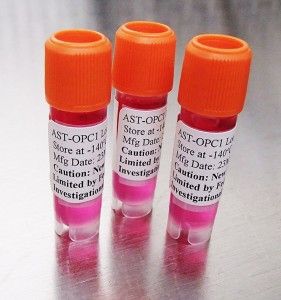
Clinical trial sites include Indiana University in Indianopolis, Medical College of Wisconsin in Milwaukee, Rush university in Chicago, Shepherd Center in Atlanta, Stanford University and Keck Medicine at University of Southern California.
]]>