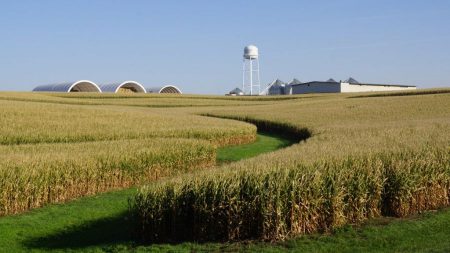
What tools can produce the data that makes it possible for AI to help with food security? AI can use computer vision to review satellite images, and real-time video from drones. AI can review information fed to it in real time from in-the-field sensors. Machine learning can compare what it learns from legacy datasets with current field observations to help it spot plant stress caused by various issues such as lack of water, poor soil conditions, pest infestations, and negative weather conditions.
Fermata is an Israel-based company that uses computer vision and AI to monitor crops grown in greenhouses. Croptimus, its adaptive computer vision platform, automatically detects pests and diseases at early stages and informs farmers to take action. To date, users of Croptimus have reduced leafy green tomato, and medicinal plant crop losses by 30%.
Valeria Kogan, founder and CEO of Fermata, was approached in 2017 by a tomato grower friend who asked if Kogan could invent a program to help keep plants healthy, identify risks, and reduce crop losses. Kogan looked at the technical challenge and what tools were available and developed bioinformatic AI algorithms that could be married to off-the-shelf vision technology for monitoring crops. She began working with greenhouse growers and considered deploying a field robot for plant surveillance. This proved to be overkill. No one needed a robot for field surveillance when a camera system capable of a 360-degree view could do the same.
The problem of using the camera data feed to identify pest infestations and plant diseases represented the bigger challenge. What was needed was a trainable AI algorithm and lots of publicly available data to feed it. That way the AI could use machine learning to identify the range of threats. Human input was needed to label the individual threats before the software could begin to do its job. After Fermata launched in 2019 a research centre containing infected plants was added for the AI to continue to learn over over and above what it observed from collected field data.
The key to Croptimus is the ability to identify lots of problems through gathered data. Kogan notes that up to 40% of what farmers grow succumbs to pests, diseases and other environmental stresses. These are preventable losses. For the company to identify them all it required talking to growers. She describes what this was like in a recent article published in TechCrunch where she noted:
“We love customers who have a lot of problems because it brings us a lot of data, especially if they have some deadly diseases…We’re like, okay, let’s look serious on the call, and that we’re worried because that is bad news for them but for us it’s amazing news.”
Croptimus provides 24/7 field observation of crops. Its precision 2D mapping combines visualization, data collection, and analysis to identify pest and disease incidents. Data is continuously filtered through its database in the Cloud where it is analyzed. Problems are identified by type and precise location. Notifications are sent immediately to the grower. After intervention and mitigation, Croptimus continues to monitor the effectiveness of the intervention and ensure there is no recurrence.
The list of crop issues that Croptimus has identified so far includes: Aphids, Spider Mites, Thrips, White Fly, Powdery Mildew, Botrytis, and Mosaic. Croptimus can also identify nutrient issues and mechanical damage to crops. The company is working with AI to add Hop Latent Viroid to the database.
This work is one case example of how AI is being applied to precision agriculture as farmers seek help in dealing with the challenges of providing food security while facing environmental changes exacerbated by climate change in the 21st century.
]]>Food technology is turning science fiction into science fact one innovation at a time. It’s making eating ethically a head-scratcher. For vegans, the questions are no longer how sustainably agave is sourced, or whether environment-damaging pesticides are being used to grow kale. Now they have to consider ethical avoidance issues such as can they eat animal protein when it is synthetic. Imagine slaughter-free spaghetti bolognese or beef burgers where no cow is harmed.
Meat alternatives aren’t new. Tofu and seitan have been around for over 1,000 years and veggie burgers have been in supermarkets for decades. Typically, these appealed only to vegans and vegetarians, a niche market prepared to compromise on how meat-like the product is for their own ethical reasons.
With the advancement of new food technologies, however, that may no longer need to compromise. Plant-based food is becoming increasingly convincing posing as meat. Look at Impossible Foods who are using genetically modified yeast to make vegetarian burgers that bleed.
The search for sustainable, guilt-free burgers is going even further with the advent of cultured meat. A burger, made from 100% real beef, where no cows were harmed has become a reality.
Cultured meat is produced from the same or similar animal cells that make up conventional meat. As a result, it is possible to create meat products completely indistinguishable from meat on the hoof. Since the world’s first cultured burger was produced in 2013, the industry has been growing with start-ups around the globe competing to be the first company to commercialize cultured meat products.
In December 2020, Singapore became the first nation to grant regulatory approval for commercial cultured meat products. Eat Just, began selling its hybrid product made from plant protein and cultured chicken cells. And in June of this year, Future Meat Technologies, an Israeli company opened a cultured meat facility with a daily capacity to produce 500 kilograms (1,100 pounds) of cultured chicken, pork and lamb meat.
For more information on cultured meat and companies in this new business read the IDTechEx report “Cultured Meat 2021-2041: Technologies, Markets, Forecasts”.
Today we have vertical farms growing fresh produce on skyscraper walls. That includes lettuce and tomatoes as garnish for your cultured burgers.
The beauty o vertical farming is locality. Instead of produce being grown, harvested, and shipped from fields far away, a successful vertical farm means the veggies you will buy will come from markets mere metres away from where you live.
Vertical farming involves growing crops indoors in controlled environments and vertically stacked to save space. Vertical deployment means yields can be 20-30 times higher per hectare than in normal agriculture. Using advanced growing methods such as hydroponics and LED lighting tailored to the exact photosynthetic needs of the crops, vertical farming can also achieve yields hundreds of times higher than that from conventional farmland.
Almost any location can be used for vertical farming, with companies operating out of old shipping containers (Freight Farms), disused warehouses (AeroFarms uses a warehouse in New Jersey for its indoor farming) and skyscraper walls. The only limitation is getting resources in and harvested plants out.
Increasing agricultural yields in a sustainable manner is critical in meeting the demands of a growing world population. Precision farming provides one answer. It uses an approach where each individual plant (or a specific region within a field) receives targeted treatment. Planting and harvesting are tailored as well to existing ground conditions and the status of a particular fruit or plant.
This marks a technological transition from the broad-brush farming methodologies still being used today. To implement it farmers need to embrace robotics, imaging, machine vision and low-cost sensor technologies. With precision agriculture farming practices will more closely align with industrial automation seen in other business sectors.
Hyperspectral imaging monitors plant health and catches diseases early, minimizing the risk of wastage and lost crops. Rather than expressing images as red, green, and blue (RGB) values, each recorded pixel provides a complete spectral view of the plant, allowing farmers to gain far more information than what can be gleaned from standard imaging. This enables supervised artificial intelligence (AI) and machine learning to quantify the plant’s chemical composition and determine its health status. For a detailed look at the technologies emerging in this field refer to the IDTechEx report “Emerging Image Sensor Technologies 2021-2031: Applications and Markets.”
Once AI reviews the data collected by precision agriculture technologies it can provide actionable insights which call for execution. This is where the robots come in producing precision-targeted planting, fertilizing, weedkilling and harvesting. You no longer need to imagine this happening. Today robots can vary planting densities across a field in response to soil conditions and target specific areas within a field with pesticides.
To target fertilizer or application of herbicides, attributes of individual plants need to be ascertained. This can be done using algorithmic image analysis acquired from conventional cameras in the visible spectrum. But the limitations of the technology mean you cannot necessarily identify subtle differences between leaves or fruit at different stages of ripeness. That’s where short-wave infrared (SWIR, 1000 to 2000 nm) imaging comes in. Using this technology when imaging plants provide substantial differences. SWIR light can detect bruised from healthy fruit. And SWIR imaging isn’t negatively impacted by clouds, dust, or mist which can make other imaging technologies less effective.
Synthetic chemical pesticides and mineral fertilizers are less and less sustainable. Farm runoff contributes to algae blooms in our rivers, lakes and oceans. Their overuse is leading to natural soil depletion and growing weed and insect resistance. Much of the world’s food supply, however, still depends on these products being applied to farm fields.
There is a solution. It is called agricultural biologicals derived from nature. Biostimulants can be used to boost crop yields and reduce the need to apply synthetic fertilizers to boost soil health. A good example is PROVEN, developed by California start-up Pivot Bio. It uses genetically engineered nitrogen-fixing bacteria to form a symbiotic relationship with the roots of corn plants in order to boost nutrient uptake.
Biopesticides are pest management agents that use living organisms or natural products. They have proven potential to provide pest management but currently are heavily regulated by systems originally designed for the chemical pesticide industry. Examples include bait sweeteners that get carried back to an insect’s nest, pheromones that distract insect pests, sterile pollen carried by insects that land on weeds to make them infertile, and bee carrier biopesticide delivery systems.
Some aspects of agricultural biotechnology are controversial. One such is genetic engineering. But this is a technology with enormous potential for improving food security.
Crop biotechnology tools and disciplines focus on modifying the genome of organisms for a particular purpose, for example, increasing yields, or developing innate resistance to diseases in order to reduce crop losses and pesticide use. The technology identifies specific genes that confer advantages for a particular crop or livestock, and then implants and replaces the existing genetic material.
For many, there is controversy in inserting and replacing genetic material to improve farmed plants and animals. But genetic engineering is really selective breeding by another means and instead of taking generations to breed a true improvement, saves enormous time when attempting to address challenges like developing drought-resistant crops at a time of climate change.
So there you have it. Today we are at the beginning of an agricultural and food revolution where you can have a burger made from cultured meat, topped with vertically farmed lettuce, and genetically modified tomatoes. Are you game? If so, then bon appetit.
]]>In the last week in one county to the west of Toronto, 164 migrant workers from Mexico fell ill to the coronavirus. These are workers that arrived in Canada in early April to undergo 14-days of quarantine before being allowed to do their jobs on local Ontario farms. No one was sick coming out of quarantine. But poor and crowded living conditions led to community spread.
On another farm, out of 216 migrant workers, 125 tested positive for COVID-19, and there is no way to know just how far the virus may spread beyond the migrants themselves. This local outbreak on farms is symptomatic of a wider problem facing agriculture in the age of pandemic. We no longer can continue to do things the same way we have done them in the past.
The Agricultural Revolution happened 12,000 years ago. Technology has always been part of agriculture from the first digging sticks to plant seeds, to hand plows, plows pulled by animals, to harvesters, bailers, and combines. Even with all this technology agriculture remains labour intensive requiring lots of human muscle power.
Considering how the current pandemic and future ones may restrict the human migrant option, it should be no wonder that the agriculture’s future will involve a high degree of automation.
Robots are the future of agriculture. Whether ground-based or aerial, semi-autonomous and intelligent autonomous machines will become a common sight on farms.
Ecorobotix is a lightweight autonomous drone with built in GPS. Its job is to kill weeds using a herbicide spray. Mounted on wheels and solar-powered, the robot can work all day, using its onboard camera system to survey and target infestations. Farmers who implement the robot report having to use The 90% less herbicide because of it can discern precisely where the weed killer needs to be spread. And it is 30% cheaper on delivery than traditional untargeted treatments.
Will robots like Econobotix replace human labour? There is no doubt that labour-intensive, repetitive jobs are ones that robots can do as well if not better than human counterparts. And in this case, the work of weeding may no longer require any human intervention.
The widespread use of sensors on farms is further reducing the need for farm workers. Famers can survey the state of their fields and crops from a home monitor or one onboard a tractor, connected to an array of sensors sending data to the Internet cloud. This is the developing field of precision agriculture. Sensors gather the data and software interprets the results. The type of sensors include:
The growing use of precision agriculture reflects the changing climate. Areas of the United States, particularly the mid and southwest, are increasingly threatened by drought making water conservation critical. Moisture sensors make it easier to target irrigation. Efficient water delivery systems use precise air valves and sustainable pipes to distribute needed water at the appropriate time and in the right amount to maximize the health of individual plants and fields.
Environmental concerns are making farmers take note of what to grow in their locations. There is an increased focus on “low impact” crops for sustainability, and a move away from animal husbandry as the industry’s carbon footprint is increasingly under examination.
Two interesting movements in both practice and crop science have arisen at opposite ends of the spectrum.
One is organic farming that grows traditional selectively bred crops. Organic farms limit the use of pesticides, avoid artificial chemical fertilizers, and implement natural processes and techniques to reinvigorate soils.
Two is focused on the genetic manipulation of plants to improve their ability to withstand environmental challenges. Drought-resistant wheat and corn, are two examples. Both have been developed through the genetic alteration of the plant. Manipulating the DNA to make these crops resilient in the face of drought is allowing farms to continue to produce crops on increasingly marginal agricultural lands. Tools like CRISPR are being used to replace defective genes with healthy ones, or to alter the characteristics of a gene to increase a plant’s resistance to insects, fungi, and other environmental pests. Known by the acronym GMO, the technology is seen by many to be the best way forward to ensure food security in a world where our human population continues to grow, and climate change represents an existential threat.
Farm labour, the plants we grow, and the food we put on our tables are all tied to innovations being made on farms and in agricultural research being done today whether at colleges or in industry. From energy use to water management to the storage, supply chain, and distribution agribusiness systems, the farms of our past are quickly disappearing turning the growing of crops into high tech.
]]>
Global Food Demand
The Food and Agriculture Organization (FAO) is anticipating our world population will be between 9 and 10.5 billion by 2050. The majority of us, 70%, will live in cities and will be relatively richer, demanding diets that include more animal protein, emulating the food habits of the Developed World today. That presents a not unprecedented challenge to agribusiness since farming has gone through in the past demand crises that led to the green revolution and enormous increases in cereal crop yields, the food that today sustains the majority on the planet.
Until most recently, hunger as a chronic condition among humans was in decline. The capacity of farms to feed our growing population seemed to work. But it appears the gains have suddenly come to an end. Today 1 in 8 don’t get sufficient food to sustain them. That represents a population greater than the European Union, the United States and Canada combined. Malnutrition is the cause of 15% of all child deaths in the world and 1 in 6 in the Developing World are chronically underweight. And these statistics will grow without the intervention of disruptive new technology solutions.
Genetically Modified Organisms
GMOs are the next stage in selective breeding, a practice that humans have engaged in since the first domestication of animals and plants at the dawn of the Neolithic Revolution. The fact that the alteration is being done at the genome level rather than through multiple generations of trial and error, which had been common practice for agribusiness throughout history.
It is our ability to selectively remove and replace genetic information that bothers many. So much so that countries have banned growing GMOs within their borders and prohibited their import. The organic food movement has portrayed GMOs as Frankenfoods. But those researching and developing GMOs have done so with more rigorous trials than any food products ever produced before them. No animal or human has ever gotten sick from eating a GMO food. None have got cancer.
Today in farms in the United States that grow soybean, cotton, and corn, 90% of the crops are GMOs. Sugar beets, alfalfa, canola, potatoes, and more are largely GMOs. GMO golden rice is ending childhood blindness in South Asia, and yet some countries in that part of the world resist growing or importing it despite high incidents of loss of vision in their children.
Despite the pushback and fearmongering GMOs are expanding around the globe. Why? Because GMOs are doing what they were designed for. Drought resistance built into corn, wheat, and soybeans gives farmers the means to deal with prolonged dry spells while still being able to produce significant yields. Disease-resistant GMOs counter the threat from bacterial, fungal and insect invasions that decimate crops. GMOs make it possible to decrease the amount of pesticides and herbicides applied to fields throughout the growing season. And GMO crops are developed to store better where refrigeration is not available, or where other conditions such as a lack of roads in rural areas make getting harvested produce to consumers while still fresh, more difficult. Food waste in the Developing World because of a lack of harvest infrastructure remains an enormous challenge.
And GMOs are not limited to plants. Today we are seeing an increased interest in developing various breeds of GMO livestock as well as fish for aquaculture on Developing World farms.
To those who feel that GMOs are an abomination, without them today the number of people on our planet who suffer from malnourishment would be much higher. The resistance from the fearful is creating some of the worst food crises in places where food shortages and population growth are most apparent – Africa and South Asia.
It’s time to accept GMOs as a necessary technology for humanity’s present and future.
AI, Robotics, and Intelligent Sensors
Automation in many forms has come to farms worldwide. With arable land finite, companies such as John Deere, are introducing artificial intelligence, robotics, and smart sensors to maximize every piece of it, finding better ways to nourish it, and, in the end, produce much more from it.
Computer vision and machine learning technologies are making it possible for farmers to do agriculture a single plant at a time and produce optimal results. Drones, robots, and sensors oversee fields, zero in on plants showing stress, determine the problem, and apply a solution. Whether it is micro-irrigation, a dose of herbicide or insecticide, or pruning growth interfering with the plant’s ability to produce a healthier yield, this is precision agriculture as never done before.
These technologies are being applied in every season and at every step in the farming process from fallowing, to tilling or no-till, to planting, and to harvesting. Robotic tillers ensure that soils are minimally disturbed while preserving organic content from the remains of previously harvested crops. Smart sensors assess field conditions in real-time sending reports to the farmer’s smartphone or computer. Robots in the air or on land view the crop using different types of light and thermal imagers to better understand plant conditions.
John Deere argues that with 2 to 3 billion more mouths to feed by mid-century farms need to increase productivity by 1.7% annually to meet demand. Without AI, robots and smart sensors, meeting that growth will be next to impossible. When asked about the growing need to increase farm yields, Alex Purdy, Director of John Deere Labs, states, “70% of it is going to come from technology.”
Urban Farming and Consumer-Farm Cooperatives
At one time here in Toronto there were working farms within the city’s boundaries. But not today. The suburban growth has pushed farmland further out. This is true of many cities. An interesting response to this
An interesting response to this phenomenon is the development of farms in cities that are unconventional, to say the least. Boutique farms that are vertical are appearing in communities. These are literally wall farms found in warehouses with growing racks, no soil, hydroponic and artificial light. The plants can be grown year round. Another urban farm model can be found on rooftops. The green roof movement isn’t limited just to planting growth to cool the building beneath. Now the plants can be eaten as well. Some supermarkets are turning their roofs into fresh produce generators which can be purchased daily by customers.
Another phenomenon is a reflection of consumers becoming more conscious of what they eat and from whom they buy. At farmer’s markets in Toronto, consumers can sign up to a relationship with a farm. They can choose that farm partner based on their criteria (organic, no chemicals, humane practices in animal husbandry, etc.) and pay monthly fees to receive a shopping list of items the farm produces. This is a new business paradigm for farms that reflects the increasing health consciousness of a large demographic.
Hoofless Meat, Leather, and Synthetic Replacements
The first lab-grown hamburger patty cost $250,000 U.S. It was only three years ago when the first hamburger taste test was conducted in London, England. This was meat grown in vitro, cultured from cells of donor animals. But now, three years later, a company named Modern Meadow, located in New Jersey, is not only growing meat from stem cultures on an industrial scale but is now creating a material from genetically engineered yeast that resembles leather. The combination of stem cell technology and additive manufacturing (3D printing) may be the biggest disruptor to agribusiness in the 21st century.
Why? Because animal husbandry, particularly large-hoofed animals like cows, takes up an enormous amount of resources. When I wrote about the topic back in September 2014 I stated that a single McDonald quarter pounder entailed the consumption of 3 kilograms (6.7 pounds) of feed grain, 200 liters (52.8 gallons) of freshwater, 6.9 square meters (74.5 square feet) of feed production space and grazing land, and 1,093 joules (1.036 BTUs) of energy. While creating the raw product the McDonald quarter pounder contributed 6 kilograms (13.4 pounds) of carbon dioxide to the atmosphere.
Modern Meadow duplicates what farms and cows produce in a factory setting. No more slaughterhouses and abattoirs. No more use of land for grazing that could be suitable for other crops or for reforestation to increase natural carbon sinks. And no more cows contributing to greenhouse gas emissions.
The latest twist at Modern Meadow is to be revealed this October 1 when the company presents a new material that is, in effect, factory-grown leather. Produced using a genetically modified strain of yeast that generates a protein identical to bovine collagen, this represents as big a disruptor to agribusiness as lab-grown meat. In the August 26, 2017, edition of The Economist, an article entitled, “More skin in the game,” describes the advantages that Modern Meadow’s factory-method leather provides: standardized sheets, straight edges, no flaws or inconsistencies, and customizable materials to customer preference. It is only a matter of time before the company branches out to create alligator, ostrich, snakeskin, and other “natural” materials.
Laboratories around the world are also actively developing synthetic replacements for what farmers produce, from milk that has never seen a cow, to meatless meats that resemble fried chicken, beef jerky, meatloaf, bacon bits and chicken chow mein. We have sugar substitutes, synthetic vegetable oils, proteins derived from petroleum distillates, and fibres that replace wool, and other animal hair. And then there is Soylent. Every one of these is a significant disruptor.
Social Change in Human-Animal Relations
There appear to more vegans and vegetarians these days. The growing trend doesn’t hurt farmers who plant, but it is impacting the animal husbandry industry.
Why people choose a vegan lifestyle varies, but one cause is a growing awareness of just how much the animals we raise to eat and harvest have feelings, are sentient, and more related to us as animals ourselves.
Will the vegan movement grow in light of factory produced substitutes for animal products? It will be interesting to see how this trends.
Climate Change
There is no greater disruptor to agriculture and agribusiness than climate change. Atmospheric warming and extreme weather events including mega-droughts are impacting farms globally. It is more than just crop yields that are under stress. A 1 degree Celsius (1.8 Fahrenheit) increase in mean global temperature will likely lead to declines of between 9 and 13% as invasive pests migrate into temperate farming zones, and as extreme weather events shock crops, inducing lower yields. A 2 Celsius (3.6. Fahrenheit) rise will be even more catastrophic if not for GMOs helping to adapt plants and animals to the new reality of a warmer planet.
The psychological impact on farmers of climate change has not yet been accurately measured. But one can imagine how distressing farming will become in this altered world. Already farmer deaths from suicide is a concern in many Developing World countries where the stress from low yields and debt are creating an industry crisis. A recent posting on this blog site described the link between climate change and nearly 60,000 farm suicides in India.