The industry describes a number of pilot projects it has launched to find ways to reduce its GHGs. It has dramatically reduced emissions per barrel produced as well as the amount of fresh water needed in production. It claims based on data collected that its contribution to air pollution is improving or remaining the same despite the increase in levels of production. It even describes the industry’s investment in satellite technology to monitor oil sands emissions.
As the primary industry association responsible for informing the Canadian and global public about the oil sands, it is a well-presented case that is backed up by the political leaders of Alberta and Saskatchewan who consider any action by the federal government to constrain the sector an infringement on provincial authority.
Now add three other elements to the mix.
Canada’s federal government has been a strong advocate for improving the pipeline infrastructure to get bitumen, the product of the oil sands to foreign markets. It long ago approved the Canadian portion of the Keystone XL project which today, is being held up by legal battles within American states along the pipeline’s route.
The federal government has purchased the Trans-Mountain Pipeline after the company that was to build it backed out of the project. Considerable consultations with First Nations and stakeholders along the pipeline’s route have led to delays. The government plans to eventually turn the pipeline over to the private sector.
Then there is the application to Canada’s federal government by Teck Resources Ltd., to build a $20 billion oilsands mine with peak production to add as much as 260,000 barrels of bitumen daily, lasting up to forty years. Teck in its application acknowledges that its processes will increase GHG emissions and be a potential source of water pollution.
Alberta has drawn a line in the sand on the Teck application with its Premier stating that anything less than approval is an attack on the province’s future. Environmentalists concerned about climate change are opposed to the approval.
A federal-provincial review of the application last year declared the project in the nation’s interest while admitting it would likely harm the land, air, and quality of life for indigenous people in proximity and downstream from it.
To add to the melodrama, in today’s The Globe and Mail, the CEO of Teck, Don Lindsay, remarked that even if approved, the project may likely never be built citing the low price for oil sands output on the world market.
So, the federal government, with its pending announcement to approve or not, is caught between two very different positions. Approving the project will lose the support of a growing number of Canadians who see climate change as the primary issue the country faces today. Disapproving the project will suggest to Albertans that the federal government is abandoning them with this the first step into shutting down the oil sands and the jobs of tens of thousands in the province.
In the face of a growing climate crisis and the federal government’s commitment to achieve and even exceed its commitment to reduce GHGs by 30% by 2030, how can a further expansion of oil sands capacity be justifiable?
The problems associated with oil sands production begin with extraction and are then exacerbated by processing and upgrading the product for the purpose of transportation by pipeline or rail. Further refining adds to the environmental footprint. And then finally, when the oil is burned usually for transportation and heating, the environment is even further impacted. There is no getting around it despite what the CAPP Factbook states. This is an industry in direct conflict with reducing GHG emissions, and in particular carbon dioxide and methane, the prime culprits in human-caused global warming.
So does that mean the oil sands in total must go? What if the output of the oil sands could be used not to burn but to create high-value, high-demand products?
The answer may be carbon fiber. Carbon fiber consists of very large carbon molecules. So does bitumen. What makes bitumen less than ideal as a source of fuel oil, its heaviness, makes it an attractive source of carbon fiber. Partial upgrading of bitumen, rather than breaking up the heavy carbon molecules to make them lighter, creates asphaltene, the feedstock for producing carbon fiber.
Today carbon fiber is used to build tennis rackets, golf club shafts, and bicycle frames. But more recently it is replacing fiberglass, steel, and aluminum, in automobiles. The Toyota Prius Prime, for example, uses carbon fiber panels. At current costs of $15.40 per kilogram ($7 a pound), carbon fiber is a material more valuable pound for pound than dilbit which should make it an attractive high-value-added product.
The current market remains small but that has more to do with manufacturing capacity than the product itself. To solve the capacity challenge, the Alberta government has created Alberta Innovates, and a $15 million international contest called the Carbon Fibre Grand Challenge. It will award three suppliers who can create large quantities of carbon fiber. The three phases of the challenge are to wrap up in 2024 with three $3 million grand prizes awarded to suppliers who produce 10 kilograms of carbon fiber per day and provide a roadmap to scale up to 250 tons daily.
Today’s oil sands produce a little less than 3 million barrels of bitumen daily. The Alberta government sees the possibility of converting 100,000 barrels daily to produce carbon fiber. On that scale, carbon fiber becomes a far more attractive end product than dilbit with far greater earning potential.
How big is the market opportunity? The carbon fiber market was worth $4.7 billion USD in 2019 and will grow by 10.6% annually based on recent forecasts. By 2029 it will be worth more than $13.3 billion. As supply ramps up carbon fiber will replace other materials used in aerospace, defense, automotive, and wind turbine industries.
In the electric vehicle (EV) market alone, a recent Deloitte study projects vehicle growth from 2 million units sold in 2018 to 4 million this year, 12 million by 2025, and 21 million by 2030. Carbon fiber is expected to make EVs lighter and replace steel, aluminum and fiberglass. A lighter EV means greater operating range before recharge even if no improvements are made to battery technology.
How much carbon fiber will the automotive industry need? Certainly far more than the 100,000 barrels daily that Alberta Innovates says is its current capacity goal.
Alberta Innovates is looking at additional uses for bitumen that don’t involve burning it. These include:
The question that logically follows is:
Is there an opportunity for the oil sands in the future?
And is that opportunity a green one?
The answer to both questions is yes.
Will these new byproducts of the oil sands create new jobs for Albertans and Canadians?
Again the answer is yes.
For the short term future, however, and in the face of the coming climate crisis, burning less of what the oil sands produce would be better for the planet.

]]>
It turns that some of polymers in plastic bottles kills Candida albicans, a fungi that infects the ices of mice. IBM created a polymer-based compound that although not yet tested in humans works better in mice than any antifungal drug and causes no harming side effects.
The fungi develops resistance to the normal antifungal drugs after several applications but not the polymer-based compound. What it appears to do is disrupt the microbes’ outer membrane. The chemistry is rather interesting. Belonging to a group known as molecular glasses it starts off as individual molecules that self-assemble into larger weakly-bonded structures. The compound quickly breaks down so it passes through the body and won’t contaminate waterways.
The compound is being tested on other antibiotic-resistant bacterial infections with very promising results. IBM sees the possibility of developing commercial products like mouthwashes and shampoos containing the compound to treat skin infections.
In the pictures below you see two shots of Candida albicans, one before and one after applying the polymer compound. In the second shot all that is left is cellular debris. So maybe we have found the ultimate way to recycle all those bottles after all?


This international patent pending process uses sulfur left over from the refining of fossil fuels like the oil sands. Typically the sulfur extraction process involved yields less than a quarter kilogram (half a pound) of sulfur for every 72 liters (19 gallons) of gasoline. But when you factor in the millions of barrels of oil being refined each day you get a lot of sulfur. Although there are industrial uses for the sulfur there are not enough to get rid of mountains of yellow waste.
Using waste sulfur was a key objective for the research team. One that uses some of the sulphur from waste is vulcanization, a process that involves adding a small amount of sulfur to make synthesized rubber. In the case of the process from University of Arizona, the researchers use liquid sulfur with a chemical agent additive that turns the waste product into a usable polymer. The researchers have dubbed this process aptly as reverse vulcanization.
In the picture below you can see a petri dish on the left containing the liquid polymer plastic created from waste sulfur seen on the right. The plastic created from the sulfur performs very well in the Li-S batteries exhibiting high specific capacity and good retention over multiple discharges.

Already several companies have expressed interest in commercializing the technology. Li-S batteries are lighter than current lithium-ion batteries used in electric and hybrid vehicles today making them an attractive option for the transportation industry to consider. And these Li-S batteries are even lighter than any others on the market making them attractive for small form factors like airborne drones. A comparison chart shows the distinct advantages of Li-S over Lithium-Ion for such applications. Note how much lighter Li-S is than the lithium-iron batteries with which we are more familiar.

The research team continues to work on their discovery looking at other chemicals to see if they can improve on their formula. One field of interest is photonics looking at the polymer for its transmission properties and for light emitting diodes.
]]>Quantum Computers Go Commercial
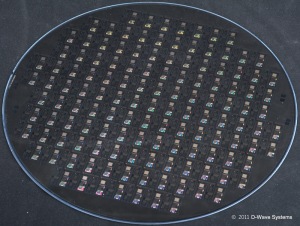
D-Wave, a Vancouver, British Columbia-based company, has shipped its first generation of quantum computers to clients. Its clients include Google, Lockheed Martin, University of Southern California, and Harvard University. In October, Jeff Bezos, the founder of Amazon, invested through his venture capital firm $30 million in the company. That’s quite an endorsement of the company’s efforts in developing what is perceived to be a dimensional leap in computing.
Traditionally quantum computer designers have used the typical logic gates model. D-Wave’s approach is different. The model is adiabatic or quantum annealing. Quantum bits, known as qubits, shift from superposition to traditional computer states. They are not limited to two states, “0” or “1” and can do many calculations in the same amount of time as a traditional computer does one. For additional understanding on quantum computing I refer you to previous published blogs on the subject.
D-Wave’s latest quantum computer uses a 512-qubit processor and expects to quadruple the number of qubits every two years. Researchers believe that D-Wave computers with this kind of horsepower will be capable of solving problems that no other computing technology can touch.
NASA Uses a 3D Printer to Build Rocket Engine Parts
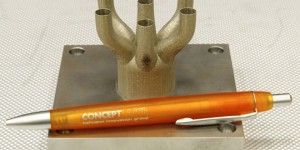
The Space Launch System, NASA’s heavy lift technology, is getting some of its parts from a 3D printer, the M2 Cusing Machine, installed in the Marshall Space Flight Center in Huntsville, Alabama. The first test piece is a rocket engine part that normally requires multiple pieces to be welded together. Using the 3D printer and a finely powdered nickel-based alloy, the printer created a duct for a rocket engine gas generator. A difficult part to make, the test piece met the minimal acceptable range in strength requirements although it wasn’t considered as strong as a comparably forged and milled product. The big advantage of the 3D printer – no welds which means no potential structural points of failure. NASA intends to make other parts that have complex geometries where welding of multiple pieces in the past was the only option.
India Delivers on a $25 Android 4.0 Tablet
Promising Internet for the billion plus of India, the government has taken steps to contract development of an inexpensive tablet. It’s called the Aakash 2. Datawind, a British company, is the builder. Commercially you can buy under its alternative brand name, the UbiSlate 7Ci for approximately $80. But the Indian government is subsidizing the educational price so that students pay 1,130 rupees or $21 US.
This is the second attempt at launching Aakash. The first time in 2011 it had the Android 2.2 operating system, and the device was slow, the battery poor and the touch screen unresponsive. In version 2 Aakash has been significantly upgraded with a 1 GHz Cortex-A8 processor, 512 Megabytes of RAM, 4 Gigabytes of flash storage, the Android 4.0.3 operating system, built-in WiFi, a front-facing VGA camera and a multi-touch responsive screen interface. Today only a small percentage of Indians have access to the Internet. But the government plans to buy 5 million units to kick start an Internet revolution throughout the country.

For Future Androids a Plastic Skin that Heals Itself
In the November issue of Nature Nanotechnology, research scientists at Stanford University, revealed they have created a self-healing polymer that can serve as synthetic skin. For Star Trek’s Data and the androids of the Terminator films this gives them a human-like experience, skin that self-heals and through its piezoresistive characteristics provides a sense of touch.
The material is a supra-molecular organic polymer with embedded nickel nano particles the size of individual atoms. When cut it repeatedly restores itself gaining its original integrity and conductive capability. The current version lacks elasticity but researchers hope to add the ability to stretch it in the next generation. Embedded with electronics this new skin can be incorporated into wearable medical devices such as monitors, or provide prosthetic wearers with arms and legs that are touch sensitive.

Self-Assembling Polymers: The Next Breakthrough in Hard Drive Technology
Polymers aren’t just good for making artificial skin. A research team at the University of Texas in Austin is using the material to increase the amount of data that can be stored on hard drives. As reported in this month’s edition of the journal Science, using a self-assembling polymer first pioneered at MIT and University of Wisconsin, the scientists have created nano-scale polymer structures that insulate magnetic elements allowing much greater crowding of data. The polymers contain maleic anhydride and two other components that when baked quickly form regular nano-scale patterns. Current drives allow a terabyte per 6.5 square centimeters (about one square inch). The new polymer increases that density by a factor of five. HGST, a Western Digital company, is testing the new material with plans to use it in its disk drive manufacturing.

A Postscript
This week I welcomed my first guest blogger here at Techso Mogro. I hope you enjoyed this change of pace. I also introduced in the last two weeks “Gizmos and Gadgets” which will become a regular feature of this blog to go along with features, updates and weekly headlines.
Traffic continues to climb with the hope that we can reach 10,000 monthly visitors by the New Year. So you can help me if you are a regular reader by letting others know about Techso Mogro and why they should visit.
Once again, thank you for dropping by.
– Len Rosen
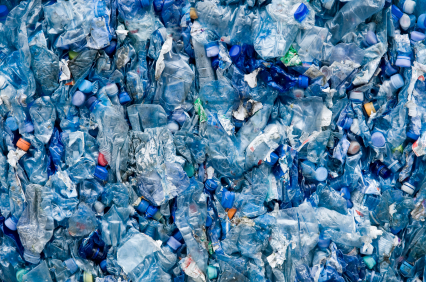
]]>Plastic is durable and versatile. We can mold it into almost any shape. We can reuse some of it to make new plastic items. But what we can’t easily do is decompose it. That’s because plastic is a polymer, consisting of hundreds of thousands of smaller molecular units called monomers. Polymers are huge molecular structures that can stretch and bend. But don’t ask a microbe to digest a polymer. The molecules are just too big to be handled. Plastic thrown in landfill, therefore, doesn’t degrade.
It appears that the only way to breakdown plastic is through chemical processes. Sunlight and heat seem to work. The photochemical effect from sunlight doesn’t work on all plastics and as the polymer degrades it turns into brittle fragments that keep getting smaller until they become microscopic. The process can take years.

On the other hand heat seems to work well on plastic. Cook it and you can break down the polymer chains. A Markham, Ontario company, Phoenix Depot International, is one of a handful of technology developers that are using a heat-based process to take waste plastic from recycling programs and landfill and convert it into clean diesel and gasoline fuel. The technology, called Thermal Molecular Decomposition (TMD) involves raising the temperature of the plastic to 700 Celsius (almost 1,300 Fahrenheit) at atmospheric pressure in an oxygen-free environment. There is no combustion, no toxic waste gases and no secondary contamination. The process yields gasoline, diesel fuel and carbon black.
The TMD technology can also be used to turn scrap tires and waste oil into usable clean fuels. Every landfill can become its own fuel depot processing plastic, tires and waste oil into gasoline and diesel. Output is impressive:
The TMD technology is available in 5, 30 and 50-ton units to scale to any operational requirement.
Phoenix is not alone in attempting to solve the waste plastic issue. I have found a number of other companies including:
As long as we continue to be a throw away society particularly with plastic, it’s good to know that there are companies addressing the waste we produce and coming up with ways to remove it from landfill without further polluting the environment. That’s a good first step in tackling the plastic problem we created over the last 70 years.
]]>
Our industrial society is built on a platform of core technologies that address these needs.

Physiological needs include food, shelter, warmth and health (the bottom tier). Safety and security needs appear on the second tier.
The core technologies to address these needs cover the following fields:
So much of the technology we create addresses our psychological and self-fulfillment requirements as humans. And that is fundamental to our love affair with the automobile from its invention to today. Much of our industrial infrastructure has been constructed to meet this love. Through automobiles we have experienced personal mobility, prestige, a feeling of accomplishment and self-fulfillment. We measure status through the automobiles we drive. To drive a Mercedes, BMW, Lexus, Lincoln, or Cadillac means a lot to a lot of humans.
With 2.5 billion automobiles in the forecast by the mid-21st century what will they look like and what will be their impact on our society and this planet? In this blog we will take a look at current and future materials as applied to the automobile.
The Search for Lighter, Energy and Eco-Friendly Materials
Automobile emissions contribute to greenhouse gases. Automobile production creates an enormous carbon footprint. Automobiles use materials that often are difficult to recycle or toxic when dumped into landfill.
Automobiles typically contain 3 basic materials:
Metals and Alternative Main Structural Components
Until the last decades of the 20th century automobiles were primarily built of steel. I remember my first new car in 1972. It was a Mazda 618, a hatchback, two-door coupe that was bright orange, had a manual transmission, a 4-cylinder 1.8 liter high-performance engine, and a curb weight of 1,005 kilograms (greater than 1 ton). Most of that weight came from the steel used in its manufacture. If an automobile manufacturer were to replace the steel with carbon fiber, for example,the vehicle’s weight could be reduced by up to 40%, and CO2 by 30%.
Carbon fiber is just one of many materials in use or under consideration by the industry as a replacement for steel. Among these are duralumin and fiberglass. Duralumin is an aluminum alloy containing copper, manganese, magnesium, iron, and silicon. Duralumin resists corrosion caused by salt or acids. An automobile frame constructed of duralumin would weigh half that of one built using steel and would provide equal strength.
Ford introduced a prototype fiberglass automobile in 1938. In 1953, the Kaiser Darrin and Chevy Corvette were the first fiberglass-bodied production cars. Fiberglass when used in automobile bodywork is a composite primarily containing glass mat combined with resins. Fiberglass demonstrates shape versatility making it extremely popular among custom automobile designers. Automobile bodies made from fiberglass are much lighter than those made from steel. Depending on the composition of the resins (oil-based or biodegradable) fiberglass can be much more eco-friendly than either steel or duralumin.
Plastics, Polymers, and Biopolymers
Plastics usage in today’s automobiles provides an average weight saving of 180 kilograms (approximately 400 pounds). Plastics were first used to replace metal bumpers. Today’s cars use plastics throughout the automobile. Plastics combined with fiberglass can be found in many automotive body parts.
Shape memory polymers represent another class of materials for automobile manufacturing. Called “smart,” these materials have a memory and when subjected to an electric charge or heat change shape. Shape memory polymers can be self-sealing or self-healing when damaged making them ideal for automotive external and internal body parts. These materials have the ability to alter their colour in response to light and heat. Triple-shape memory materials consist of two different cross-linked polymers that soften at different set temperatures and experience three shape changes in response to heat and cold.
Although increasingly popular because of their strength, durability, ability to integrate colour to eliminate painting, and because of their friction and wear resistance, engineered resins are commonly used in car manufacturing today. But these engineered products have potential volatile and toxic characteristics. One of them, Bisphenol A , has been linked to numerous medical issues. Bisphenol is just one of many engineered resins which include Acrylonitrile Butadiene Styrene (ABS), Polybutylene Terephthalate (PBT), and Polycarbonate (PC).
Biopolymer compounds are biologically derived polymer resins combined with engineering thermoplastic resins. They are designed to be temperature resistant and impact absorbing making them ideally suited for automotive parts. What makes biopolymers attractive is their use of renewable carbon as opposed to fossil-fuel derived carbon. Japanese automotive manufacturers are committed to meeting a government mandate to include a minimum of 20% bio-derived polymers in their products by 2020. The most common biopolymers include Polylactic Acid (PLA) made from corn and Polyhydroxyalkanoates (PHAs). PLA reinforced with plant fibers is being used in a wide array of applications. Polyhydroxyalkanoates are bacterially synthesized, fully biodegradable, and nontoxic. They have high heat and cold tolerance and can replace synthetic plastics in a number of industrial applications reducing the industrial carbon footprint.
Ceramics
Ceramics have always been used in automobiles. Besides glass for windshields, side windows and lights, ceramics were introduced for use as spark plug insulators as early as the 1920s. Every car today contains ceramics within catalytic converters and oxygen sensors to improve combustion and reduce emissions. Ceramics are used in the electronics, computer controls and electrical motors that operate everything from windshield wipers to power windows, seats and locks. Ceramics are being used in braking systems to prolong brake life. And now new ceramics are being developed that have similar properties to metals making them highly temperature shock tolerant for many applications including the internal components of automobile engines.
In our next blog we will look at the motive power behind automobiles and the future of the internal combustion engine. As always, please feel free to ask questions or comment on this or any of the other blog articles appearing in Techso Mogro.
]]>