The Kepler mission launched in 2009 and retired in 2018, surveyed hundreds of thousands of stars in a targeted region of the Milky Way galaxy, and in the process discovered thousands of planets. Astronomers are still harvesting Kepler data more than a year after NASA ended its mission.
The Kepler sample discovery was so large it profoundly changed our planetary estimates for the Milky Way. So many of its discoveries were solar systems circling individual and binary stars and showed planets were ubiquitous throughout the galaxy.
The Gaia mission, launched in 2013, was given a wider goal to create a three-dimensional survey map of the Milky Way providing accurate positional measurements for more than one billion stars. Gaia also has discovered extra-solar planetary systems to add to the Kepler haul which when extrapolated across the entire Milky Way has given the Penn State researchers the ability to calculate the total number of planets in our galaxy.
The researchers used the data from both space telescopes to infer the number of planets and their sizes and orbital distances from host stars. They were able to then come up with a number for planets occupying habitability zones as well as the number of Sun-like stars as their hosts. They were also able to come up with an estimate of planets in the galaxy that were a close approximation to our planet, varying in size from three-quarters to one-and-a-half Earths in diameter. They also were able to estimate the number of planets of Earth-like proportions that circled their host star in orbits ranging from 237 to 500 Earth-days.
Eric Ford, Professor of Astronomy and Astrophysics at Penn State, and one of the lead authors of the paper noted that “knowing how often we should expect to find planets of a given size and orbital period is extremely helpful for optimizing surveys for exoplanets and the design of upcoming space missions.” And knowing that at minimum there will be one Earth-like planet for every 33 stars and that the planet will be orbiting in the right number of days within the habitability zone, makes the search more compelling. That one in 33 is the low estimate. The high estimate is nearly one in two with the average approximately one in four.
Penn State has built an instrument which it has added to the Hobby-Eberly Telescope, a 10-meter instrument located at the McDonald Observatory in Davis Mountains, Texas, to search for low-mass planets around cool stars. They call the instrument the Habitable Zone Planet Finder, and it recently went into operation. It uses an ultra-precise Doppler spectrograph to find extrasolar planets and measure their mass and velocity around orbiting stars.
It will be interesting to read more from this research team as they uncover many future habitable-zone planets just in case some of us decide to seek refuge on one of them after we finish wreaking havoc on the one we live on now.

]]>
Sarma Pisupati, Professor of Energy and Mineral Engineering at Penn State, states, “essentially, rare-earth elements are sticking to the surface of molecules found in coal and we use a special solution to pluck them out.” Pisupati and his associates found a solvent that is both inexpensive and environmentally friendly. Their experiments and findings are documented in an issue of Metallurgical and Materials Transactions E.
The chemical chosen is ammonium sulfate. Using it the team extract 0.5% of available rare-earth elements. The goal is to get to 2%. Once at that level of recovery rare-earth element extraction becomes economical.
Rare-earth elements concentrate the most in coal shale found at the top layer of coal seams. There are seventeen elements of economic importance all highly valued for:
Rare-earth elements are used in catalytic processes in oil refineries. They are used in steel furnaces. Their value for products and processes is worth hundreds of billions of dollars to our global economy annually.
A list of rare-earth elements includes:
The names are funny but the stuff is not. And the problem up until now has been sourcing rare-earths. Today China remains the single largest producer. But if coal were to become a major source of rare-earth elements, the preferential status of China in the market would come to an end.
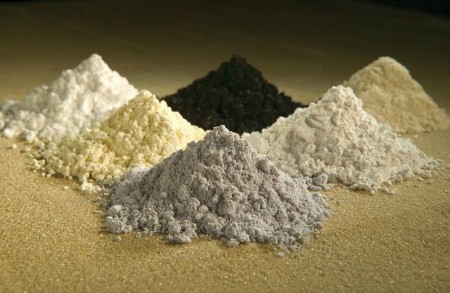
Coal is the most abundant fossil fuel on our planet. Harnessing it for its rare-earth content rather than burning it could give coal mining a new lease on life in light of global initiatives to close coal-fired power plants to combat climate change.
Interestingly, the study didn’t use mine samples. Instead it extracted the rare earths from mine tailings. If using the coal would mean improved extraction rates approaching or excceding the 2% goal it would have a profound impact on the industry and our planet.

SETI, the search for extraterrestrial intelligence, has been searching for other life in space for several decades by trying to detect intelligence through radio signals we receive here on Earth. SETI researchers believe, if a technical civilization can arise here on Earth as it has, then given suitable, habitable planetary environments, plus time and you have a repeatable formula for technical civilizations. And like we humans on Earth, space will represent the same kind of challenges resulting in exploration largely done by spacecraft with nothing living on board.
Professor Mathews believes who better to meet up in space with a robotic spacecraft than another robot, one originating from here on Earth. He goes on to argue that humans need to develop smart, self-replicating robots as well as better communications technology if we want to find other life in the galaxy.
Robots have many advantages over their human creators when in space. They don’t require all of the baggage we humans need to survive. They can be programmed to replicate in the presence of raw materials so that they become self-perpetuating. Places like the Moon would be a better alternative than Earth for developing smart robot factories. The Moon’s gravity well is far less than Earth’s for launching expeditions into Deep Space. The Moon has all the materials needed to build robots and even the fuel necessary to launch them on missions. We’re not limited to the Moon, a near-Earth asteroid could serve as a source of raw materials for a self-replicating robot factory in space. Launching from an asteroid would require very little propulsive energy to reach escape velocity.
Intelligent robots with a high-speed communication mesh network can learn from each other and rapidly build collective wisdom as they set out on voyages of discovery and report back to their human creators here on Earth. Ultimately one of these robots may encounter a signal or make contact with robots from another intelligent species. It will be robot first contact. And who knows what will follow from there.