Evidence of the Anthropocene can be found in our impact on the rock strata we humans are laying down today embedded with plastic debris and other pollutants. We call these new rocks, plastiglomerates. More disturbing, however, is the chemical evidence recently uncovered of human-created pollutants found in the deepest ocean trenches of our planet.
In a study done by Newcastle University scientists, a sampling of crustaceans from the Mariana and Kermadec trenches in the Pacific Ocean show the presence of polychorinated biphenyls (PCBs), and polybrominated diphenyl ethers in the fatty tissue of these animals.
States lead author, Dr. Alan Jamieson, Marine Ecologist, “We still think of the deep ocean as being this remote and pristine realm, safe from human impact, but our research shows that, sadly, this could not be further from the truth.” The sampling from these crustaceans indicates contamination levels equal to some of the most polluted surface areas in the Pacific Ocean basin.
The likely source of deep sea pollution is contaminated plastic debris, and dead animals containing absorbed industrial chemicals, that find their way to the ocean bottom and get ingested by the local fauna. “The fact that we found such extraordinary levels of these pollutants in one of the most remote and inaccessible habitats on earth really brings home the long term, devastating impact that mankind is having on the planet…..It’s not a great legacy that we’re leaving behind.”
The complete study can be found online in the journal, Nature: Ecology & Evolution, entitled, “Bioaccumulation of persistent organic pollutants in the deepest ocean fauna,” published on February 13, 2017.
Findings like these are part of the accumulating evidence that shows we humans are changing the nature of life on this planet. It is inevitable that the 7.5 billion people on this planet plus the accompanying aspects of our civilization are bound to leave an imprint. But in the age of humans, the Anthropocene, we owe the planet the love it deserves for giving us the only place in the Universe where we can safely exist. Why are we screwing with it?

]]>

In a report appearing in Nature Climate Change, scientists describe why global warming has slowed down in the last 12 years and why this is a temporary aberration. The halt is explained by acceleration of the equatorial trade winds blowing from Pacific coast of the Americas to the Western Pacific. These winds have impacted ocean circulation leading to the subduction of warmer surface water into the ocean depths. This has virtually halted the steady rise in atmospheric temperatures over the Pacific and has impacted the rest of the world as well.
In the diagram below we can see the normal pattern of the Pacific both in the atmosphere and ocean. Note in the bottom illustration how strengthened trade winds impact the distribution of warm water from Peru to Australia as the winds push ocean circulation to the west.

But the research report also shows a similar pattern in the history of wind and ocean circulation over the Pacific. Back between 1940 and 1975, a similar stall occurred in global temperatures linked to increased wind activity over the Pacific and leading to cooler than expected atmospheric temperatures.
So are the climate change deniers right? Is all this talk about increased CO2 pure nonsense? No state the scientists in this study. They argue that the hiatus in warming will end when the trade winds resume their normal pattern. At that point much of the suppressed heat in the ocean will rise to the surface and enter the atmosphere creating a new pulse of warming. They believe that this will lead to even more exaggerated warming. In the diagram below we can see the trends in temperature and ocean and atmospheric circulation over the Pacific Ocean during the past two decades. Colored shading shows observed temperature trends.

The scientists have described the surging trade winds as unprecedented and well beyond the expectations of existing climate models. They suspect these winds will continue to persist until around 2020 when they will abate. At that point rapid warming will occur. This does not bode well for Australia, already suffering from higher temperatures and severe drought despite the fact that much of the rest of the inhabited world has been spared. Of course even though the upward climb in average temperatures has halted, the Arctic continues to melt at an unprecedented level and the Antarctic peninsula continues to see thinning of its coastal ice shelves.
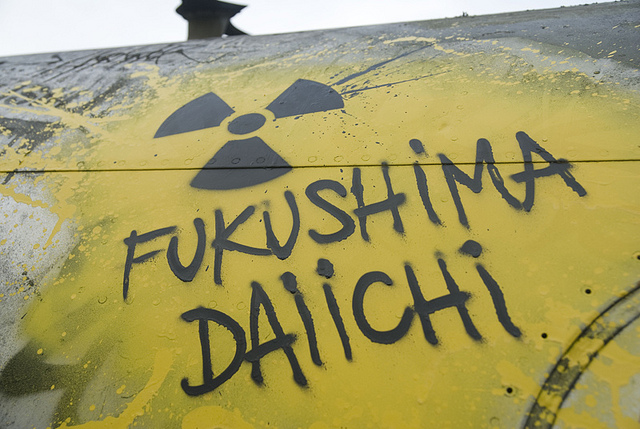
Fukushima is costing the Japanese government $80 billion at the moment to clean up the environmental mess. And estimates by independent nuclear engineers believe the total cost will approach minimally $250 billion and possibly as much as $500 billion. Compare that to BP’s Deepwater Horizon blowout at $30 billion and the latter looks like chump change.
For Japan which generated 30% of its energy from nuclear it probably means a full bore effort to develop renewable energy using solar, wind, geothermal and tide. For the rest of the world that is considering fission reactors for power generation it is a wake up call to look at alternative nuclear models like thorium reactors, hybrid fission-fusion reactors, and fusion.
With no precedent to follow, Fukushima is the ultimate disaster for a nuclear industry that has had a reasonable safety record considering the toxicity of the fuel it uses. For the Japanese who lived near Fukushima there is now a wasteland that will remain toxic for several hundred years. This is the same result as Chernobyl except that the former has also impacted the neighbouring ocean. The environmental consequences of the meltdown at Fukushima has so far affected the Pacific Ocean to the east of the country. But the radioactive discharge will creep across the Pacific in time and do we completely understand what the impact will be on Pacific islands and the west coast of North America? How is the marine environment being impacted? Should Pacific islanders continue to eat the fish they catch? Will exotic beaches in tropical islands in time be off limits to swimming?
This is what we know right now. The Japanese have restricted fishing in the offshore area directly opposite Fukushima. But for migratory species like the Pacific Bluefin Tuna which will certainly be exposed to this radiation pollution, these offshore areas are feeding zones. And the Bluefin migrates across the Pacific where it can be caught off North America’s west coast.
Fortunately, from studies done by Woods Hole Oceanographic Institute we know for the moment that levels of radiation (cesium, polonium and strontium) are not at any level to suggest it would be hazardous to eat large fish species caught in the ocean. If there is a potential threat it might be from strontium contamination in sardine populations but even here it is only impacting the local Japanese fishery and not the traditional west coast fishery off Peru. In fact the level of radioactive exposure appears to be far less than the dose one gets from dental x-rays. So for the moment we can thank the diluting power of the Pacific Ocean for making Fukushima less a threat to those of us further away from Japan’s shores. The inshore fishery and coastal beaches near Fukushima, however, will remain problematic for years to come.
For a reliable source of information on radiation health risks from Fukushima check out the Woods Hole Oceanographic Oceanus online magazine site.
So Fukushima has pretty much killed conventional fission reactor technology. But safer nuclear technologies are on the horizon and I have written about them in previous blogs. The real question is will post-Fukushima fears lead to a NIMBY response from those who will live near these plants should they receive the green light from government and utility providers?
]]>


