Ozone can be found in the lower and upper atmosphere. In the former, it poses a danger to health. In the latter, it provides a protective barrier to block harmful ultraviolet (UV) rays from the Sun reaching the surface.
In the lower atmosphere, ozone’s presence produces smog. Where does this ozone come from? We are the source producing the chemicals in paints and other products and from oil refineries. The internal combustion engines that we use to power our cars emit ozone from vehicle tailpipes. If you have ever walked down a busy street where there is a lot of traffic, if your eyes start to smart, you are feeling the effects of ozone.
When ozone is depleted from the upper atmosphere in the layer called the stratosphere, we lose its protective properties that act as a barrier to ultraviolet (UV) rays emitted by the Sun. Excess exposure to UV rays with a depleted layer of ozone is associated with increased skin cancer and cataracts. It also is known to weaken the immune system, reduce crop yields and negatively impact marine life.
During the 1980s, the alarm went off regarding ozone depletion in the upper atmosphere. Holes in the ozone layer were opening over the Earth’s poles. Ozone depletion was increasing their size, posing a growing threat to the health of humans and other species. The nations of the world bought the science and came to a global agreement called the Montreal Protocol, signed in 1987. The phase-out of ozone-depleting hydrofluorocarbons began.
At the same time, medical research showed that ground-level ozone was contributing to ill health. In children, it was causing asthma. In adults, it was damaging lungs leading to emphysema, bronchitis, pneumonia and permanent scarring of the tissue.
A solution existed. It was called the catalytic converter, invented early in the 20th century but first patented in 1952. A catalytic converter could screen out noxious gasses like nitrous oxides and ozone from combusted gasoline and diesel fuels used by internal combustion engines. The adoption of the catalytic converter by the automotive industry took off in the late 1960s when governments began to enact stringent emission control regulations. Today, all cars and trucks are equipped with catalytic converters.
So you would think that regulation and invention would have saved us from ozone. Well, it has not because recent measurements by the European Space Agency’s Copernicus Sentinel-5P satellite indicate an ozone hole has opened up over Antarctica covering 26 million square kilometres (10 million square miles). Are we responsible for this hole, or is the cause natural?
The 2022 eruption of the volcano Hunga Tonga-Hunga Ha‘apai (seen below in images captured by a NASA satellite) may be the biggest contributor to this latest depletion of ozone in the stratosphere. The eruption spread dust, ash, water vapour and chlorofluorocarbons into the stratosphere. It caused a polar vortex of high-speed winds to surround Antarctica leading to ozone depletion.
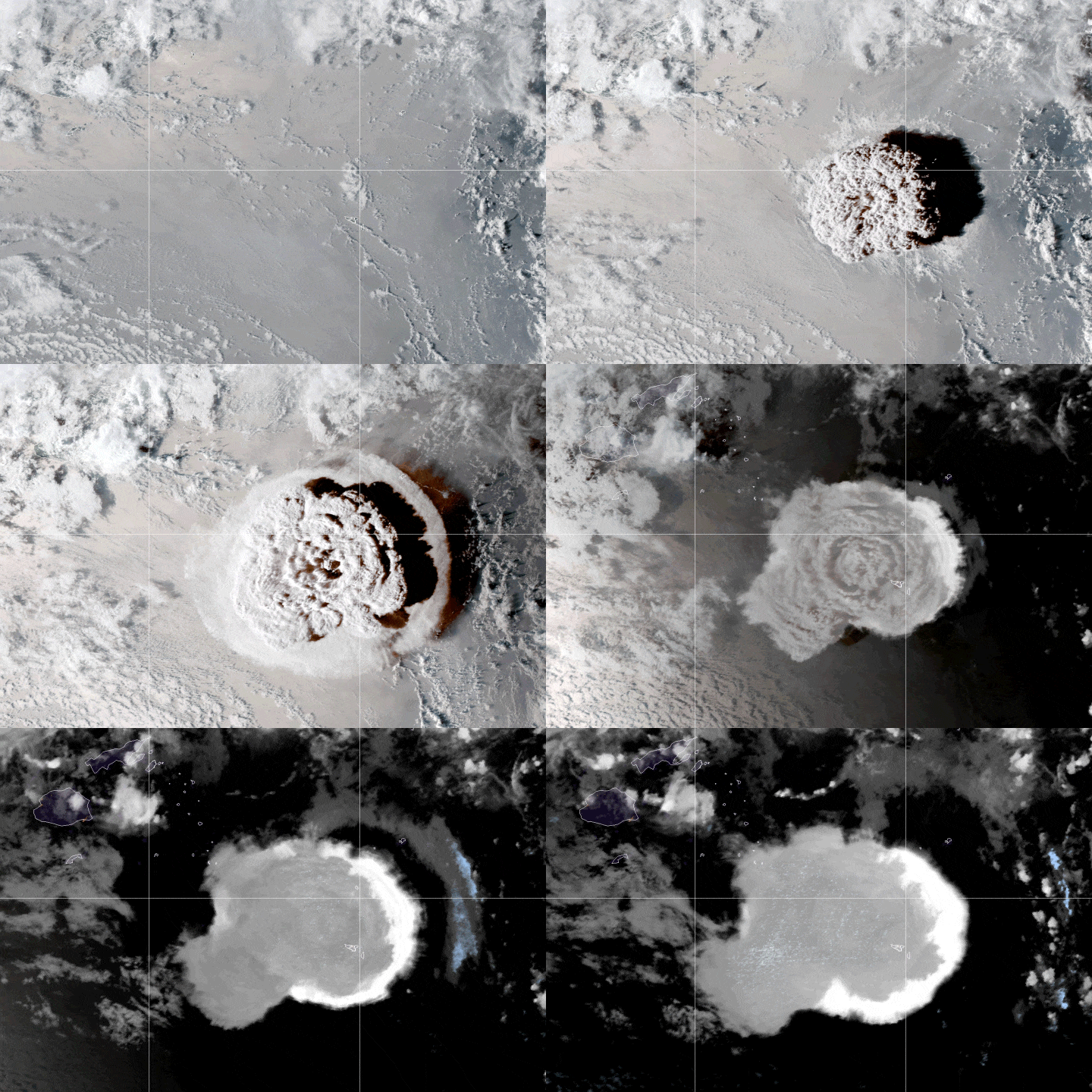
The emergence of ozone-detecting Earth-orbiting satellites has given us new insights into understanding the nature of the ozone layer and its fluctuations. In the Antarctic, the ozone hole increases from August to October reaching a maximum through mid-September to October when temperatures start to rise in the southern hemisphere. Ozone depletion reverses with the hole shrinking by the start of summer.
Did the Arctic experience a similar enlargement of its ozone hole? Apparently not, which lends credence to the volcanic origins of this recent change over Antarctica.
But human-engineered ozone remains a problem coming largely from petrochemical industrial sources. Where is it worse? The Persian Gulf has the highest concentrations of industrial ozone. Qatar leads the way. Another country with high ozone levels is Nepal where rapid urbanization and industrial pollution in the Kathmandu Valley are seen to be the cause. High levels of ozone pollution can be found in India, Bangladesh, Bahrain, Pakistan, Kuwait, Iraq, South Korea, and Saudi Arabia, while the lowest levels are in Pacific island nations and Papua New Guinea.
And satellites continue to detect hydrofluorocarbons being emitted from industrial sources. The offenders include industries in the United States, Great Britain, the European Union, Russia, South Africa, China, South Korea and Japan.
Before the latest enlarged hole opened over Antarctica, scientists were optimistic that the ozone layer would be restored to conditions in 1980 by 2040. But now some forecasts are far darker indicating that with the continued production of hydrofluorocarbons, not including natural events that could speed up ozone layer depletion, we could see it disappear over Antarctica by 2066, and over the Arctic by 2045.
We thought we had it licked, but apparently not.
]]>
That is until recently when suddenly one form of CFC, CFC-11, saw levels of the pollutant begin to climb starting in 2012. Today CFC-11 levels are 25% higher despite the ban on the chemical worldwide. The signatories to the Montreal agreement annually report all CFC production. But it appears someone is lying or cheating. In today’s Washington Post, Durwood Zaelke, from the Institute for Governance and Sustainable Development states, “There’s some slight possibility there’s an unintentional release, but … they make it clear there’s strong evidence this is actually being produced.”
The Post’s report is based on a report published today in the international journal of science, Nature, which includes atmospheric observations from Hawaii indicating that the source of the CFCs may be somewhere in eastern Asia with the amount being added to the atmosphere equaling 13 million kilograms (more than 14,000 US tons annually. That may not sound like a lot when compared to greenhouse gas emission volumes, but it doesn’t take a lot of CFC-11 to seriously degrade ozone.
The evidence appears to indicate a new emissions source sufficient in quantity to show up in statistical atmospheric observation. The volumes being added are greater than the amount of decline in CFC presence from the disappearance in the chemical’s use.
Furthermore, because CFC-11 doesn’t degrade quickly, lasting up to 50 years once released, the accumulations over time will be sufficient in quantity to do more than damage the ozone layer. The chemical will, as a greenhouse gas, also contribute to atmospheric warming.
Someone needs to fess up. If not the signatories to the Montreal agreement will have to begin flying in the stratosphere to pinpoint the source. Even so the damage already being done will linger throughout the 21st century and beyond.
Could an increase in CFC-11 in the stratosphere be associated with a natural occurrence?
No. CFCs are artificial chemicals concocted in laboratories and were used in foam, fire retardant materials, and HVAC systems when first invented.
Could the CFC-11 come from old materials, from decommissioned utilities, or demolition of old manufacturing and building sites?
Unlikely because of the volume and rate of growth.
Is the release of new volumes of CFC-11 a violation of international law?
Undoubtedly. Any unreported production of CFC-11 within the Montreal Protocol outside of agreed to exceptions is considered a violation of international law.
What’s the potential punishment for the CFC-11 producer?
The Montreal Protocol included no punitive clauses. That means the finding of the CFC source and its exposure becomes vital. Exposed to the world as a CFC cheater may be sufficient to get the violators to stop. Otherwise, international forums such as the United Nations’ or World Trade Organization may have to act to apply sanctions on the violators.

]]>
The article, entitled Evidence for a continuous decline in lower stratospheric ozone offsetting ozone layer recovery, is a research collaboration involving scientists from the Physikalisch-Meteorologisches Observatorium Davos World Radiation Centre, Swiss Federal Institute of Technology Zurich, the Center for Computational Astrophysics, Flatiron Institute, New York, Imperial College London, Stockholm University, Hampton University, University of Saskatchewan, University of Colorado, Boulder, Earth System Research Laboratory, Boulder, NASA Goddard Space Flight Center, Greenbelt, Jet Propulsion Laboratory, Pasadena, Finnish Meteorological Institute, Georgia Institute of Technology, NOAA, Morgan State University, Baltimore, and others. In other words, this isn’t just a one-off observation, but rather a compilation of accumulative research with profound implications for our planet.
The key findings:
It’s the latter point that has the researchers concerned. If it can’t be modeled then it becomes hard to figure out if this is a natural phenomenon or human-caused.
For those readers less familiar with the composition of our atmosphere I provide a brief explanation.
The atmosphere consists of a number of layers. Where we humans and almost all life exists is in the troposphere. Here oxygen and water vapour are abundant, and the thickness of the air provides reasonable protection from cosmic and solar radiation.
The layer above the troposphere is the stratosphere. Stratus clouds, those icy wisps often called mare’s tails, form in the lower stratosphere. Where modern commercial jets fly is in the lower stratosphere. And in the stratosphere, a layer of trioxygen molecules made up of oxygen we cannot breathe, called ozone, blocks cosmic and solar radiation.
The other layers lying above the stratosphere include the near-space, mesosphere, above that, the thermosphere, and finally, the exosphere which takes us to a familiar space where near-Earth satellites and the International Space Station fly.
But getting back to the stratosphere, it was in the latter part of the 20th-century when ground-based atmospheric observations combined with satellites detected the thinning of ozone. Eventually the thinning became so pervasive, ozone-free holes opened near the Earth’s poles. Those holes grew to a point where Northern Europe, much of North America, Australia, South Africa and southern Argentina and Chile were exposed to cosmic and solar rays at levels previously not seen. That’s when scientists noted a sharp spike in skin cancers.
The search for a cause led to the discovery that the aerosol chemicals developed in commercial laboratories, used in air conditioning and in many spray-bottle products, was breaking down trioxygen. At a conference held in Montreal, Canada, the countries of the world agreed to ban the identified aerosol chemicals from commercial use. Decades later scientists could measure the recovery of stratospheric ozone over the poles.
Or at least scientists thought there was recovery until the findings of the research were published this week telling a very different story. Now what the researchers may have discovered is, that instead of ozone recovery the net increase at the poles has been offset by a thinning of ozone in the lower stratosphere over a wider swath of the planet.
The puzzle gets even more complex when the compiled data is studied further because it shows tropospheric ozone increasing for no explicable reason. The tropospheric ozone data set studied covers the last 13 years, and although this is a small sample in terms of time, the rise is notable.
So the picture the research shows is less ozone in the lower stratosphere, increases in the upper stratosphere, and increases in the troposphere with no easy explanation for the why.
Speculation points to three potential causes.
The latter is not mentioned in the research paper but has often been considered as a pollution source that interferes with the normal chemical composition of the lower stratosphere. There have been a number of recent studies that link cloud formation with the presence of contrails. So why not ozone?

]]>
This week I look at technology headlines in the fields of agriculture, biomedicine, climate change, energy, and space. Enjoy the read.
Agriculture Update: “Urbanana” Brings Tropical Vertical Farms to Paris
Greenhouse vertical urban farms are making a fashion statement in the fashion capital of the world, Paris. A French architectural company, SOA, has designed a six-storey annex-styled greenhouse that can fit between existing buildings on the main thoroughfares of the City. Called Urbanana, a combination of urban and banana, the building is designed to grow tropical fruit year round. This is not SOA’s first urban farming concept. The company has developed an Agricultural Urbanism Lab to create facilities for growing local produce in urban settings.
With over 3.5 billion of us living in cities today vertical farming is no longer an idea but a necessity, a practical solution to supplementing the feeding of urban populations.
Urbanana has been designed to be highly mechanized with plants grown in pots and rotated on moving belts to maximize light requirements. In the concept drawing below you can see how the greenhouse has been integrated into the urban landscape. Nice curb appeal!

Biomedicine Update: Developing A Drug Chemistry Replicator
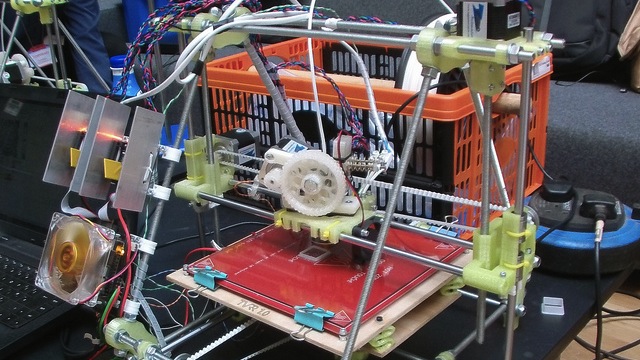
Two headlines on 3D printing technology caught my eye this week. This one involves using 3D printing to create complex chemistry. The other you’ll read about a little further down.
The 3D printing research being done here is by the Cronin Group, headed by University of Glasgow’s, Lee Cronin, a chemistry professor who is adapting 3D printers to become what he calls “chemputers.”
Cronin’s goal is to use 3D printing to build complex molecular chemistry. The chemputer is a prototype that can be programmed to build complex chemicals. Most pharmaceuticals are complexes of carbon, hydrogen and oxygen along with vegetable oils and paraffin. With the chemputer, drugs can be assembled from inks that reflect the chemistry of the pharmaceutical recipe. The chemputer lays down the molecules with reliable precision. The current goal is to successfully fabricate ibuprofen. Ultimately the goal is to manufacture almost any drug using a combination of a larder of chemical-based inks with an electronic recipe book for guidance.
Climate Change Update: Will Global Warming Also Damage the Ozone Layer?
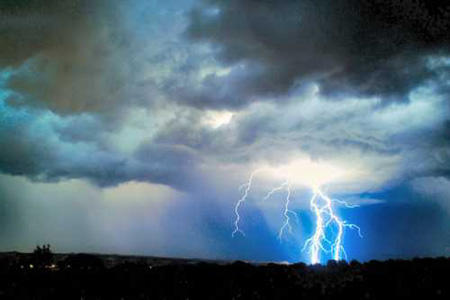
In a report published in the journal Science, Harvard University researchers are studying increased atmospheric turbulence and its impact on ozone. What they are finding is violent summer thunderstorms pull large amounts of water vapour into the stratosphere causing chemical reactions with residual atmospheric pollutants. The pollutants are the legacy of CFC (chlorofluorocarbon) prior use, the refrigerant and spray can gas containing carbon, chlorine, hydrogen and fluorine, that was banned in the 1980s because it was blamed for ozone depletion in the upper atmosphere. It was CFC use that led to today’s UV weather reports with admonishments for us to all use sun screen.
The scientists who wrote this recent report were led by Dr. James G. Anderson. They looked at risks to the ozone layer from increasing storm frequency and intensity and studied a process called convective injection where water vapour rises as high as 19 kilometers (approximately 12 miles) into the stratosphere.
The IPCC (Intergovernmental Panel on Climate Change) in its reports notes that storm frequency and intensity are byproducts of rising temperatures globally. Storms over oceans such as hurricanes and typhoons have been forecasted to become more frequent and more intense. The same is true for storms over land. Although these are not equal in intensity to hurricanes and typhoons, nevertheless they create large upwellings of moist air to rise and mix in the bone dry stratosphere.
Energy Update: Trash to Energy on the Upswing
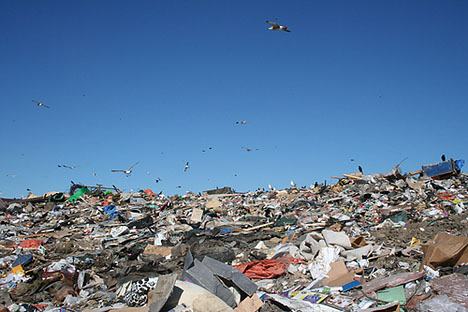
When is urban trash a good news story? Well according to Pike Research the trash we currently dump into landfill is becoming an important energy resource. The report states that more than 800 thermal trash-to-energy facilities operate today in 40 nations. The trash to operate these facilities, however, amounts to only 11% of the total municipal waste we generate annually worldwide.
By 2022 forecasters indicate that we will be converting between 260 and 396 million tons of waste each year to produce 429 Terawatt-hours of power and heat. That will represent between 10-13% of total municipal waste.
Urban trash will reach 3 billion tons by 2022. Our trash is an untapped energy resource and represents an increasingly attractive option for cities that find landfill sites reaching capacity or closing and NIMBYism (not-in-my-backyard) push back on creating new municipal landfill sites.
The largest growth for trash-to-energy is expected in the Asia-Pacific region which is forecast to account for 54% of these projects by 2022.
Space Update: 3D Printers to Fuel Made in Space Manufacturing
Check out Made in Space, a company in the business of creating manufacturing in space for in-space consumption. The plan is – build spacecraft and habitation components in space. Do this by using 3D printers and a wide range of space compatible materials. NASA has even developed a supergoo that can be used with a prototype electron beam fabricator, seen in the picture below.
The materials of space construction include plastics, aluminium and titanium. Building for in space for use in space is different than building for space here on Earth. When we manufacture on the planet surface we have to send the finished product into space. To do that we have to construct it to withstand the forces of gravity and the stresses of a launch. When we manufacture in space for consumption in space, however, we don’t have to deal with gravity and launch stresses. As a result we can reduce mass dramatically.
A 3D printer on board with base feedstock and a CAD program could begin to manufacture almost anything needed. A 3D printer delivered to Mars wouldn’t even need feedstock. It could use the local materials to fabricate habitations for the planet’s surface.
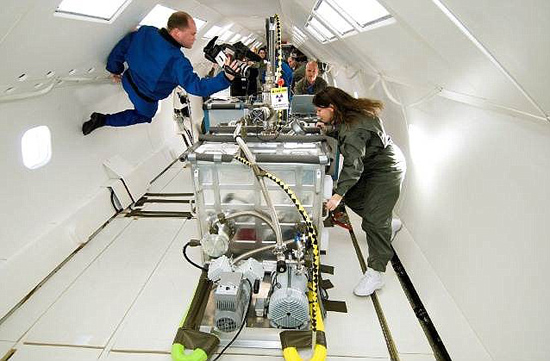
Currently Made in Space 3D printers are being tested on parabolic flights to simulate microgravity. The next step will place a 3D printer on the International Space Station along with some supergoo and the recipe book.
A Postscript
Find an interesting technology story, an innovation that can really make a difference for humanity and the planet in the 21st century- let me know. Currently with over 2,200 readers visiting each month it is encouraging to see the growing traffic, up 300% in the last 90 days. I thank all of you for visiting and hope you keep coming back. If you like what you read here then let others know. My personal goal is to have 10,000 visitors each month by year’s end. I’m hoping you can help me get there. – Len Rosen
]]>