
More frightening is the next graph which shows where population growth projections are heading as we approach 2050. If total CO2 emissions have paralleled population growth from 1900 to the present, then what’s to stop them from continuing the same parallel track to 2050 and beyond?

Note the second graph above has a line marked 50% CO2 emissions reduction. This is the target that climatologists have agreed upon to keep the average temperature from rising more than 2 Celsius (3.6 Fahrenheit) degrees.
It would seem useful this week for the meeting in New York City involving the United Nations and 125 of its members, there to discuss climate change, to keep reminding themselves that meeting overall CO2 emission reductions requires all of humanity to look at both population and CO2 in tandem. That’s because a successful CO2 reduction outcome means recognizing that population growth also needs to be addressed. And addressing the latter cannot come soon enough particularly for those countries of the Developing World where growth is explosive.
The population bomb made science headlines in the last week. A new study published in the journal, Science, entitled World population stabilization unlikely this century argues that the 9 to 9.5 billion projection of 2050 representing the peak in human population will not be the plateau previously forecasted. That in fact, population will likely continue to increase to exceed 12 billion by 2100. And most of the increase will come from Africa where high reproduction rates are not slowing down as predicted even in the light of urban migration.
The authors of this study from University of Washington, the National University of Singapore, Colorado State University and the United Nations’ Population Division, argue that there is an 80% probability that the number 12.3 billion will be reached by the end of the century. But the only way this will be achieved, according to the authors, is if impediments to population growth are overcome. These include increased food supply, combatting HIV, Ebola and other epidemic and pandemic diseases, avoiding war and of course, extreme weather events associated with climate change.
When those studying population growth came up with the 2050 population plateau at 9.5 billion, assumptions were based on looking at population trends in South Asia and Latin America. In these areas of the world fertility rate trends moved downward correlated with improved food security, urbanization, higher literacy rates and higher educational attainment.
In China, a centralist-controlling government mandated a one child family policy that was rigorously enforced. This put a halt to the country’s population growth. Was the China way the right way to exert population control? Those who argue that China got it right when it comes to population control are not looking at current events with the country’s leaders now loosening the strings on the policy because the rapidly aging population can no longer produce the tax revenue needed to meet the government’s budgetary spending.
At the same time, the population bomb is very evident in Africa today. Nigeria is a good example. It is the most populous country on the continent at 173.6 million as of 2013. Average families have six children with no change in the reproductive rate in 15 years. Projected out to 2100 it means Nigeria’s population will be 532 million. Other countries in Africa on a parallel course will raise the continent’s population from 1 billion today to 4 billion by 2100. The authors of the study rate the probability of this outcome at 90%.
Back on September 16th I wrote a posting describing the recommendation coming from the New Climate Economy Report, in which the authors stated “it’s not business as usual.” That report addressed the 500 million projected population increase over the next 15 years and the disruption it would cause. Now imagine population growth ten times greater than that between now and the end of the century.
Do we have leadership today with foresight and determination to act on behalf of all humanity to address both climate and population? Up until now we have watched since the signing of the Kyoto Protocol and the Rio+20 conference, a diminished sense of urgency on part of world leaders to address carbon emissions. How will they even begin to come up with a comprehensive population strategy?
Think about this. The carrying capacity of the planet for our species in theory is much larger than 12.3 billion. Some time ago I did the calculation based on arable land under cultivation, a diet of rice, and meeting a minimum of 2,000 calories per person per day. The number comes to almost 66 billion. Of course that’s if all we want to do is eat rice and if we denude the entire planet of other plants and dedicate it to growing that staple.
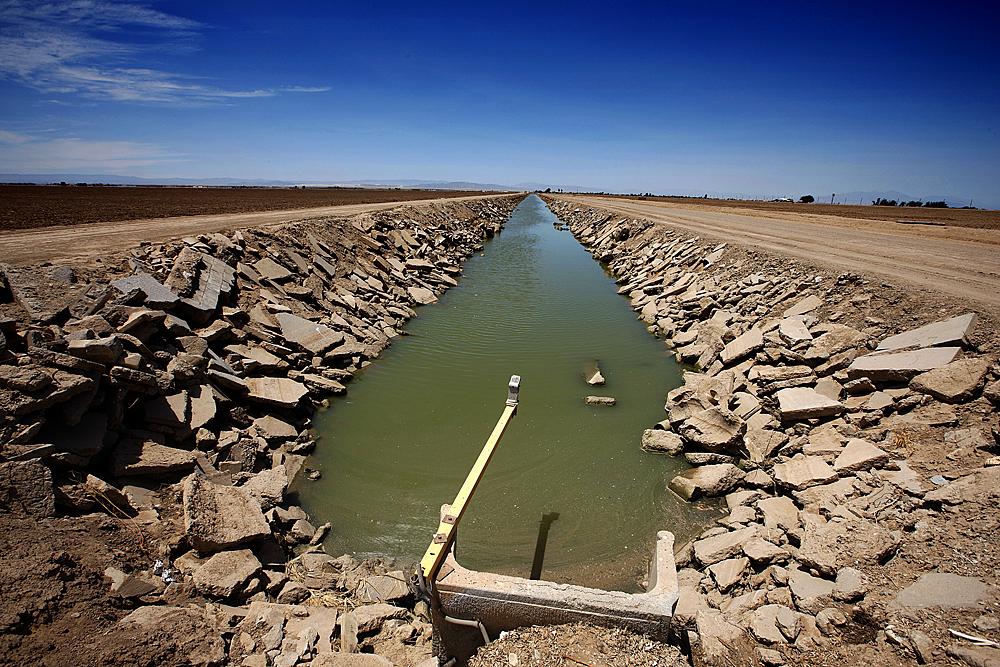
The 12.3 billion number is a wake up call that needs to be heeded. So as government heads gather in New York City, will any of them be looking at graphical representations like the two shown in this posting? And if so what kind of policies and strategies will they be considering for reducing our planetary carbon and human footprint? For the hundreds of thousands who joined climate change marches this weekend, consider the picture below and recognize that our human numbers must be part of any equation to solve our carbon dependency.

In preparing my speech to the Jamaica2030 conference I came across the following statistic:
A quarter of the planet will experience severe water shortages one month per year by 2030.
What will be the reasons?
A map posted on the Geospatial World website, reproduced below, shows those ares of the planet that have faced significant drought since 1981. Note in the image that the polar regions remain blank because of insufficient data. And areas like the Australian Outback, the Sahara and deserts of Southwest Asia, already in permanent drought, remain blank as well.
But the tinted areas that go from light to dark are the ones of concern. These are areas that have had a wetter past but are now experiencing change with the darkest representing the most prolonged water shortages accompanied by significant crop failures and natural vegetation loss.

In my talk at Jamaica 2030 I mentioned that the World Water Development Report 4, issued by the United Nations, forecasted that half of the world’s human population in 2030 will live in freshwater stressed areas. A quarter billion of them will live in Sub-Saharan Africa and will join a growing number of climate refugees.
There is no immediate remedy to come from a carbon reduction strategy. So by burning less coal and other fossil fuels in the immediate future we cannot alter the pattern we are witnessing even though human-assisted climate change is part of the cause. The other human contribution is overpopulation in both people and the domesticated flocks of animals we rely on for part of our food supply.
So what can we do to mitigate freshwater scarcity?
This list is by no means complete. I invite you to suggest additional strategies we can deploy to address what may prove to be the most significant immediate challenge we face as an outcome of human influenced climate change.
]]>


