
Today a dental laboratory represents a significant add-on cost to any dental practice. Every crown, bridge, implant or model a dentist uses is produced by them. The costs are factored into every dental bill patients receive and they are not inexpensive. when I had a crown done a few years ago, the total cost for all the work amounted to well over $2,000.
The dental laboratories employ skilled labor to produce crowns, dentures, partials and full sets of false teeth. The cost to an individual dental practice, depending on the volume of work, can amount to $100,000 in added overhead per year. And if a dentist takes the laboratory work in-house, the one-time cost of the equipment to do the work could easily reach $100,000 using traditional technologies.
But not anymore. The top-model 3D dental printers today sell for about $20,000 including a supply of materials. That’s one-fifth the cost of outsourcing the work to a dental laboratory. And when you consider that the cost of 3D printers is dropping to the point where they are becoming almost a commodity, the incentive for dentists to invest in them seems almost irresistible.
What can a dentist do with one of these 3D printing technologies in house? Here are just a few applications:
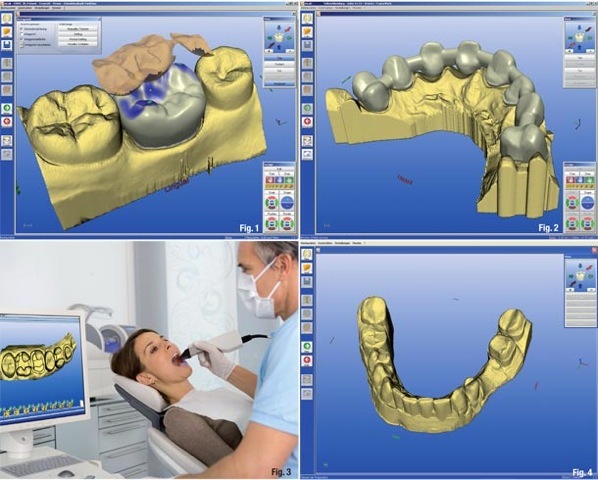
In a recent report on CNBC the dental sector is cited as the one most likely to “mass uptake” 3D printing technology growing 515% over the next decade. And ID TechEx in a recent forecast predicted that sales of 3D printers to the medical and dental sector will top $868 million US by 2025.

