The post Even Artificial Intelligence Can Be Disrupted As China’s DeepSeek Is Showing appeared first on Techso Mogro.
]]>DeepSeek provided other surprises for the AI crowd including Elon Musk’s xAI, Mark Zuckerberg’s Meta AI, Google’s Gemini, Amazon’s Anthropic and Microsoft-backed OpenAI. The initial reaction to DeepSeek’s revelation was felt in stock prices for these companies with sharp declines.
What other attributes of the DeepSeek reveal are of interest?
The comparison between DeepSeek, OpenAI and the other AI players is stark. For example, OpenAI has 4,500 employees. DeepSeek has 200. OpenAI has raised over $6.6 billion and spends more than $100 million to train new iterations of ChatGPT. DeepSeek spent $5 million to build and launch its AI.
Diamandis describes the results as “staggering” offering this summary:
By making DeepSeeks’ AI open source, it is opening the application to allow researchers and developers to build on it. This is democratizing AI and should lead to faster development. Open source means DeepSeek’s AI is transparent and can rely on the global community to help make improvements and corrections to it, let alone build niche applications for it. Meanwhile, compared to its Silicon Valley competitors, DeepSeek will remain cheap with application development on it attractive to small and medium-sized businesses that now can find reasons to jump on the AI bandwagon.
Diamandis welcomes the democratizing of AI stating:
For NVIDIA it means retooling rather than relying on AI chips at $30,000 a pop to prop up its earnings. For OpenAI, Meta, Google, Microsoft, Amazon, and xAI it means going back to the drawing board if they want to compete with their more agile, smaller Chinese competitor. Those investors in Silicon Valley AI companies will wonder if they will soon be the victims of an AI bubble just like the dot-com one that burst in the late 1990s.
Diamandis sees the arrival of DeepSeek as a significant course change for AI describing it as “one of those moments we’ll look back on as an inflection point, like when PCs disrupted mainframes or cloud computing changed everything.” He continues, “The efficiency genie is out of the bottle, and there’s no going back.”
The post Even Artificial Intelligence Can Be Disrupted As China’s DeepSeek Is Showing appeared first on Techso Mogro.
]]>The post Open Source University of Toronto 3D Printer is Building Blood Vessels and Other Engineered Tissues appeared first on Techso Mogro.
]]>Today’s 3D bioprinters are limited by several constraints. The first involves the bioink. The second involves the print heads that inject the bioink. The third involves the medium in which to lay down the ink. The bioink has to nourish the living cells contained within the solution. The print heads must be capable of delivering the bioink solutions keeping the living cells viable. And finally, the medium in which the bioink is deposited must be such that it forms a structural matrix for the growth of the cells to meet the required organ or blood vessel being constructed.
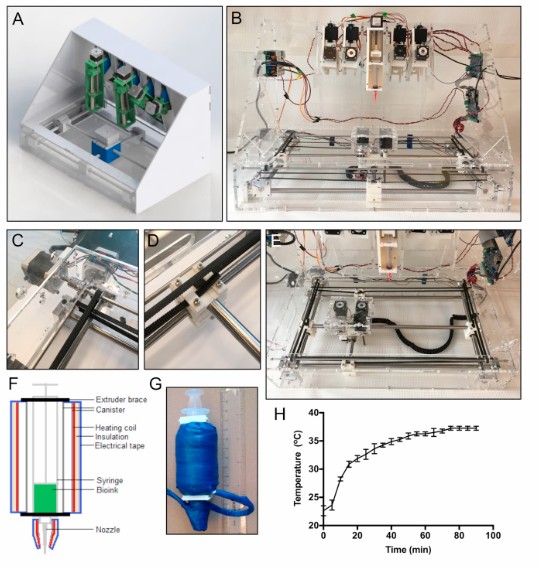
The U. of T. paper describes a functional 3D printer built from custom-designed parts combined with open source controller boards and motors with five print heads, and a Cartesian coordinate XYZ system to plot the 3-dimensional print job where X is width, Y is depth, and Z is height. Traditional inkjet printers are designed for 2D output laying down ink on a sheet of paper. But the added Z dimension is the one that presents the biggest challenge because the method of printing with bioink lays down material using the X and Y axis and then systematically adds layer upon layer to create the Z. Another feature of this open source printer is the print bed which allows the operators to switch out different printing surfaces to address issues like fine temperature regulation during organ or blood vessel construction.
The bioink contains gelatin and readily available Pluronic F-127, a bioreagent suitable for culturing living cells. When doing bioprinting it involves two stages. First, you lay down a material that forms the matrix design for the organ and blood vessel to be constructed. Then second, you follow that with the bioink. The first material is not meant to be permanent. Once the desired organ or blood vessel is constructed, a third step involves flushing away the material in the first step and leaving finished living tissue.
A relative bargain, the cost of the printer amounted to $3,000 CDN in parts and materials. Resolution of the print is between 0.5 and 1 millimeter. In testing the printer was capable of replicating complex vascular tissues with consistency and accuracy.
The post Open Source University of Toronto 3D Printer is Building Blood Vessels and Other Engineered Tissues appeared first on Techso Mogro.
]]>The post Quantum Computing Will Arrive When There is Lots of Software for It appeared first on Techso Mogro.
]]>What is open source? In the world of software many developers have made available the original software source code for computer languages, operating systems and applications. These open source tools are the opposite of “proprietary “ or “closed source” systems. Open source arose from the 1980s free software movement, a guerilla response to companies like Microsoft and IBM who sold closed source software licenses with expensive upgrades and maintenance contracts.
Developers of the various UNIX operating systems were among the initiators of what eventually became the Open Source Initiative. The Firefox and Chrome browsers that I use on my desktop and chrome-book laptop are products of open source. The Android operating system found on the majority of smartphones today is open source. Users are encouraged to enhance the code, develop applications, and share their results.
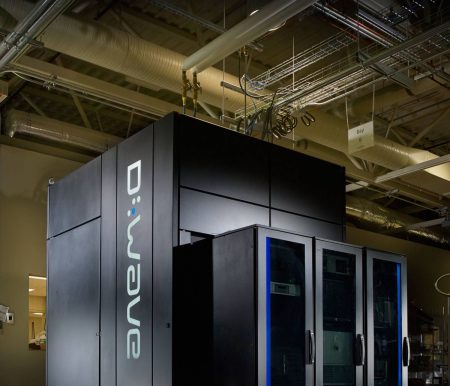
D-Wave, with the release of the source code of Qbsolv, is joining the open source movement in the hope it will be a quantum computing game changer. And they are not alone in this pursuit. Last year a Los Alamos researcher, Scott Pakin, released Qmasm, a quantum macro assembler, to help Qbsolv developers create programs that current D-Wave systems can’t even handle. These will be programs for future releases of ever more powerful D-Wave systems.
Other quantum computing developers see the merit of making the technology more accessible. For example, IBM offers a cloud-based quantum computing platform for “students, researchers and general science enthusiasts” to get a hands-on experience creating and running algorithms and experiments using qubits. Even Microsoft has created a quantum computing simulator to give developers an opportunity to write code and experiment with qubit-based applications.
Early users of Qbsolv have found it beneficial. It has enhanced the problem solving capability of D-Wave systems by a 20-times factor. States Fred Glover, Professor at University of Colorado and CTO of Opt Tek Systems, “Qbsolv opens a world of possibility for developers….Quantum applications are a new frontier and we’re just beginning to scratch the surface.” The current problems addressed, however, seem less real-world and more esoteric.
For example Qbsolv is being used to find “a faster solution to the multiple-sequence alignment problem….to study the evolution and function of DNA, RNA and protein.” Another application developed by Los Alamos scientists has helped to “find better ways of splitting the molecules on which they performed electronic structure calculations, among the most computationally intensive of all scientific calculations.”
Where can Qbsolv take quantum computing? Scientists see its potential for helping solve some of the world’s biggest challenges including improving crop yields to feed a growing human population, or addressing the planet’s changing climate through more accurate modeling of the environment, or finding new ways to treat and cure disease. A recent quantum application successfully predicts epileptic seizures in patients 20 to 40 minutes before they occur.
The post Quantum Computing Will Arrive When There is Lots of Software for It appeared first on Techso Mogro.
]]>