And exactly where is wind power going these days?
To see how wind power can become a reliable and primary energy producer go to the United Kingdom where it is being implemented on a massive scale. Known as the windiest country in Europe, the UK currently operates 8,000 wind turbines generating electricity to 11 million homes. Plans call for additional growth until wind can meet 40% of the country’s energy needs, an increase from the current 11.5%. For the UK wind is the primary choice for replacing coal-fired power, and the proximity of the North Sea provides the country with as close to a wind paradise as possible. That’s why today wind farms are being placed hundreds of kilometers off the UK coastline, and the turbines being erected are massively bigger than anything seen previously on land or at sea.
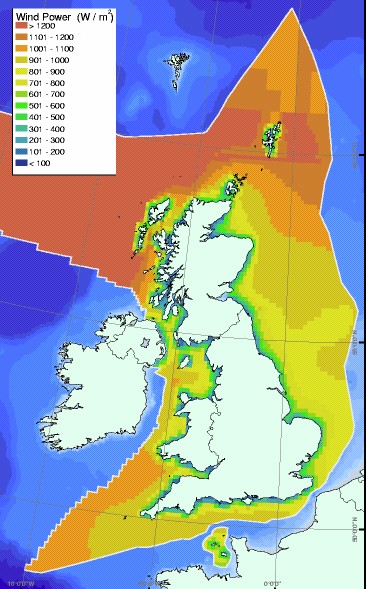
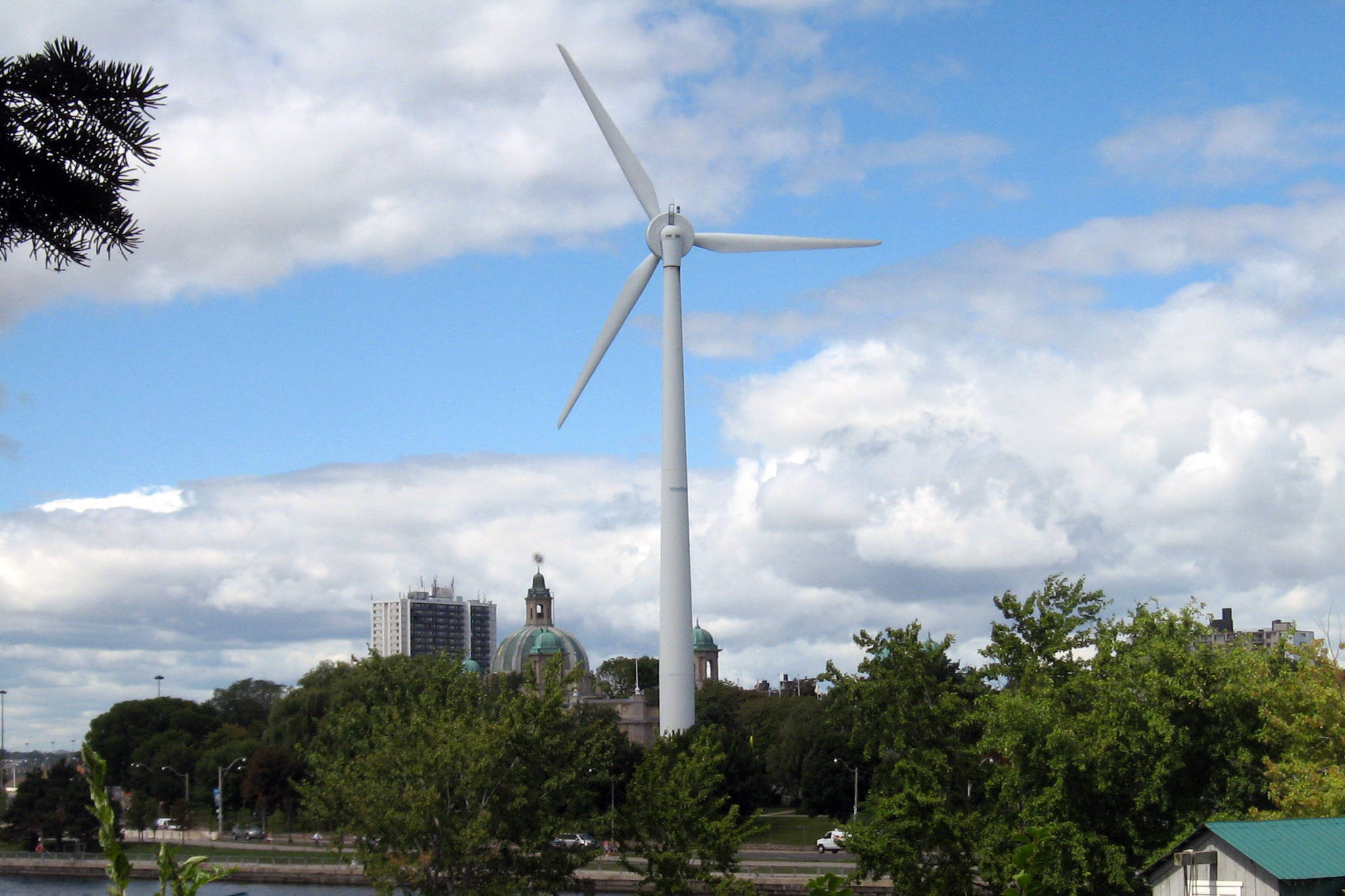
To give you a comparison, in Ontario where the province is bordered by four of the five Great Lakes, there are no wind turbines over water. NIMBY (not-in-my-backyard) resistance is the likely reason that such projects have not made it beyond proposals. But instead, the province, with detailed maps of wind capacity over land, has tendered contracts to numerous suppliers who have built thousands of turbines which can be seen throughout much of Southwestern Ontario where large expanses of relatively flat terrain provide consistent wind speeds. In a recent driving trip that took my family to this part of the province, the sight of these windmilling colossi was indeed impressive. But nothing we witnessed compares to what the UK is building.
An average wind turbine in Ontario stands between 85 and 115 meters (280 to 380 feet) in height. Each turbine blade, made of fiberglass or carbon fiber, stretches 45 meters (nearly 150 feet) in length. And with each rotation a blad, can exceed 160 meters (525 feet) in height at the topmost point of its sweep. Such turbines generate 2.5 Megawatt of electricity per rotation individually. When operating at full capacity (the wind needs to continuously blow), each can generate in excess of 20,000 Megawatt hours per year. But if the wind blows only half the time, the yield is reduced to 10,000 Megawatt hours annually.
In the UK, however, the latest wind turbines stand 195 meters in height, each featuring massively long blades and yielding 8 Megawatts of power per single rotation. That means just one of these operating at 100% capacity can generate more than 65,000 Megawatt hours per year. And because they are on the water, wind reliability is very high. That means near full capacity year round.
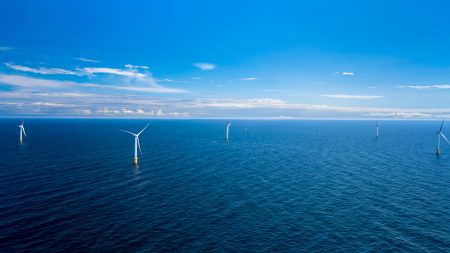
There is a drawback to placing wind turbines at sea. What happens when one breaks? A turbine that suffers a mechanical failure when at sea requires sending a workboat and repair team, working in less than ideal conditions. A solution that can reduce the cost and risk of over water wind turbine failures, is to build them to float. Then if a mechanical failure occurs, you can tow it to shore for repairs.
In the UK, the world’s first floating wind turbine farm opened last month. Located 24 kilometers (15 miles) off the Scottish North Sea coast, it contains five 253 meter-tall (830 feet) towers with 78 meters (256 feet) of their length beneath the sea’s surface. Each turbine is tethered by massive chains to the seabed. And each has the capacity to generate 6 Megawatts per rotation. There are plans to add more of these floating behemoths not only off Scotland’s North Sea coastline but also in the neighbouring Irish Sea to the west where some of the largest anchored wind turbines lie offshore near Liverpool. A field of 32 of these behemoths generates 8 Megawatts each per single rotation, enough power to keep a house heated and lit for 29 hours.
So size does matter and as we can see, so does location. If the UK experience proves anything, wind can be a significant contributor in the mix to lower the planet’s collective carbon footprint while providing the energy we all cannot live without.
How will it work?
The two provinces will be able to buy Mexican carbon credits and sell them to industries operating within their jurisdictions. Similarly Mexico will be able to purchase credits from the Canadian provinces to sell to the industries in its market. The revenue earned from the credits will be used by each jurisdiction differently. In the case of Quebec and Ontario, the focus is on funding green projects within the provinces. Mexico may choose to use the revenue similarly.
That certainly is the case in California based on a separate announcement yesterday. California legislature and governor agreed to put over $900 million collected through cap-and-trade into green projects focused on reducing emissions. The state so far has raised more than $1.4 billion in its carbon market but only two-thirds has yet been assigned to projects which include:
Cap-and-trade is being tried in other countries as well. It was instituted as part of the European Union’s Emissions Trading Wcheme in 2005. China announced a regional and urban cap-and-trade pilot program in 2013 starting with the city of Shenzhen. In 2015 China added the cities of Beijing, Tianjin, Shanghai, and Chongqing as well as the provinces of Guangdong and Hubei. The next step will be a national rollout beginning in 2017.
Ontario’s program takes effect on January 1, 2017.
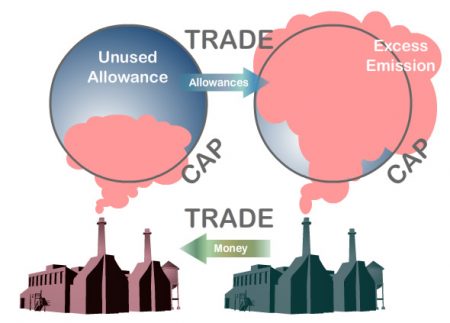
If you are unfamiliar with how cap-and-trade works, it is a market driven scheme to reduce emissions and begins with a cap set on emissions. The cap is then lowered over time. The trade portion includes allocated carbon allowances which companies must meet within the cap. If they don’t they pay for credits to cover the excess emissions. Companies that are efficient in reducing emissions under their allocated allowance can sell the difference to companies that don’t meet theirs. First tried in the late 1980s in North America and eventually globally as a means to use market mechanisms to combat ozone depletion through emission reductions of chlorofluorocarbons, its application to greenhouse gases seems to be working already in Europe and California.
Not everyone is sold on cap-and-trade as a mechanism for combating greenhouse gas emissions and climate change. George Soros, the billionaire, in 2007 stated, “The cap-and-trade system of emissions trading is very difficult to control and its effects are diluted…It is precisely because I am a market practitioner that I know the flaws in the system.” Others describe it as a stealth approach to combating climate change rather than tackling it head on. Companies with deep pockets can purchase offset credits and continue to produce carbon pollution with impunity while passing the costs on to their customers.
]]>It is true that the 80 policies and 32 actions called for in the Climate Action Plan are ambitious beyond the scope of most climate change activist governments. It is also true that the $7 billion CDN to fund the plan seems awfully low-ball. And it is true that the industries in Ontario most affected, those automotive manufacturers and third-party suppliers will have to retool dramatically to meet the Plan’s ambitious timetable.
Other than the umbrage of commentators, however, it seems that the larger public took little notice of the government’s intent. Under the plan the cost of energy to heat homes will go up. Retrofitting older structures will receive subsidies so home owners may see this as an opportunity to replace old leaky windows, insulate walls, and install rooftop solar panels. Electric and hybrid vehicles will be promoted through significant subsidies. Homeowners will not be alone in being asked to contribute to a low carbon future. Businesses will share the burden as well. New construction will have to meet a low-carbon gold standard. Older facilities will be encouraged to renovate for the purposes of saving energy. And finally passive geothermal will finally come of age as an alternative energy source. So what’s beneath backyards and parking lots may turn into geothermal sinks to be tapped for heat in the winter and cold in the summer.
But all of this requires buy in from the public. How do you get that?
Transitioning to a low carbon future requires society to understand the whys and wherefores of making necessary changes. People need to understand how their own personal actions and behaviors can contribute to a society-wide outcome. Decision makers in government need to be better at educating the public. That, today, is decidedly lacking.
But there is an online site produced by Nature.com that explores these subjects extensively looking at how individuals, communities, companies and countries can engage in delivering a low-carbon economic future. In a content section on the Nature site entitled, “That human touch” the authors describe the general principles behind social engagement on the climate file. They state finding the right “routes to reduce fossil fuel consumption” requires daily discussion involving economists, scientists, sociologists, business and the public. “The moral aspects of our energy use” must be laid bare in terms of environmental impact both in the present and future. Justice and ethics applied to the climate change issue means looking at present and future infrastructure projects needed to ensure no future energy impoverishment while addressing the carbon problem. The emphasis is on personal responsibility. “We each have a role to play as energy users.” What are those roles? How can we personally adopt new practices and contribute to “a decarbonized, energy-efficient world?”
In a content section entitled, “Opportunities and insights for reducing fossil fuel consumption by households and organizations,” the authors describe how households and business can implement short and intermediate-term energy policies taking into consideration “psychological, social, cultural and organizational factors that influence energy choices.”
Another content section entitled, “Thinking through participation in renewable energy decisions,” examines how greater public participation can contribute to openness in policy development.
In the content section entitled, “Energy decisions reframed as justice and ethical concerns,” energy policy and technology are investigated from a justice and ethics perspective. Specifically the authors focus on five energy problems: “nuclear waste, involuntary resettlement, energy pollution, energy poverty and climate change.” Here the authors propose a framework based on availability, affordability, due process, transparency, accountability, sustainability, equity and responsibility.
As the government here in Ontario attempts the transition to a low-carbon future one hopes that the agents of change will include all of us. That as much as we receive directives from government on intended action, that throughout the public is fully engaged. Because that is the only way a path to a low-carbon future will happen.
In a 57-page document, entitled Climate Change Action Plan, it outlines 80 policies linked to 32 actions, each with a specific price tag and emission reduction estimate. The $7 billion is to come from the cap-and-trade marketplace that Ontario is joining along with Quebec and California. The Premier describes the plan as transformational, to “forever change how we live, work, play and move.”
The Government of Ontario has incorporated some of the ideas pioneered in New York State to combat climate change. The U.S. state recently launched a $5 billion clean energy fund to advance renewable energy and clean tech industries.
The $7 billion budget breaks down as follows:
The Plan is not yet official but a formal announcement is expected in June. The reaction of automakers has been of concern leading to a concerted behind-the-scenes effort to reach out to the sector for consultation and in advance of the Plan’s release.
To put the the challenge into perspective it will require the industry to deliver 200,000 hybrid and EV units to Ontario customers every year between now and 2024. For General Motors, Ford, Fiat-Chrysler, Toyota and Honda, all manufacturers within the Province, this amounts to a major sea change, a retooling of assembly lines, and a significant investment in new technology. The targets are far removed from the present reality which amounted to 6,933 total EV sales for all of Canada last year up from 5,235 in 2014. And in Ontario where the companies are being asked to promote EV and hybrid vehicles, to-date the numbers have represented a paltry 2% of all units sold annually.
Strangely missing from what has been shared with the public to date is a strategy to lower carbon emissions in mining, agriculture, forestry and Great Lakes shipping, all significant contributors of greenhouse gas emissions.


Other states are starting to build EV infrastructure with companies like Tesla ramping up a North American-wide network for its Model-S sedans. But Tesla technology is proprietary. What needs to happen is a build out of generic super charging stations drawing from clean renewable energy sources. And that seems to be the idea behind the two latest Canadian initiatives, one in Quebec and one in Ontario. Mind you they are modest when compared to what California has already achieved.
Quebec’s EV Initiative
In October the Quebec government announced its plans to expand the use of EVs in the province. Montreal will be the site for 106 charging stations to be installed between now and next spring. That’s in addition to the 80 already in place. Plans are to have 1,000 in the city by 2020. The mix will include 240 volt charges each with two plugs and the recharge fee will be $1.00 CDN per hour. The city will also have 400 volt fast charging stations and recharge rates are $10.00 per hour although a 10 minute charge will give an EV a 50 kilometer (31 mile) range. The province expects to have 100,000 EVs and hybrids on the road within five years and is spending $420 million to get Quebecois to switch from diesel and gas-engine vehicles.
What makes EVs an attractive Quebec option. The recharge power will be coming from 100% renewable sources because Quebec produces a surplus of hydroelectricity.
Ontario Modestly Kick Starts EV Infrastructure
Joining Quebec, Ontario yesterday announced it is spending $20 million to build a network of public charging stations for EVs. Currently there are 5,400 registered EVs in the province and only 5 fast-charging stations, all in Toronto. The Ontario announcement didn’t specify the number of chargers to be deployed with this investment. The government announced it wants to partner with the private sector in building the network and the money is to kick start the process. The type of technology Ontario has in mind costs $40,000 a unit and can recharge an EV up to 90% in less than 30 minutes. Private companies can apply to the fund on a first-come, first-served basis.
Like Quebec, Ontario’s recharging stations will come from clean sources although the mix is different including nuclear, hydroelectric, wind and solar power.

]]>
Led by California, Ontario, Quebec and British Columbia who put out a joint climate change statement committing themselves to collaborate on policies to reduce greenhouse gas emissions. All four set 2020 emission targets and agreed to collaborate on “mid-term greenhouse gas emissions reductions to maintain momentum toward 2050 targets” which they jointly will establish prior to the 2015 Conference in Paris. Joining these four are Vermont, Oregon, the city of Sao Paulo and 14 other jurisdictions who all agreed to band together to institute aggressive policies to limit global warming to less than 2 Celsius (3.6 Fahrenheit) degrees, the target the IPCC has established as one that would keep the impact of a warming planet to a workable minimum.
Mexico’s Felipe Calderon, chair of the Global Commission on the Economy and Climate, spoke at the summit and reported that 2014 was the first time in four decades that global GDP grew 3% without growth in greenhouse gas (GHG) emissions.
The commission which he heads is focused on transitioning the world to a low-carbon future. Among its recommendations are:
Present at the climate summit event – Al Gore who framed his speech in three parts, “Must we change? Can we change? Will we change? and described daily news reports on the environment as “a nature hike through the Book of Revelation.”
Not present – the federal government of Canada whose spokesperson touted the government’s success to date in reducing GHGs without putting a price on carbon which the government describes as a job killer. Of course, the spokesperson’s position is far from the truth. Canada’s GHGs have flat-lined rather than fallen, and are expected to rise over the next decade as more oil sands capacity comes online. Only the sub-jurisdictions – Quebec, Ontario and British Columbia have seen emissions drop and they are the ones who are implementing a price on carbon.


