The post Fossil Fuel Oil Sands Producers Have Been Blowing Smoke Up Our Buts For Years appeared first on Techso Mogro.
]]>A January 25, 2024, research paper produced by Yale University and Environment Canada scientists, measured atmospheric pollutants in overflights of oil sands operations. This type of airborne study had never been done before. The results collected measured organic carbon emissions that previously were thought only to be found at ground operations and in tailing ponds.
The organic carbon emissions were found to be 20 to 64 times greater than any previous Alberta and Canadian government report. The technology used included in-aircraft gas chromatographs and mass spectrometers. What was found high in the troposphere over oil sands sites, in addition to methane (CH4), carbon dioxide (CO2), and fine particulate matter, included:
The magnitude of the total carbon emissions from oil sands facilities far exceeded industry reports. Before these overflight studies, measuring organic carbon emissions focused on surface extraction and bitumen production.
And where industry reports on oil sand pollution showed releases of approximately 68 million tons of CO2 annually, over 10% of all Canadian emissions, the new data suggests the number is closer to 100 million tons.
Measuring was done in 30 overflights conducted over the spring and summer of 2018. The three largest sources were Syncrude, Suncor Energy, and Canadian Natural Resources Ltd. operations producing from 200 to 500,000 tons of organic carbon chemicals annually. What surprised the researchers was that dry tailings emitted more than the tailing ponds, a noticeable feature of the oil sands region in Northern Alberta.
John Liggio, an atmospheric scientist with Environment Canada, who worked with the Yale research team, told the Canadian Press, “All of these different hydrocarbons in the atmosphere react…They form things that are of concern.” Liggio added, “It’s difficult to know what the impact is right now. There are thousands of chemicals. Some of them are cumulative. I don’t know which ones that would be.” He added there is a need for more of these airborne studies.
The post Fossil Fuel Oil Sands Producers Have Been Blowing Smoke Up Our Buts For Years appeared first on Techso Mogro.
]]>The post Producing Carbon Fibre from Asphaltenes Could Provide A Future for Canada’s Oil Sands appeared first on Techso Mogro.
]]>The Carbon Fibre Grand Challenge could be that other purpose. Businesses, universities, not-for-profits, and government laboratories were invited to take the challenge. Thirteen entries reached Phase 3 this year and now five remain to battle for the prize of $15 million Canadian (approximately $11.2 million US).

The five have to produce from oil sands raw and semi-processed products, from 0.5 to 1 kilogram of carbon fibre daily (see picture above). They then have to show they can scale their method to yield 5,000 tons annually by no later than early in the 2030s. And finally, they must produce the carbon fibre at a cost 50% below what it sells for now which is somewhere between $20 and 33 US per kilogram (approximately $9.10 to $15 per pound).
What makes carbon fibre an attractive alternative to the making and selling of synthetic crude? What is the current and future demand for it? According to Fortune Business Insights, carbon fibre is the product of choice for aerospace, automotive, construction, defence, medical, renewable wind energy, and sports equipment industries. Revenue in 2023 will end up around $3.31 billion and will grow to a forecasted $5.96 billion by 2030.
Carbon fibre has a low-weight-to-strength ratio. It is five times stronger and twice as stiff as steel. Better yet, it doesn’t rust and is chemical resistant. In the drive to make automobiles lighter and more energy efficient, carbon fibre parts are being used extensively by automotive manufacturers.
Today, carbon fibre’s largest producers can be found in the United States, Japan, South Korea, Germany and Belgium. Their manufacturing processes are labour-intensive. Canada has little in the way of manufacturers, so kickstarting production in Alberta would make the country competitive with the frontrunners.
For CFGC, a team of experts selected the best projects that now have 36 months to prove themselves. So who are the companies still in the competition?
Carbomat Inc. is Calgary-based and a 2022 spinoff from the University of Calgary. They claim they can drive down the cost of producing carbon fibre by 60% using asphaltenes and other waste materials from oil sands mining while reducing emitted greenhouse gasses in production by 50%.
Enlighten Innovations Inc. is a novel energy company with offices in Calgary and Denver, Colorado. It has a patented sodium ion-selective ceramic membrane technology that enables low temperature, high conductivity and selectivity of sodium ions. it intends to produce carbon fibre using its technology to desulfurize asphaltenes.
NORAM Engineering & Constructors Ltd. was founded in 1988. Vancouver, British Columbia-based, the company builds custom solutions for resource industries. Its entry into the CFGC is to provide a low-temperature stabilization and bulk processing technology for the production of low-cost-asphaltene-based short carbon fibres.
Thread Innovations is an Edmonton, Alberta-based company that aims to disrupt the production, economics and adoption of carbon fibre. It uses bitumen vacuum refinery residue-derived and asphaltene-based precursors to manufacture carbon fibre at a higher scale and far lower cost than its competitors.
University of British Columbia’s Department of Applied Sciences is a CFGC finalist having developed a unique process for spinning finer fibres while maintaining their structural integrity. Two distinct products, regular micro-diameter and nano-fibres are both being produced using bitumen. The process can yield fibres costing less than $12 per kilogram (approximately $5.45 per pound).
Alberta’s bitumen and asphaltene are described by Bryan Helfenbaum, Associate Vice President for Clean Energy, at Alberta Innovates, as ideal feedstocks for making carbon fibre. For the province, it represents an opportunity to diversify its economy while reducing carbon emissions. And it means that demand for Alberta bitumen can now be directed to the fast-growing market for carbon fibre.
The post Producing Carbon Fibre from Asphaltenes Could Provide A Future for Canada’s Oil Sands appeared first on Techso Mogro.
]]>The post To Save the Oil Sands Alberta Wants $30 Billion for Carbon Capture Projects appeared first on Techso Mogro.
]]>The Premier has also used $3.5 million in public funds to launch an inquiry to seek who is behind anti-Alberta oil-sands “propaganda.” Kenney wanted to find evidence of foreign influence in the anti-pipeline and anti-oil sands opposition. His inquiry has turned up empty.
In fact, both investments at the taxpayers’ expense have turned into dust and left Albertans holding a bag of nothing.
But now, the Premier has suddenly discovered climate change and its association with greenhouse gases. To solve the challenge he has settled on carbon capture and sequestration (CCS) and the funding of projects that can offset emissions that would allow Alberta to continue to harvest the oil sands. This isn’t something new. It just seems to be new to Kenney. After all, Alberta has committed $1.24 billion through 2025 to two older CCS projects: Shell’s Quest, and the Alberta Carbon Trunk Link (ACTL). Both projects received government investment from a previous provincial administration under the New Democratic Party (a democratic socialist party). Kenney’s United Conservative Party (UCP) had inherited them as legacy projects.
What are they?
Both projects when fully operational will capture and store 15.6 million tons of CO2 annually which, according to an Alberta government website on oil sands operations represents only 20% of the oil sands’ total emissions per year.
Alberta has fomented against a federal government policy to put a nationwide price on carbon in the form of a levy per ton. Alberta, rather than coming up with its own carbon pricing scheme has taken the federal government to court to fight the levy which currently amounts to $30 per ton and will incrementally grow to $170 by 2030.
Alberta has been content with a modest sector-based initiative to reduce emissions while pushing a narrative about decreased carbon intensity per barrel of harvested oil sands. None of these policies is equivalent to the federal carbon levy.
It is understandable that without an alternative economic plan Alberta wants to sustain its oil sands operations which are deemed critical to the province’s financial viability. It knows that its court challenge will likely fail.
Is that why Kenney has taken a new tack?
This week’s $30 billion carbon reduction announcement aimed at building a number of CCS and CCUS (carbon capture utilization and storage) projects in Alberta comes with a big ask. The money isn’t coming from the province. It wants the federal government to fork it over with the promise to produce a 30 million ton reduction in CO2 emissions annually by 2030 (just a little over 40% of the current total annual emissions). And Alberta wants the money in annual chunks of $2 to 3 billion.
What is so disturbing about this ask is how sadly out-of-date Alberta has become. Since the first decade of this century, there have been CCS and CCUS projects being talked about. Some have been proposed by industry and started, and then stopped. Others have been critiqued by the academic community as counterproductive to solving the carbon problem. Quite a few have been abandoned by the industry and left for governments to bail out the project.
Before the Paris Climate Conference in 2015, I wrote about the state of the CCS market. The number of projects that had died had vastly outnumbered those completed. And the latter had only made it because of those government bailouts and investments with an industry partner scaling back its financial participation.
So what appears to be happening here is that Alberta has rediscovered CCS and CCUS as a new religion to save the oil sands, and is asking the Canadian federal government to distribute the alms. Stated Alberta’s Energy Minister during this week’s announcement, “We want the federal government to step up…Carbon capture and CCUS have a long lead time, it can take 4 to 5 years to get to the point where they’re even under construction. So if we want to meet our targets for 2030 and beyond, we have to get moving on them now or yesterday.” So where was the Alberta government and the current UCP’s thinking a decade ago considering the lead times?
Will Kenney’s ask fall on receptive ears? It may very well because the new U.S. federal administration and that in Canada are both committed to reducing atmospheric CO2 to net-zero by 2050. In yesterday’s Financial Post, it states that Canada’s Minister of Environment and Climate Change, Johnathan Wilkinson, had meetings with the U.S. Special Presidential Climate Envoy, John Kerry, to discuss climate change cooperation between the two national governments. The current goal is for a coherent policy to be in place by April 22 at an upcoming Earth Day Summit which has been called for by President Biden.
Meanwhile, the Canadian federal government and Alberta have committed jointly to advance CCS and CCUS technology because of their job-creating potential as well as the benefit of overall emission reductions in CO2 and other greenhouse gases. A technology, once largely ignored, now is being seen as an opportunity to create a global competitive advantage for the country and the province.
President Biden, too, has hitched his climate change ambitions to the potential for massive levels of new job creation. The President has set a goal for the U.S. energy industry to be 100% clean by 2050. He wants to upgrade buildings and homes, create millions of new jobs, curb greenhouse gas emissions, and take a global leadership role in combating climate change. And if the opportunities in the U.S. can lead to Canadians exporting CCS and CCUS technology to the U.S. and other countries, then Canada too will reap similar benefits.
So maybe Kenney’s timing is propitious even though his “come to Jesus” moment is a Johnny-come-lately reaction.
The post To Save the Oil Sands Alberta Wants $30 Billion for Carbon Capture Projects appeared first on Techso Mogro.
]]>The post Canada Struggles to Reduce Carbon Emissions With the Oil Sands appeared first on Techso Mogro.
]]>The industry describes a number of pilot projects it has launched to find ways to reduce its GHGs. It has dramatically reduced emissions per barrel produced as well as the amount of fresh water needed in production. It claims based on data collected that its contribution to air pollution is improving or remaining the same despite the increase in levels of production. It even describes the industry’s investment in satellite technology to monitor oil sands emissions.
As the primary industry association responsible for informing the Canadian and global public about the oil sands, it is a well-presented case that is backed up by the political leaders of Alberta and Saskatchewan who consider any action by the federal government to constrain the sector an infringement on provincial authority.
Now add three other elements to the mix.
Canada’s federal government has been a strong advocate for improving the pipeline infrastructure to get bitumen, the product of the oil sands to foreign markets. It long ago approved the Canadian portion of the Keystone XL project which today, is being held up by legal battles within American states along the pipeline’s route.
The federal government has purchased the Trans-Mountain Pipeline after the company that was to build it backed out of the project. Considerable consultations with First Nations and stakeholders along the pipeline’s route have led to delays. The government plans to eventually turn the pipeline over to the private sector.
Then there is the application to Canada’s federal government by Teck Resources Ltd., to build a $20 billion oilsands mine with peak production to add as much as 260,000 barrels of bitumen daily, lasting up to forty years. Teck in its application acknowledges that its processes will increase GHG emissions and be a potential source of water pollution.
Alberta has drawn a line in the sand on the Teck application with its Premier stating that anything less than approval is an attack on the province’s future. Environmentalists concerned about climate change are opposed to the approval.
A federal-provincial review of the application last year declared the project in the nation’s interest while admitting it would likely harm the land, air, and quality of life for indigenous people in proximity and downstream from it.
To add to the melodrama, in today’s The Globe and Mail, the CEO of Teck, Don Lindsay, remarked that even if approved, the project may likely never be built citing the low price for oil sands output on the world market.
So, the federal government, with its pending announcement to approve or not, is caught between two very different positions. Approving the project will lose the support of a growing number of Canadians who see climate change as the primary issue the country faces today. Disapproving the project will suggest to Albertans that the federal government is abandoning them with this the first step into shutting down the oil sands and the jobs of tens of thousands in the province.
In the face of a growing climate crisis and the federal government’s commitment to achieve and even exceed its commitment to reduce GHGs by 30% by 2030, how can a further expansion of oil sands capacity be justifiable?
The problems associated with oil sands production begin with extraction and are then exacerbated by processing and upgrading the product for the purpose of transportation by pipeline or rail. Further refining adds to the environmental footprint. And then finally, when the oil is burned usually for transportation and heating, the environment is even further impacted. There is no getting around it despite what the CAPP Factbook states. This is an industry in direct conflict with reducing GHG emissions, and in particular carbon dioxide and methane, the prime culprits in human-caused global warming.
So does that mean the oil sands in total must go? What if the output of the oil sands could be used not to burn but to create high-value, high-demand products?
The answer may be carbon fiber. Carbon fiber consists of very large carbon molecules. So does bitumen. What makes bitumen less than ideal as a source of fuel oil, its heaviness, makes it an attractive source of carbon fiber. Partial upgrading of bitumen, rather than breaking up the heavy carbon molecules to make them lighter, creates asphaltene, the feedstock for producing carbon fiber.
Today carbon fiber is used to build tennis rackets, golf club shafts, and bicycle frames. But more recently it is replacing fiberglass, steel, and aluminum, in automobiles. The Toyota Prius Prime, for example, uses carbon fiber panels. At current costs of $15.40 per kilogram ($7 a pound), carbon fiber is a material more valuable pound for pound than dilbit which should make it an attractive high-value-added product.
The current market remains small but that has more to do with manufacturing capacity than the product itself. To solve the capacity challenge, the Alberta government has created Alberta Innovates, and a $15 million international contest called the Carbon Fibre Grand Challenge. It will award three suppliers who can create large quantities of carbon fiber. The three phases of the challenge are to wrap up in 2024 with three $3 million grand prizes awarded to suppliers who produce 10 kilograms of carbon fiber per day and provide a roadmap to scale up to 250 tons daily.
Today’s oil sands produce a little less than 3 million barrels of bitumen daily. The Alberta government sees the possibility of converting 100,000 barrels daily to produce carbon fiber. On that scale, carbon fiber becomes a far more attractive end product than dilbit with far greater earning potential.
How big is the market opportunity? The carbon fiber market was worth $4.7 billion USD in 2019 and will grow by 10.6% annually based on recent forecasts. By 2029 it will be worth more than $13.3 billion. As supply ramps up carbon fiber will replace other materials used in aerospace, defense, automotive, and wind turbine industries.
In the electric vehicle (EV) market alone, a recent Deloitte study projects vehicle growth from 2 million units sold in 2018 to 4 million this year, 12 million by 2025, and 21 million by 2030. Carbon fiber is expected to make EVs lighter and replace steel, aluminum and fiberglass. A lighter EV means greater operating range before recharge even if no improvements are made to battery technology.
How much carbon fiber will the automotive industry need? Certainly far more than the 100,000 barrels daily that Alberta Innovates says is its current capacity goal.
Alberta Innovates is looking at additional uses for bitumen that don’t involve burning it. These include:
The question that logically follows is:
Is there an opportunity for the oil sands in the future?
And is that opportunity a green one?
The answer to both questions is yes.
Will these new byproducts of the oil sands create new jobs for Albertans and Canadians?
Again the answer is yes.
For the short term future, however, and in the face of the coming climate crisis, burning less of what the oil sands produce would be better for the planet.

The post Canada Struggles to Reduce Carbon Emissions With the Oil Sands appeared first on Techso Mogro.
]]>The post A Week After Canada’s 43rd Election and the Parties of Climate Change Action Are the Winners appeared first on Techso Mogro.
]]>Besides the Liberals, the New Democratic Party (NDP), Greens, and Bloc Quebecois, the latter a nationalist party in the Province of Quebec, all have stated a commitment to putting a price on carbon as a step in the right direction in addressing global warming and the frequency increase in extreme weather events. Only the Conservatives and the Peoples Party of Canada presented policies that experts described as being insufficient to drive down the country’s carbon emissions. In the case of the Conservatives, promises to repeal carbon pricing and tougher fuel standards appeared to put them on the wrong side of the climate issue even though they included platform planks providing credits and tax breaks to new technologies that could be used to fight global warming. The Peoples Party, on the other hand, decried climate change as a hoax. The won no seats in Parliament.
The Liberal Party as the government is the same one that purchased an oil pipeline and its planned expansion while nixing another pipeline project and reserving judgment on any future investments in oil and gas capacity building. The pipeline purchase was a political act, certainly not an environmental one. It was seen as a way to ensure that Alberta’s oil-based economy would no longer be landlocked with only the United States as a customer. This situation had seriously depressed the province’s economy with it only capable of selling its fossil fuel products at deep discounts. At the same time, fracking in the United States had created an enormous surplus of domestic oil and gas further limiting demand for oil sands products. Only a pipeline outlet to the Pacific ensured Alberta producers access to world markets and world prices.
One would think that making the investment would have yielded a positive political outcome in the producing provinces of Alberta and Saskatchewan. But that’s not what happened. Instead, the Liberals won no seats in these two jurisdictions. To make matters worse, the provincial governments openly speculated about negotiating a new contract with the federation or separation. So much for respecting good intentions.
Now moving forward, the Liberal government, with support of the climate change action parties will move on an agenda to meet if not exceed the 30% reduction in greenhouse gases pledged by the country in 2015 at the Paris conference.
So what exactly is to be expected in the new political mandate?
In looking at the Liberal Party platform it makes the following commitments to Canadians and the world:
In an effort to justify the pipeline investment and approval of any other oil sands projects, the Liberal Party may get support from both opposition on the left and right with the following policies:
And although parts of Canada, largely those in the business of fossil fuel extraction, feel abandoned by a reelected government focused on climate change action, it is pretty clear that much of the world applaud the results. Germany’s ambassador to Canada noted that her country will work closely with Canada in the coming months on a climate change agenda. The European Union is promoting a “green deal” as a top priority, and see the outcome of Canada’s election as an opportunity to coordinate efforts to deal with the climate crisis.

The post A Week After Canada’s 43rd Election and the Parties of Climate Change Action Are the Winners appeared first on Techso Mogro.
]]>The post In Canada Federal-Provincial Politics Has Usurped Good Policy appeared first on Techso Mogro.
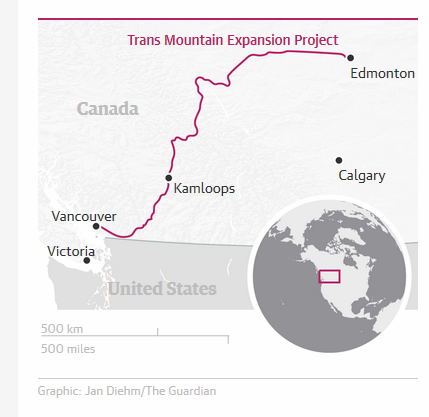
]]>Back in the spring Kinder Morgan set May 31st as a deadline to hear back from Canada’s political authorities; that the company could move forward unhindered by local governments and environmental opposition. It stated without assurances it could not proceed to build TransMountain, a pipeline running from Edmonton to an oil terminal in Burnaby, on the lower Fraser River in British Columbia. Kinder Morgan was no longer keen to build the pipeline because of ongoing resistance from the British Columbia government, City of Vancouver, and a number of First Nations along the route.
That’s when the blackmail scheme was hatched. If Kinder Morgan could put a gun to the head of the government it would get one of three results:
And guess what. The number 3 rolled up when the dice was thrown.
What is sad about this outcome is how far removed it is from the goals of Canada’s current federal government in its effort to curb carbon emissions. Why? Because you cannot contribute to carbon emissions and curb them at the same time unless you have some carbon aces up your sleeve.
Why is this bad policy?
Because the Paris Climate Agreement of which Canada is a signatory called for the nations of the world to keep global warming from rising above 2 Celsius, and better yet to not rise above 1.5. Adding a pipeline to carry diluted bitumen (dilbit) to Canada’s west coast for overseas markets where the carbon within the product will be burned means Asian customers will be adding to global emissions and as a result Canada will have done nothing to help achieve Paris targets.
Adding a pipeline to triple the amount of oil and increase revenue earnings of oil sands producers likely will lead to more, not less dilbit going to world markets. When you consider that oil sands at best during extraction and production produce equal amounts of carbon to other oil producers, and at worst, more than double the carbon, it means even more carbon will enter the atmosphere.
This will all happen while Canada attempts to implement a federal carbon tax meaning that the cost burden will largely fall on consumers, not the emitters. And with the likely abandonment of Ontario’s cap-and-trade participation, it is clear that emitters will continue to pollute the commons raising atmospheric mean temperatures.
What would have been better policy than buying a pipeline project?
A government committed to achieving Paris goals would consider a number of policies including:

The post In Canada Federal-Provincial Politics Has Usurped Good Policy appeared first on Techso Mogro.
]]>The post Fossil Fuel Industry Dilemmas – Part 1: Pipeline Battles appeared first on Techso Mogro.
]]>Alberta, Canada, British Columbia, First Nations and the Trans Mountain Crisis
The Canadian government approved the building of a second Trans Mountain Pipeline last year to follow the route first laid down some years ago and tripling the amount of oil traversing this right of way to a Pacific Ocean port in British Columbia. But politics and the environment have gotten in the way.
The province of British Columbia elected a minority progressive-socialist government supported by three Green Party members. The bargain struck for the government included stopping the pipeline from being built. The justification given was to ensure Pacific coastal waters were protected from oil spills like the Exxon Valdez. The opposition to the pipeline included First Nations living along the pipeline’s right-of-way. Environmental activist groups including Greenpeace, Avaaz.org, 350.org, and others, drew a line in the sand aimed primarily at the oil sands seeing the pipeline as an enabler of one of Canada’s largest sources of carbon emissions.
The federal government approval was done in the “nation’s interest.” Now the quarrel among the parties is leading to a constitutional crisis abetted by Trans Mountain’s recent announcement that it intends to pull the plug on the project if there is no way forward by the end of May 2018.
Can a provincial government block federally-approved projects on their own territory? Can a First Nation do the same?
The bargain to keep the minority British Columbia government in power is not the only one that has been made. Alberta and the Canadian government have also got an agreement. In return for pipeline approval, Alberta has imposed a price on carbon emissions within the province and has agreed to phase out its coal-fired thermal power plants.
Alberta believes its economic future remains tied to the oil sands and shipments of its products out of the country to world markets. But without access to tidewater, Alberta’s sole means to export continues to be through the United States with heavy price discounts caused by competition from American fracking operations. The end of being landlocked means the end of American dependency. It means Alberta can get world pricing. It means more oil being produced from the oil sands resource. And it means a provincial revenue windfall from taxes on output.
There is a problem when an economy has most of its eggs in one big basket and a few small ones elsewhere. That is an apt description for Alberta. But the province has other eggs to hatch which could become world-beating industries in the battle to mitigate global warming. Read a posting from last December on this website where it describes Carbon Engineering, CO2 Solutions, and Shell’s Quest carbon sequestration technologies, all Alberta-based ventures. Each of these is a state-of-the-art business that could in time replace the jobs and revenues currently produced by the oil sands. But unfortunately, changing the Alberta economic paradigm from fossil-fuel to low-carbon-solution technologies seems to be far from the minds of those in the boardrooms or political offices of the province.
The conflict over Trans Mountain is likely to produce no winners among federal, provincial, First Nation, and municipal governments, the principal parties to the conflict. And certainly, the environment is bound to be a big loser as well. For those of you who are readers from outside Canada, I promise to keep you informed about the outcome of this kerfuffle.
In Part 2 of this series, I look at how fossil fuel energy producers are locking in long-term pricing as a hedge against the uncertainty brought on by climate change and efforts by governments and citizens to move to low-carbon energy alternatives.
The post Fossil Fuel Industry Dilemmas – Part 1: Pipeline Battles appeared first on Techso Mogro.
]]>The post Fossil Fuel Energy Companies Risking It All Against Limits Indicated by COP21 Climate Agreement appeared first on Techso Mogro.
]]>

Was Trudeau’s answer correct?
Only if you accept status quo thinking, that the economy of Western Canada will sputter and die without putting a pipeline in place to triple the flow of bitumen to the West Coast for oversea’s markets. The pipeline itself creates short-term jobs and very few of the long-term variety. But what it does do at the bitumen production end is encourage expansion of oil sands operations along with increased carbon emissions. Then if you follow the bitumen through the pipeline to the West Coast terminal where it will be loaded onto tankers destined for Asian markets, the decision will lead to increased emissions in shipping, and emissions created by the countries receiving, refining and burning the end products.
In effect what Canada will have done is pas the carbon buck overseas, putting off the hard decision of tamping down oil sands growth and production in pursuit of a low-carbon future. But Canada and its oil and pipeline companies aren’t alone in continuing to put money down on fossil fuel projects. Energy companies and governments around the world are doing the same thing. These are countries who have signed up to COP21 objectives to keep global warming well below a 2 Celsius (3.6 Fahrenheit) rise, striving for no more than 1.5 Celsius (2.7 Fahrenheit). But through lack of policy and regulation, they aren’t meeting their promises with very few exceptions (some Pacific and Indian Ocean island nations, and Costa Rica).
Andrew Grant, Senior Analyst at Carbon Tracker, and author of a new report published today argues that governments are a long way from Paris and November 2015 when they all signed on to reduce carbon emissions to beat the 2.0 Celsius upper limit. And because the vast majority of countries are policy deficient in addressing carbon reductions, and because demand for energy across the globe remains high, the fossil fuel companies are seizing short-term opportunity to drill and build more infrastructure. The worst offenders are in the United States under the climate change denying regime of President Donald Trump. Russia is equally culpable.
Grant quantifies the risk these countries, and the fossil fuel and energy companies they continue to support, are willing to take for short-term gain in his study by looking at projected energy demand based on trends. He creates three demand curve scenarios in his analysis.
In low demand new oil and gas projects between now and 2025 expose fossil fuel and energy companies to $1.6 trillion in investment risk.
In the middle curve increases in risk grow to $3.3 trillion.
And demand at the high end increases risk exposure to $4.8 trillion.
States Grant, “At present, governments’ policies fall a long way short of the ultimate goal committed to at Paris, but we should expect a ratcheting up of international efforts. Companies that misread the signals and overinvest in marginal oil, gas and coal projects based on a false sense of security could destroy shareholder value worth billions of dollars.”
Grant points out that the amount of money companies are slated to risk, in the absence of governments enacting climate change legislation with teeth, is staggering. We are talking trillions more than the risk exposure described above. Many of the companies with risk exposure are state-owned enterprises. So countries, by not committing to enforce COP21 goals to which they have agreed, double down on the risk exposure for their nations and citizens.
Millions of shareholders who own a percentage of these oil and energy companies are now exposed to risk and will take a financial hit having been misled, not only by their governments but also by the fossil fuel and energy companies, the latter having never been regulated to report their risk exposure.
Risk by specific sub-sector is further described in the report.
In light of the risk exposure identified by the study, I wonder if Prime Minister Trudeau might reconsider his comments about balancing economic and environmental goals as justification for Kinder Morgan and other oil sands’ capacity investments.
The post Fossil Fuel Energy Companies Risking It All Against Limits Indicated by COP21 Climate Agreement appeared first on Techso Mogro.
]]>The post A New Use for Oil Sands Wastewater: Extracting Lithium for Batteries appeared first on Techso Mogro.
]]>What can be done with them?
That’s what MGX Minerals Inc., a Vancouver-based company, is attempting to tackle. Is there value in what oil sands operations produce in waste?
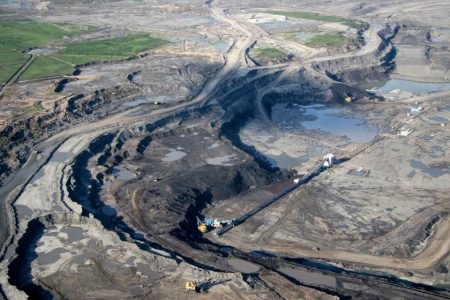
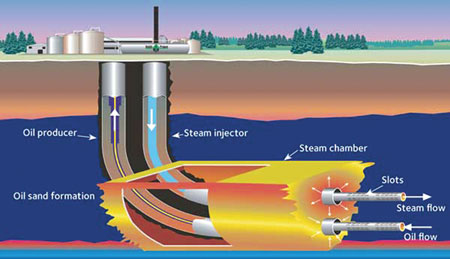
The tailing ponds may have to wait for awhile. The ponds are largely the end result of older oil sands extraction processes. Newer methods such as steam-assisted gravity drainage are showing in the wastewater brine produced a potential economic benefit.
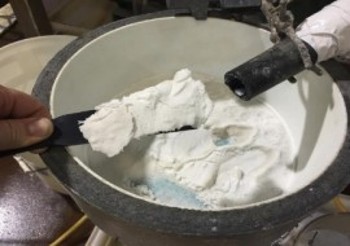
In a January 3, 2017 announcement, MGX reported it was successfully extracting lithium from oil wastewater at rates of between 100 to 140 milligrams per liter in a series of pilot test projects using its patent pending processes. Lithium isn’t the only product of the oil wastewater. Described as “the first of its kind,” it turns what is referred to as “blowdown wastewater” into a revenue generator.
MGX is partnering with PurLucid Treatment Solutions to create a commercial operation to help oil sands producers by introducing more “environmentally-friendly disposal options as well as recover valuable minerals.” During the recovery process 21% of the total lithium contained in the wastewater brine can be converted into lithium carbonate. The other valuable minerals that could conceivably prove to have commercial value include sodium, calcium, potassium, bromine, magnesium and boron. During the process 99.97% of the hydrocarbons were reduced to allow the oil sands operators to reuse the water in the steam-assisted gravity drainage operations (see graphic below).
In the past wastewater brine containing dissolved minerals used evaporative processes to extract lithium and other valuable substances. But the technology MGX has developed accomplishes in a day what previous methods take as much as 18 months to produce. And the extraction yield at 40% currently makes the technology commercially viable. States MGX President and CEO, Jared Lazerson, “I think we’ll be at 60% recovery fairly quickly.” Lazerson continues, “We focused on….developing an industrial process that would combine the evaporation and processing with very high recoveries….Nobody else has done this before.”
Global demand for lithium continues to grow as sustainable technology such as electric vehicles and battery storage become more commonplace in a world seeking low carbon alternatives to fossil fuel energy. It is somewhat ironic that the process MGX created comes from fossil fuel operations.
The post A New Use for Oil Sands Wastewater: Extracting Lithium for Batteries appeared first on Techso Mogro.
]]>The post David Suzuki Asks Why Canada Fights Climate Change on One Hand While Fueling it with the Other appeared first on Techso Mogro.
]]>I’ve often thought politicians inhabit a parallel universe. Maybe it’s just widespread cognitive dissonance, coupled with a lack of imagination, that compels them to engage in so much contradictory behaviour. Trying to appease so many varying interests isn’t easy.
Rather than focusing on short-term economic and corporate priorities, though, politicians should first consider the long-term health and well-being of the people they’re elected to represent. When it comes to climate change and fossil fuels, many aren’t living up to that.
We celebrate the federal government’s decision to implement nation-wide carbon pricing, even though what’s proposed won’t, without additional measures like regulations, get us to our commitments under the Paris Agreement, which is also inadequate for keeping global warming from catastrophic levels. A government could be forgiven for going slow on a measure opposed by some industrial sectors, provinces and citizens, but it’s difficult to take a government seriously when it approves or supports expanding fossil fuel infrastructure and development while the world continues to break warming records, with increasingly dire consequences.
A massive B.C. “carbon bomb” LNG project in the midst of critical salmon-rearing territory, in defiance of many area First Nations’ wishes. Likely approval of at least one more bitumen pipeline to support expanded oil sands development. A provincial government that pretty much says, “We’ll support federal efforts to fight climate change if you support our efforts to fuel it.” None of this makes sense.
As a report from non-profit Oil Change International and 14 other groups concludes, “The potential carbon emissions from the oil, gas, and coal in the world’s currently operating fields and mines would take us beyond 2°C of warming,” and “The reserves in currently operating oil and gas fields alone, even with no coal, would take the world beyond 1.5°C.” That’s without any new development!
That leaves us with three choices: managed decline, stranded assets or climate chaos. The first, which the report recommends, means no new fossil fuel infrastructure, existing supplies become depleted and replaced with clean alternatives and employees redeployed to latter. As the report’s authors point out, “This does not mean stopping using all fossil fuels overnight. Governments and companies should conduct a managed decline of the fossil fuel industry and ensure a just transition for the workers and communities that depend on it.”
Stranded assets means, “Companies continue to develop new fields and mines, governments are eventually successful in restricting emissions, and the resulting reduction in demand causes many extraction assets to become uneconomic and shut down, causing destruction of capital and large job losses.”
Under the third scenario, we keep digging, mining, fracking, building, transporting, selling and burning until we’re well beyond the 2 C threshold, resulting in “economic and human catastrophe.”
Sadly, in Canada and globally, we’ve chosen the second option, and in some cases, the third. Subsidies to the fossil fuel industry, the most profitable industry ever, continue despite a 2009 G20 commitment to phase them out. Canada alone promotes the industry to the tune of about $3.3 billion a year in tax breaks and handouts, not including provincial incentives. Politicians say they care about climate while arguing we need more bitumen, natural gas and coal to fuel growing economies and human populations, and more pipelines to get “product” to tidewater and overseas markets. Saskatchewan has Canada’s best wind and solar resources, but the government focuses on expensive and unreliable schemes like carbon capture and storage while arguing against carbon pricing and other tools to cut emissions.
It’s all a form of denial. Conserving energy, shifting to cleaner sources, reducing automobile use by improving transit and bike and pedestrian infrastructure, protecting and restoring carbon sinks such as forests and wetlands, and getting a handle on agricultural emissions are all possible, and would create numerous jobs and economic opportunities.
Most national governments have committed to the 2015 Paris Agreement’s goal of limiting global warming to 2 C above pre-industrial levels, with an aspirational goal of 1.5 C. We’re already nearing the latter, with growing consequences, including increasing extreme weather events, water and food shortages, migration crises and extinctions. We must conserve energy, quickly phase out coal power and continue to develop renewable resources.
As Oil Change International says, “If you’re in a hole, stop digging.”

The post David Suzuki Asks Why Canada Fights Climate Change on One Hand While Fueling it with the Other appeared first on Techso Mogro.
]]>
