MARPOL is the international convention for preventing pollution from ships. It includes airborne and water pollution including garbage. First adopted in 1973 by the International Maritime Organization (IMO), a United Nations agency responsible for safety, pollution prevention and security for the shipping industry, MARPOL has undergone a number of revisions since inception. Changes in 2005 finally imposed a ban on disposal of all forms of plastics at sea. And last year the ban was further extended to prohibit any discharge of garbage into the ocean. Yet despite these efforts garbage continues to be a major ocean problem. Recent surveys show that our coastlines are strewn with the stuff at the rate of 10 tons per 1.6 kilometers (1 mile). Part of the problem is plastic pollution entering the ocean from continental runoff. Another challenge is the limit set within MARPOL related to the size of ships governed by the convention. For example MARPOL covers ships of 12 meters (40 feet) in length and 100 gross tons or greater. Smaller vessels have no restrictions related to on board garbage. And MARPOL has no say on how cities on coastlines handle plastic and other garbage.
Can We Harvest the North Pacific Gyre?
How do we go about cleaning up the plastic in our oceans? One proposal is to collect the plastic floating waste, converting it into in situ building materials for floating islands. A Dutch architectural firm, WHIM, has been doing research to create what it calls recycled islands. It reasons that with over four million tons of plastic afloat in the ocean any attempt to clean up and dispose of the waste will require a massive effort at a prohibitive cost. So instead of scooping the plastic out using a drone like the one I described recently or shipping the skimmed plastic to shore for reprocessing or disposal, WHIM wants to do on site recycling to use the waste to create self-sustaining communities on floating islands. It believes an island measuring 10,000 square kilometers (about the size of the main island of Hawaii) could be built to house eco-refugees from rising sea levels.
This floating island would include renewable energy in the form of solar, wave and wind. Residents would plant crops on its floating surfaces. They would harvest seaweed and develop aquaculture to meat dietary needs. The seaweed farming would not only serve as a food source but also a nutrient and carbon sink filtering out CO2, ammonia, nitrates and phosphorous. And as a primary local industry residents would continue to harvest the plastic waste in the ocean to use to expand their island domain and create other products.

What would be the cost of a floating island the size of Hawaii’s main island? For comparison a 1,000 square meter (approximately 10,000 square feet) floating island currently being offered on the market costs $4.6 million U.S. It can accommodate 12. Adding a perimeter to grow land-based crops is extra. With 1,000,000 square meters to a square kilometer, the cost of accommodating 12,000 people not including space for agricultural pursuits would amount to $4.6 billion. An Hawaiian sized project would be 10,000 times that cost based on existing floating island concepts. Would the cost come down, however, if the raw materials used in creating the island came from the plastic garbage in the North Pacific gyre and if mass production principles were applied? Probably, but it remains a very expensive proposition. So the question to ask is “Is this more WHIMsical than real?” What do you my readers think of floating islands as both a way to deal with the garbage time bomb and a solution for those who may find themselves victims of climate change and rising sea levels? We know that the Maldive Islands are pursuing this course but is what they are doing as crazy as it sounds?

]]>
Less than 10% of the plastic we create gets recycled. So it is no surprise that plastic gets into our oceans and has become a major pollutant. Plastic pollution comes in all forms from microscopic fragments to large pieces.
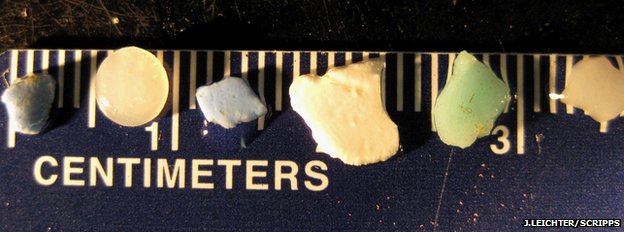
What you see on the ocean surface today represents 1/17th of what is actually in the ocean. Small plastic particles are almost indistinguishable from zoo and phytoplankton. Marine animals from small fish to baleen whales ingest it. A recent Scripps Institute study reported that 9% of Pacific Ocean fish have plastic content in their stomachs. Plastic pollutants contribute to the death of hundreds of thousands of birds, fish, turtles and sea mammals annually. Small particles of plastic become breeding grounds for algae blooms and bacterial concentrations that contribute to ocean dead zones. Floating plastic combines with other debris to create mats that continue to grow in areas of the Pacific, Atlantic and Indian Oceans.
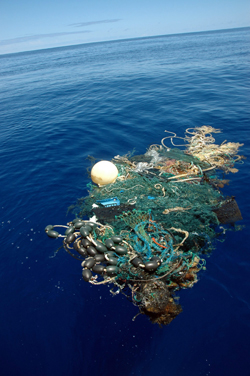
Plastic water bottles, bottle caps, plastic bags and cellophane wrap are floating platforms for barnacles and other sea life. A Scripps Institute of Oceanography 2012 report found an insect species flourishing in mid-ocean that more often finds its habitat along marine coastlines. That insect, the Pacific Pelagic Water Strider, is thriving in ever increasing numbers in mid-ocean because the garbage patches we have created offer it a stable floating platform for survival.

Plastic takes centuries to breakdown into chemical polymers. It does this when exposed to sunlight for a prolonged period, up to 500 years. So at best during our lifetime the plastic we throw away may break down in sunlight into small pieces. No creatures intentionally will eat plastic because it is indigestible. So over time in the ocean it just becomes a bunch of small fragments floating in a soup of debris.
Some would argue that the plastic serves the same purpose as floating rafts of seaweed. They point to natural occurring gyres such as in the North Atlantic where the Sargasso Sea features an accumulation of floating seaweed that is teaming with zoo-plankton, phytoplankton, crabs, crustaceans and fish. Because the North Pacific doesn’t have an equivalent to the Sargasso Sea, these same folks would argue that we, through our actions, have created an artificial equivalent in the North Pacific as well as the other zones in mid-ocean areas of the planet (see map below).
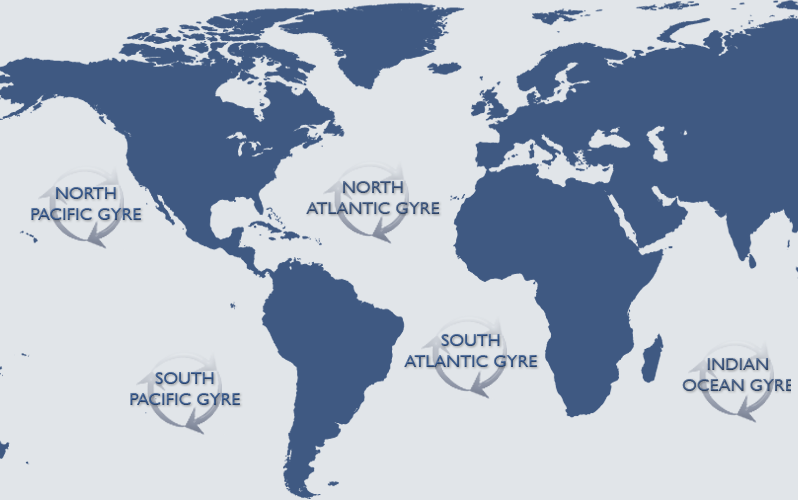
The argument of course is baseless. Yes lots of life finds its way to the floating plastic and debris in these gyres but so does death because plastic is a toxin in so many ways.
What Can We Do About It?
Humans have to act in two ways if we are to end the threat to our oceans from plastic and other floating debris. First we must reduce, reuse, recycle or repurpose all of the plastic we currently use in our modern world. Second, and much more challenging, we must develop technology capable of removing plastic and floating debris from the ocean.
Reduce, Reuse, Recycle, Repurpose
Humans respond better to carrots than sticks. If the phrase is unfamiliar to you then let me explain. When you want a mule to pull a cart you can offer him a carrot by waving it in front of his face so that he moves forward to grab and eat it. Or you can get behind the mule and whack it with a stick and accomplish the same result.
Recycling programs today are more sticks than carrots. Reducing plastic use is more a stick policy than a carrot. And because the political will to create carrot policies seems non-existent we end up with weak sticks and poor programs for tackling our plastic waste problem.
I’ll give you an example. In Toronto where I live we get charged a nickel (5 cents) for every plastic bag we request from a store for carrying the things we buy. Is this a sufficient deterrent to reduce the use of plastic? Initially there was a small drop in plastic bag volume. But the nickel charge has hardly made a dent. People pay the nickel and bring the bags home to use them in garbage receptacles. So the plastic ends up in landfill and dumps. And some of it ends up in our rivers and lakes and finds its way out to sea.
What would be a more effective policy? A bigger stick! This could be accomplished by charging much more than a nickel to discourage use of plastic bags. For those still inclined to purchase plastic bags a carrot would be assigning the money collected to environmental cleanup projects. But the best policy would be banning plastic bag usage entirely.
But plastic bags are just one of many plastic products that make their way into our recycling bins and garbage. In Toronto as in many North American cities homeowners are encouraged to recycle plastic as an environmental responsibility. The carrot here is the good feeling that comes from making a dent in what we end up throwing away. The city tries to make it easy by issuing a special rolling bin where we can dump all of the recyclable plastic, aluminum, metal cans, and paper that we would normally put in the trash. Our city picks up these items, sorts and sells them, a very big carrot. But much of what is recycled turns out to have no recyclable value and ends up in landfill. That’s because people recycle plastic that is not commercially reusable today or because the city collects so much that its ends up with a surplus and no current buyer or place to store the recyclables.
How can we repurpose the plastic we cannot recycle? Plastic is a polymer. It is an oil-based product. If we can reuse it by melting it to form new plastic items why can’t we use it by turning it into other products such as gasoline and diesel? Since it is oil-based why can’t we use non-recyclable plastic as a fuel for generating energy? The technology to do this exists today but there seems to be a lack of political will to do it, or the economics just don’t add up. This is where we need to apply both sticks and carrots.
We need to apply the stick to our governments. Governments that don’t advance the cause of environmental best practices should be voted out and replaced by those who have the political will to legislate. And we need our governments to create carrots that reward those who build innovative technologies to repurpose plastic.
Cleaning Up the Oceans of Plastic
Project Kaisei is a not-for-profit organization dedicated to cleaning up the North Pacific Gyre. Funded by other not-for-profits, private companies, associations, universities and charitable donations, the organization is developing and testing methods for marine debris retrieval with the goal of converting what is recovered into fuel or other plastic products.
The Clean Oceans Project is another not-for-profit focused on developing technologies to assess plastic debris concentrations and test technologies that can harvest the debris for plastic-to-fuel conversion.
But not-for-profit efforts won’t cut it in the long term. Governments have to get involved and provide sticks to plastic makers and carrots to innovators who develop technologies that recover the plastic debris and find a useful purpose for it.
Governments have to initiate carrot and stick policies that keep new plastic on land where it cannot get into the ocean. Government has to incent the plastics industry to find ways to make the plastic they produce rapidly biodegrade after usage.
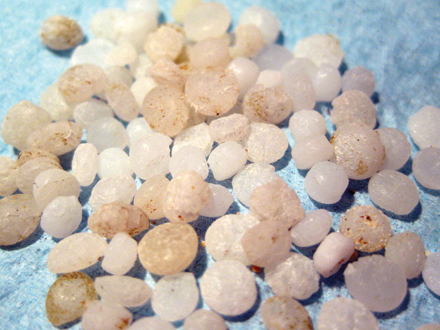
The merchant fleets of the world, manufacturers and government need to stop the use of plastic pellets for filler in the packaging and shipping of goods. Called nurdles, billions of kilos are manufactured annually ending up in the growing mass of floating debris that characterizes our oceans today.
When you look at “Earth” water covers over 70% of the planet’s surface. It is our most dominant feature. More than half of all humans lives within 200 kilometers (120 miles) of a coastline. We are dependent on our water environments which serve as a source of food, an avenue for transportation, a source of recreation, and a place to explore that is both near at hand and yet exotic.
We need water to survive yet only a small percentage of water is drinkable, the rest is filled with salts and minerals washed into it and dissolved from land sources. This undrinkable water, however, feeds our atmosphere, is the source of the water vapour that falls as rain and snow on our continents, and refills our underground aquifers.
Without water Earth would just be “earth,” a dry lifeless place. Yet as precious as it is as a resource we have been reckless with it and have exploited our marine environment to a point where we are creating significant damage. In the next few blog feature articles we will explore this world of Inner Space and what role it will increasingly play in our technical civilization in the 21st century. But first let’s prepare the groundwork or more appropriately the waterworks by looking at some of the Inner Space challenges we currently face.
What is the State of Our Oceans and Seas Today?
I thought I would begin by posing some basic questions about our marine environment to get you thinking about its importance and what we need to do to maintain it in the 21st century and beyond.
1. How much food do we harvest from the oceans today?
Ocean fisheries today provide approximately 16% of the total protein consumed by humans annually. In the Developing World the percentage of protein derived from fish is higher. You would think that most of what we catch gets used for food but in fact, almost 40% is used for other purposes such as fish meal used as a food in aquaculture and as an ingredient in fertlizers. Much of what we catch occurs close to coastlines in water between 10-30 meters (approximately 30-100 feet) in depth. These also happen to be the areas which are most vulnerable to pollutants.
We have overfished much of the planet’s oceans and yet have created fish conservation preserves in less than 1% of the ocean. Almost 90% of the largest game fish stocks have been severely depleted. In Canada we have had collapses in our cod fishery on the Atlantic coast and in our salmon fishery on the Pacific coast.
Aquaculture in the form of fish farms has become a method of commercially breeding fish stocks but there are many challenges to this type of intensive industry.
2. What is the biggest source of pollution in the ocean today?
Is it from land sources, from shipping, from oil rigs, or from some other source? The truth, of course, is pollution comes from all these but land is the main culprit contributing as much as 80% of all that we find in our oceans and marine environments.
The list includes chemicals and oil from industrial sites, fertilizers from farms and urban lawns and gardens, and solid treated and untreated waste, much of it plastic. Plastic garbage constitutes almost 90% of floating debris in the ocean today. Plastic presents a number of problems besides the fact that it floats. It does not easily bio or photo-degrade and when it does it breaks down into smaller pieces that can be ingested by marine animals. Although the plastic eventually fully degrades to its organic roots that process can take centuries. The result is large floating debris fields that now populate parts of the North Pacific and North Atlantic Oceans.
3. What is the average temperature of the ocean today?
Our ocean average temperature has been rising in the latter part of the 20th and here in the 21st century. In 2009 it was 17 Celsius (almost 63 Fahrenheit). Rising temperatures change evaporation rates in the air above the ocean surface and contribute to altered and extreme weather events. Warming oceans also cause water to expand contributing to increased mean sea levels. And warming oceans damage coral reefs causing bleaching and coral death.
4. Is sea level rising in the world oceans and if so, by how much?
Indeed we have seen a global rise in mean sea levels of between 10 and 20 centimeters (approximately 4 to 8 inches) in the last 100 years. Some scientists refer to this phenomenon as the invisible tsunami putting much of humanity at risk. For places like the Maldive Islands a rise of 20 centimeters is significant, particularly in places where population centres are only 2 meters (76 inches) above mean sea level. Kiribati, another island archipelago is endangered as well with most of its over 112,000 people living on the island of Tarawa , a mere 3 meters above mean sea level. Bangladesh is a nation that appears to be extremely vulnerable to a rise in mean sea levels. A 1.5 meter increase would impact 16% of the country creating 17 million refugees. In addition what rising sea levels mean is storm surges that cause more significant inland flooding, erosion and the despoiling of arable land. And rising sea levels deplete groundwater as saltwater intrudes into inland freshwater aquifers.
5. What is the current impact of increasing CO2 on the world’s oceans?
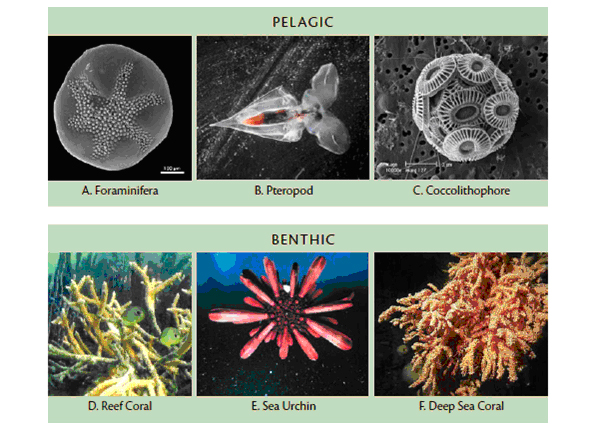
The ocean today is 25% more acidic than a two centuries ago. During the period of our industrial age human civilization has dumped billions of tons of greenhouse gases into the environment. Half of the CO2 has been absorbed into the ocean creating surface waters containing carbonic acid.
How do we know this? Because we have been measuring the chemistry of ocean water since 1751 using the pH scale (pH stands for “potential Hydrogen,” the ability of molecules to attract hydrogen ions). A neutral pH is 7.0. Liquids that are more alkaline are higher than 7.0 and liquids that are more acidic are lower. Oceans are salty and therefore more alkaline. But today ocean surface waters have an average pH of 8.14. In 1751 the average was 8.25.
There are implications for creatures that build shells by relying on calcium carbonate available to them in a more alkaline ocean. This includes even the tiniest of ocean creatures – phytoplankton, zooplankton and corals. A decline in plankton impacts the entire food chain in the marine environment including fish, sea birds, invertebrates and marine mammals. The disappearance of coral means the loss of our oceans’ most important marine habitats – the coral reefs.
6. How much oxygen does the ocean produce?
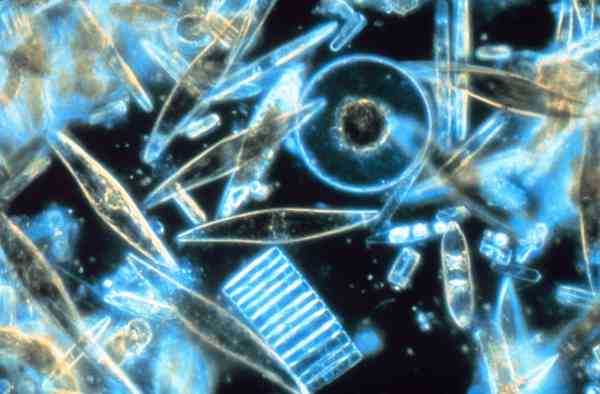
Between 50 and 85% of the oxygen we breathe on Earth is produced from the phytoplankton in oceans. Oxygen from phytoplankton has made it possible for air-breathing land animals to evolve and survive. Phytoplankton not only produces the oxygen that these animals breathe it also contributes to the ozone layer in the upper atmosphere protecting us from ultraviolet radiation.
Oxygen in ocean water is essential for marine animal survival. When we contribute to increasing ocean acidity we can impact plankton with devastating consequences. When we see increases in global average temperatures we can see a correlation with the loss of oxygen volume in ocean water leading to ocean dead zones with insufficient oxygen to support life.
]]>