Saltwater is heavier than freshwater. Coastal freshwater aquifers which are often the source of drinking water in cities are increasingly under threat as saltwater invades. In South Florida, cities like Fort Lauderdale and Miami in search of freshwater are tapping the inland aquifers of the state because those wells closest to them are contaminated by saltwater. South Florida isn’t alone in facing this threat. Texas and other coastal communities from Louisiana to New England face saltwater intrusion into their freshwater sources.
Desalination of seawater is increasingly seen as the solution for those areas of the U.S. coast under threat. Current desalination technology, however, remains pricey and wherever it is constructed, poses a threat to marine and freshwater habitats in proximity to these facilities.
New Orleans has a different freshwater challenge than saltwater intrusions into local aquifers. The Mississippi River for the last few years has faced prolonged drought in those areas of the country that feed freshwater into it. The result has been a drop in water levels and a decrease in the rate of flow. New Orleans relies on the river as its freshwater source which is all well and good if the areas from where you draw the water are not compromised by these changing river conditions.
So what is happening near the mouth of the Mississippi River? It appears that with changes to the continental climate conditions of the river’s watershed, saltwater from the Gulf of Mexico is creeping upstream. This saltwater intrusion is a direct threat to the 1.2 million who live in Greater New Orleans.
In September, Joe Biden declared the situation to be a state emergency and authorized funding and federal government resources to implement protective measures to secure the city’s water supply. Described as a wedge of saltwater, New Orleans has been monitoring its progress which until a few days ago appeared to be putting most of its freshwater treatment plants under threat. Since then the saltwater has retreated almost 9 kilometres downstream. Conditions inland, however, don’t hold much promise for a return to normal Mississippi River levels and rates of flow. The result is that federal funds and resources will help to build a new pipeline to draw freshwater from further upstream.
The changes in the Mississippi are not all caused by climate change. The river provides for the movement of goods throughout much of the continental United States. Dredging by the Army Corps of Engineers to deepen the river near the Port of New Orleans to accommodate larger ships is enabling saltwater to move upstream. The Army Corps is no stranger to the city and the river. It has been re-engineering the latter since the 19th century. It has built barriers on the river floor to block saltwater intrusion. The latest this year constructed a 7.5-metre (25-foot) barrier on the river bed to inhibit the saltwater intrusion. The barrier failed with saltwater flowing over it.
The new pipeline is a temporary fix because climate conditions in the Mississippi’s extensive river valley and surrounding watershed, according to climatologists, will continue to see the drying of the continental interior.
Tyler Antrup, at the Tulane School of Architecture, who is a green infrastructure expert recently stated “A lot of folks here don’t understand the way that the river works…We’re not expecting everyone to be hydrologists…I think the fact that the primary driver of this event is a drought in the Ohio River Valley is something that is very difficult for an average resident to understand….We need to work on how do we better demystify the whole watershed for our residents because it passes by our front door.” The Ohio River is the main eastern tributary of the Mississippi.
The Netherlands has faced the challenge of saltwater intrusion for centuries. Dutch hydrogeologists point to alternative sources for freshwater supply. These include rainwater catchments, stormwater capture systems, and greywater recycling by homes and businesses to reduce the need to draw water from the Mississippi.
Uprooting the people who live in New Orleans and other coastal communities under similar threat may be, in the end, the ultimate solution as sea levels continue to rise. But it is not our nature to give up on places where humans have established roots for centuries. The Netherlands is a prime example. So I expect desalination and other technologies along with freshwater conservation will help New Orleans get through much of the remainder of this century.
]]>Entergy is a monopoly provider of power to New Orleans. It is also turning out to be a bad corporate citizen when fighting climate change, having doubled down on building capacity through implementing thermal power plants that burn fossil fuels and contribute to greenhouse gas (GHG) emissions.
According to an NPR report published on September 22, 2021, Entergy’s New Orleans subsidiary, ENO, has made little progress in implementing measures to ensure it can keep the power flowing to the residents of the city. When Hurricane Ida made landfall all of New Orleans’ eight transmission lines failed. For the poorest neighbourhoods of the city, the power failure quickly turned into a health disaster in the late summer heat and humidity that enveloped the city.
When confronted with the evidence of failure, an ENO spokesperson described the company’s $6 billion investments in Louisiana alone since 2016. It has three million customers in four southern states. The spokesperson went further describing how Entergy is seeking U.S. federal funds to help pay for grid modernization and reduce its contribution of GHGs. Meanwhile, in 2020, Entergy made a record profit of $1.4 billion.
The history of southern Louisiana has been dominated by repeated extreme weather with hurricanes like Katrina in 2005, Gustav in 2008, Isaac in 2012, and Laura and Zeta in 2020. Repair costs for each of the previous hurricanes ranged from hundreds of millions to billions of dollars. And each time repairs showed the failings of Entergy’s grid.
Katrina forced Entergy into bankruptcy. It came out of it in 2007 and has been profitable ever since. Where is it getting its profits from? High utility rates and little in the way of maintenance. Today, when it rains in New Orleans, parts of the city experience blackouts. And even on sunny days blackouts occur because of chronic equipment failures.
So what lessons are to be learned from this story?
For every dollar invested in disaster mitigation and adaptation, a utility like ENO could save multiple dollars down the road in not having to spend on repairs. This is something that was stated by an academic and insurance industry expert at a virtual climate adaptation webinar I attended last week. A panellist, Blair Feltmate, of the Intact Climate Adaptation Centre, at the University of Waterloo in Canada, described how electrical grids throughout North America remain chronically underfunded, and not ready for what climate change is already bringing, let alone what the infrastructure will face as the century further unfolds.
Feltmate isn’t alone in touting the multiple dollars saved from preventive investment. Similar comments can be found in the literature on the subject. And at the United Nations, Secretary-General António Guterres in a 2019 message stated that “making infrastructure more climate-resilient can have a benefit-cost ratio of about 6 to 1. For every dollar invested, six dollars can be saved.” These types of savings are similarly described in World Bank literature, and by reinsurance giants Munich Re and Swiss Re who track extreme weather events and the damage they cause.
Do these observations fall on deaf ears? It would seem so in southern Louisiana at least where extreme weather events, referred to as storms of the century, seem to be happening with a high degree of frequency.
And specifically, how has Entergy reacted to the notion of a prescriptive approach to its grid infrastructure failings? In the last week, Entergy stated in a press release that it was making an offer to the city of New Orleans to buy ENO. Could the city run it better? Does New Orleans have the financial means to invest in upgrades that would harden the grid? Can it implement a distributed energy strategy, harness the tidal power of the Mississippi, or partner with a company to build offshore wind farms in the Gulf? Can it add solar to the mix and encourage New Orleans homes to put photovoltaic panels on roofs?
For Entergy, getting ENO off the books will appeal to shareholders. Unloading the subsidiary without making necessary upgrades will remove the headache while leaving the city a broken system. For the utility, it will mean out of sight, and out of mind.
Where are the state and federal governments to provide oversight and ensure New Orleans can keep the lights and air conditioning working now and in the future? The current fight over the $3.5 trillion infrastructure bill in the U.S. Congress may play a part in determining the city’s future viability.
One has to ask the obvious. How much more can the residents of New Orleans take? How much longer can the region be a viable place to live? And when will Americans and the rest of the planet learn from the evidence that climate change is presenting to us, both physical and fiscal?
]]>

But if your government denies the evidence then nothing gets done. Do nothing then you have reason to be very afraid if you live in lowland areas near coastlines. For example, think about a beachfront property you have just bought that lies just beyond a low beach on one of America’s beautiful East and Gulf Coast barrier islands. Think about the premiums you will pay for flood damage, and how much they will rise as the century unfolds. And what happens when the insurers no longer provide flood coverage? Will you be able to resell? Or will you take your chances until your home gets washed away?
Anders Levermann of the Potsdam Institute for Climate Impact Research has been quoted stating, “No one has to be afraid of sea level rise if you’re not stupid. It’s low enough that we can respond. It’s nothing to be surprised about, unless you have an administration that says it’s not happening.”
Getting blindsided because the government chooses not to accept evidence could mean a 30% decline in the global economy as low-lying regions where much of humanity lives is abandoned over the next few centuries.
Based on a 2015 study on future coastal population growth and sea-level rise looking out to 100 years hence, the authors calculated that the regions of the world with the highest degree of exposure would be in Asia and not in Europe or North America. Shanghai and much of coastal China, Bangladesh, India, Indonesia, and Vietnam would be most impacted. The populations of Nile delta and Amazon basin would also suffer. And finally most of the world’s megacities which are almost all located along coastlines.
Managing the Coastlines Going Forward
We have two options as sea levels rise. One is to build up our coastal defenses, raise berms, plant mangroves, build seawalls and tide gates. The cost of these projects will amount to hundreds of billions if not trillions of dollars. The other option is to move coastal populations inland and in measured fashion abandon our coastal cities and shorelines.
For the people of New York City, abandonment seems like an insane option. The same can be said for San Francisco or Los Angeles. But what about cities like New Orleans, Miami or Boston? Today the latter three or the most vulnerable in North America when it comes to rising sea levels.
But what about cities like New Orleans, Miami or Boston? Today these latter three or the most vulnerable to rising sea levels in North America.
Take a look at New Orleans and its climate change adaptation strategy. Already below sea level, New Orleans was a victim of Hurricane Katrina, a once in a century storm that inundated much of the city. So the city has a plan to cope with rising water which includes coastal wetland restoration with a target date of 2030 for completion. In place are new storm surge barriers built by the Army Corps of Engineers after Katrina. Dikes and levees have been restored or strengthened. Housing regulations now require new homes to be built higher. Is this enough to ensure New Orleans will be here in 2100 and beyond? Many climate scientists seriously doubt it.
Miami, neighbouring Fort Lauderdale to the north, and communities to the cities south represent the fourth-largest most vulnerable population on the planet when it comes to sea level rise. A recent task force focused on planning to 2060 and made five recommendations including a capital plan with measurable timelines to deal with coastal inundation. Where sea level rise will be gradual, storm surges of significant height remain a continuing danger to Miami and its surroundings. Sea levels by 2060 may only rise 15 to 20 centimeters, but a Category 3 hurricane could create storm surges 10 times that height.
Miami doesn’t have the dikes and flood barriers of New Orleans. The city’s urban spread makes the construction of such economically prohibitive. But what Miami does have is the Everglades and restoration of this extensive wetland plus development of coastal wetlands and mangroves where Miami’s beaches are today could help the city survive to the end of the century at least.
In the task force’s conclusion it states, “we believe that without a professionally well thought out adaptation plan in place, we risk losing insurability and financial support for our future.” The mention of insurance is interesting because the reinsurance industry is looking at Miami and seeing an underwriting nightmare unfolding. Trillions of dollars are at stake and the Munich Re and Swiss Re’s of the world are not interested in backing insurance companies issuing flood policies to homeowners and businesses so at risk.
Boston is ranked the eighth most vulnerable city to climate change on the planet. Its government began drafting a climate action plan back in 2007. , The Boston Urban Land Institute in its reports sees Boston’s downtown reclaimed tidelands as most vulnerable. So Boston is considering becoming the Venice of North America as sea levels rise. Neighbourhoods may find themselves completely surrounded by canals rather than streets with Boston by end of century looking far different from what we see today.
The Numbers
The Union of Concerned Scientists has studied Michael Bloomberg’s 2014 Risky Business Report, a climate assessment for the United States that quantifies economic risk. It calculates the following:
The scientists have their own number which encompasses the entire planet. It is far steeper with sea level rise and flooding by 2050 impacting properties to the tune of more than $1 trillion per year. That’s 2050, not 2100 or some even more remote day. If you have just given birth to a child when they reach the age of 33 their world will be far poorer because the current U.S. administration has chosen to believe climate change and sea level rise are a hoax.
Maladaptation is always being one step behind appropriate adaptation and mitigation. It happens because infrastructure investments get planned, funded and built based on obsolete data. City planners react to an incident, collect data, then design a solution and get it built with safety thresholds that are no longer a reflection of new realities.
Humans are good at maladaptation, which is a bad thing.
We exhibit it in our daily lives….not fixing a leaking window until a rainstorm causes a damaging flood. And we are led by politicians who exhibit maladaptive behavior in many ways. If they promote, approve and fund a project, it often only addresses the present and not the future vulnerability.
Our failure is one of timing.
Cities, states and nations build infrastructure that meets the past and present but seldom the future. And when the future is not measured in decades, but centuries, maladaptation becomes almost a certainty. If we were better long-term planners, we could see the consequences of our current behavior and develop adaptation strategies that work. That is the real challenge we face with climate change. Climate change is creeping up on us and “storms of the century” events are now becoming “storms of the decade.” We can create a mitigation strategy for a decade, but what about five decades from now or a century?
In a June 2015 report entitled (Re)conceptualising maladaptation in policy and practice: towards an evaluative framework, the authors provide the findings of a five-year, multi-country research project looking at climate resilience in semi-arid regions of our planet. The report defines adaptation and looks at five ways in which our response constitutes maladaptation. Where adaptation refers to a process of adjustment to actual or expected changes, maladaptation refers to how we get adaptation wrong.
The authors describe the reasons for maladaptation:
But all is not lost.
The authors of the report describe a framework for adaptation to avoid maladaptation. They include warning signs and symptoms to heed before money is misspent.
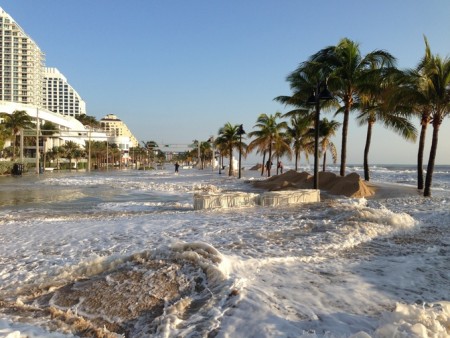
Let’s look at two examples. The first is our Fort Lauderdale shoreline and roadway project.
The city government chose an adaptation strategy that clearly will lead to maladaptation. How so?
Illustrations of points #2 and #3 above, the money is not exclusively being used to increase stormwater runoff capacity and the raising of a berm and wall to mitigate flooding from storm surges. Instead, a portion of the project fund has been spent on new bike lanes, a beachfront promenade, pedestrian lighting, crosswalks, median islands and left turn lanes. To call the strategy maladaptive is to be kind. More like stupid.
Our second example is Canada’s oil sands.
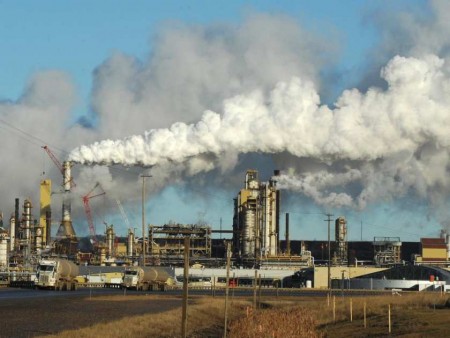
To meet a 30% reduction in carbon emissions as Canada’s national government has pledged to do by 2030, there must be reductions in the amount of CO2 coming from all sectors of the economy. Yet the current Canadian government has chosen to exempt the oil sands in its emission reduction strategy, adopting the non-action of point #1. Instead, it intends to purchase carbon credits on world markets to offset oil sands emission output, which effectively is choosing the strategy of point #2. On the surface one may consider this not to be maladaptive, but in fact, what the government is doing is choosing to kick the oil sands can down the road to some unspecified future date. In Canada’s current federal election campaign, none of the three leading political parties have had the guts to state the obvious, although one candidate expressed it briefly before being corrected, that the appropriate adaptation strategy would be to keep the oil in the ground to meet carbon reduction targets. Canadian and foreign energy companies operating in Canada have exhibited similar maladaptive behaviors in shuttering carbon sequestration projects that could help them offset oil sands output. The net result….instead of a decline in greenhouse gas emissions, the oil sands have increased their net carbon contribution.
Discounting the future is the single largest problem humanity faces addressing climate change.
We, as a global society, are susceptible to political leaders whose timelines are determined by election cycles, and who would prefer more study than action. In their defense, sometimes more study is required to produce the right combination of strategies and projects to address future climate change impacts. But the politicos who deliberately and wantonly confuse the public about the scientific certainty of climate change are guilty of non-action, the point #1 maladaptation risk. Counterfactual behavior of this type can be described as criminal.
When Hurricane Katrina struck Louisiana and inundated New Orleans, leading to the deaths of 1,836 people, maladaptation was the primary cause. Building a city, New Orleans, on land below sea level, situated on a flood plain near the mouth of the Mississippi River, can only be described as a pursuit of maladaptive behavior.
You are asking for it.
Engineers, knowing the vulnerability of the city to flooding, built levees and flood protection systems to address a “storm of the century.” Post-Katrina investigation showed that of the more than 500 kilometers (350 miles) of levees designed to protect the city, most did not fail. So kudos to the engineers.
But a system is only as good as its weakest link and there were a number of those. Some levees were constructed using substandard porous materials. In one case, a levee was re-purposed to serve as a transportation corridor for rail with an extra layer of porous gravel added to its top.
A greater failure was not recognizing the severity of a storm defined as a Category 3 hurricane.
And finally, the biggest maladaptation was a lack of multiple lines of redundant flood defense structure but instead relying on what turned out to be numerous single points of failure.
Returning to the issue of time.
The misjudgement of time is the most critical maladaptive behavior we humans exhibit. We make short-term decisions and investments rather than going long-term. Hence we don’t build for redundancy with a century or multi-century ahead outlook.
This partial list of maladaptation symptoms is a condition of humanity that we need to overcome:

