What causes one hand to be dominant in a species?
What does it say about our brains when we use our left-hand over our right?
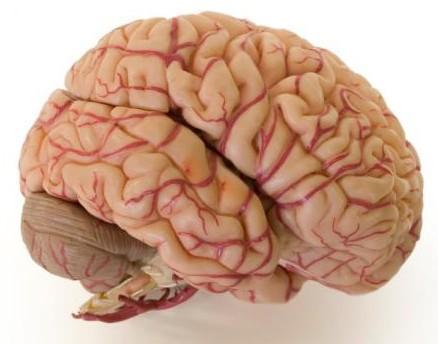
A recent study of 500,000 people’s genetic data done by researchers at the University of Oxford revealed four areas of our genome that govern left-handedness. Three of these were associated with brain development and language proficiency. Akira Wiberg, a researcher at Oxford and one of the lead authors of the study noted that people who are left-handed appear to have a different pattern of brain communication between the left and right brain hemispheres.
In Brain: A Journal of Neurology, Wiberg and her research colleagues describe our uniquely human character trait, a predominance of right-handedness. This is uncharacteristic in other animal species were dominant handedness is evenly distributed between left and right. In our nearest primate relatives, the numbers do not weigh heavily to the right.
So what could be the explanation for this unique skewed human characteristic?
Some anthropologists believe that the use of stone tools made us right-hand dominant. The left hemisphere of the human brain controls motor coordination critical to developing stone tools. Pointing to dental records of European Neanderthals, researchers see in the fossil record evidence of right-slanted striations on the front side of teeth. They hypothesize that the striations came from gripping material with the teeth while striking an object being worked with the right hand. The same evidence appears in earlier Homo habilis fossils. Hence, anthropologists believe marks like these could only come from working with tools held in the right hand. Subsequently, a combination of genomic inheritance and learned behaviour skewed human populations to become right-hand dominant.
A more disturbing aspect of the Oxford research links the four areas of the genome associated with left-handedness with several neurodevelopmental disorders including schizophrenia.
The study found that:
The most interesting aspect of this dominant-hand study is how dominant-handedness and verbal skills in language are linked giving left-handers a cognitive advantage. Being a left-hander, all I can say is “I knew it! Now, could someone help me open this can of tuna with this right-handed can opener?”

]]>

Cataracts mostly strike us as we age. About half of individuals over 70 years of age have them. Cataracts are the most common reason for blindness globally.They are caused by proteins called crystallins that are present in the eye from birth. We have a reserve of these proteins that we are born with and no more. The crystallins are responsible for maintaining the transparency of the fiber cells in our lens allowing us to see clearly. But as we age the crystallins may lose equilibrium and begin to fold in unusual ways clumping together to cloud the lens. These clumps are called amyloids and they can eventually block the field of vision.
Finding away to unclump the crystallins was the focus of the research conducted at these three universities. They began looking at 2,450 compounds, narrowed it down to 12, all sterols, and identified one, lanosterol, which they called “Compound 29,” that when injected into the lenses of aged mice dissolved the clumps. Their research showed that the chemical not only dissolved formed amyloids but also stabilized crystallins to prevent them from clumping.
The images below show how treatment with “Compound 29” of genetically predisposed 5-week old mice with cataracts produced dramatic results. Researchers used a protocol involving three applications of the chemical per week for six weeks. In the two image strips, the top one labelled “Vehicle” is the control. The lower strip labelled “Compound 29” shows how the treated eye inhibited amyloid clumps from forming with no evidence of a cataract as a result.

“Compound 29” in eye drop form has also been tested on mice genetically predisposed to cataracts. The results show partial transparency restored where cataracts have formed. In testing on mice with naturally age-related cataracts as well as on human lens tissue surgically removed from patients receiving artificial lens replacement, the eye drops when applied showed measurable improvement in transparency.
“Compound 29” is now being developed commercially in preparation for clinical trials in humans under license to ViewPoint Therapeutics, a California-based company founded by Leah Makley, Chief Scientific Officer, and a Ph.D. graduate from University of Michigan. It has ramifications that go beyond curing human cataracts. Veterinarians are interested in the chemical because 50% of dogs aged 9 or older develop cataracts. And even more interesting is the potential for the chemical in research for cures to Alzheimer’s, Parkinson’s, and Huntington’s Disease. It appears that crystallin proteins found in the eye bear a striking resemblance to those identified with these three neurodegenerative diseases. So an eye drop that can restore vision for patients with cataracts could also lead to new technologies to combat nervous system diseases.
Not too bad!
]]>
Boston Universities Discover New Techniques for Treating Parkinson’s and Other Neurodegenerative Diseases
Two studies appeared this last week looking at novel and complimentary ways to attack neurodegenerative diseases. The first, from Northeastern University, involves the development of a gene-based therapy to stop Parkinson’s Disease in its tracks and even reverse the symptoms. The second, from a division of Harvard Medical School and Boston University, announced a new method to bypass the blood-brain barrier to administer treatment to those suffering from neurodegenerative and central nervous system diseases.
The Northeastern research involves the use of nanoparticles containing genetic information that gets introduced through the nose into the brain to reduce the loss of dopamine neurons. With Parkinson’s the symptoms really don’t start to show until 80-90% of dopamine neurons have died. With this treatment early stage Parkinson’s sufferers can receive treatment and begin manufacturing dopamine to stop if not reverse the disease’s progress.
At the Department of Otology and Laryngology, Massachusetts Eye and Ear, part of Harvard Medical School, and at the Biomedical Engineering Department at Boston University, new surgical techniques have discovered a way to create a window into the brain using the patient’s donor tissue.Through the window doctors can deliver molecular-sized drugs that can get by the blood-brain barrier. In the past 98% of drugs are prevented by the blood-brain barrier from being used therapeutically inside the brain. With this new technique we could be witnessing a revolution in treatment of brain and central nervous system diseases.
Need a New Liver? Order it and 3D Print it!
Organovo bioprints! There’s a new verb for you.
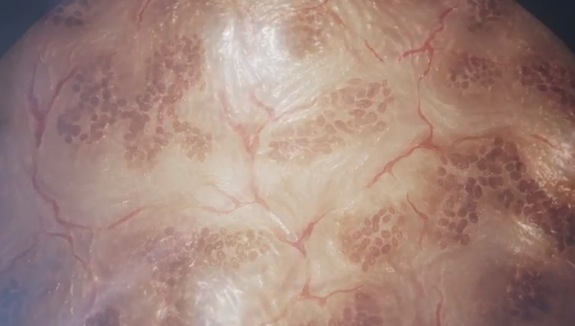
The company, located in San Diego, has developed an automated bioprinting platform for fabricating body tissue including parenchymal and non-parenchymal liver cells. It bioprints in a matrix that includes cells from the lining of blood vessels (see image below). In other words the output is compositionally similar to what nature produces.
As reported in NewScientist this week, the company is generating mini-livers, each about a half millimeter in depth and 4 millimeters across. These little livers are being used as predictors to test hormones and drug toxicity. But eventually Organovo plans to produce lab grown chunks of the tissue for transplant to restore diseased livers in humans.
3D Print Manufacturing Gets the Market Nod from Venture Capitalists
Shapeways, the 3D printing company announced in the last week that it had closed on $30 million in new venture capital to add to the $17 million already raised. That’s a pretty impressive amount of money for what many see as no more than an interesting hobby.
But the field of additive manufacturing is taking off and Shapeways is tackling it in a social media way, through membership in an online user community.
If you have an idea for a new product, to use Shapeways you model your design on computer using a 3D CAD program. Shapeways can take input from a wide range of 3D authoring software tools including free ones like Google SketchUp or FreeCAD. Once you have created your computer design upload the file output to the Shapeways community website. Use the menu to choose the materials you want for production. Choices include glass, plastic or metal. Shapeways gives you your unit cost. Accept the quote and your creation gets manufactured. When it’s done Shapeways ships it anywhere in the world. Custom manufacturing for the 21st century.
 Climate Zone Shifts Accelerating in a Warming World
Remember the weather patterns you used to know in your part of the world. Well don’t blink because there is strong evidence they are going to change and at a faster and faster rate.
A study published in the journal Nature Climate Change last week projects large shifts in climate zones by the end of the 21st century with the pace of shifting accelerating linearly as global temperatures increase. Climate zone change will impact more than 20% of the global land mass.The study reinforces predictions of shrinking polar regions and increasing aridity in equatorial and mid-latitude zones.
What this means for plants and animals is disruption of the environment in which they live. Species will either migrate following the changing climate zones or die. The pace of change may make evolutionary adaptation impossible with only the very flexible surviving.

Move over Falcon 9, There’s a New Gun in Town
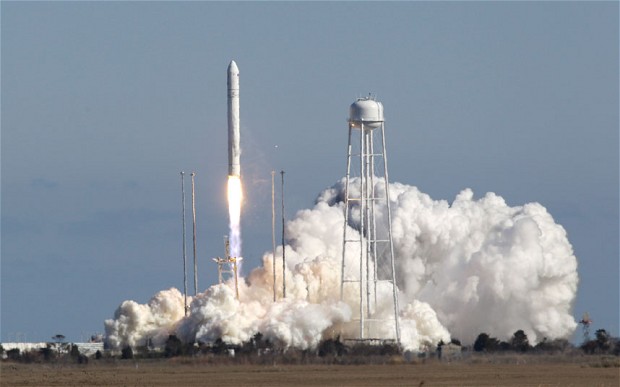
It took a few pulls of the trigger this last week but finally the Antares rocket with a dummy payload took off successfully from Wallops Island, Virginia. So now there are two commercial low-Earth orbit rocket launchers that NASA, other space agencies, and private companies can consider when launching a satellite.
Antares is a product of Orbital Sciences. The rocket stands 40 meters (133 feet) in height and weighs 240,000 kilograms (530,000 pounds) fully fueled at time of launch. It can deliver a 5,000 kilogram (11,000 pound) payload to orbit. Not quite as powerful as SpaceX’s Falcon 9 which can deliver twice the payload, Antares should have enough muscle for most low-Earth orbit jobs.
A Postscript
This week saw a spike in new subscribers. Always appreciated. If you are a regular reader of this blog and have not subscribed, it’s free and easy to do. Just click on subscribe near the bottom right of any article or the home page and provide an email address. That way you don’t have to find me. I’ll find you and postings will appear in your email inbox. Once again, thanks for visiting and please come back again often.
– Len Rosen
]]>