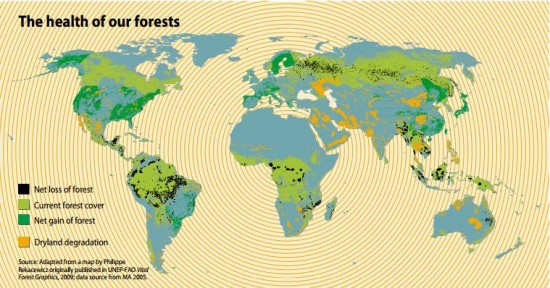
We can’t afford to lose the tens of thousands of hectares that vanish each year and genetic research may provide us with a tool to fix not only the trees but climate change to boot.
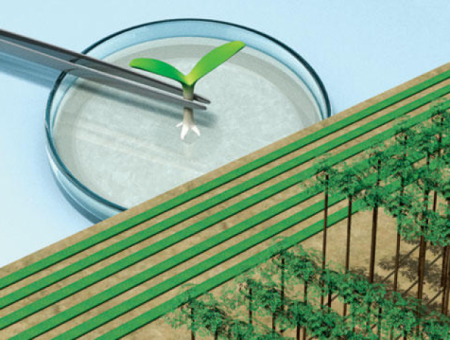
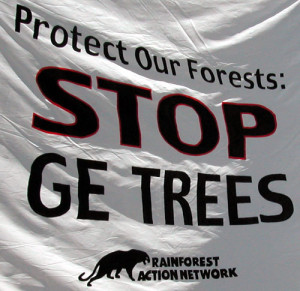
Genetically modifying trees can alter the way they grow, how they resist disease, and even increase their carbon sink capacity. But the anti-GMO movement seems to not understand the implications of their resistance to research in this field. Here’s a quote from Rachel Smolker, BioFuel Watch: “This is deliberate, irreversible and completely irresponsible contamination of the environment with unknown and possibly devastating consequences.”
What are the anti-GMO concerns when it comes to trees?
How valid are these concerns?
The only legitimate concern raised by the anti-GMO groups is the first point. Why?
If we use GMO crops as the model, the biggest concern was always cross contamination from genetically modified species to non-GMOs. This has yet to happen after almost two decades of commercial growing of GMO corn and other crops. But these are annual staples that live only one growing seasons. Trees are not the same.
So scientists who are experimenting with GMO trees recognize they have to implement longer timeline studies to ensure the same results occur waiting as much as three years for the trees to reach reproductive maturity. This means longer timelines on GMO-tree studies before approvals are sought from regulatory bodies.
What kind of benefits could be derived from introducing GMO forests?
There are so many including:
If we are to continue to watch our human population rise to levels of 9.5 billion or more by mid-century then more forested land will be cut down to grow food crops.
If we continue to cut down our forests we will see the impact this has on precipitation patterns, aquifers, and land stability with subsequent landslides.
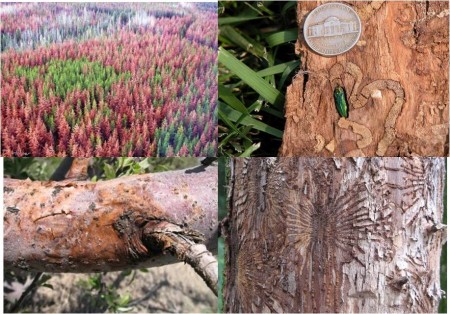
If climate change continues to warm temperate boreal forest areas we will see the spread of insect-borne, bacterial and fungal infections like the mountain pine beetle, ash borer, fire blight, and other agents have destroyed tens of thousands of hectares each year and created fodder for wildfires when combined with climate change-induced drought conditions.
GMO and the science of genomics gives us a tool that can allow us to expand cropland while we enhance forest lands. Enhanced trees can help us mitigate CO2 increases by being more effective carbon sinks.
If we cut off GMO tree research we will lose in so many ways.
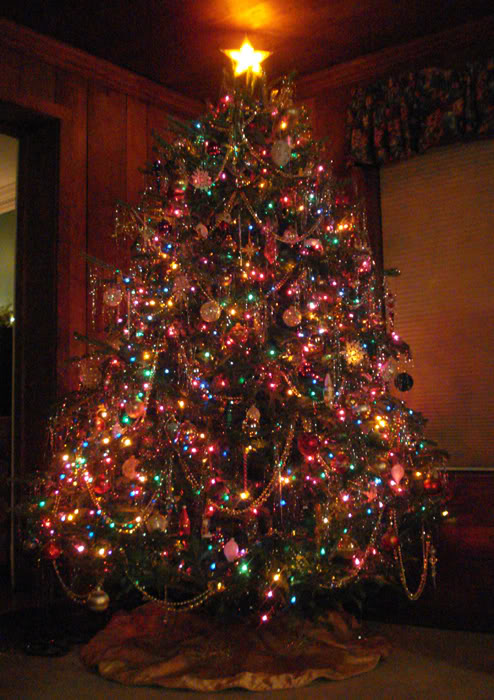
But it is about Christmas trees and the fate of the boreal forest that this posting focuses on. A warming atmosphere does not bode well for the prime Christmas tree cut, delivered or picked up by families each year to decorate millions of homes. The trees of choice, mostly variants of spruce, although some years I recall seeing Balsam Fir, are at risk because as the atmosphere warms, the sub-zero air of winter, so critical to these trees health, is disappearing. It is gradual but nevertheless winter evenings with temperatures below 0 Celsius (32 Fahrenheit) are fewer than at any time in recorded history.
It is not just the conditioning of the tree that is at risk when it doesn`t experience its normal periodic freeze and thaw, but also the survival of many of its natural enemies, the beetles, fungi and other forms of blight which can winter over and then re-emerge to devastate a coniferous forest. In the past many of these forest plagues died because of winter`s freezing conditions. Not so much now.
For now the Christmas tree species are holding their own, but scientists doing testing in Scandinavia, simulating what they believe will be a near future, are seeing evidence that trees like the Norwegian Spruce may find themselves endangered.
And it is not just the Christmas species that are threatened. All species in boreal forests are at peril, and not just because of climate change, but from continued massive deforestation practiced by logging and pulp and paper operations. Although forestry companies in many countries are regulated and obliged to replant for every tree they cut, the habit of replacing mature multi-species forests with single tree species forests is proving to be a disaster waiting to happen. Just look at the devastation caused by the Mountain Pine Beetle in the Western Cordillera of the United States and Canada. Here monoculture planting combined with warmer winters has wreaked havoc on tens of millions of hectares of secondary growth forests.

The cutting of forests directly contributes to carbon accumulation in the atmosphere. Whether this is done for commercial forestry, or is part of land clearance strategies in a Developing World seeking more hectares for growing staples, the human practice of deforestation is credited with creating 30% of the carbon atmospheric buildup of the past 150 years. Reforestation, therefore, makes sense. With forests the second largest carbon sink on our planet, only bested by the ocean, making the world safe for Christmas trees to thrive should be a high priority.
Of course, cutting down a tree each year to put in the family room on display means you are contributing to additional carbon in the atmosphere. So maybe a new Christmas tradition can include the planting of two trees every year to produce a net carbon reduction. We would in our own way be taking a small step to mitigate climate change.
Merry Christmas!
]]>


