———-
 In the field of medical research, data is a kind of currency. If medical professionals are to develop any kind of understanding about how diseases affect the human body, they must be given the means by which they can collect accurate medical information from a large population. Without data, they have no way to measure the efficacy of a new drug or trace a disease back to its root cause.
The problem has been finding a way to gather information from a diverse group of willing participants. How do medical professionals reach people without disrupting their daily lives? And how do they make people feel invested in research that may never directly affect them?
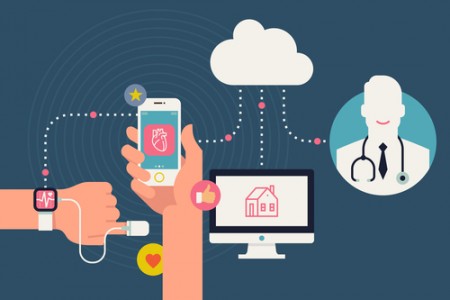
This year, Apple has provided a most promising solution with its release of ResearchKit, an open source framework for application development in medical research. It allows researchers to create applications for gathering health data on a massive scale. Here are just a few reasons why ResearchKit may be a game changer.
The iPhone Is Good at Data
With every generation, Apple has improved the health-monitoring capabilities of its iPhone products to meet the demands of an increasingly health-conscious consumer base. The iPhone 6’s integrated Health application automatically and accurately tracks distance traveled, steps taken and elevation changes. It also makes it extremely easy for users to record other factors, such as nutrition, sleep habits and reproductive health. And because ResearchKit is open source developers and researchers can build on its foundations to tailor data collected to meet specific needs.
ResearchKit Finds Participants
One of the biggest hurdles with medical data collection is finding participants willing to travel to a hospital or academic institution to take part in a clinical study. Not only does that lead to a smaller pool of data, but also a less diverse one.
It can also create a bigger problem. When individuals know they are involved in a medical study, it often changes their behavior. Researchers can’t count on truly objective answers to medical questions this way. However, ResearchKit removes the face-to-face element from data gathering that often leads to skewed answers. ResearchKit also allows for complete anonymity. Participants share their data, but they also keep their privacy. Best yet, users never have to fill out a single questionnaire.
It Enables Frequent Data Collection
Medical studies have proven to be an effective means for gathering useful data for a select period of time. But what do researchers do if they need a constant flow of data? ResearchKit makes this easy allowing participants to submit data as often as every hour. Doctors know that symptoms can come and go over time, and infrequent data collection can cause simple diagnostic spikes to be over emphasized. But with ResearchKit doctors develop a more complete picture. Using the built-in accelerometer, barometer and gyroscope, an iPhone can collect an accurate stream of data without intruding on the participant’s daily life.
ResearchKit Is Already Working
A team at the NYU Langone Medical Center is already using ResearchKit to develop an app for tracking concussion-related symptoms in athletes. Called the Langone Concussion Tracker, the app conducts a series of tests to check a participants’ memory, balance and vision to gain a long-term picture of how concussion affects motor skills and brain function. The research could completely change the way we diagnose and treat this previously ignored condition that has led to the instituting of concussion protocols in amateur and professional sport.
Agriculture Update: Netafim Irrigation Technology – A Scarce Water Solution
A leaky water pipe and a flourishing tree revolutionized irrigation over 50 years ago and what was discovered by accident has led to the development of micro-irrigation products by a company in Israel called Netafim. Its micro-drip technology adapts to operational and environmental conditions maintaining directed water flow to field or greenhouse crops. Today the company is providing training and assistance to farmers in 110 countries developing micro-irrigation solutions that increase water use efficiency to 95%. In April Netafim opened a new facility in India to assist more than 50,000 farms in the country. India, a country with 1.2 billion people , 17% of the world’s population, contains only 4% of its fresh water. With 77% of that water designated for agriculture, maximizing water use is critical to increasing crop yields. Crops under micro-drip irrigation include cotton, sugarcane, potatoes and bananas grown in open fields as well as green houses.

Biomedicine Updates
Hey Doc – You May Soon Be Replaced by a Machine
At the Health Innovation Summit in late August in San Francisco, Vinod Khosla, a co-founder of Sun Microsystems and a partner in a health venture capital firm, described a future in which applications on smartphones would replace 80% of physicians. Khosla demonstrated AliveCor’s ECG Heart Monitor, a low-cost mobile device that enables a patient to monitor his or her heart health anywhere, anytime and that attaches to an iPhone. The monitor is one of a number of consumer-oriented medical products that Khosla’s firm is funding that allow consumers to measure and assess their own wellness. And with Watson (see last week’s headlines) learning to become a medical whiz on behalf of WellPoint Inc., machine learning systems may soon prove to be better at diagnosis than most doctors.

Using Computers to Stave off Dementia
Today dementia affects 13.3 per 1,000 population. But here is a prescription you can take if you are getting to your senior years like me. “Take one personal computer, laptop, tablet or smartphone session a day and call me in the morning because you’ll remember my number. According to a research study done by the University of Western Australia, regular computer use is a formula for lowering incidents of dementia in older males. The study followed 5,506 men between the ages of 69 and 87 for a period of up to 8 1/2 years. The results, a decrease in dementia rates of 40%. Computer usage was measured by frequency and type of activity. Follow up showed a correlation between frequency of computer use and cognitive abilities.

Environmental Technology Update: New Filter Separates Oil From Water
Imagine a filter that cleans up oil spills in the ocean or separates oil from water in fresh water treatment plants. In the past membranes separating water and oil have fouled up after a few hours. But not this technology created by engineers at University of Pittsburgh. The filtering agent consists of two compounds: POSS (fluorodecyl polyhedral oligomeric silsesquioxane) and PEGDA (polyethylene glycol diacrylate). When applied to surfaces such as wire screening, filter paper or fabric, water passed through while oil was blocked. Tests in the lab on canola oil and diesel fuel produced optimal results. Next in the plans, a field test in the ocean. Where are you BP?

Transportation Update: Is There a Supersonic Flying Wing in Your Travel Future?
NASA’s Innovative Advanced Concepts Program has awarded engineers at University of Miami $100,000 in funding to turn their bi-directional flying wing idea into a reality. The wing looks like a Ninja warrior’s star with four wings at 90 degrees to each other. When in subsonic flight the aircraft uses one set of wings. When in supersonic flight it rotates and uses its other set. The jet engines atop the aircraft re-align for the type of desired flight. For passengers on board, a 5-second rotation would create g-forces less than those experienced during commercial jet flights today.
Not to be outdone, engineers at Tohoku University in Japan have come up with a supersonic biplane concept that produces no sonic boom. Supersonic commercial air travel ended with the Concorde. Will we see it revive? Most experts believe concepts like these will take 20 years to go from the drawing board to commercial use. My bet is we will see sub-orbital commercial rocket service between New York and Tokyo before either of these two interesting airplanes ever fly.

A Postscript
Readership continues to climb every month. Thank you. You can find Techso Mogro on Facebook as well. If you go that route please “Like” the page. I’m 10 short of 30 readers. Once I reach that number I can begin to analyze reader traffic on that site. To the more than 4,000 of you who visited last month, thanks for dropping by and keep on coming back. I promise to keep you interested and intrigued about 21st century technology and our future. – Len Rosen
]]>