I joined Facebook back in early 2006. I was writing a small business blog at the time and was looking at how social networks could leverage opportunities for new companies. Facebook was among about 30 different social networks that I test drove but soon it asserted its dominance. Today Facebook has nearly 2.9 billion monthly users. And it has added other social media platforms to its offering including WhatsApp, Instagram, and Messenger. These all have between one and two billion users. Only YouTube from Google is as pervasive on the Internet.
When I joined Facebook I saw all of its potentials as an online forum, a digital space where there were no national borders, and opportunities aplenty to engage the global community in collaborative ways. My naivete.
That Facebook is long gone if it ever even existed. Today it is a media giant and cash generator for its investors. Its online presence makes it a principal influencer of thought and purpose often appealing to the worst in humanity.
Frances Haugen, the Facebook whistleblower on 60 Minutes, worked there. She is a computer engineer with a Master’s Degree from Harvard. In her whistleblower complaint, she states that Facebook has promoted misinformation, hate speech, and incited violence through its pages because that makes money, increases traffic and sells more advertising to get more clicks. Facebook executives have denied that any of this is true. But the evidence as presented in the whistleblower complaint contradicts the company’s leaders.
Not only is Facebook misleading its users and investors, but when it describes its newest software algorithms to create meaningful interactions and content, it hides a reality that it is in the business of pushing negative communications because this gets more eyes and makes the company more money. And it’s true of audiences, whether they are Trump supporters in America or Modhi supporters in India, that racism, bigotry, antisemitism, anti-Muslim, and anti-vaxxer rhetoric are all good for Facebook’s bottom line.
Facebook tells you they monitor hate speech and misinformation, but the truth is they haven’t the staffing or means to look at much more than 10% of all of these messages and postings. Facebook’s final defence is that the divisiveness and hate found on its platform reflects current global society and cannot be blamed on them.
The growing reliance on our digital presence in the 21st century in examples like Facebook is not helping us to overcome the challenges we currently face. If anything applications like Facebook exacerbate them.
There are technological innovations that counter this negative Facebook narrative and here are some examples.
SEEDS is a digital platform and online community that encourages global collaboration and rewards participants for their pursuit of happiness and collective self-actualization. I recently joined the SEEDS community and have written about it. Seeds (lowercase) is the digital currency used to reward members of the community for their efforts. Seeds can be exchanged for non-digital currencies when needed.
Another good example of a digital presence that is a solutions maker is Kiva.org. I discovered Kiva back in 2007, a microloan operator aggregating capital from hundreds of thousands of lenders to provide money to Developing World entrepreneurs with little access to banks and other financial lenders. Recently I surpassed 100 loans that are helping to seed new projects in more than 40 countries. The unprecedented repayment rate of 99% with nary a default is unmatchable by any bank or other financial institution. Kiva launched Kiva U recently to educate young people in wealthier countries about similar-aged compatriots in the Developing World. Truly a bridge builder, Kiva is using the Internet the way I always ideally envisioned it rather than spreading disinformation and fueling hate for profit.
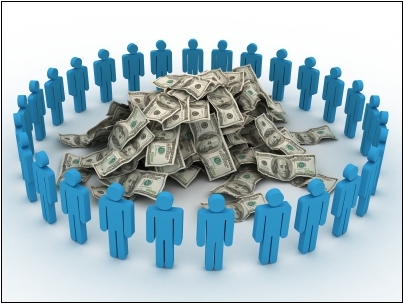
Crowdfunding represents another innovation of the digital age. A means of raising and exchanging money for projects deemed worthy by the general public, crowdfunding is a financial social movement offering real or digital currency to those whose ideas and products attract investors. The reward for crowdfunders is usually a premium of some kind, maybe an early release product, or bling. The most popular of these sites include Kickstarter, Indiegogo, Fundable, GoFundMe, and one less talked about, Mightycause that crowdfunds not-for-profits.
Exchanging money has gone digital over the Internet with the advent of mobile phones and access to the Internet. In the Developing World where there is a large number of people who don’t have bank accounts, it is a challenge to move money over any distance. Exchanging money electronically used to be a bank-to-bank or Western Union thing. But now there are many applications to use to replace these antiquated and expensive exchanges. One site, WorldRemit handles money at low exchange rates for more than 130 countries. In Kenya, WorldRemit partners with a smartphone app developer, M-PESA, a collaboration involving the local telecommunications company and a number of East African banks. Today M-PESA operates in 10 countries. But M-PESA doesn’t need a bank to move money. Its mobile phone app allows users to buy and sell goods and services and store the value of the exchange in a secure cloud on the Internet. And the service fee for each transaction is a fraction of what it used to cost. And if you want to turn the exchange value into cash you can pick it up at designated locales.
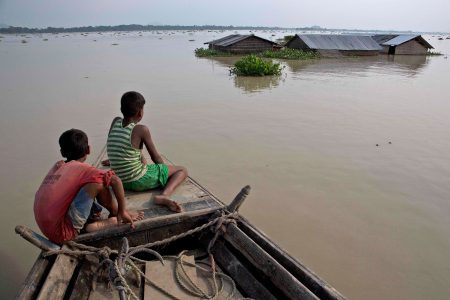
]]>Microfinancing clearly works when dealing with families, groups and individuals motivated to build a business or improve themselves with the assistance of repayable loans. But can it work to pull people back from the brink of a major natural disaster such as a hurricane, or to help implement adaptation or mitigation strategies to combat the impact of climate change?
VisionFund, a microloan charity currently lists on its website over 1.25 million borrowers with an average loan of $552 U.S. distributed over more than 30 countries in Africa, Asia, Latin America, the Middle East, and Eastern Europe, and a portfolio totaling more than $621 million. The organization focuses on the poorest communities where its loans can make the most significant impact, places where people live on less than $2 per day.
VisionFund’s latest foray is into climate insurance with the launch of a program for Africa and Asia. The target is to benefit more than 690,000 families, some four million people living in six low-income countries by providing them with climate insurance. They call the program the African and Asian Resilience in Disaster Insurance Scheme (ARDIS). ARDIS gives policyholders swift access to credit in the event of a climate shock. Microloans are managed by local financing partners and get quickly disbursed to limit disruption after a climate-related calamity. The presence of this type of quick capital makes all the difference to small farms and businesses hit by natural disaster disruptions. In these events, normal loan providers like local banks are usually slow to respond. And often so are local and state governments.
Michael Mithika, President, and CEO of VisionFund International states, “ARDIS uses an innovative financing structure making recovery lending scalable. This scalability means greater opportunities for more people to access emergency finance to restart businesses and restore incomes. We’ve already seen the benefits of recovery lending initiatives in sub-Saharan Africa in 2016/2017. “
Partnering with VisionFund is Global Parametrics, a for-profit venture with financial disaster risk management solutions aimed at helping poor and vulnerable populations. Together the two have set up a new venture that also includes the United Kingdom’s Department for International Development, the InsuResilience Investment Fund from Germany’s development bank KfW, BlueOrchard Finance, a Swiss-based impact investment manager, the Rockefeller Foundation, and FMO, the Dutch development bank.
Microfinancing, in the age of climate change, could make an enormous difference to the most vulnerable populations on the planet. It is good to see large institutions getting into this area of investment rather than just writing cheques and claiming charitable tax deductions in the aftermath of disasters. It also brings global capital markets front and centre into these two important realms: microloans, and insurance risk coverage. The initiative has set a target of 1% of the G7 goal to insure vulnerable people, in Developing World countries, giving them access to instant capital when climate change creates the need.
]]>
For me the Internet has pretty much ended most of my visits to banks with me managing our household accounts online. My bills are electronic and the only time it seems I visit a bank is to deposit a cheque or take money from the automated teller.
Moving money around the globe in the Internet age is almost magical. Where Western Union and your local bank were the sole providers of services for wiring currency overseas, today we have mobile phones and electronic money transfers that work using an “app.” One can almost describe the evolution of the technology as a democratizing process. So today I want to share with you some stories about the evolution of money in the 21st century.
Micro Loans
In 2007 I discovered Kiva.org, an online community founded in 2005 that was a capital aggregator and an alternative to banks. Kiva has never been about profit. Every dollar that is loaned is free of interest but must be repaid. Kiva’s loans are distributed and managed by a network of microfinance field partners and trustees who vouch for the character of the borrowers and who get measured by the rate of loan repayments.
The idea of Kiva intrigued me because it wasn’t about charitable giving. Every dollar I put into loans I expected to see come back to me. And that has been the case since my first loan in 2007. To date I have made 37 loans with nary a default. The individuals and groups that I have provided investment capital live in 24 countries. My initial $100 investment in 4 business opportunities has been recycled to become $925 by me keeping the money circulating in the capital pool and loaning it again and again.
In some sense Kiva acts both as social network and economic stimulus. It has been exciting to watch how 21st century technology has created an entirely new means to enhance the lives of people around the world. Today Kiva has over 1 million members who have loaned nearly a half billion U.S. dollars to individuals and groups in 72 countries around the world who would never had access to capital through traditional financial institutions. It has an unprecedented repayment rate of 99.03%. No financial institution on the planet can match that.

Funding from the Crowd or Crowdfunding
I have written about this phenomenon in previous postings. Just type in “crowdfunding” in the Search field on the home page of Techso Mogro blog if you want to read more). It appears that this means of raising capital and exchanging money between individuals has become a phenomena of the Internet Age growing from an initial campaign to raise $100,000 for one project in in 1997 to some 450 crowdfunding sites providing $2.66 billion U.S. in 2012 for new products, films, services, research and clinical trials and more. In a sense Kiva.org is a part of this phenomena. What crowdfunding is doing is bringing free market capitalism at the micro level to inventors and entrepreneurs on a scale never achieved before.You can purchase an automobile and car accessories, book a tour or vacation, buy your dog food and pet accessories, the latest computers, a wide range of clothing, all online and all for Bitcoins. You set up your Bitcoin account by downloading the free application. Once you have a wallet for your Bitcoins you earn them by providing goods and services you except for Bitcoin.
Bitcoins
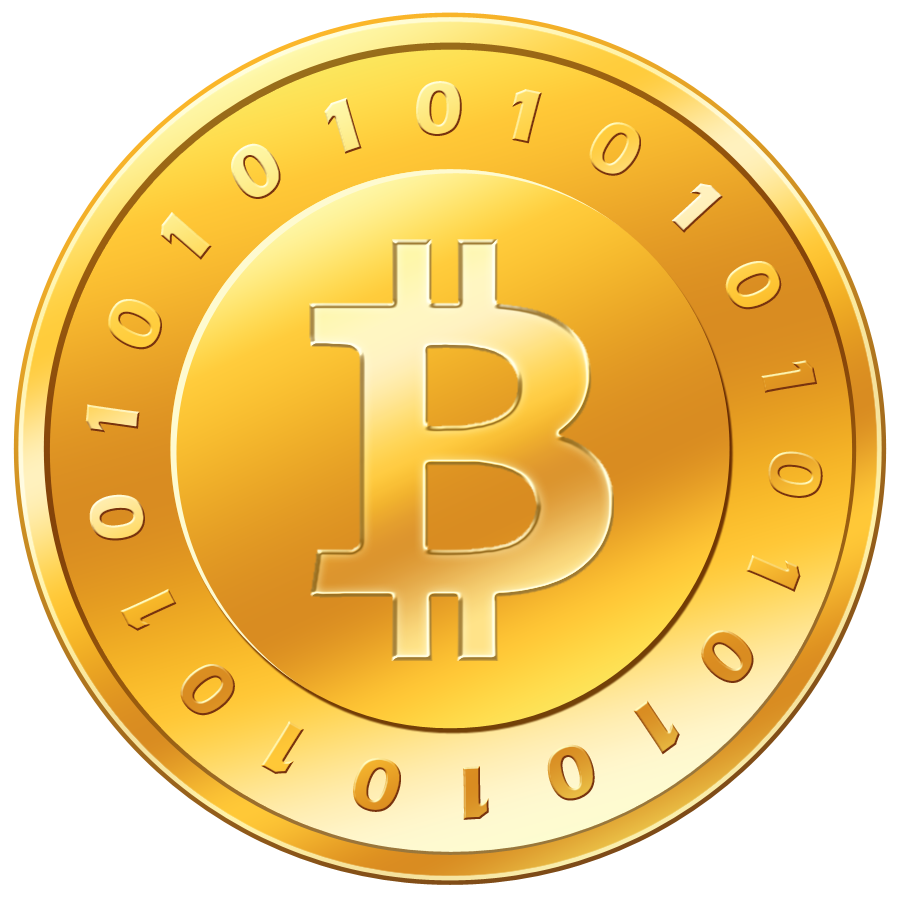
Probably one of the most interesting phenomenon of the Internet Age is the introduction of electronic currency that is unaffiliated with any country. Bitcoin is an open source project, a true child of the Internet. The code used to create Bitcoin and transactions is freely available to anyone who is a member of the Bitcoin community. As electronic currency it can be traded for goods and services with any other Bitcoin user. But it only works if those using it have confidence in its value as a currency. And today 1,136 businesses use Bitcoins as currency. You can even trade Bitcoins online.
Exchanges and Money Transfers