From smart materials that are self-healing to novel chemistry that impacts energy storage, medicine and other fields, the science of engineering materials is undergoing a revolution in the 21st century. The U.S. government’s Materials Genome Initiative is focused on advanced materials with application to clean energy, national security and human welfare. New tools are making it possible to develop materials atom by atom creating endless fabrication possibilities. Carbon fiber composites make for lighter, more fuel-efficient vehicles. Advanced alloys revolutionize avionics. Bio materials change the way we repair or replace worn out body parts. And nano materials are contributing to the development of quantum computers.
So follow along as Carbeck outlines the current top 5 material science breakthroughs and 5 more that he forecasts are coming in the next three years and beyond.
———-

Top 5 Recent Materials Science Breakthroughs: 2013 to 2015
1. Materials Genome Initiative (MGI) predicts thousands of new materials.
In the same way that the Human Genome Initiative mapped every gene in our human body and then was able to use machine learning to make predictions, the Materials Genome Initiative seeks to map out the hundreds of millions of different combinations of elements in the periodic table. Why? Creating this database will allow scientists using AI to predict properties of new material combinations. Carbeck explains, “Over the last few years we’ve been able to take the 10,000 materials we know about, and, with the help of high performance computing and quantum mechanics, start to predict properties of new materials that don’t exist yet.”
2. Graphene empowers new electronics, sensors, and composites.
The potential impact of graphene, a two-dimensional version of diamond or graphite, is emerging. It will be a key factor in a world of ubiquitous sensing and ubiquitous computing. Graphene is two-hundred times stronger than steel by weight. In the last decade we’ve seen it emerge as a material of choice for very high performance transistors, sensors, and new composites.
3. Rechargeable metal-air batteries make grid scale storage low cost and reliable.
New types of batteries are emerging. These are metal-air such as aluminum-air, zinc-air and lithium-air. They are smaller and lighter because they don’t require the extra bulk and weight of a chemical oxidizer. They have the potential to power the 1.2 billion people around the world today who don’t have access to reliable sources of electricity. “Grids using metal-air batteries have the potential to leapfrog traditional centralized energy production and distribution, especially in places like Africa,” states Carbeck.
4. Transferable ultra-thin silicon circuits enable electronics on and in the body.
We are developing technology to transfer high-performance electronics from rigid silicon wafers to form factors that can go on or inside our bodies. This is changing the way we interface with electronics – from how we track our daily activities, how we monitor our health and how we communicate and connect to the Cloud.
5. Soft robotics starting to change the human-machine interface.
Materials science allows us to make robotic structures out of fundamentally different materials to behave in different ways. For example, rather than a rigid metallic prosthetic limb, imagine a soft robotic prosthetic that actuates like muscle when activated by an electric field. “These soft materials will create a completely different physical interaction between humans and robots, electrically active, allowing us to design push and pull systems, much like muscles.”
So what’s in store for the near future?
Top 5 Anticipated Materials Science Breakthroughs: 2016 to 2018
1. Meta materials will become widespread.
The continued convergence of super-computing, modeling software, and micron-level additive manufacturing plus other manufacturing techniques will allow us to increase our ability to predict, engineer and construct meta materials with incredible properties not yet found in nature (for example, invisibility cloaks that make objects covered by them invisible).
2. Perovskite solar cells will beat silicon photovoltaics.
Perovskite is an amazing material that happens to make very efficient and cheap solar cells. When perovskite’s solar voltaic properties were first discovered five years ago, they provided conversion efficiency of about 4%. Now it’s 20%, and expected to rise to 30% in the next few years. Perovskite is 100 to 1,000 times cheaper than current materials used to manufacture silicon solar cells. By 2017 we should see mass deployment, a major contributor in moving the planet towards a solar-powered future.
3. AI coupled with the Materials Genome Initiative will allow us to commercialize new materials exponentially faster.
The Materials Genome Initiative developed over the past few years will come into full impact as cloud computing and machine learning allow scientists to discover new material combinations and material properties. Expect a lot of new commercialization efforts resulting from the application of AI. You’ll be able to say, “I want to build a next-generation implant for my knee,” states Carbeck, and your AI will understand all possible materials available and help choose ones that will be the most reliable and safe.
4. Carbon nanotubes and graphene will significantly extend Moore’s Law.
If Moore’s Law is to continue, we’ll need fundamentally different ways to organize materials into computers. Graphene and carbon nanotubes are among the most promising solutions. These materials contain properties that will allow us to continue to improve computing price-performance. We’ll even be able to manufacture a chip using traditional technologies, then add graphene functionality through materially pre-programmed self-assembly.
5. Recyclable carbon fiber composites.
While high-performance thermoset and thermoplastic composites are enabling breakthroughs like the Boeing Dreamliner and the BMW i8, the challenge remains that once heated and set they are irreversibly cured and unalterable, unlike aluminum and steel, which both can be melted and reused. But recent breakthroughs can change this, increasing their utility. Carbeck explains, “There have been real breakthroughs in chemistry that allow us to reverse the chemical reaction that makes the plastic composite depolymerize back into liquid form for reuse.”
]]>The term battery covers a wide range of technologies. A battery can be the flat lithium cell running your wristwatch (for those who still wear one) or your mobile phone. A battery can be the “A” battery in your flashlight, “AA” in your electric toothbrush, “AAA” in a penlight, or the battery in your tablet, notebook, gasoline-powered, hybrid or electric car, or a compressed air storage, chemical or molten salt technology found in continuous solar power stations.
The commonalities for all these “batteries” is – we need to make them more efficient, we need to extend their power capability, we need them to last far longer, and we need them to be less chemically toxic.
Three recent battery technology announcements caught my eye:
1. Boulder Ionics, a company in Colorado, is developing ionic liquids, salts that are molten below 100 degrees Celsius (212 Fahrenheit), for use as electrolytes. Ionic liquids could replace conventional electrolytes shrinking battery form factors and doubling capacity. Instead of the concrete block sized battery in your gasoline-powered car, you would have a battery about the size of a flashlight.
Using ionic liquids could improve lithium-ion storage capacity by a factor of 10. So that battery in your laptop could run continuously for days rather than hours.
In addition to the efficiency gain that Boulder Ionics’ technology brings, it has also improved on the manufacture of ionic liquids making them in greater quantity and cheaper than conventional electrolytes. The industry at large has always known about the potential of ionic liquids but shied away from them because to manufacture them took days to get sufficient production volume. But Boulder Ionics has developed a continuous rather than batch process making ionic liquid electrolyte in six minutes rather than three days. Instead of requiring a large chemical plant to make ionic liquid for 100,000 electric cars, Boulder Ionic can do this in a space no larger than a living room in an average home.
Ionic liquids do not evaporate and can be exposed to the air, which brings us to the second technology announcement.
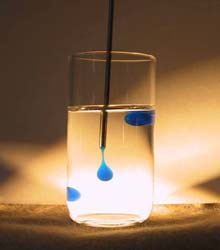
2. Metal-air batteries rely on the oxidation of metal when exposed to oxygen in the air to generate energy. Fluidic Energy, an Arizona-based start up, is using ionic liquids in a metal-air battery that will produce 11 times the energy density of current lithium-ion technology and at one-third the cost. The company recently received a $5.13 million research grant to help it get this technology up and running.
Traditional metal-air batteries use water-based electrolytes that can evaporate when exposed to air. This causes the batteries to fail. In addition water is far less electrochemically efficient, and when subject to excessive cold or heat can freeze solid or boil away. But with ionic liquids all those deficiencies go away. Ionic liquids survive as a liquid in sub-zero and above the water boiling point temperatures.
Metal-air batteries using ionic liquids become practical replacements for current lithium batteries when there is sufficient volume of the stuff available for production. Boulder Ionics is now making that possible. What it will mean is energy storage in electric cars that will, on a single charge, allow you to travel 700 to 800 kilometers (400 to 500 miles). And it will mean that the battery you will use to achieve this will be no bigger than your gas-powered car’s lead-acid battery.
3. Our last technology announcement concerns solid oxide fuel cells (SOFC). These are fuel cells that contain electrolyte sandwiched by two porous electrodes. Pacific Northwest National Laboratory in the state of Washington is building SOFC technology to power individual homes and neighbourhoods. These fuel cells achieve up to 57% efficiency, significantly higher than industry standards between 30 and 50%.
The goal is to create distributed power sources rather than large centralized power plants while addressing reduced carbon emissions. The SOFC technology that Pacific Northwest has developed includes micro-channel technology, tiny looping channels each narrower than a paper clip that are etched into a heat exchanger. The heat exchanger allows the fuel cell to recycle heat generated by the interaction of the two gases within the fuel cell in a closed loop system making it far more efficient. The development team expects to achieve 60% efficiency with a few more adjustments and then develop capacity to decrease SOFC costs.
