Murphy’s co-senior author, Christine Lian, also at Brigham, describes the team’s pursuit of an underlying cause looking at potential epigenetic abnormalities. And what they discovered was a defect in the epigenetic covering in stem cells resulting in the loss of a DNA methylation hydroxymethylation mark. Given the name, 5-hmC, the defect could be seen in psoriasis cells but not in other thickened skin cells such as callous. The team, in focusing on 5-hmC, was able to replicate psoriasis in mouse studies. It is their belief based on these studies that restoring 5-hmC levels to normal will correct the deficiency that leads to psoriasis. Vitamin C supplements may help since in previous investigations at Brigham and Women’s, 5-hmC loss was seen to be restored to normal levels through additional amounts of ascorbic acid being added to the diet.
The Brigham researchers believe that their discovery could transform the treatment of psoriasis with Murphy concluding that it may lead to “more personalized and targeted approaches directed at the very cells that accumulate to form the heartbreak of this all-too-often devastating skin condition.”

What defines the nature of the paralysis? It is where the spinal cord injury occurs that makes the difference. For paraplegics, the severing occurs to the cord in the thoracic or lumbar section of the spinal column. For quadriplegics, the damage occurs higher up in the cervical spine. But one thing is certain. With either injury, mortality risk is much higher than the general population, and medical lifetime costs run into multi-millions of dollars.
Experimenting with stem cells is ongoing around the world as medicine experiments with the potential of regenerative medicine. Successes in the laboratory on animal studies have not always translated into success in human clinical trials. The Mayo Clinic in Rochester, Minnesota, however, is working with stem cells harvested from adipose tissue (body fat) and using the cultured cells for clinical trials focused on spinal cord regeneration.
Dr. Wenchun Qu, a physiatrist and pain specialist at the Mayo describes regenerative medicine and the use of stem cells as “an evolving field” with physicians still trying to figure out what is an effective stem cell dose, and what risks are attendant in their use. So far, the trials show how imperfect the results can be with some patients tagged as super responders, and others as non-responsive.
A recent Mayo clinical trial involving 10 adult patients suffering from spinal cord injury paralysis shows some early promise with a report appearing in an article published in the Mayo Clinic Proceedings on November 27, 2019. The patient, a 53-year-old male named Chris Barr had suffered a surfing accident that broke his neck severing his spinal cord and leading to a complete loss of motor, bowel, bladder, and other sensory functions. He was told that he would likely never walk again. Initial surgery to repair the vertebrae and spine provided some modest improvement but then plateaued six months post-injury.
Barr was enrolled in a clinical trial headed up by Dr. Mohamad Bydon to become a stem cell guinea pig. Thousands of his mesenchymal stem cells were harvested from his abdominal body fat. The cells were then cultured in the Mayo Clinic’s laboratory increasing the volume to 100 million. They were then reintroduced into the body through an injection in the lumbar spine eleven months after the injury. He was then followed by the medical team for 18 months with physical and occupational therapy scoring improvements to his mobility and sensory functions. The results were notable with Barr able to feel pinpricks and light touch, walk and use his hands. Today Barr is back walking and enjoying a much-improved quality of life, a far different outcome than the one he initially envisioned after the accident, a moment in time when he asked to end his life.
Apparently, the injected stem cells did exactly what Dr. Bydon and others hoped they would do. They migrated from his lumbar spine to the cervical site where he sustained his injury. Several samplings of cerebrospinal fluid indicated the ongoing progress as nerve tissue at the original injury site regenerated.
Dr. Bydon calls Barr a super responder. As Patient Number #1 in the clinical trial of ten, his results were considerably better than anyone of the other enrollees. Stated Bydon, “One of our objectives in this study and future studies is to better delineate who will be a responder and why patients respond differently to stem cell injections.”
What is it that makes some patients respond well to regenerative therapy while others do not? It could be the timing of the intervention, the age of the patient, prior physical condition, or the subtle differences in the location and specifics of the spinal cord injury. For the Mayo Clinic the only way to know is to keep expanding on the results of this first clinical trial to begin to detect a pattern within patient groups that end up being super responders, those who benefit the most from the therapy.
Dr. Qu who was senior author of the paper published in the Mayo Clinic Proceedings describes the rigour of the Clinic’s approach to this new form of therapy stating, “Mayo’s research and use of stem cells are informed by years of rigorous scientific investigation. We strive to ensure that patients who receive stem cells are fully educated in the risks, benefits, alternatives, and unknowns about these therapies. Through our clinical trials with stem cells, we are learning from and improving these procedures.” The Clinic intends to continue to do randomized controlled trials with stem cell therapy. The 250 to 500,000 who sustain these types of injuries are hopeful to experience similar results to Patient Number 1.

]]>
But 1963 may not be the earliest date in which a cell exhibiting stem cell characteristics is mentioned. The term is mentioned in a 1932 medical journal, but the reference to what we know as stem cells today seems inappropriate. And then there are older references to stem cells back to 1905.
One thing is clear, however, we had little understanding of what these cells were and their potential.
Today we know about stem cells. The Mayo Clinic’s website calls them the “body’s raw materials,” cells from which all others can be generated. But what makes them so different from all those other cells in our bodies? Our bodies contain 200 known varieties of cells. Each, with the exception of blood cells, has a nucleus, mitochondria plus other organelles, a common chemical soup, and consistent structural features.
Yet there is no such thing as a typical cell. All cells pretty much do the same thing. They divide until their ability to do it stops. At that point, they die. We lose 96 million cells per minute but we also gain that same number in the same amount of time. The behaviour of each cell is determined by instructions given by genes located on chromosomes within the cell nucleus.
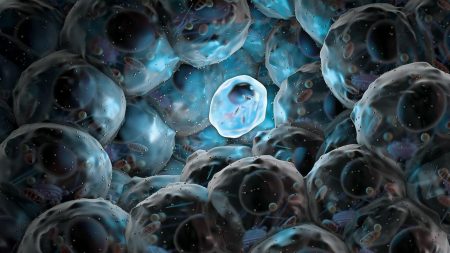
When we humans start out, our first cell is a fertilized egg combining DNA from both of our parents. The egg divides to eventually form a ball of cells we call an embryo. And the modern story of stem cells begins with what scientists first discovered about embryos. They contained cells that were non-specific but capable of being instructed to differentiate to turn into us, producing our bone, muscle, organs, brain, nerves skin, and nails. With all that differentiation leading to the 200 known varieties of cells we find in our bodies today, scientists overlooked one. Stem cells didn’t cease to exist when the embryo began to differentiate. They very much exist within all those differentiated organs and tissues that form us. You can find them in muscle, bone, organs, and fat. In fact, body fat may prove to be the best source of harvestable stem cells that we can use to cure so many of the chronic conditions and diseases we humans encounter.
Most of us when we think of stem cells, we think embryonic. That’s because that’s where the science of stem cells first started. To make embryonic stem cells researchers use a technique called somatic cell nuclear transfer. It involves manipulating donated eggs by removing the original DNA contained in the nucleus and replacing it with DNA from a donor adult cell. Cell division then follows until an embryo forms. The embryonic cells, about 100 of them on maturity, are then harvested and the embryo destroyed.
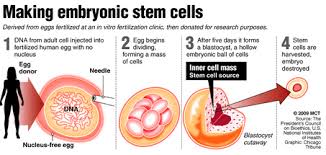
It is this use of human embryos that has created the controversy associated with stem cell research. For those who aspire to the belief that life begins at conception, harvesting and destroying an embryo is seen as murder. Lobbying by religious groups soon led to restrictions in the science in the United States with only a limited number of embryonic stem cell lines allowed.
But the promise of these cells and their ability to differentiate into any type of tissue has kept research laboratories busy in places other than the United States where more than 300 existing lines of human embryonic stem cells being cultivated in Canada, Sweden, France, Spain, and the United Kingdom. These lab-grown embryonic stem cells represent one branch of stem cell research. And because the cell populations are artificially cultured in laboratories there are some significant problems that can happen.
Consider evolution, the engine that drives speciation. From reptiles came dinosaurs, mammals, and birds. How did that happen? Mutation. And mutation worked best when there were large populations of individual species who through breeding, living and dying further differentiated and survived.
Now apply that same observed principle to laboratory populations of continuously dividing limited lines of stem cells. Just like in an isolated population of animals with a limited amount of DNA to share, mutations can produce undesirable results. In the case of laboratory-grown stem cells, a cell meant to cure could because of undesirable changes kill.
In addition, growing a large enough population of embryonic stem cells to cure people is an expensive proposition. The science, therefore, needs to find a better way to use the potential regenerative capacity of these cells.
Finding a new source of stem cells is critical. And lo and behold they are there, in our bodies, lurking among all those differentiated cells which came after conception.
In Part 2 we’ll continue the story, describing how readily available stem cells existing within us represent a medical revolution in tackling a wide variety of diseasee challenges from autoimmune to cardiac, hepatic, pancreatic, gastrointestinal, respiratory, neurodegenerative, ophthalmologic, spinal cord, skin, osteo, and more.
If you have ever gone through a colonoscopy prep it is a couple of days of “living hell.” But nonetheless having the examination with all of its attendant discomfort is far better than the alternative, dying of colorectal cancer. And yet most people living in North America choose not to get screened despite some dramatic mortality statistics associated with the disease.
But because traditional screening involves a colonoscopy the majority of Americans and Canadians over age 50 choose not to be screened. Now consider places in the world where the technology and infrastructure to do colonoscopies is non-existent and you have a populations at extreme risk to this form of cancer.
That’s why researchers seeking ways to screen for polyps are trying to find less invasive methods that are more portable and ubiquitous. Among those leading in this effort is Rochester, Minnesota’s Mayo Clinic. Our family visited the Mayo Clinic a number of years ago seeking answers for my daughter’s congenital heart life challenges. The week we spent there changed our lives and today my daughter is 31 and doing well. So when the Mayo comes up with a new test or technology I listen.
For colorectal cancer the Mayo has developed a screening test called Cologuard. It is a kit that can be mailed to your home. It provides instructions for collecting a small stool sample which then gets mailed back for screening. Results are returned within a couple of weeks.
This multimarker screening test detects traces of blood within the intestinal tract as well as DNA alterations to cells in the lining of the colon. There is no prep required, just a stool sample. The results are highly accurate detecting precancerous polyps and early-stage colorectal cancer. The latter detection is really important because Stage 1 5-year survival rates for colorectal cancer are between 87 and 92%.
A Cologuard test doesn’t replace a colonoscopy. If the test comes back positive then prepare yourself for the colonoscopy prep. But a negative result will give you some peace of mind. Cologuard has yet to be used enough for multiple testing staged over years. But in a 10,000 patient clinical study the screening found 92% of colon cancers and 69% of high-risk precancerous polyps. False positives occurred in 13%.
Today Cologuard is approved by the U.S. Food and Drug Administration and also available in the United Kingdom. It’s not in Canada as of yet but should be.
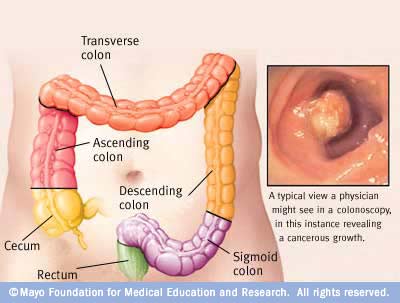
In the absence of Cologuard the recommendations for those at average risk are as follows:
And don’t be fooled. Early stage colorectal cancer is often asymptomatic so screening may be the only way to find out if you are safe. This is one cancer that all of us can prevent through colonoscopy screening and now it appears using a simple mailed-in stool sample.
]]>Knowing what I witnessed back in the 1990s at Mayo made the story I read this week seem unsurprising. Mayo’s outreach as a world class medical institution is now employing advanced technologies including telecommunications, smartphones, robotics and telespresence in the development of a telestroke program. Using it Mayo neurologists diagnose stroke remotely and save lives while never leaving the confines of the Rochester campus.
Through telepresence they perform neurological examinations on patients hundreds if not thousands of kilometers away. They prescribe thrombolytics (clot-dissolving drugs) that are locally administered by the attending emergency physicians, or even intervene physically, through the use of remotely controlled robotic devices, to unblock an artery or blood vessel and save a life. This allows the patient to receive immediate attention and mitigates against any long-term stroke symptomes. It also allows the patient to be treated locally where they live.
This is how the program works:
The patient is given a local CT scan. The Mayo neurologist does a real-time telepresence consultation taking a complete medical history and reviewing the results of local tests and the scan.
The patient is then treated appropriately with either clot-dissolving therapies (thrombolytics) or other forms of intervention to reduce potential post-stroke symptoms.
All this happens within a 3 to 4 1/2 hour window to ensure an optimal recovery.
In 1995 the technology to perform this type of intervention had yet to be invented. If it had existed we would have been spared the two-day drive to get to Rochester from Toronto. Our daughter would have been “seen” in much the same way telestroke works today.
We are just at beginning of a new age in medical treatment, one in which telemedicine and telepresence will mean a new level of healthcare delivery wherever telecommunications can reach. It represents a paradigm shift in patient care, and it is no surprise to me that Mayo Clinic is taking a leadership role in using these 21st century technologies this way.
