The post I Had Knee Replacement Surgery in 2020 But Could 3D Bioprinting Do The Job In The Future? appeared first on Techso Mogro.
]]>Before agreeing to knee replacement, I had researched stem cell cartilage replacement therapy to the nth degree but that option eluded me. Although delayed and under total isolation conditions the operation was performed on July 15, 2020. Two days later I was home to recover and rehab with a physiotherapist who virtually visited me over Zoom as I exercised my way back to full mobility without a walker or cane in three months.
The osteoarthritis that caused my left knee so much grief and pain is a thing of the past now, but my interest in less invasive and minimal surgical knee interventions remains high. I have osteoarthritis in my right knee but no pain so I assume I can live with that condition for many more years. Should I need to do something about it, there is the promise coming from a four-year joint project in Germany involving the Fraunhofer Institute for Applied Polymer Research and the Brandenburg University of Technology Cottbus-Senftenberg BTU. The research is focused on producing personalized 3D-printed personalized cartilage-cell-embedded implants to restore knee function.
Before my knee operation, I had asked my surgeon why cartilage replacement therapy had yet to evolve for use in treating bum knees. He laughed about what the prospect of developing an alternative to surgery would do to his job but also described the considerable challenges the research had yet to resolve.
I mentioned I had been following work being done in Germany, Chicago, and at the Mayo Clinic. The latter has the RECLAIM Project which was at the time still at its earliest stages. RECLAIM stands for Recycled CartiLage Auto/allo IMplantation and it remains a work in progress.
My surgeon told me that growing personalized cartilage cells wasn’t the problem. The challenge was being able to put the cells in the right place and have them adhere and grow to fit the exact shape of the joint. That’s when he brought up the challenge of growing collagen.
Where cartilage provides the lubricated smooth surface and shock absorbers our knee joints need, it is collagen that gives cartilage its structural framework and tensile strength. Without collagen, cartilage has no framework upon which to attach.
In the past harvesting cartilage from other parts of the body and inserting it into the knee has been tried with limited success. Collagen, however, has remained the unresolved challenge.
What the German-based research project is proposing involves embedding host cartilage cells into a glycopolymer hydrogel and 3D printing multiple layers of the mix on the joint surfaces to recreate what the cartilage and collagen combination would do naturally.
The process is called BioPol-3D. In an August 21, 2024 Fraunhofer press release, Professor Ursula Anderer, who holds the Chair for Cell Biology and Tissue Engineering states, “Our approach to printing the cartilage cells goes beyond conventional methods because we mould the biological component – the cartilage cells – directly. In other words, we don’t first print a scaffold on which cells are later placed.” That solves the collagen challenge.
It remains a work in progress to get the printable ink mix just right so that the living cartilage cells remain viable throughout the layering process and after. Anderer notes “the inks must be biocompatible and biodegradable” while the printing itself must produce “the desired cartilage shape” with “a high degree of stability and strength.” The goal is “to establish an advanced 3D cell culture for the treatment of cartilage damage and at the same time revolutionize the production of such moulded bodies through additive manufacturing.”
I wonder if my knee surgeon has seen the work being done at the Fraunhofer and Brandenburg. If it is ready for clinical trials and perfected before the end of the decade, I am sure he will become aware because knee replacement will never be the same as medical 3D-printing comes of age in the third decade of the 21st century.
The post I Had Knee Replacement Surgery in 2020 But Could 3D Bioprinting Do The Job In The Future? appeared first on Techso Mogro.
]]>The post I Didn’t Drop Off the Face of the Earth: Just Fixed My Bum Knee appeared first on Techso Mogro.
]]>Knee replacement surgery isn’t just about removing the osteoarthritic joint and replacing it with a prosthetic. It’s all about what happens after. The rehabilitation is a full-time job and I have been going at it since the day after surgery with flexing of the joint, straightening it, and doing muscle strengthening exercises to get my body back in balance.
The surgery had some surprises. It turns out the tibia, the weight-bearing lower bone in my left leg had undergone significant changes over the 50 years that followed an accident I experienced at age 19. At that time it took three surgical procedures to restore my leg so that I could walk without a cane or other aids. But in doing the repair my body decided to begin redistributing bone mass from the head of the tibia to the middle area where the multiple breaks had occurred.
Fifty years later the upper part of the tibia had become soft, demineralized and decalcified, and my patella, the knee bone, had corroded. So the surgeon did some rebuilding with pins and cement and that to some degree has slowed my recovery progress from the norm.
This is the first time I am sitting at my desk and writing about the experience. I am using a walker, and occasionally two canes, to get about. The walker gives me better weight distribution as I walk easing the strain on my hip abductor muscles as I try to rebuild them to manage my new knee and gait. And because this is the first time sitting at the desk for a period of time, I’m cognizant of the need to get up and move, flex and straighten the knee joint so that it doesn’t stiffen.
So this posting will be short. Consider it a placeholder for up and coming postings of which I have many lined up, some from contributors, some that I was working on before the surgery, and others that I have been working through in my head as I have gone through these five weeks of rehabilitation.
As always, I appreciate you visiting my blog site and hope to have you reading and commenting on future postings here.
The post I Didn’t Drop Off the Face of the Earth: Just Fixed My Bum Knee appeared first on Techso Mogro.
]]>The post As I Face Future Knee Replacement Surgery New Research Tells Me My Body Can Regenerate Cartilage appeared first on Techso Mogro.
]]>
October 12, 2019 – It has been a frustrating five years of searching for the latest research into regenerative medicine, and stem cell science, as I have put off making the decision to have my knee replaced with an artificial joint. It seems so many mouse-based research studies have shown that our bodies can regrow damaged cartilage in joints. So many clinical trials performed on a limited number of patients have further demonstrated the viability of a combination of implanted matrices and stem cells that could make knee replacement obsolescent.
But unfortunately, none of these advances are even close to becoming the treatment of choice in dealing with patients like me who have virtually no cartilage remaining in one of my knee joints. What the X-rays show is bone-on-bone, and what keeps me going is periodic cortisone injections and a daily application of pain killers plus CBD oil.
In less than two weeks I go for my third re-assessment knowing that this exercise is purely a formality before I get introduced to an orthopedic surgeon who will tell me that regenerative treatments remain a decade away.
I was told the same thing five years ago at the first assessment.
Should I be surprised about the ten-year forecast?
Consider that a decade ago we were told that fusion energy was only a decade away and that we were told this again this year…only a decade away. This seems to be a common mantra for so much of what we are told by scientists and engineers when it comes to innovation and breakthroughs.
Just like my knee needing a better solution than cut and replace, the world needs an energy solution like fusion to save it from the tyranny of fossil fuel companies and the pushing of their addictive product on the world economy as they lobby governments to do little if anything to stop the deadly impact on climate of their products. (Please excuse my perpetual rant on this subject.)
Having said all this, here’s the latest research piece in developmental biology that suggests we have a latent ability to regenerate joint cartilage in the same way salamanders do to regrow a lost tail or limb.
In a paper entitled, “Analysis of ‘old’ proteins unmasks dynamic gradient of cartilage turnover in human limbs,” Virginia Kraus, and four other researchers from Duke University, Durham, North Carolina, and Lund University, Lund, Sweden, have just published results that show proteins associated with microRNA reflect an “innate tissue repair capacity in human lower limb cartilages.” They are not saying that we have a salamander’s propensity to regrow an entire limb, but rather limited regeneration capacity for joint repair.
In an interview published in The Scientist, Kraus states, “We believe that an understanding of this ‘salamander-like’ regenerative capacity in humans, and the critically missing components of this regulatory circuit, could provide the foundation for new approaches to repair joint tissues and possibly whole human limbs.” This is a bit of hyperbole considering what is actually stated in the research paper itself with an emphasis on limited regeneration capacity.
So how does this microRNA and young protein discovery work?
The researchers discovered an abundance of microRNA along with young proteins that block messenger RNA from inhibiting production of new collagen.
With this microRNA, Kraus suggests it can be “injected directly into a joint to boost repair to prevent osteoarthritis after a joint injury or even slow or reverse osteoarthritis once it has developed.”
What has been further discovered is that the phenomenon of young proteins to facilitate regrowth and repair appears in greater volume the further from the body’s central trunk. So translated, that means less of the proteins in the hip joint, more in the knee, and even more in the ankle. The illustration below visually describes the discovery very well.

So maybe I can take the research paper with me when I go to my next knee assessment and ask the orthopedic surgeon to comment. I’m betting the answer will be, “it’s a decade away.”
The post As I Face Future Knee Replacement Surgery New Research Tells Me My Body Can Regenerate Cartilage appeared first on Techso Mogro.
]]>The post In Search of a Better Knee – Part 1: Physiotherapy Delays the Need for Surgery appeared first on Techso Mogro.
]]>In my search for non-surgical approaches to restoring my knee function I have looked at research into the use of stem cells, and I have asked one of my brothers who is a doctor, and who has recently undergone partial knee-joint replacement, to look at the state of regenerative medical options available to me. It appears that there is technology today that can take millions of stem cells from my adipose tissue (body fat) around my belly, and re-inject them into my knee joint. In theory, the cartilage would then trigger stem cells to begin replicating as chondrocytes (the cells that form cartilage). But until you can ensure that the regrown cartilage ends up in the right place, stem cell injection therapies for knee joint restoration are purely hit and miss.
To solve the remaining challenge research is being done to develop dissolvable matrices using gelatinous materials that don’t trigger the body’s autoimmune response. Ideally, a 3D bioprinter would create a scaffold precisely shaped using the data from digital MRI and x-ray images. This would serve as a framework for stem cells turned chondrocytes to grow in place and restore the joint. The doctors, aided by precision-guided artificial intelligence would inject gel into the knee joint positioning it to form the scaffolding upon which the stem cells turned chondrocytes would grow. As they did the gel scaffolding would slowly dissolve leaving a healthy, regenerated knee. That’s what I have been holding out for as I search for a better outcome than one that involves removing my knee joint and replacing it with something artificial.
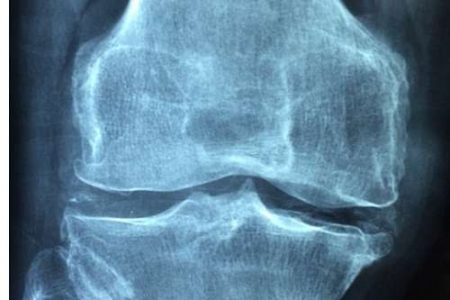
This week, however, I had an outpatient appointment at the Sunnybrook Holland Orthopaedic & Arthritic Centre here in Toronto. My family doctor arranged it after I suffered a fall in our apartment bathroom. I was seen by a resident and occupational physiotherapist. I brought along two recent x-rays of my knee joint and the findings which indicated that I had tricompartmental left knee osteoarthritis. The radiologist report that accompanied the x-rays described by osteoarthritis as severe and worsening based on a comparison of images done in two consecutive years. My immediate thought was, here goes, I’m going to see the orthopaedic surgeon and be told when I would go under the knife.
But that’s not what happened. Instead, the resident took a history. Then I was seen by a team of occupational therapists. One had me doing a timed walking test, followed by a timed stand-up and sit-down test. Then I had range-of-motion, and muscle strength tests to compare my left and right knee function. Overall, despite what my x-rays showed, the occupational therapy team gave me encouraging results. My left knee was performing pretty well despite the loss of most of my cartilage. I would attribute this to daily walks with my dog. But I also found out I was neglecting some key muscles that would make my knee function even better.
I had already resolved to go on a diet to take the weight off the knee joint. And now I am adding swimming, stationary cycling and a series of yoga-like exercises to my routine. The idea is to strengthen hip, thigh, hamstrings and quadriceps to give my muscles greater endurance and improve range of motion in the joint. Losing weight should make the rehabilitation root that much more effective.
So no surgery pending, an outcome for which I would be more than happy. And maybe, while I am rehabilitating my knee joint sans surgery, progress on stem cell regenerative medicine will eventually mean no need for joint replacement in my future. An orthopaedic surgeon my brother talked to on my behalf in the last week says we are a decade away from seeing this technology move from the laboratory to clinical trials, and to become an option for patients with osteoarthritis. Within a decade I will still be in my seventies.
I’m happy to wait.
The post In Search of a Better Knee – Part 1: Physiotherapy Delays the Need for Surgery appeared first on Techso Mogro.
]]>The post 3D Printers Create Custom-Built Knees and Hips appeared first on Techso Mogro.
]]>Why? Because I have talked to a number of people who have had knee replacement surgery and the procedure and recovery stories vary widely. Some have reported a full restoration of mobility after several months of rehabilitation. Others have had to undergo more than one knee replacement within a decade. In fact, one of my very good friends who had knee replacement done over a year ago informed me that the government issued prosthetic that cost nothing in Canada’s public health plan had a 50% failure rate after ten years. So for his surgery he was paying extra to get the good knee prosthetic.
I have researched non-surgical treatments from cortisone and hyaluronic acid injections, to platelet and experimental stem cell treatments to regrow cartilage in the knee joint. Currently I am receiving cortisone injections every three to four months. The injections have produced significant pain relief and given me increased mobility including the ability to walk up and down stairs more easily and without discomfort. But there may be a technology solution that could get me to reconsider a knee prosthetic.
It involves the 3D printing of custom-made knee joints. 3D printing is being used today to create blood vessels, ears and other body parts. But this is the first time that I have read of its use in knee and hip replacement.
Where is it being done? In Denver Colorado, Dr. Ian Dickey, at Presbyterian St. Luke’s Medical Center, is pioneering the technology. In a YouTube video he describes why 3D printing produces better outcomes. The process begins with a CT scan of the effected limb, not just the hip or knee joint.
Why the entire limb? Because the goal is to restore perfect alignment to the limb after repair. With a CT image software can produce a 3D rendering of the joint and limb. The 3D image provides X, Y and Z coordinates for the joint. These get used to create a modeled joint that can make corrections to the alignment producing an implant with the correct thickness and width. The information gets fed to the 3D printer to create an implant that is precise to one-thousandth of a millimeter.
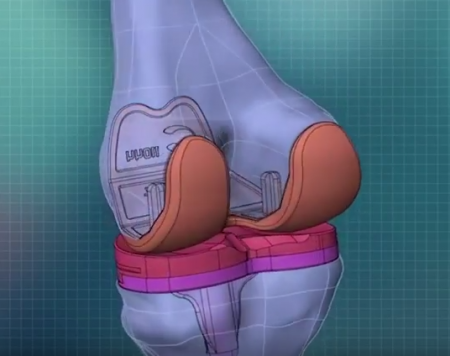
When you consider that 5% of the 600,000 knee replacements performed in the United States and 60,000 in Canada represent repairs to already replaced knees, custom-designed prosthetics could eliminate 33,000 procedures annually. The average non-custom knee prosthetic today has a life between 15 to 20 years before wear, loosening, infection, fracture, instability or stiffness and pain create the need for replacement. With rising obesity rates in both countries, knee and hip surgery procedures are expected to increase 15% annually. Doctors advise patients that one of the best ways to decrease knee and hip joint replacement is to keep body weight down.
The post 3D Printers Create Custom-Built Knees and Hips appeared first on Techso Mogro.
]]>