What the Agricultural Revolution gave humanity was a larger volume of food but not a better diet states Harari. It created a population explosion but the life of farmers was considerably harder than that of ancestral hunter-foragers. When there was a dearth of food sources, hunter-gatherers could move on. That luxury of choice didn’t exist for farmers who were tied to their plots of land.
What moving from hunting to farming did do was hook humanity to annual staple crops like wheat, corn (maize), and rice. Domesticating wild versions of these plants meant more food could be harvested per square kilometer of land. And while we domesticated plants we also selected a number of animals that we could domesticate. Sheep, goats, cattle, horses, pigs, chickens and camels were incorporated into our Neolithic way of life.
The worst choice we made was becoming dependent on annuals. It meant a labour-intensive endless cycle of preparing ground, seeding, weeding, and harvesting. If there were drought or flood, an entire crop could be lost, leading to mass starvation. The only way to ensure a continuous supply of food was to over produce, creating surpluses to bank in case of disaster.
We could have picked better crops, ones that didn’t need such intensive care and maintenance. We could have picked perennials and not annuals. In Asia, where we took a native perennial plant, rice, and turned it into an annual, we gained in yields but intensified the labour needed to sustain the plants. And with wheat and corn, we picked plants that died every autumn, and that only reappeared if they reseeded themselves while in a wild state.
Modern agriculture is attempting to redress those initial errors of the Neolithic Revolution. Researchers have tried to develop perennial versions of the crops with which we, today, are so heavily dependent. The tools we used in the past, selective breeding and cross-breeding of varieties of wild and domesticated plants, have worked to some extent. But now that we have the means to analyze or alter the DNA of plants, we can examine the genetic makeup of new varieties which leads to better experimental results. This is helping to create the first of the staple crops we describe below.
One issue in developing perennial substitutes for annual crops, speed of maturation, remains unresolved. Perennials take longer to grow because they develop more extensive root systems. When we can speed this process up we will have the best of both worlds, staple crops that don’t need to be replanted and produce yield equivalencies in the same amount of time as the annual crops we grow today.
So where are we currently with perennial staples?
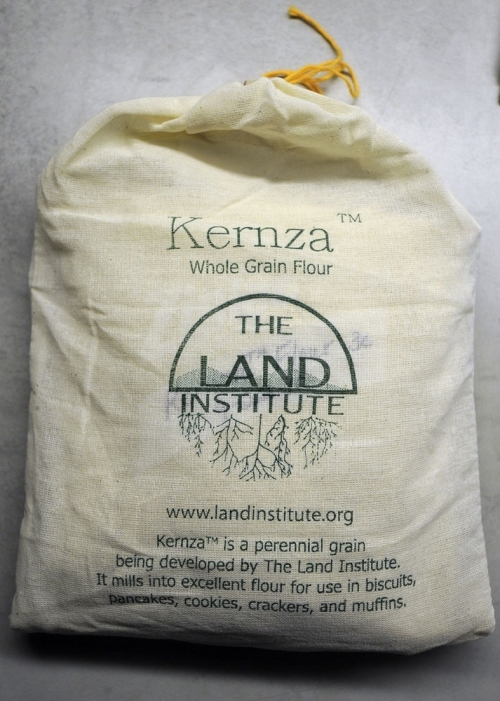
Perennial Wheat – Kernza, a perennial wheat developed by the Land Institute in Salina, Kansas, produces 20% more protein, more fiber, double the level of omega-3 fatty acids, five times the calcium and ten times the folate of traditional wheat crops. The challenges with Kernza, have been in size of yields and speed of maturation. Kernza grows more slowly and produces a smaller crop. The flour is considered excellent for biscuits, cookies, crackers and muffins, but not so much for bread.
Now joining Kernza is Salish Blue, the product of researchers at Washington State University who published their results recently. The formal Latin name for this new perennial wheat is Tritipyrum aaseae. Intense genomic analysis of the DNA combined with 20 years of breeding and cross breeding produced the Salish Blue, a stable perennial.
One of the most important benefits that will be derived from widespread planting of perennial wheat will be the impact on soils. On farms where extreme drought or rain can destroy fertility and viability of the soils, perennial grains will be much better at retaining moisture, organic matter and minerals, while at the same time, there will be less need for replanting, less plowing and less labour.
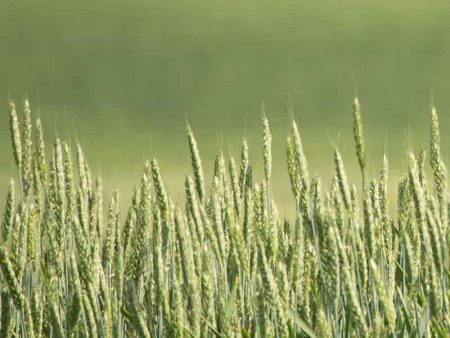
Salish Blue seeds have a blue tint. Normal annual wheat is either white or red. Salish Blue grows to 1.5 meters (about 5 feet) in height. That’s a half meter or more taller than annual wheat grown today which is called dwarf wheat. The tallness should help produce better moisture retention and soil protection.
Perennial Rice – In the last year China has begun field trials with a new variety of perennial rice. This is indeed an exercise in reversion. Almost ten millennia ago rice was a perennial grass that grew more than 4 meters in height on the edge of streams. It produced small red grains. Within a millennium that crop was genetically altered through selective breeding to become an annual that today provides the bulk of nourishment to half the planet.
But scientists in China have been observing how climate change is impacting growing areas from irrigated paddies in the lowlands to upland hillsides. Multiple plantings per year in conditions where precipitation has become less predictable is degrading soils and causing erosion. The search for a perennial rice would alleviate the planting cycles and hold soils in place.
The Academy of Agricultural Sciences completed a ten-year breeding program to create perennial rice varieties. One strain, for the last four years, has produced yields close to those obtained from conventional rice. It is called PR23. If the new field trials can match the success of controlled plantings then China intends to make it available to farmers within the next year.
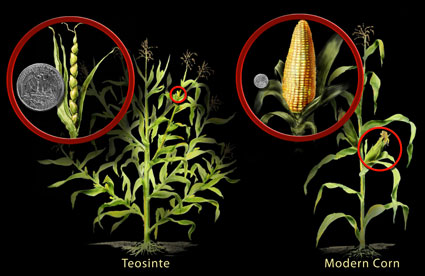
Perennial Corn – Corn is a staple found throughout the Americas, Europe, Asia and Africa. Corn, like rice, was probably derived originally from an ancestral perennial that resembles the plant’s wild relative, teosinte. Today, teosinte varieties are still found in Mexico and Central America where the plant was originally domesticated almost 9 millennia ago. One variety in particular, Zea mays, subspecies parviglumis, is believed to have spawned the modern corn plant. Zea mays is a perennial.
Back in the 1982, a collaboration between Argentina and the United States, reported in the New York Times, was said to have produced a perennial offspring from cross breeding Zea mays and modern corn. Harvard University, University of North Carolina, and University of Buenos Aires, partnered in the development of this new hybrid.
Since that study nothing else has appeared, which suggests that field trials didn’t produce desired results.
Perennial food security continues to be sought by agronomists. If successful, it could mean billions of dollars in industry savings. It certainly would be disruptive to the existing agro-chemical companies that count on annual seed sales plus the fertilizers, herbicides, and insecticides needed to produce quality yields. And it would finally correct the mistake our ancestors foisted upon us when they seemingly chose wrong at the beginning of the Neolithic Revolution.
]]>

What is carbon farming?
We know the ocean absorbs carbon dioxide from the atmosphere. But so does land and it does it through the plants that take root on it, and through the soils that trap and sequester the carbon in root systems and the organic material that remains after harvest and in the cycling of the seasons. In the United States alone 762 million tons of carbon dioxide (CO2) is stored in plants and soil offsetting 11% of the country’s carbon emissions.
Agriculture research is no longer just about crop varieties and growing yields. It is now front and centre focused on helping the planet to stay cooler through better carbon farming practices. The areas where new research is yielding results include:
The current administration of the United States Department of Agriculture set out a road map for climate smart practices in May of this year. In it implementation plans were laid out based on 10 building blocks:
The goal of the road map was to achieve carbon sequestration amounting to 120 million tons of CO2 or equivalent annually by 2025, equal to the emissions produced by 25 million cars or 11 million homes. With the new administration it is not known whether this road map will endure the scrutiny of the new President and his appointees.
Nonetheless agriculture and farmers are on the front lines of climate change and will be first victims of global warming’s many tipping points including increased frequency in extremes of heat or cold, prolonged droughts, and episodic floods. So whether the government of the day is proactive or in denial, the vital business of agriculture must go on.
A quick review of the practices described above are, therefore, in order.
No Till, Cover Cropping and Crop Rotation

These best practices all work hand-in-hand. Farmers are learning not to turn over the soil after a crop is harvested (see image above). Instead of disturbing the soil before reseeding, no till the planting gets done in the residue of the previous crop. Only small slit trenches get cut to place the seeds which are then covered. A sample case study report using soybean crops shows yield increases from 25 to 65 bushels per acre.
Cover cropping combined with no till practices ends the practice of fallowing. Farmers stabilize the soil, suppress weeds, reduce runoff, fix both carbon and nitrogen and improve the micro biota when they don’t leave a field to lie fallow after a harvest. At schools like Cornell University, the College of Agriculture and Life Sciences has developed a comprehensive cover crop decision tool for farming vegetables. The tool includes selecting management criteria, planting time and growing time duration to provide guidance.
Iowa State University agrologists have been studying no tillage combined with crop rotation and the role the two play in carbon sequestration. In a paper entitled, “Impact of Tillage and Crop Rotation Systems on Soil Carbon Sequestration,“ published in 2008, it was noted that minimizing organic carbon breakdown by keeping plant residues intact plays a critical role in farming’s contribution to reducing our global carbon footprint. Rotating what gets grown as a cover crop on land reduces the rate of soil carbon decline when compared to continuous planting of a single crop. In the study the research looked at a rotation of corn to oats to meadow yielding better carbon retention.
Perennials versus Annuals
If wheat, corn, soybeans and rice were perennials rather than annuals then the world of farming would be a very different business. Instead of the cycle of planting, harvesting and reseeding we would have a permaculture which would resemble forests. Today there are no perennial grains in widespread use. Back in 2013 I wrote about Kernza, a perennial wheatgrass being developed as a wheat substitute by The Land Institute in Salina, Kansas. Kernza when planted develops a significant root system that goes well beyond that of traditional annual wheat. That root system is key to sequestering carbon as well as stabilizing soils.

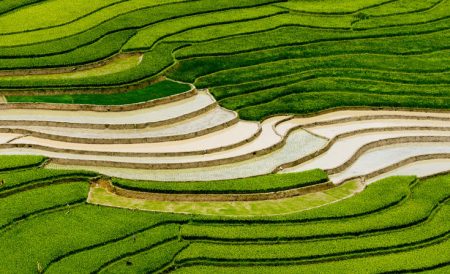
Perennial farming would be particularly useful in many of the rice growing regions of the world which often feature hillside farms with terracing. Roughly 45% of the world’s farmland happens on hills with an 8 to 30 degree slope. If these farms were to switch from annual to perennial cereal crops it is estimated that an additional 16.8 billion tons of carbon could be sequestered annually.
We already have perennial agro-forestry success stories in orchard crops like apples, pears, peaches, oranges, grapefruit, coconuts, and avocados, to name a few. Orchards are great at sequestering carbon at a rate from 9 to 228 tons per hectare (3.6 to 92 per acre). The variable is determined by latitude, altitude, and rainfall.
Changing What is Grown in Pasturage and on Grazing Lands
Livestock are a significant source of greenhouse gas emissions. But until we come up with a substitute for beef and other meat protein food sources then we need to address what we feed livestock. A single cow releases between 70 and 120 kilograms of methane (CH4) annually. If we can alter the diet of cows to impact that methane output we could considerably reduce the production of what is a much more potent greenhouse gas than CO2. And CH4 is emitted from almost all livestock and contributes 18% of the total greenhouse gases worldwide. Today 30% of our continental land surfaces are set aside as pasture for livestock.
In a 2011 report entitled, “Raising the Steaks: Global Warming and Pasture-Raised Beef Production in the United States,” researchers looked at ways to lower greenhouse gas emissions by improving the capacity of pastures to sequester carbon. Changing the plants cattle graze on was seen as one way to reduce CH4 emissions. The report suggested a plant like Birdsfoot Trefoil (seen below) would serve well in reducing emissions from cattle as they graze.

Birdsfoot Trefoil is a perennial legume primarily used as pasturage or harvested as hay.It can grow in poorly drained soils. Unlike alfalfa it does not contribute to bloating in grazing animals because of the presence of tannin compounds in the plant. So that means less CH4 emissions from foraging livestock. An added benefit, Birdsfoot Trefoil reduces nitrous oxide (N2O) emissions from soil. Fixing nitrogen is useful in crop rotation where pasturage is in the mix. And finally the plant tolerates marginal grazing areas typically overrun by weeds so in planting it farmers can keep intrusive weeds from creeping into non-forage crop plantings.
Birdsfoot Trefoil is one of several plants that can help reduce CH4 emissions from livestock. Brachiaria increase soil sequestration rates by 3-fold factor and produce similar benefits. Brachiaria is found in sub-Saharan Africa and research shows that dairy cattle grazing on it can yield 40% more milk than on other pasturage.
Integratng Trees
Agro-forestry is helping farms contribute to reduced carbon emissions. In a recent study entitled “Global Tree Cover and Biomass Carbon on Agricultural Land” researchers noted that between 2000 and 2010 increases in tree cover on farmland yielded a 4.6% increase in biomass carbon, that is carbon stored and sequestered by trees. The research suggests integrating woodlots, border field tree plantings and planned silviculture such as fruit orchards would sink four times more carbon than other agricultural land use.
A final word
Eric Toensmeier, lecturer at Yale University, has authored The Carbon Farming Solution: A Global Tookit of Perennial Crops and Regenerative Agricultural Practices for Climate Change Mitigation and Food Security. The book was published in February of this year. Toensmeier states that “carbon farming practices…could play a critical role in preventing catastrophic climate change by removing carbon from the atmosphere and safely storing it in soils and perennial vegetation.” He cites a farming cooperative in Veracruz, Mexico, as a locale where carbon farming is successfully practiced today. An aerial view of one of the farms can be seen in the image below. The sustainable practices implemented at this site mitigate climate change with no negative impacts on food and fodder production.
For farmers this books is truly worth checking out if you are into saving the planet while contributing to feeding it.

]]>
In the article Pett states that we fell into this trap 10,000 years ago at the dawn of the Neolithic when we chose annual grains, legumes and oil seed crops to be our main source of plant nutrition. The result today is agricultural practices that are problematic with Pett in his article providing some statistics and challenges that we face because of our reliance on annuals:
At the Land Institute in Salina, Kansas, researchers are looking at ways to alter our dependence on annuals by developing perennial versions of the plants we grow for food. For years I have planted a perennial garden rather than annual flowers. I have done this even at our new apartment downtown here in Toronto, planting perennials in pots rather than the typical flowering annuals. Why? Because perennials seem better equipped to handle environmental changes. They persist under the most difficult conditions. If it is too cold in the spring they tend to be self inhibiting waiting for the weather to improve. And they seem to be less demanding about soil conditions or needing artificial fertilizers. A good mulch cover in the fall works wonders.
The researchers at the Land Institute believe that perennial grains, oil seed crops and legumes can be developed reversing 10,000 years of agricultural mistakes made by us. They are doing this in two ways:
The hope is to release the first perennial grain crop within a decade. The Institute is currently developing a wheat grass called Kernza. It looks a bit like wheat but like most perennials it grows more slowly. It develops extensive root systems (see image below) which hold the soil in place and retain moisture. It shows high variability when planted so a Kernza field isn’t as pretty as the wheat fields you see on the Prairies today. But it provides continuous coverage so the soil is not exposed to erosion. It needs less tending and as a bonus provides winter fodder for native and herding animals without losing its viability to propagate and produce subsequent harvests.

The Institute has been developing Kernza for 7 years and has harvested the crop to produce flour “excellent for use in biscuits, cookies, crackers, and muffins.” The yields to date are far less than those produced by annual wheat but the researchers believe they will soon match wheat in future harvests.
And Kernza is proving to have other unique benefits. Its protein content per kilogram is 20% higher than wheat. It produces more fibre, double the level of omega-3 fatty acids, five times the calcium and ten times the folate.
Other perennial projects at the Institute include development of a perennial variety of sorghum as well as perennial sunflowers.
Is the Institute unique in pursuing perennial crops? Hardly. We’ve been growing them as food sources for years. After all fruit and nut trees, bananas, palms, breadfruit, and avocados are all perennials. Several types of perennial beans and tubers provide staple crops for many tropical and subtropical countries. But none of the above equal the volume of food we get from grains like wheat and rice, two of the dominant agricultural crops grown on this planet. We can, however, learn from our experience in cultivating perennials, ways to develop even more choices and in the process reduce the toll we are putting on precious top soils and fresh water while feeding the planet.
]]>