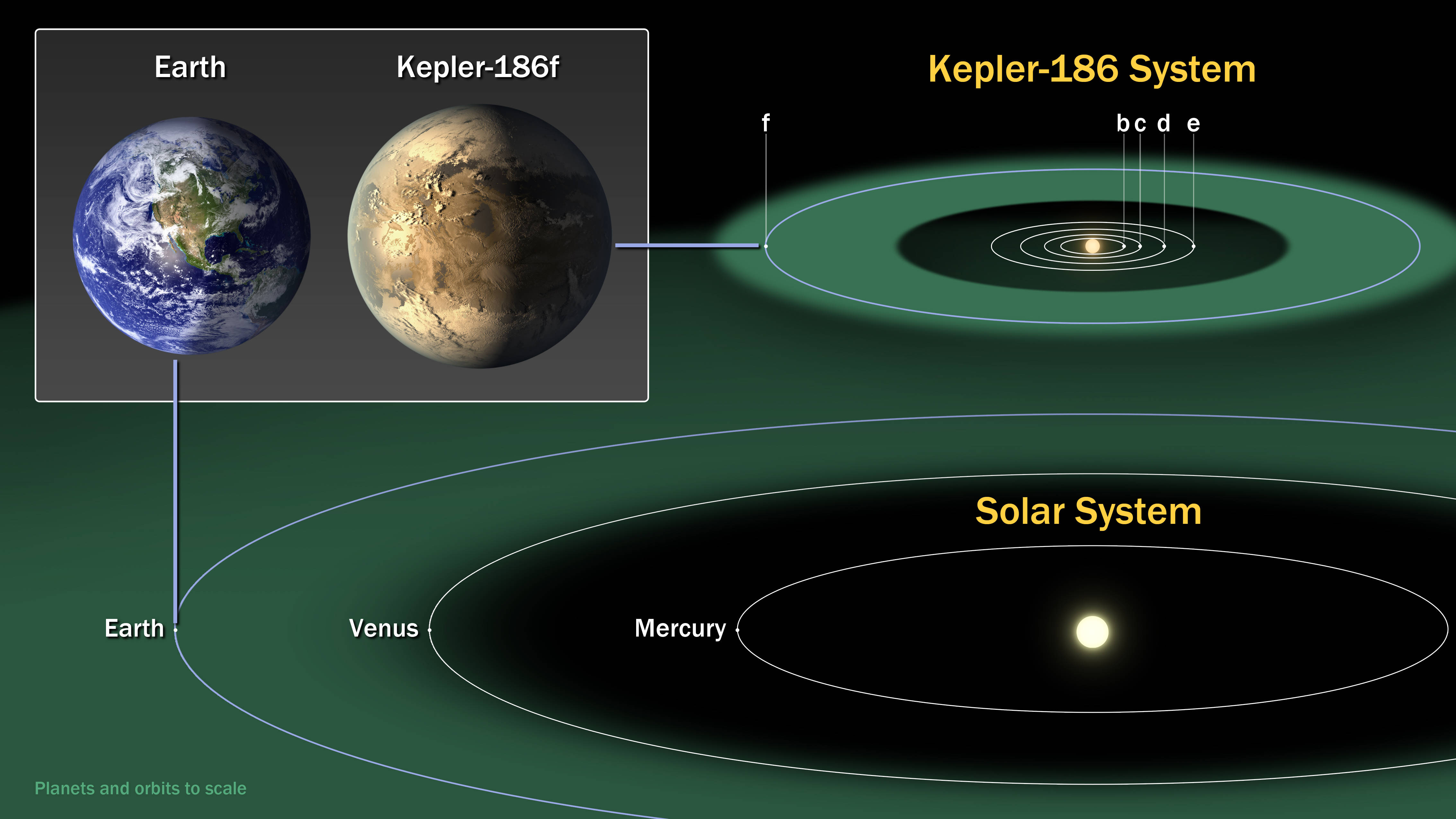
Dubbed Kepler-186f (gee I wish NASA would come up with a new naming convention for these exoplanets) it is the fifth planet in its solar system. The host star, Kepler-186, is a red dwarf and cooler than our Sun. The planet, which is the outermost of the five within the system, circles much closer to its star than us. As a result a year on Kepler-186f is a mere 130 days. So a human who arrives on Kepler-186f could live a life almost three times as long without changing diet or lifestyle.
Because the star is cooler the solar energy the planet receives is approximately 1/3 of that here on Earth. When you compare that to Mars which receives 44%, you can imagine that Kepler-186f must be cooler than our planet. But because its mass is greater than Mars it may retain a much more significant atmosphere with the attendant greenhouse affect.
The planet is too far away from us to allow our current technology to discern whether it has an atmosphere or not. All we know is at 10% larger it is the exoplanet that most closely resembles Earth. But unless we learn to bend space-time, we won’t be going there soon.